Sampling Experiences

One of the topics of my previous post was sampling. While there could be a good number of campaigns out there that understandably do a go job at sampling ‘products’, how do you execute sampling of services and experiences? I wondered.

And then I discovered Hunger Delivery

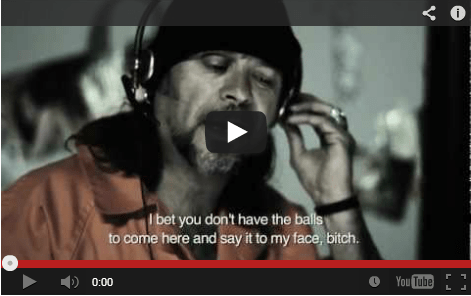
There are campaigns for NGOs that have tried to tug at your heartstrings in order to make a point and evoke your empathy (and in some cases, sympathy). But what if you are made to actually experience the cause that an organization is fighting for? In other words what if you are inadvertently compelled to sample the experience? And what if the experience is ‘hunger’? The Food Bank Foundation tied up with 2 pizzerias in Paraguay and executed the following campaign.

It could require guts to execute something like this (in fact it could almost be impossible to be executed in a number of markets given the expected temperament and potential consumer backlash characteristic of these markets). The results shown in the above video notwithstanding, I am not sure if this campaign has actually offended or ended up alienating any of their consumers. But a noteworthy campaign by any standards! Hats off to the Pizzerias that have offered to be part of this campaign even if it was for one single day. (Agency: TBWA/Oniria)

Interestingly, I also learnt that there exists a near parallel for this campaign in Spain, albeit for a TV Show.

Alcatraz Delivery

Alcatraz is an American TV series; a thriller based on the namesake Alcatraz Prison, from where all the prisoners and guards had mysteriously disappeared in 1963. The execution apparently was to make people sample the prison experience without them having to leave their homes. See the case study video here.

Alcratz reportedly was a success on its opening, given the buzz it has managed to generate with this campaign. (Agency: Leo Burnett Iberia).

Again a gutsy attempt, but I have mixed feelings about this as it almost inflicts an unpleasant experience upon unsuspecting ‘viewers’ and doesn’t make up for it (as the Hunger Delivery example did). May be it succeeds at planting an intriguing thought in your mind, but I somehow get a feeling that it appears to have tried a little too hard at it.

What do you think?

Any other ‘sampling of experience’ examples that you know of?

Wash Your Bill + Space For Rent

Sampling and Coupons.

Let’s start with ‘sampling’ – the initiative through which marketers offer consumers an opportunity to try out their product/service for free or for a nominal charge, so that they get a first hand experience and thereby form an opinion about the offering. The philosophy? Trying IS believing. TrendWatching.com calls this TRYVERTISING. Everyone of us have at some point or other been offered free samples or a chance to try out something for free. But how many of those do we remember? How many of those experiences have left an impression on us and carved a niche for themselves in our mind?

As with all other marketing executions, the key challenge for sampling is to stand out as a memorable message delivered through a touch point that is innovative, relevant and remarkable (as in ‘Remarkable’ = Anything that is worth making a remark about). Though it sounds like an obvious statement to make, identifying and executing sampling through touch points that are relevant (to the target consumer) can become an uphill task as we descend down the ‘ladder of involvement’. In other words, while a bedroom furniture store’s idea of offering customers nap for free, may not sound like a ingenuous mattress sampling idea, I would think that it requires a good deal of ingenuity to think of innovative, distinct and relevant sampling avenues for low involvement product categories.

Take for example, the category of Dish Washing Sponges. How do you introduce them to a new demographic like the Youth? How do you deal with the challenge of being ‘innovative’ and ‘remarkable’ when you speak about something as boring/avoidable as Dish Washing to a segment of consumers who are as ‘challenging’ as the Youth? 3M’s Scotch Brite did it in Brazil. The Wash Your Bill Campaign. See the video for all details.

A fun way of reaching out to a new demographic, through touch points and instances that are remarkable  and innovative. It has all elements to be sticky. Surprises you, delights you, compels you to share the experience, and makes you speak about it. The following screen shot says it all about the potential of this.

A great example of sampling executed in a cool way!

Now let’s get to ‘coupons’.

How do you make coupons sound serious? Like serious money? By making it sound as a real business deal, so that the consumers have a ‘real’ stake in the equation. IKEA is known to be ‘Out of the Box’ when it comes to its marketing. Recently, in Australia it has come up with, what I think is a fantastic campaign called ‘Space for Rent’. Executed by 303Lowe, this campaign spans the entire 360 spectrum of touch points to reach out and target the consumers that are willing to ‘rent out some space for IKEA’.

Hang on..did I say consumers renting out space for IKEA and getting paid in return? Indeed. Watch the video here.

What I loved is the sheer genius of the solution. It smartly repurposes the whole question and turns it around into an almost irresistible offer. Kudos to the team behind it!

Another innovative ‘couponing’ example is the recent emart’s 3D QR code campaign to generate traffic during the non peak hours in Seoul. See the video here.

What I liked about this campaign is that it almost creates a sense of urgency, owing to the 60 mins time window of 12-1PM when the Sun just about helps you get a QR code out of those strategically placed installations. And thereby spurs you and entices you to take action.

Nice finds for the week.

And you thought ‘sampling’ and ‘coupons’ were dirty cheap words?

Technology: Catching up with Human Behavior

What is the most expensive piece of real estate in the world?

Many know that it is – arguably – the white space on the Google home page. Obviously it was a user interface design principle laid out by the founders of Google to keep its interface as clean and simple as possible. We know that it is user centered design at work. The fonts, colors, sizes, layout and design of every single element on every single page of Google are known to be ideated, brainstormed, prototyped, tested, validated, fine tuned and refined before finally dishing it out to the end user. The objective: to facilitate the user’s interaction and her journey of finishing the task at hand without drawing unnecessary attention to itself.

  • That’s what has made Facebook dramatically redesign its interface – The Timeline
  • That’s what makes Twitter roll out changes/improvements in its interface on a continuous basis
  • That’s what makes Apple.com to be consistently ranked as the Best Designed Website in the world
  • That’s what stokes the passion flames in Mac fanatics and equally…
  • That’s what is creating great levels of anticipation for the next iteration of Microsoft Windows as it is slated to be a game changing redesign of its UI to what is called as the Metro interface.

That’s all good and inspiring. But if we take a step back and ask ourselves why is this so pertinent to the current world order, the answer could be simple. Information.

Simplistically put, computers, web portals, websites, web browsers and Operating Systems are nothing but our interfaces for information consumption, data processing and finally content creation. Given that the information that is becoming available online is growing by leaps and bounds by every passing second, it is but natural that user interface design takes utmost precedence. The goal: Facilitate information consumption to be as intuitive as possible.

What further complicates the access and consumption of this boundless information is this word called ‘social’. Given that information is increasingly taking social attributes and contexts of time and space (almost in real time) the complexity of information retrieval has seemingly multiplied over night. Hence the goal now is not just to make information consumption as intuitive as possible, but also as instinctive as possible.

For e.g. if you want to search for restaurants in a new town, you naturally Google for it, pick some names from the search results, read their reviews on Yelp and then choose one that looks promising for your needs and budget. Of course search engines are now dishing out the search results in such a way that all these activities can be collapsed to one single search action. That could be intuitive design at work.

Now comes the interesting part. What if you know of a friend who lives in that town or who had visited that town recently? Naturally you would give her a buzz and take her recommendations and bingo your search is complete! It is instinctive of us to seek out references/ advice / suggestions to many things that we search for from the people that we know and trust. That’s how we fundamentally seek out information.

Sounds very natural isn’t it? Only, our online search experience has been antithetical to this very social attribute that we humans are instinctively used to. Not any more, the guys at Microsoft seem to say. See the video here.

In what looks like a paradigm shift in search, Bing has announced today that it is soon going to make search socially relevant to you like never before. Read the full story on this post on Bing’s blog.

This has many interesting ramifications.

  1. Everyone is now a key influencer: If I like Nikon on my Facebook page, a friend of mine searching for this brand on Bing could potentially get to know of my affiliation to this brand and can thereby start a conversation with me. And given that I already ‘like’ Nikon, chances that I would recommend this brand to her are high.
  2. Marketing on Facebook can now become even more challenging (and expensive): Facebook ‘Likes’ can become much more valuable than they are now and could even be monetized a la AdWords
  3. Online Privacy: Online privacy is slated to become even more complex and interesting as Social Networks evolve into these bigger entities
  4. Trust, Connection and Attention as the core assets of ‘connection economy’ can be radially redefined (for good or for worse)
  5. Mashup: This could open up very interesting possibilities of mashing up info from geo tagged sources, social networks, along with conventional web pages to make search results even more relevant and contextual in terms of time, space and connections.
Facebook is known to quote often that “Technology is now catching up with human behavior”. And today they seemed to have proven this again with Microsoft.
I Like!

Stories, Grommets and Epipheos

This is the latest in the series of cartoons by Hugh MacLeod as featured on his blog GapingVoid. While I totally agree with his point on how conversations change when the markets change, I want to add further to it or take the liberty of phrasing it in a slightly different way by saying “all evolutions in marketing are evolutions of stories, the narratives, or chronicles”.

KONY has been phenomenally viral. It is a story well told.

Charity Water tugs at your heart. It is a story well told.

Innocent makes you look at smoothie in a new light. It is a story well told.

Stories simplify, humanize and lend emotion to messages about products, services and causes and thereby make them unique and authentic for us. When a brand tells me its story, it plants its idea in my mind and thereby becomes more potent. When I know the story, I suddenly begin to care. That’s why more and more videos in Kickstarter are about a ‘story’, that’s why people go to ‘About Us’ page in most sites/blogs that they visit, that’s why you might find yourself intently reading the story of a restaurant as printed on the first page of its menu even before you get to the appetizers section, that’s why you might even relish and appreciate the coffee at your local coffee store. That’s why Facebook brand pages with a well designed timeline tend to come across as more interesting and humane narratives.

As a marketer I find this to be one of the most inspiring tenets of the practice. When I realize that it is all about story telling, things suddenly seem to take newer shapes of significance and bring newer things into perspective. It then begets questions from a consumer standpoint and demands for a spiel that a consumer can care about.  That I can relate and relate to as I share it with my friends. Branding as Story telling isn’t to be confused with some smartly concocted campaign ideas or executions. It is much more than that and encompasses all the elements of the mix and binds them to a unique, authentic core.

I am definitely not an expert at this but there are tons of resources available that offer help on the science and art behind branding as story telling. That said, let me highlight 3 interesting trends that are panning out in the realm of story telling in various realms.

1. Luxury brands are showing greater proclivity to adopt story telling strategies: Some examples: Vitra – the maker of master piece furniture is turning to story telling – read the story here. Read an account of Lady Dior Saga in this post on Luxury Story Telling.  And finally, the Chanel No5 film – need I say more!

2. Story telling at a personal branding level: For starters, I could argue that most brands in high involvement categories that you buy today, you do so with a conscious, painstaking thought and consideration on what story it could tell of you. As an other example read a trend briefing here regarding the shift from brands telling a story to brands helping consumers tell ‘status-yielding’ stories about themselves to other consumers.

3. Content consumption as story telling: Visual story telling is fast becoming a new standard in content curation and consumption. ‘Infographics’ are redefining this field rapidly. In fact it is said that over the past 2 years, infographic search volumes have increased by over 800%. There is even a site full of ‘visual summaries’ of this year’s SxSW event!

Obviously, story telling is no more about just making films, writing screenplays or devising plots. It is much much than that and the following 3 examples are a testimony to it:

Daily Grommet: This innovative site uses the art of story telling to sell a product a day. A new product is featured every day in a video with a story and an account on why this product has made the cut on this carefully curated video blog.

Epipheo: There is this ‘story telling studio’ that helps people/companies/brands tell stories about their new ideas, products or even technologies with what they call as ‘epipheos’. I would strongly urge you to see its video on Siri here and you would know why Epiheo has clients like Google, Facebook, etc.

And finally there is Get Storied that is all about teaching entrepreneurs how to tell their story. Never before was story telling so critical a part of pitching as business plans, revenue models and risk mitigation strategies had been for VCs and investors by budding entrepreneurs. Story telling is THE thing in pitching now.

Now, that begets the question – what is your story?