Remarkable And What Lies Beyond

When you look at a photograph, read a novel or eat at a good restaurant what do you expect?

A good capture of a single moment in time, a nice story and a decent meal. Right?

What if these expectations are messed up and you need to discover for yourself a whole new experience in consuming these products/services? Let’s start with Stephen Wilkes.

The Photograph

Each photographer tends to have an area of interest. i.e., a fascination of architecture or people or nature etc. But what if as a photographer, you are fascinated by architecture and people and cities and also nurture a love of ‘shooting history’? Stephen Wilkes is one such guy and has a way of going about it.

  • He starts at a vantage point that can afford a panoramic view of the location of an iconic land mark
  • Then he shoots what he calls the ‘naked plate’ – a shot of the land mark with absolutely no one in it – in other words  a completely deserted landscape of the location
  • Then over a span of over 12 to 15 hours from dawn to dusk in a day, he takes nearly 1,500 pictures of the same location from the same angle, while also taking mental notes of the shifting landscape and the random events unfolding below him
  • After this action at the location, he then selects about 50 final shots from which to over lay the final composite picture that seamlessly merges the action that had unfolded between dawn and dusk at that single place in a single shot!

Result – pictures of a place that are panoramas in ‘Day to Night’ that can throw your brain off the hook. Each picture in this series can look like a magical landscape suspended along a tapestry of time. Don’t believe me? Then let his pictures from his newest body of work titled ‘Day to Night‘ do the talking.
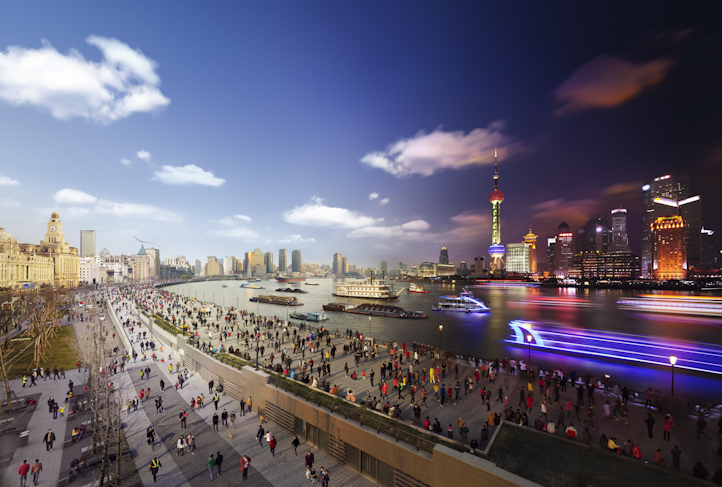
Shanghai

(Stephen Wilkes, Source, Shanghai, Bund)

Times Square

(Stephen Wilkes, Source, Times Square)

The November 25 Edition of TIME features a photo essay based on Stephen’s work. As the article puts it,

A lot can happen between sunrise and sunset especially when Stephen Wilkes is photographing it. 

The Novel

OK, so this is going to be difficult. For how do I write about a book that redefines the very experience of a book?

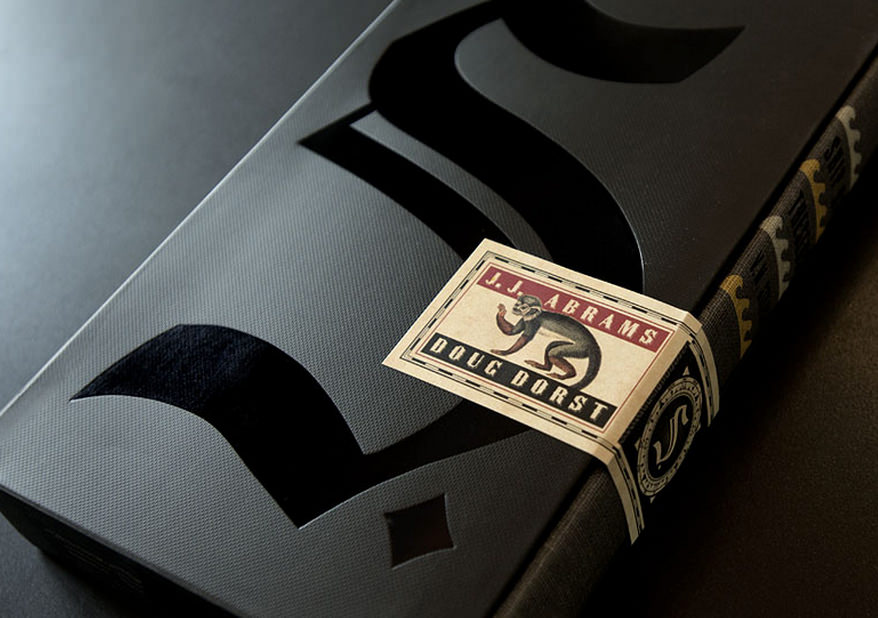
S. – a novel by JJ Abrams and Doug Dorst, released on Oct 29th 2013 is a first of its kind experiment in book design, layout, narratives and structure. It is a book that stands out because of its unprecedented ambition, creativity and inventiveness.

For the first time you might actually feel a need for a ‘guide’ on how to read a novel! There are three enmeshing story lines in S. :

  • First you have the story in this book by name “Ship Of Theseus”
  • Second you have the mystery about the fictional author of this book by name V.M. Straka
  • And third you have the dialogue between the two readers of this book by name Jennifer and Eric, who communicate to each other via hand written notes along the margins and inserts

Designed by the New York-based design firm Melcher Media, this is a book that can easily be an inspiration for a generation of designers, writers, novelists, publishers and marketers to come for years! Read this FastCompany article for more details.

As the article says..

It’s difficult to decide exactly how to start reading S.–a sort of 3D Infinite Jest with a pop sensibility–and nearly impossible to imagine how it ever got written.

See this video to get a feel of what is inside the book

Trying to explain this book is like trying to explain the plot of ‘Inception‘ and raving about the genius of its concept. The only way to appreciate the ingenuity of this art form is to get a book and start reading. I – for one – cannot wait to begin my magical adventure with S. and discover a whole new experience of consuming a novel!

The Restaurant

Earlier this month, DiverXo has become just the eighth Spanish restaurant to win an unbeatable third Michelin star. With an unassuming kitchen that measures just 30 square meters, it is the only establishment in the Spanish capital to hold the honour. But that’s not the big deal.

The big deal is how DiverXo – led by the Spanish chef David Munoz – turns every single convention on its head as a restaurant.

  • For starters, upon entering, every diner is given a one page manifesto on how to best enjoy the food in the restaurant. All they need is to surrender every preconceived notion and suspend judgement and just do as they are told
  • Once seated, DiverXo offers a choice between a ‘short menu’ (7 dishes,  €95, lasting 2.5 hrs) and a ‘long menu’ (11 dishes,  €140, lasting 4 hrs).  Both menus are exquisitely choreographed as unprecedented gastronomic experiences by the chefs
  • For e.g., as per TripAdvisor,when a dish arrives on the table prepare to be instructed to eat with even a spatula!
  • And as per this AFP article, no sooner do you dig into say – a raw cod fillet drizzled with boiling olive oil and accompanied by potato skins and pickled chilies, don’t be shocked if a cook bursts in to you and lays on hot mayonnaise
  • Later, as you chew more another chef could arrive with a cream of cod and sea urchin

And the shocks and surprises continue.
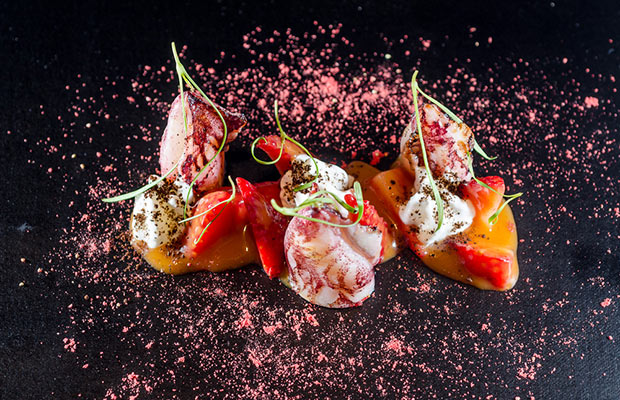
rp-diverxo-1

(DiverXo, Artful dishes that push the limits of fusion cuisine, Source)

Besides, as per this AFP article ..

  • Even the design of the food can tend to defy expectation. For e.g., a fiendish ketchup of chili and tabasco makes the dish of duck dumplings and fried ducks’ tongues resemble a blood-splattered murder scene
  • The menu lists not ingredients but rather sensations: sweet, sour and, in the case of one star dish, the “Hannibal Lecter”, sharp

As the article says..

The self-proclaimed “brutal” approach of this tiny eatery, where the cooks rush to add ingredients to diners’ plates mid-bite, has made it one of the most unusual restaurants ever to join the world’s gastronomic elite.

In summary DiverXo is a first of its kind restaurant where the rules are simple: Come with an open mind, trust the chefs, expect to be shocked and prepare to be surprised as you embark on a culinary adventure like never before.

May be food is almost besides the point here. Or may be it’s all about the magically shocking experience of what a restaurant has never been yet!   

All about experiences that redefine the product, category and consumer expectations

So the next time when we think of ‘elevating consumer experience’, it could be worthwhile to remind ourselves of these extra ordinary examples that go beyond this ‘elevating the experience’ mould. Three brave, ingenious and creative examples where the very experience of the product has been redefined, our expectations as consumers defied and all norms of the category disbanded.

So now you know. What lies beyond remarkable?

Magic –  after all –  could indeed be serious business!

The Best Touch Points To Market To SME Businesses In India

Imagine stepping into a market that has only 10% market penetration of the category that you specialize in.

Sounds like too good to be true?  Welcome to a new chapter in the Indian growth story. The  SME – Small and Medium Enterprises sector in India.

A few facts first.

In India, the size of the investment that a manufacturing or services company makes in its plants/machinery/equipment determines if it is to be classified as a Small, Medium or Micro Enterprise:

SME Classification INDIA(SME Classification: Indian Manufacturing and Service Enterprises, Source)

 Besides, today the SMEs in India are known to:

  • Contribute to 45% of the industrial output
  • Make up 40% of India’s exports
  • Employ 60 million people
  • Create 1.3 million jobs every year
  • Produce more than 8000 quality products for the Indian and international markets and
  • Have been growing at 8% per year (source)

In fact, by some accounts India has the largest number of SMEs in the world — at 48 million —second only to China!

But that’s not the most salivating part of the story. The magical statistic is the following:

As per a recent study conducted by Microsoft-Boston Consulting Group (BCG), nearly 90% of SMEs in India have no access to the Internet(!), compared with only 22% of SMEs in China and 5% in the US. A commensurate increase in technology adoption by SMEs can potentially add  $56 billion to the country’s economic output and create more than one million additional jobs, says the study.

This is a telling statistic on the growth potential for IT companies that market to SMEs, their wares related to Cloud computing (e.g., SAP, EMC), Productivity Solutions (e.g., Microsoft Office Suite, Xerox etc), Digital Marketing Solutions (eg, Google Adwords etc), Networking & Infrastructure Management Solutions (e.g., HP) etc.

No wonder then companies like Google have begun to make massive inroads to market to SMEs in India. Two recent examples:

  • As part of a massive campaign called ‘India Get Your Busisness Online‘ aimed at bringing down the barriers that prevents SMEs to get on the Internet, Google India & HostGator recently targeted popular traditional markets in Ahmedabad, Surat, Vadodara and Rajkot and built websites for over 5000 small businesses making them accessible to the world besides also creating Google maps listings and Google+ business pages for them. As part of this, Google India has recently announced its plan to get 50,000 SMEs in Gujarat online by end of 2014. (source)
  • Google India has partnered with Getit Infomedia to market Adwords to SMEs in South India. As part of this 50,000 SMEs in Coimbatore mainly in engineering, automotive components, textile machinery and pumps and motors would be targeted and educated on how to achieve global reach at lower cost with measurable results and personalisation. (source)

So while there doesn’t seem to be any dearth in the ambition and appetite of IT companies that target SMEs, the natural question that this begets is  – What is the best touch point to market to SMEs in India? What is the Zero Moment of Truth for these customers? 

My take on this  –  For IT vendors, banks are the best touch points to market to SMEs in India. The Zero Moment Of Truth in marketing (potentially any IT product/service) to SMEs is the time when they engage with their bank for their financing needs.

Why? My reasons as below:

  • Relationship: Given the role that banks play as lenders/financers/ advisers/ networking conduits for their SME customers, the latter tend to nurture their relationship with their banks for their long term interest. So the ‘lender – borrower’ equation in this context lends itself to exciting possibilities as a touch point for cross category marketing and info dissemination.
  • Reach: Banks have a very wide reach across the length and breadth of India.  For e.g., SBI – a government owned banking corporation has 14,816 branches in India, as on 31 March 2013, of which 9,851 (66%) were in Rural and Semi-urban areas (source). So they are naturally positioned as an incredibly powerful ‘distribution channel’ to market to SMEs.
  • A Customer Mindset that tends to be Future Oriented: The moment a SME operator steps into his bank to say, apply for a loan, his Zero Moment of Truth begins. After all, the sheer process of zeroing onto and applying for a loan are the most forward looking instances in terms of the customer mindset in setting up/sustaining his business. So can there be a better time to engage with him on possibilities and the cost benefit equations that are relevant to him from your product proposition stand point?
  • The Equation of Trust: From a psychological perspective, banks are traditionally about ‘trust’. So any message that gets seeded to a SME customer within the context of a banking relationship is bound to be enveloped with a liberal coating of feel good emotions like openness, good will and trust.   
  • Multiple Touch Points to Seed Content: A typical customer journey in a banking process is laden with multiple touch points from the multitude of application forms, the multiple approvals that need to be sought, the bulletin boards on the walls, the pamphlets that help the customers kill time as they wait for their turn, the tellers, the bank manager etc which can all seed compelling content on potentially any given new product/service that could be relevant for the SME.
  • A Win Win Relationship: Most banks tend to be big customers of IT services/products already. So they can be a willing accomplice to partner with an IT company to help market their wares to SMEs in return for say, a competitive pricing package for the coming year on their IT requirements. So a win win relationship can thus be effectively leveraged.
indusBank
(Image Source)
So there you have it, some food for thought. All along the purchase funnel right from building awareness, influencing consideration, driving sales to growing loyalty and retention, aren’t banks the strongest touch points to tap into when it comes to marketing to SMEs in India?

And for a category like ‘IT’ that is only 10% penetrated among the SMEs, what are we waiting for?

Twitter and Condoms

Two companies. Two successful IPO debuts in the same week. But two different stories.

Let’s start with Twitter.

Twitter shares surged 73% at market debut this week, and closed at $44.90, after hitting $50 at one point – or almost double its $26 offer price. Financial Times reports that at that level, Twitter was more valuable than market heavyweights such as Time Warner and Yahoo! In fact, by some reports, there is also a sentiment that by pricing its  shares at only $26, Twitter has ended up leaving an awful lot of money – nearly $1.3bn –  on the table!

[Amidst heaps of articles out there currently on Twitter, if there is one article that you need to read this week, this would be  it – Bloomberg Businessweek’s cover story on the ‘Surprising Sophistication of Twitter’.  

Twitter Businessweek

(Cover Page, Bloomberg Businessweek, November 11 – 17, 2013)

A small teaser from the article:

Millennia from now an intelligence coming across a single tweet could, like an archaeologist pondering a chunk of ancient skull, deduce an entire culture.

Deducing an entire culture from a single tweet? Do read the full post to appreciate the wealth of data that gets encapsulated in each tweet that we send out and its implications.]

For hints on how Twitter could possibly go about driving growth and revenue, one just need to look at these two statistics:

  • 77% of current Twitter users are from outside the United States. And given the potential swing of the demographics in many Asian economies in the coming years, Twitter’s target user base in these markets is expected to grow at a sustainable pace.
  • However while the advertising revenue that Twitter currently realises from every 1,000 interactions from the US is $2.58, this figure is only 36 cents for the other 77% of the interactions. (source)

These clearly underscore the tremendous growth potential that Twitter has in several Asian markets.  No wonder then Twitter has started to strengthen its focus in markets like India over the last 1 month.

Meanwhile on the other side of the world earlier this week…

Karex, a Malaysian company – the world’s largest maker of condoms –  has debuted on the Kuala Lumpur Stock Exchange with a 30% surge in share value on day one. The company, which supplies to prominent global brands like Durex besides also selling its own brand Carex, has nearly 10% global market share in condoms. (source)

Carex_Condoms_Firefly(Carex Condoms, Agency: Grey Group, Kula Lumpur, Source)

Today by Karex’s own estimates it cranks out almost 10 times more condoms than Trojan – the key condom brand in the U.S. Karex’s IPO was a tremendous success amidst analysts’ forecast that greater awareness of family planning in developing Asian countries will spur demand for condoms.

So while one company that went public this week has a story of exponential growth expected from the ‘powerhouse’ Asian markets, another company that went public during the same week from the other side of the world has a story that counts on the contrary – family planning and control in population growth in the Asian markets!

Couldn’t help noticing the contrasts.

Two companies. Two successful IPO debuts in the same week. But two slightly different stories.

(Featured Image, Source)