

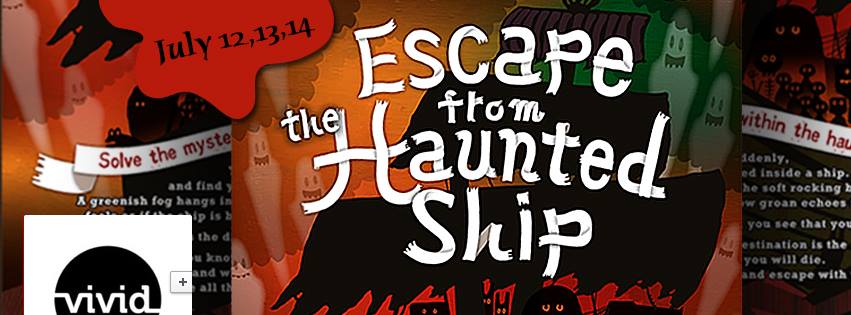
You awake suddenly, and find yourself trapped inside a ship. A greenish fog hangs in the air, and the soft rocking back and forth feels as if the ship is breathing. A low groan echoes in the hull – Looking across the dimly lit room, you see that you are alone. Somehow, you know the ship’s destination is the afterlife, and when it arrives you will die. Can you solve all the mysteries, and escape with your life?
So says the copy of an invitation for one of the most popular and the latest edition of the Real Escape Game (REG) held in Singapore in July 2013.

This is how it works: buy an entry ticket for around 25 bucks, bring along your brains, wits and teammates, get locked up in a room, and find your way out of that by solving numerous puzzles and riddles. The deal: well nothing! After all, everyone is let out of the room anyway.
But this is where it gets interesting. While there are several editions of REGs around the world and while they can possibly differ from each other in terms of nuances like game play, level of challenges, themes etc, most of them – if not all – have 2 things in common:
- Thousands of people pay over 25$ to spend a panicked, claustrophobic hour trying to win a game for which there is no prize!
- These sessions typically tend to be sold out!!
And this is just one among the many franchises/editions of a business idea that is steadily gaining steam with increasing levels of popularity around the world. While a Japanese company called SCRAP Entertainmen started the concept of the ‘Real Escape Game’ there are many other parallel off shoots around the world that operate along similar lines like the ones listed below: (list source)
- Parapark with more than 30 rooms in Budapest and many more in Hungary
- Hinthunt with rooms in Hungary and UK
- AdventureRooms – a Swiss company, with offerings in Bern
- FreeingHK in Hong Kong
- Escape Hunt that opened its first room in Bangkok in July 2013
- Real Escape Games (Scrap Entertainment) now have a franchise in San Francisco and have become a huge hit
- and HintQuest – a very recognized live escape game in Munich, Germany
On first look the concept of Real Escape Games (REGs or the likes of it) might sound similar to that of The Crystal Maze – the 90s Channnel 4 smash hit that was said to have attracted between 4 and 6 million viewers at its height (source). But on second look it becomes apparent that with the REGs of the world today we are at the cusp of a different ball game all together: from the product package, proposition, consumer base, distribution model, pricing, to the end consumer pay off – that spans emotional, mental, intellectual and social realms.
This can easily be one of the latest and arguably the most interesting examples of how the playing field is rife with rich possibilities at the top level of The Maslow’s Hierarchy Of Needs (Self Actualization). So now we have dedicated puzzle masters that spend months constructing a carefully orchestrated series of aha moments, little sub mysteries that let players come so close to solving the mystery and get commensurate highs of making discoveries – large and small, and professional game designers that are adept at staging REGs (or the likes of it) at venues as large as the Tokyo Dome to those as small as a locked room with space for just 10 players.
Introducing the newest offering at your local supermarket aisle – chunks of epiphany – sealed in an air tight pack (pun intended) – now available in a handy 1 hour time capsule best enjoyed with a bunch of friends.
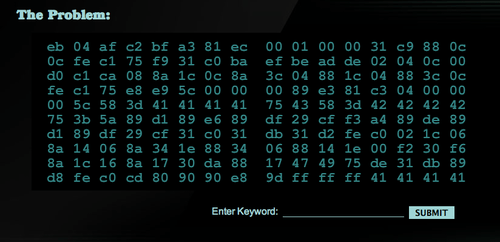
For a ‘virtual’ taste of such games, try your hand at The Google Puzzle (the result of a collaboration between Google Japan and Scrap Entertainment). And yes do drop me a note if you manage to crack the 5th stage in the puzzle 🙂
(H/T to Valentin Valov for suggesting HintQuest)


 Riffs on technology, marketing & culture