
Diffusion – Of Ideas, Infections and Innovations

Quick Read: Why do certain ideas spread faster than others?  Diffusion – a social process where people talk to people is still the way that ideas and inovations spread. Stories from diverse fields like health care and ethnic foods provide further evidence.  

Did you know the story of the humble Doctor’s coat?

Till a major part of the 19th century, a doctor’s coat used to be black in color. Why? Because a visit to a doctor had an air of ‘finality’ attached to it, almost like the solemn nature of a funeral. As per this historical account, until the late 19th century, seeking medical advice was usually a last resort and frequently a precursor to death. The reason? Poor hygiene standards in medical practice.

In fact, back in those days,  a doctor’s badge of a busy practice was their black coats stiffened with blood and remains of previous operations. Practices like washing hands, sterilising instruments were virtually unheard of in medical practice during those days.

Naturally infection became the curse of surgery – becoming the single biggest killer of patients who underwent even uncomplicated procedures. Infection was so prevalent that the discharge of pus from a surgical wound was thought to be a necessary part of healing!

Ever since then, many medical practitioners tried hard to conceive of and spread the idea of basic sanitation as an effective means to combat preventable life threatening infections. But failed.

For e.g, Ignaz Semmelweis published the earliest known studies that showed basic hand-washing to be effective at reducing mortality rates of surgery patients. His findings were known to have offended the doctors! Even Louis Pasteur’s Germ Theory or Joseph Lister‘s concept of antiseptic surgery techniques contributed little to the mainstream propogation of the idea of sanitation in health care.

grossclinic(“The Gross Clinic,” by Thomas Eakins, 1875. Source)

The break through in seeding this key idea came over the course of several years as follows.

It turned out that the key message to teach surgeons was not how to stop germs but how to think like a laboratory scientist. A few pioneering German surgeons siezed upon this idea – of the concept of surgeon as a scientist – and seeded this in their students’ minds, many of whom were young medical practitioners from US and other countries.  The result?

The students swapped their black coats for pristine laboratory whites and returned to their home countries as ambassadors not only for the use of antiseptic practice to kill germs but also to prevent germs.  Evangelising through their own students and colleagues, they finally spread the ideas worldwide.

So, the idea of basic sanitation and sterilization for health care and germ prevention spread not because of academic journals or publications, but because of social diffusion – where people (medical practitioners) talked to people (students).

Spreading a Miraclous Solution. One Person At a Time

In many parts of the world, Diarrhea remains the world’s biggest killer of children under the age of five. ORS (Oral rehydration solution) has been known to be a simple yet effective cure for the illness which required a miraculously easy formulation that can be made at almost every home around the world  (water + sugar + salt).

In 1980, a Bangladeshi nonprofit organization called BRAC embarked on a nationwide ORS adoption drive. How did they go about this? The organization didn’t launch a mass-media campaign. It attacked the problem in a way that is typically dismissed as impractical and inefficient: by going door to door, person by person, and just talking.  
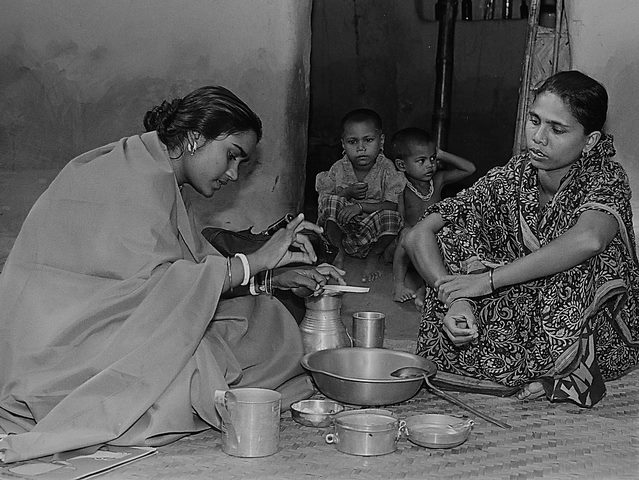
ORT(Door to door ORS Education by BRAC, 1979 . Source)

They hired, trained, and deployed thousands of workers region by region who went door to door through more than 75,000 villages and showed 12 million families how to save their children with this simple solution. Eventually, the knowledge became self-propagating and child deaths from diarrhea plummeted more than 80%  between 1980 and 2005. The program was stunningly successful. (source)

Shifting gears a bit and moving over to Ethnic Foods..

 The Greek Yogurt Revolution In The US

Till 2005, Greek Yogurt was a niche segment in the US with a market value of just about $60 million. But in just 5 years a new brand, Chobani has gone to become one of the most explosive food start-ups ever to hit the market netting more than $1 billion in annual sales and rejuvenated the entire Yogurt category in the US. How did that happen?

Ofcourse, Chobani, under the visionary founder Hamdi Ulukaya,  had a brilliant execution of its mix – from clutter breaking packaging, category defying in-store placement (he is known to have insisted that Chobani packs be merchandised in the main dairy area, not in the specialty section), competitive pricing and appealing flavours.
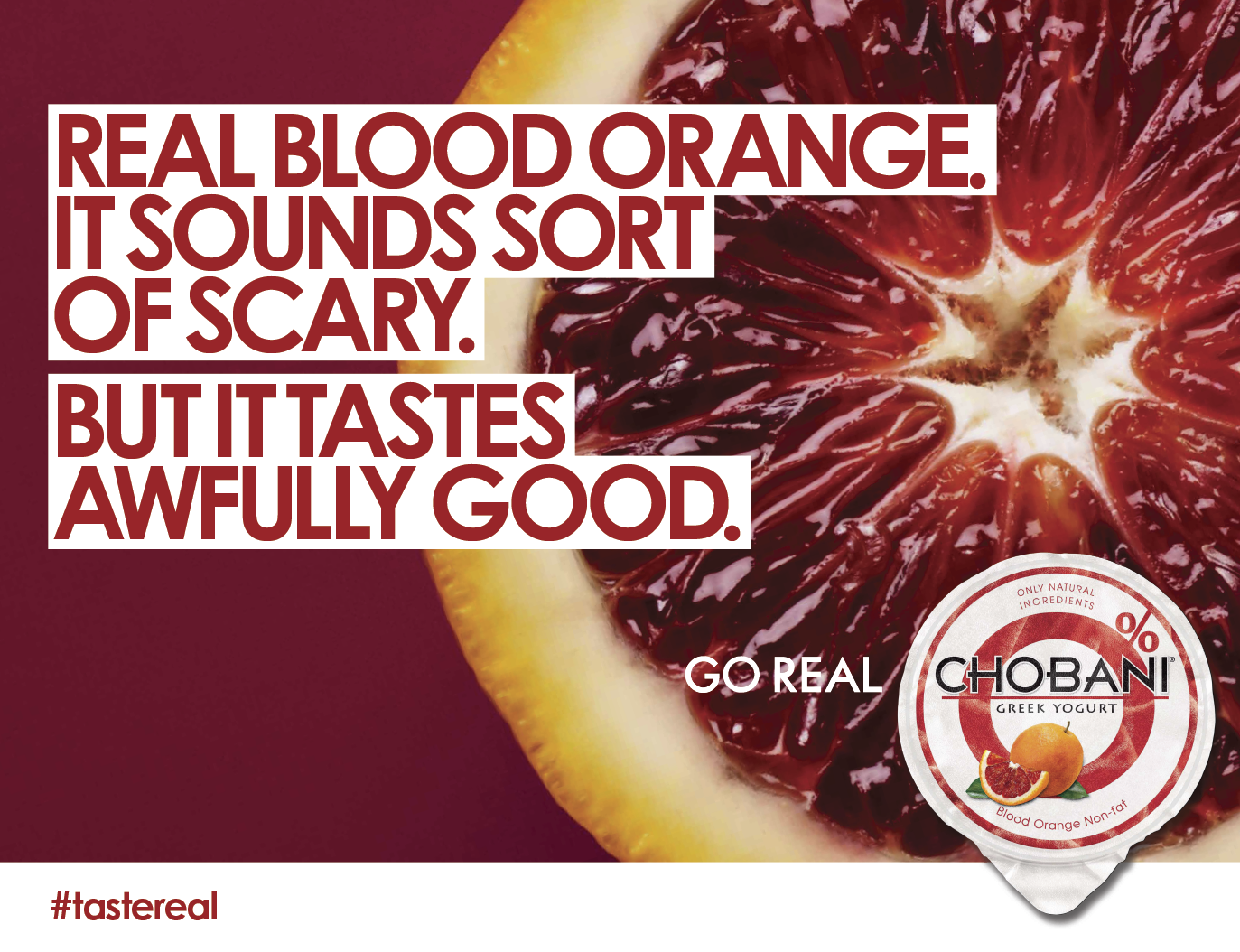
Chobani(Chobani Ad Campaign extolling its fruity goodness. Source)

But fortunately for Chobani – the timing was just right. Consumers were adopting healthier snack options into their busier lifestyles. So much so that when someone opened a pack of Greek Yogurt, it inadvertently became an instance of conspicuous consumptiona prominent scenario of social diffusion enveloped in a message of healthy tasty snack. 

So each time a pack of Greek Yogurt was opened, it created awareness and generated talkability around Greek Yogurt’s health benefits and unique taste. And this was even before its first mass media campaign. As Niel Sandfort, Director of Marketing at Chobani says..

“Before you even think about mass media or paid media, you have to have your ducks in a row on a number of fronts.”

So by the time, the company embarked on its first mass media campaign, the size of the population that was aware of or bought Chobani at least once, reached a “tipping point“, allowing the product to take hold widely. The result? An explosion in the growth of the Greek Yogurt segment. 

Today, the Greek Yogurt category – once a niche segment –  now accounts for 36 percent of the $6.5 billion in total U.S. yogurt sales (source) with Chobani being the number one seller in the category, with nearly 52% market share in the US!

Perks Of Being A Party Food

Guacamole – is an avocado based dip that originated with the Aztecs in Mexico. But in less than a generation, it went from an unknown Mexican delicacy to becoming part of everyday cuisine as a dip, condiment and salad ingredient. This growth of gacamole  was partly because it’s a party food. i.e., people discovered it when others shared it. 

So in essence, while we yearn for frictionless, technological solutions, people talking to people is still the way that ideas and innovations spread. In fact,Diffusion of innovations – a theory by Everett Rogers that seeks to explain how, why, and at what rate new ideas and technology spread throughcultures – says diffusion as a social process of people talking to people is central in spreading an idea or innovation among the members of a social system.

Meanwhile Sabra – a PepsiCo owned company that sells Middle Eastern food products in the US  – is fretting that 80 million Americans have never heard of hummus

(H/T: to Seth Godin for this riff on Guacamole, to Atul Gawande for this valuable article on idea diffusion in medical practices. Featured Image source 

Selfies And The Art Of Sky Diving

Quick Read: Selfies as a mode of expression via pictures, videos or 3D shapes is gaining main stream traction. GoPro is a fascinating company that took an unmet ‘selfie need’ and expanded it to encompass newer grounds with great success, while gaining a cult like status.   

It is believed that Robert Cornelius took the first ever selfie in the year 1839. 

Ever since then, over the span of  175 years, the humble selfie has evidently made spectacular inroads into our popular culture. Today we see world leaders, hollywood celebrities, protesters in police vans and even the Pope having all smiles for the selfie. No wonder then, today we have:

In fact – given our recent advancements in 3D printing – it is inevitable that we even have the 3D printed selfie today!

twinkind_window_5126(3D Selfies. Source, TWINKIND)

According to this paper, while selfies have been called different names like  a symptom of social media-driven narcissisma way to control others’ images of usa new way not only of representing ourselves to others, but of communicating with one another through images, or even as the masturbation of self-image, the one that stands out the most for me is the concept of selfie as a device to control others’ images of us. 

This primal urge to control others’ image of us seemed to have proven to be a gold mine for a company that is now on its way to a hotly anticipated IPO. Think Video Selfies. And think about all the exciting activities like surfing, skiing, snowboarding, auto racing, river rafting, sky diving etc. And you get the picture.

Hang on. Did we just say ‘Video Selfie’?

GoPro

2002. On a surfing trip to Australia, Nick Woodman wanted to take a selfie. Albeit with a twist. He wanted to capture quality action photos of his surfing. Having met with limited success, his desire for a camera that could capture him surfing in ‘professional angles’ started to take shape. And thus the name ‘GoPro’ was born for his company that would subsequently go on to sell small, waterproof, wearable cameras that you can use while doing exciting stuff.

GoPro-surfing-longboard-600x400(How to take kickass selfies with GoPro. Source)

Today GoPro makes what it calls ‘smaller, lighter, mightier still’ HD video cameras with a 170-degree angle view under their line up of HERO series to capture and produce high quality content along with an entire ecosystem of mounts, accessories, software and applications.

But what makes GoPro an extremely fascinating brand is the street cred that it earned for itself as an unconventional media company. Sample these..

The GoPro Ad: Instead of advertising, the company aggressively hands out GoPro cameras to extreme athletes asking them to simply shoot and bring back their footage. A small in house team then edits the footage, slaps a hip sound track, throws in the GoPro logo and boom – A stunning free GoPro Ad! (Interestingly – given the versatility of the GoPro camera – a lot of footage that they get from users is so astounding that people are known to insist it had to be fake.)

GoPro on YouTube: GoPro’s YouTube channel ranks among the top 100 with nearly 2 million subscribers and 455 million views of its 1600+ videos posted till date. In fact as per this article, the number of videos with “GoPro” in the title has grown so much—60 percent from 2012 to 2013—that watching 2013’s crop alone would take you 2.8 years. Reportedly GoPro is expected to make about $1.7 million per year from its YouTube channel alone.

The GoPro Channel: In CES 2014, GoPro announced plans to unleash its unique brand of action sport videos on Xbox Live for both the Xbox One and 360. In fact, Virgin America inflight entertainment system already lists this channel that features curated GoPro content where users will also be able to purchase GoPro products directly online.

Expanding cultural footprint of GoPro’s media content: GoPro has strategically carved an outsized cultural footprint for itself by being part of several high points in recent history. Take the recent opening ceremony of the Sochi Olympics, where many athletes were seen filming themselves with GoPros or Felix Baumgartner‘s record-breaking jump from 128,100 feet for the Red Bull Stratos mission. Chances are that you must have seen the footage filmed by one or more of the seven HD GoPro cameras used in the mission.

(GoPro Super Bowl Ad 2014 featuring the Red Bull Stratos mission)

GoPro, Apple and Red Bull: While some observers see GoPro as a company that clearly wants to create a kind of ecosystem, similar to that of Apple, with a devoted fan base addicted to its hardware and software and a thriving core of creators and consumers, there are also those that think, GoPro could make for a new sort of hybrid company, the way Red Bull is both a drink maker and powerful media brand.

Jason Stein, founder of Laundry Service, a digital media agency in New York even says:

“Red Bull has become this media entity, created around the lifestyle of people who drink Red Bull, GoPro is doing the same, but the reason I think they have more potential is that their product is an actual media device.”

Hence analysts expect that GoPro could create revolutionary possibilities in content creation and consumption in the days to come. This article even speaks about a future possibility where the company could sign agreements with sports leagues to place GoPros within the games. So when you tune into your NBA or NFL or IPL, imagine getting a live feed from whichever player you want!

Beyond Hardware

Evidently the GoPro story is no longer about a hardware maker that had captured two-thirds of U.S. sales and 45 percent of the global pie of the pocket digital camcorder segment (source).

It’s about software and experiences. It’s about enabling awesome creative expression and adrenaline packed content production – the non traditional way. It’s about brilliant marketing that is inspired by this unique culture. All borne out of one key human need – to be able to influence other’s image of us by showcasing those fleeting experiences and moments that (we think) could define us.

Like perhaps a selfie.

When Sub Cultures Influence Brands

Quick Read: There are several fascinating Sub Cultures and Urban Tribes around the world that could give us insights and compelling perspectives into consumer behaviour by way of their unique shared values and behaviours. In each such instance they exemplify how anthropology can influence advertising and vice versa. The Floggers in Argentina and The Sapeurs in Congo are two cases in point.

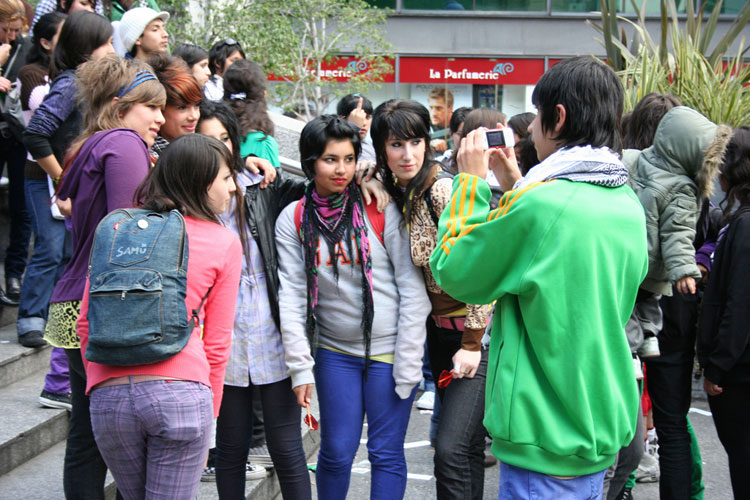
As a Youth sub culture, THE FLOGGERS originated in Argentina at the end of 2004 and have become popular through their unique fashion and went on to popularise the concept of picture sharing via photo blogs.

Essentially the floggers have two key characteristics:

  • They are dressed up in unique style: Floggers wear bright coloured unisex clothing – commonly tight trousers , V-neck T-shirts and canvas trainers and have dyed hair with long emo side fringes which cover their eyes and lip piercings. They have even developed a particular way of dancing to electro/techno music called Electro. 
  • They share their pics on Fotologs: Floggers take photos of themselves and friends and post them on photo blogs. Among FloggersFotolog.com is one such popular platform and lists more than 5.5 million users in Argentina, which is one of the two biggest markets for the site (Chile is the other). Here users comment on one another’s photos. The more comments, the more famous the flogger. (source)

floggers09(Flogging Frenzy, Source –  The Argentina Independent)

As a sub culture, if you come to think of it, the Floggers represent an interesting niche that are at the intersection of fashion, photography, social media, music and dance. Elite members of such a unique urban tribe naturally become trend setters in fashion and are the de facto voice of their generation cutting across class, creed and hierarchy.

Augustina Vivero a.ka. Cumbio is one such Flogger. She has a fotolog site that is said to be the most viewed Internet sites in Argentina logging 36 million visits in a single year alone! She is known to be the most popular and by many accounts the most influential flogger in the world and by age 17 has catapulted herself to stardom and unexpected affluence by transforming her Internet fame into marketing muscle –  signing modeling contracts, promoting dance clubs and writing a book about her life. (source)

Not surprisingly Nike enlisted her for a three month campaign including a giant sneaker-shaped slide that the floggers could slide down while posing for pictures.

cumbio(Agustina Vivero a.k.a Cumbio holding a NIKE poster featuring her, Source)

 Active members of sub cultures like the Floggers being ‘extreme users’, make for a rich minefield of emerging trends, attitudes, values and vibes of a whole generational cohort for the marketers. Thus they make for an interesting case study on how Anthropology influences Advertising (and arguably vice versa).

The Gentlemen of Bacongo

Take the Sapeurs – one of the world’s most exclusive fashion clubs in a city that you least expect – Congo.

SAPE – which loosely translates to The Society of The Elegant Persons of Congo – are a group of people whose life is not defined by occupation or wealth, but by respect, a moral code and an inspirational display of flair and creativity by way of their stylish dressing.

SAPE(Of Style and Swagger – The Sapeur. Picture by Daniele Tamagni. Also a cover page of his book)

In the words of Hector Mediavilla – who photographed the Sapeurs in his outstanding project, the SAPE can be considered to be the most interesting anthropological phenomenon for several reasonsDespite being surrounded by poverty and civil war the Sapeurs:

  • Dream on and survive the harsh reality.
  • Bring joy to those around them by way of their clothing and
  • Are required at funerals, parties and other celebrations to bring a touch of stylishness to these events.

Essentially, while everybody knows their elegance is just a façade but nevertheless, they perform an important social function for their fellow citizens. And in journalist Tom Downey’s words “when men dress as Sapeurs they become different people. Their gait, their gestures, and their manner of speaking are all transformed. The clothes are the gateway into a whole other way of being in the world.”

No wonder, the Sapeurs have inspired some fascinating photography projectsbooks and even music videos. More recently Guinness has brilliantly weaved the sartorial sub culture of the Sapeurs into their latest campaign, as part of which they enlisted Hector Mediavilla to shoot an inspiring documentary and a TVC.

Don’t miss this 5 mins documentary and the TV Spot.

Sapeurs Documentary

Guinness Sapeurs TV Ad, Agency AMV, BBDO London

For me, the connect between Guinness as a brand and Sapeurs as a spirit is a creative masterstroke truly befitting the flair and the flamboyance of ‘The SAPE Spirit’.

Do you know of any other marketing initiative that has sought to tap into a sub culture or an urban tribe

(Featured Image:  Sapeurs of Congo, Hector Mediavilla, Source.)

Commodities and Fakes. Branded

Can fakes be branded? 

Can fakes be differentiated and charged a premium for? Two recent examples show they bloody well can be!

1. Fakes with an accompanying personal escort flying first class  

A 24 hour escort is the norm for valuable paintings when they are transferred between museums. But a set of forged paintings have been recently extended security arrangements that rival that of the originals. Why?

Because these are not just any other fakes. They are imitation paintings by the world’s most notorious forger Han van Meegren the world war II era painter and master forger – who so well replicated the styles and colours of the legendary artists that the best art critics and experts of the time regarded his paintings as genuine and sometimes exquisite. His wikipedia page says that he is considered to be one of the most ingenious art forgers of the 20th century, so much so that his paintings including his signature have been subsequently forged as well!

Van_Meegeren_signatures(Source, Wikipedia. A collection of genuine and fake signatures of Han van Meegeren)

Today his forged paintings are a brand on to themselves and are treated as prestigious artworks that require the same measures of security as the authentic ones.

2. 3D printers being used to fake Vincent van Gogh 

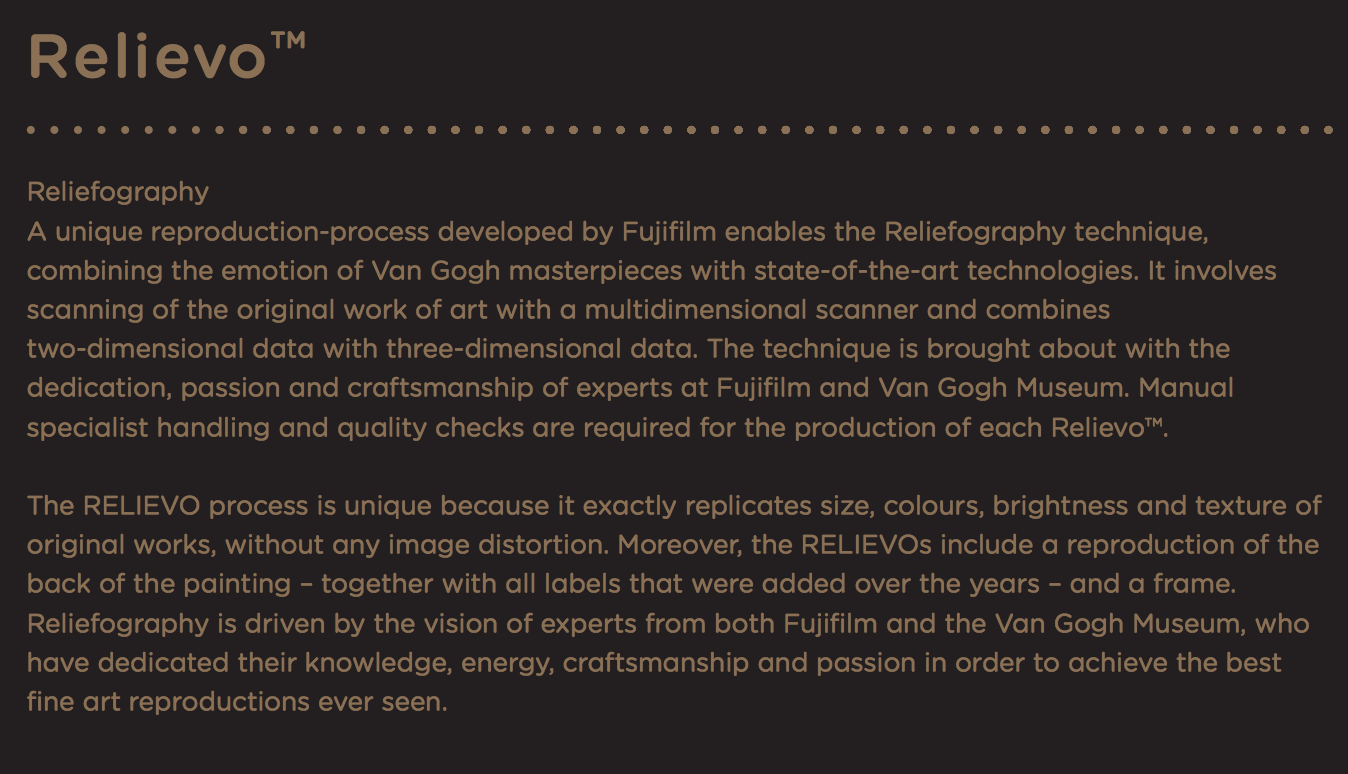
Now this time, the story to brand the fakes of none other than the works of Vincent van Gogh comes with  its own coined term and a trade mark! Introducing Relievo™

Relievo

(Source: PDF on the Relievo Collection by the van Gogh Museum)

Interestingly this initiative to develop and sell the fakes of the legendary artist is being led by none other than the official van Gogh museum.  Accordingly to this post, the museum is hoping to increase access to pictures which, if they were sold, would go for tens of millions of pounds to Russian oligarchs or American billionaires.

The replicas, called Relievos, are being created by the museum in partnership with Fujifilm, with which it has had an exclusive deal for three years. Such is the complexity of the technology, known as Reliefography, that it has taken more than seven years to develop. It combines a 3D scan of the painting with a high-resolution print. The “super-accurate” reproduction even extends to the frame and the back of the painting. Every Relievo is numbered and approved by a museum curator. And best of all – there is a limited edition of 260 copies per painting.

A limited edition of fakes with each copy uniquely numbered and approved by the curator!! 

Clearly, some fakes are more equal than others!

Commodity Branding 

On a related note, even among commodity products, some brands can be more equal than others. And when they are, as always they make for an interesting marketing case study.

Double A – the paper brand for office supplies and photocopiers has an understandable challenge. Drive user preference in an extremely commoditised category.

So how did they do it? The recent ad campaign by Double A is a case in point. Read the full story here and see all the 4 featured ads in the post by L.Bhat. My favourite 25s spot below. (For email subscribers the URL to the video here)

(Turn on closed captions for subtitles)

So, a paper is a paper? Or is it? 

[Featured Image: Wheatfield Under Clouded Sky by Vincent van Gogh. One of the paintings to be reproduced using the 3D printing technique Relievo™]

Know Thy Neighbor Nextdoor

Share it, Tweet It, Pin It, Like It, Stumble Upon It, Digg It and the list goes on..

Every conceivable kind of content that we consume on the internet today comes with explicit social networking markers.

Today with over 1000 Social Networking sites known to exist globally and 16 virtual communities with more than 100 million active users to date, Social Networks/ Virtual Communities have truly changed us and as also our definition of SELF(!). For most of the activities that we partake in our daily life like work, sports, hobbies, shopping, travel, dine, drive, and the list goes on, there is a virtual community / social network for each if it.

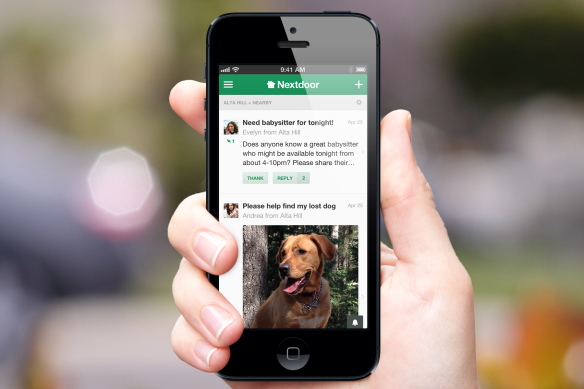
Now a social network built exclusively for local neighborhoods – called NextDoor is in the news for stepping into the elite territory of start ups.  On NextDoor.Com, each neighborhood is a closed social network where users have to verify their real name and address to gain membership. Once we are in, the idea is to be able to connect with our neighbors, strike conversations, while finding out everything from local deals, finding nearby help or even be alerted of neighborhood crime.

nextdoor_iphone_blog

(Image Source)

Developed on the insight that The Neighborhood has always been one of the “original social networks”, it has recently raised $60m fundraising led by John Doerr, the Kleiner Perkins Caufield Byers partner who led the IPOs of the likes of Amazon and Netscape and Tiger Global Management – prominent VC firms. (source)

This latest round of fund raising values the company at nearly $ 500 m as NextDoor.Com is slated to expand to more than the currently listed US neighborhoods on its site. Nirav Tolia, co-founder and CEO of Nextdoor, says there was already “incredible demand” abroad and goes on to say..

 “We see this whole notion of building safer and stronger communities is not an American thing at all, it is something all people share”.  

What I really like about the idea of a Neighborhood focused Social Network is the degree of relevance that can finally be attributed to the potential ads that can be placed in the network and the ways in which it can benefit all the players in the equation:

  • The Advertiser: Businesses in the locality can micro target the ‘captive’ user base in the neighborhood via their ads while also nurturing a local community of customers on an ongoing basis. The biggest opportunity here is for the SMBs.
  • The User: A user can find the most relevant offers from around her apartment rather than get bombarded by offers from across the country if not the world!
  • The Publisher: The publisher can facilitate the precious need of SMBs in the locality to micro target and reach out to their customer base in a very cost effective way, while also being able to track and optimize listings on a real time basis.

It’s almost like combining the best parts of Yelp, Craigslist, Foursquare, Path and Facebook with a liberal dash of a local flavor.  Like any other virtual community while it does come with its own privacy related nuances that need to be managed if it were to thrive across localities for the long term, one thing is nearly certain ..

We can finally get to know our neighbor. Albeit at least through the window of our screen.

PS: Two interesting things that you might want to check out:

  1.  To celebrate the ‘most neighborly holiday of the year’, Nextdoor launched just in time for this Halloween, a Treat Map to give you an insider’s guide to the best streets for treats in our neighborhood (relevant mostly to the US as of now)
  2. Funnily, Nextdoor has a page on Facebook 🙂

Soundscapes And Sonic Tapestries: Part 2/2

What do Cyborg Artists, Automobile Engineers, Game Designers and Branding Specialists have in common?

At least those featured in this blog post, that is. Surprise, surprise… all these have sound at the core of what they do!

See the part 1 of this thread here. In part 2, let me share some fascinating examples whereby sound and our ability to decode sound waves is complementing and supplementing our perceptual experience in truly astounding ways!

Sound As A Complement To Our Perceptual Experience

Sound (and its design) can be deployed in a very strategic manner to compliment our perceptual experience. Two compelling examples:

(1) Soundscaping In Product design: We know that there are armies of designers and engineers that work towards designing and developing  a car – it’s mechanics, electronics, aesthetics, thermodynamics, fluid dynamics etc. But did  you know that car companies  also employ sound experts to design the noise of a car? Read here a fascinating account of how GM makes a car sound like what a car is supposed to sound like. On that note meet Kara Gordon  – GM Noise & Vibration Performance Development Engineer who has designed the quietest Chevy.

(2) Sonic Logos In Branding/AdvertisingSonic Branding is big today. Think about the sound of ‘Intel Inside’, a call on Skype, the default ring/message tones on your phones and you’d get the idea. In fact Audi’s heart beat logo is said to be one of the most recognized sonic logos in the world today.  By the way did you know that after 14 years of using this sonic logo, BMW in March 2013, has changed it to this? This change didn’t get many fans by the way.

Sound As A Supplement To Our Perceptual Experience

Sound (and our ability to decode sound) can potentially also supplement our perceptual experience in new and interesting ways. Two examples again:

(1) Audio Games: What would happen if someone wanted to take the “video” out of video games and make users rely solely on their other senses?

At first the idea of Audio only games might sound like just another lateral marketing -isque variant (of video game formats).  But when you read about Deep Sea,  or about  Vanished you’d see that we are at the cusp of another revolution in game design and experience. These games are some of the best (if not the first) of its kind that explore the frontiers of what sound  (and our ability to decode sound) are truly capable of.

For e.g., Vanished – an iOS game as of Oct 2013 –  uses the iPhone’s internal compass and accelerometer to recreate a person’s movement. Players hold their phone in the direction they want to travel and touch the screen to walk. When in danger, they shake the phone to attack. All exploration is done with the help of audio only cues; as players move, the world “rotates” and provides different sounds.

Vanished

(iPhone Screenshot of Vanished – The Audio Game, Source)

(2) Hearing Colors: They say that you can see sound, but can you hear a color? Apparently Neil Harbisson can!  His profile on TED says this.

Artist Neil Harbisson was born completely color blind, but these days a device attached to his head turns color into audible frequencies. Instead of seeing a world in grayscale, Harbisson can hear a symphony of color — and yes, even listen to faces and paintings.

So there we have – some truly  fascinating examples from the recent past on how sound (and our ability to make sense of sound waves) is being leveraged in some truly exciting ways.

The next time you remind yourself to pause for a moment to appreciate the scenery and to ‘smell the flowers’, don’t forget that you could also take in the richness of the surrounding soundscapes in all their aural splendor.

All you need to do is incredibly simple. Listen.

(Featured image source)

Taking Over The World One Mobile At A Time

These days it is not uncommon for food to get onto Facebook / Instagram or Pinterests of the world before it gets into the mouth. 

Armed with this insight, Spoon – one of the largest restaurant chains in Costa Rica created the following campaign.

Developed by GarnierBBDO, the beauty of this campaign is that it smartly builds upon an existing habit of people.  And why Facebook? Apparently, Costa Rica has one of the highest ratios of Facebook to internet users of 95% (source).

Damn smart! I’d say.

Such campaigns can be a great inspiration for restaurants and bars seeking to drive awareness and generate talkability with minimum investment and presumably a high ROI. In fact, fast food industry today is known to be one of the most represented on Instagram with a near 100% adoption rate!

Instagram Adoption by Brands per Industry

adoption-of-instagram-by-brands-per-industryFrom left to right: cars, fast food, soft drinks, apparel, telcos, retail, personal care, beer, luxury, financial institutes, insurance, technology, oil & gas

(Instagram adoption, MillwardBrown 2012 BrandZ index, Source)

And yes, Food happens to be the  #1 category of content on Pinterest too with 57% of Pinterest users known to have interacted with food-related content during 2012. (source)

Now, let’s take one step back in the process and look at another emergent habit

Even before we tag the food in our plates on our Social Media pages, what do we do? We place our order with the waiter/bartender. However this poor waiter today vies for our attention with – surprise, surprise –  our mobile phones.  Thanks to our emergent habit of ‘checking in’ also called ‘location tagging’.

In fact, during the two year period ended in September 2012, Facebook has seen 17 billion location tagged posts including check ins (source). And to put that number into perspective, using May 2013 statistics, this would equal every single user of Facebook in the world checking in/ location tagging at least 8 times in an year over 2011 and 2012!

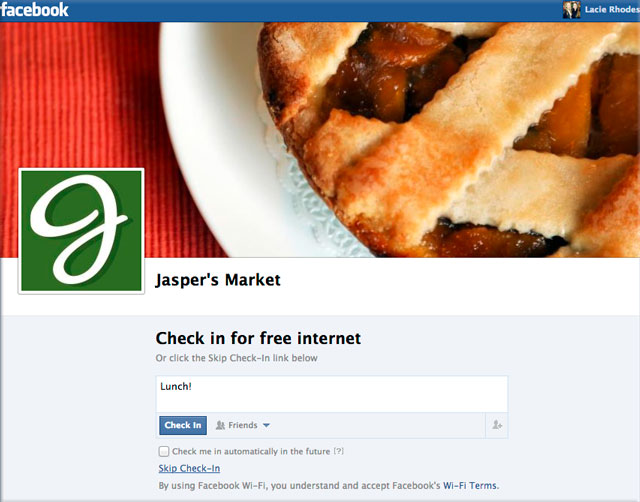
Understandably Facebook wants to make this key statistic- that of every user around the world checking in on Facebook – a reality. So after a pilot that was successfully run for over an year at over 1,000 SMEs in the US, Facebook – on October 2nd 2013 – has formalized an arrangement with CISCO. Named as ‘Facebook Wi-Fi‘ program, it converts retailers’ routers in the US into public Wi-Fi hotspots accessible to customers of the merchant establishment for free on one apparent condition. The deal? Go to the retailer’s/restaurant’s Facebook page and check in, and you have the Internet for free!

In other words, the three-step Facebook Wi-Fi system, which can be deployed by merchants running a Cisco router setup, lets people connect to a venue’s Wi-Fi, launch their browser, and click on the blue check-in button to gain unfettered access to the Internet.

Facebook WIFI

The deal for the merchant establishment?

  • Obviously each customer check in generates visibility leading to additional exposure that could pull in more customers or inspire more ‘likes’
  • While Facebook shares with the merchant an aggregate of anonymous demographic data such as age, gender, and interests on customers who sign-in to Facebook Wi-Fi, which they can potentially use for more effective targeting of their upcoming Facebook advertising campaigns

For Facebook, the Wi-Fi-with-check-in initiative is part of a broader plan to attack the local market by encouraging merchants to set up and maintain Pages on the social network and more importantly to seed – in the general public – the habit of ‘checking in’ on Facebook and thereby become the default gateway for the Internet.

Meanwhile on the other side of the world…

Chances are that you would have heard of Facebook Zero. If not, you should read this post right away. Essentially in 2010 Facebook collaborated with several mobile operators around the world and worked out an arrangement whereby the end users of these mobile networks can access  0.facebook.com – a faster and a free version of Facebook for your mobile, no matter which phone it is –  without any data charges.  People will only pay for data charges when they view photos or when they leave 0.facebook.com to browse other mobile sites. So, when they click to view a photo or browse another mobile site a notification page appears to confirm that they will be charged if they want to leave 0.facebook.com.

When this was launched in 2010, Facebook signed up 50 mobile carriers in 45 countries. The following image shows how Facebook made itself accessible on every class of phone through this initiative:

ubiquitous_mobile_facebook

How Facebook made itself accessible on every class of phone (Image source)

A smart way to drive usage of Facebook in emerging markets where the average monthly spend on mobile connectivity, which is often just voice and text, is 8-12% of the average take-home pay of a cell phone user. (source) In fact in just 10 months after its launch, Facebook Zero has become so popular in Africa that the site was said to have driven the adoption of broadband internet, just so users can have faster access to all those pictures and status updates!

Read this brilliant post on Quartz on how Facebook is conquering the world one mobile at a time.

Today, with more mobiles on earth than are people, and with smartphone penetration exponentially increasing in the emerging markets, the story has but just begun – after all there are 250 million Facebook users in Asia , more than on any other continent, and yet that’s just 6.5% of the population. In Africa, its penetration is less than 5%

And then Google launches Free Zone.

And the battle for world domination continues one mobile at a time.

Marketing Lessons From Emerging Markets

Successful marketing examples from emerging markets teach us many a lesson in getting the basics right.

Let’s take Indonesia for example. While Coke is the beverages leader globally, it is NOT so in Indonesia!

Teh Botol Sosro – The Indonesian Beverages Leader

After 80 years in Indonesia, Coke sells around 80 million cases per annum. Interestingly a local player by name Teh Botol Sosro (TBS) sells 2x that volume. Fascinatingly, TBS is not even a cola, it is a Ready To Drink Tea format and has become Indonesia’s favorite beverage in less than a decade! (source).

sosro

The reason? As per this insightful post on Occasion Based Marketing, it is two fold:

(1) TBS’s positioning is grounded in 3 local truths

  • Indonesians eat several times each day (3 square meals and 3 to 4 more snacking occasions)
  • Indonesia has a strong tea culture
  • When Indonesians eat or munch, they feel the need to drink something as well

Given these, TBS positioned itself with the simple and straight forward tagline

“Whatever the meal, Teh botol Sosro is the drink”  –  (“Apapun makanannya minumnya Teh botol Sosro”).

(2) Discipline in executing marketing strategy

Not only did TBS get the basics right w.r.t the beverages segment, it also ensured robust execution through:

  • Consistency of the brand messaging across all touch points
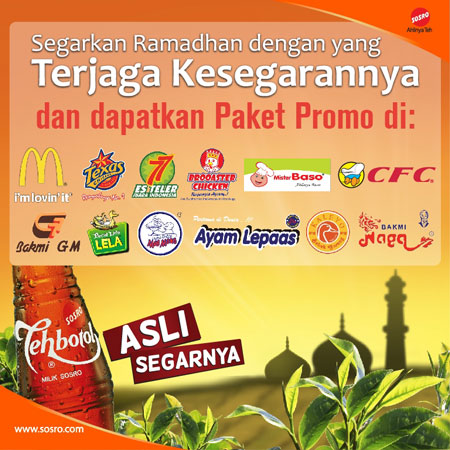
  • Ensuring Physical Availability i.e. solid distribution across retail and popular fast food chains like McDonalds and KFC
  • Building Mental Availability i.e, driving top of mind awareness and salience by leveraging on all media channels: ATL & BTL

TBS-Iklan-Ramadhan-01

(A Ramadan promo material for TBS,  shows the extent of its ‘Physical Availability’ – Image source)

McKinsey & Co Report On Building Brands In Emerging Markets

In many ways, each of the above principles strongly resonate with the findings of a recent McKinsey report titled “Building Brands In Emerging Markets”. Read the full article here for an elaborate report based on research conducted in nine product categories (including food and beverages, consumer electronics, and home and personal-care products) across various developed and emerging markets.

Essentially the report highlights 3 key differences between emerging and developed markets and its implications as:

  • Harnessing the power of word of mouth is invaluable, as it seems to play a disproportionate role in the decision journeys of emerging-market consumers.
  • Getting brands into a consumer’s initial consideration set is even more important in emerging markets, because that phase of the journey appears to have an out sized impact on purchase decisions.  
  • Finally, companies need to place special emphasis on what happens when products reach the shelves of retailers, because the in-store phase of the consumer decision journey tends to be longer and more important in emerging markets than in developed ones.

McKinsey Report On Emerging Markets(Exhibit Source, McKinsey Report On Emerging Markets)

While the above example and theory are inspiring and instructive in many ways, these miss out a commentary on an important characteristic of an emerging market.

How about speaking about building CATEGORY RELEVANCE first?

Emerging markets are essentially those where the categories / segments in question are under developed.  i.e., the target consumers in these markets don’t find the category/segment relevant to them – at least as yet. So if a segment itself is not seen as relevant in the market place, how crucial are word of mouth / perfect in-store experiences / or consistency in communications for a brand?

As a corollary, brands that start off by ‘setting up the dialogue on a category relevance’ can be said to be leveraging the opportunity to drive awareness of the category/segment and thereby establishing a strong salience of its branded offering in the market. If this key – setting up the context – activity is handled right by a brand, it can naturally have a solid advantage in the market place in the emerging category.  Let’s take 2 examples, one from a marketing strategy stand point and the other from a creative execution stand point.

1. Wines in India – Marketing Strategy In An Emerging Market

Wines in India is still an emerging market.  In 2012, wine (including imported varieties and sherry) only made up 0.45% of sales of 9 liter cases of alcohol in the country! (source). In other words (for various reasons) wines as an offering in India are still not seen as ‘relevant’ in the consideration set of alcoholic beverages category by most target consumers. So how do you build relevance for wines?

Sula Wines – a pioneer at the forefront of the Indian wine revolution shows by example. It embarked on a set of relevance building initiatives for the segment by going all out to promote wines domestically.For example, it holds about 1,600 wine tasting sessions a year to educate people on the finer points of enjoying a glass of wine, off late it has also been actively developing ‘wine tourism in India’ with vineyard tours and a music festivals held at its winery.

As a result the company produced 550,000 cases of wine last year and expects the number to rise by 25% in 2013. (source)

Sula Kebab Fest

(Image Source, Kebab Fest @ Sula Wines)

2. 4×4 Drives in Venezuela – Creative Executions In Emerging Markets

Venezuela has 147 motor vehicles per 1000 inhabitants. Compare this with 797 motor vehicles per 1000 that USA has (source). Motor vehicle here is defined as  automobiles, SUVs, vans, buses, commercial vehicles and freight motor road vehicles.

So how does Jeep communicate in each of these two markets?

You guessed it right! In a market like Venezuela,  Jeep focuses on setting the category context first – i.e. it’s communications are tuned towards building relevance of GETTING OUT as an activity ; and not so much on its technical specifications or competitive claims. See the following print ads by Leo Burnett developed for Venezuela. I love how Jeep manages to drive relevance of its segment without losing its tongue in cheek tone.

Jeep_Climber_ibelieveinadv   (Source, See the other ads in this series here, agency Leo Burnett)

On a related note, see how Jeep communicates in Bolivia here.  Similar theme here too –  More focus on setting up the category relevance than on proclaiming its uniqueness / superiority vs competition.

Now, as a contrast, how does Jeep communicate in the US?

It still speaks in its tongue in cheek tone, it still speaks about getting out or making the world your playground. But here, it also focuses on what makes Jeep the best in its segment by rattling off the pertinent technical specs or superiority credentials. See the following print ad from the US.

wrangler_garage(Source, Click on the ad for the enlarged version, agency BBDO)

The copy says: “Dana 44 solid axles, heavu duty Rock-Trac 4WD system, Tru-Lok fornt and rear differentails, front and rear mounted tow hooks, CD player, and seven speakers.”

On a related note, see Jeep’s print ad for Germany (another developed market) here and here.  Similar theme here too as that in the US – The focus here is on reinforcing its uniqueness and/or technical superiority vs competition and not so much on setting up the context / category relevance.

In Summary..

Whether it’s about a marketing strategy or even a creative execution,  whenever we see a success/failure of a brand in the context of an emerging market, probably the first questions to be asked could as well be:

  • Who was the first to drive the category/segment relevance in the market place? (who initiated the dialogue)
  • And How?  (is the dialogue grounded in local consumer truths?)

Once you have these answers, often times, you might not need to see the market shares for validation.

Don’t you think so?

(Featured Image –  BRIC Countries, Source)

The Goldfish Conundrum

The fact that Google has introduced ‘skippable pre-roll’ ads on YouTube is nothing new.  In fact nearly an year ago, it has also started to enable the same for mobile users.

skippable-youtube-ad-mobile

Three obvious things that stand out for me from these ‘skippable, pre-roll ads’ are:

(1) Permission Marketing: By placing these ads right at the beginning of the actual video and enabling the viewer full freedom to skip if necessary, YouTube has acknowledged the importance of gaining viewer permission (a.k.a a commitment of her attention span) before bombarding her with any message. This disincentives attention abuse by advertisers.  [Seth Godin must have said – I Told You So” 😉 ]

(2) Soft Wired: Understandably these ‘pre-roll ads’ are not ‘hard wired’ to the video ; meaning, YouTube can dynamically mix and match an ad to a video based on algorithms / user preferences / browsing history / relevance and advertiser criteria, with an objective to maximise advertiser revenues.  This disincentives lack of relevance of the spots to the viewer/ viewer context.

(3) The 5s litmus test: This is the most interesting implication for me. Irrespective of the length of the pre-roll ads (which typically are 15s or 30s), any ad is given a golden period of 5s within which it can either capture the attention of the viewer or fail at it (for various reasons) resulting in the ad getting skipped. This disincentives lack of the grip factor in the ad – by way of production values/ story / narrative etc. 

Not surprisingly, as a result, we now see many of these ads desperately trying to shock / awe / seduce  or lure us into seeing the full spot during the first few seconds of the roll. The fascinating thing for me however is this 5s mark that YouTube has set for itself and advertisers.  But why 5s?

Well,  as it turns out, we human beings are currently rated as a species with one of the lowest levels of attention spans. For eg., see the following table that compares the worsening of our attention spans and contrasts it with that of the Goldfish’s! (source of data)

The average attention span in 2012 8 seconds
The average attention span in 2000 12 seconds
The average attention span of a gold fish 9 seconds

Call it ADD (Attention Deficit Disorder) or Information Overload or Infobesity, it’s almost an intuitive thinking now that our attention spans are plummeting. As a result, today:

  • Movie trailers are getting insanely faster.
  • We now have movie tweasers: (A tweaser is a six-second teaser for a 20-second teaser for a two-minute teaser for a 2:32-length theatrical trailer for a feature-length movie. source)
  • Vine from twitter is capped at 6s (tweasers are hosted on vine)
  • And then we have delightful ‘marketoons’ like the one below:

130902.shortattention

(source and inspiration for this blog: Tom Fishburne)

Obviously, this only reinforces the fact that we are living in an Attention Economy – where attention has become a scarce commodity.

On a related note, you should read this amazing post titled – The Scarcest Resource You Don’t Even Know You Are Spendinghere. And do check out this though provoking video.

From the above two observations viz.,

  • We tend to be ruthless in our attention spans when it comes to consumption of entertainment /information.
  • We are given only a limited number of ‘attention bits’ to spend in our life time. …

…the insight for me here is that.,,

whilst proving ourselves to be (penny) wise in terms of how we exercise our ‘attention spans’ for certain tasks like say – media consumption, we sometimes tend to be (pound) foolish when it comes to expending this very resource for things that have far reaching implications in our lives like learning, decision making, productivity, interpersonal interaction etc.

Something for us to ponder and reflect upon?

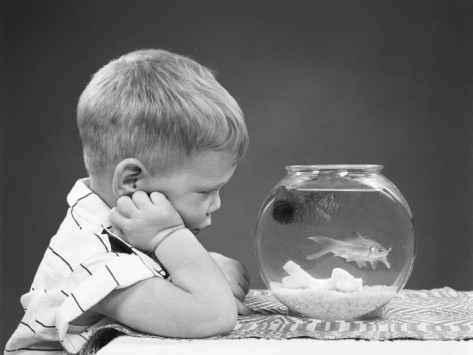
h-armstrong-roberts-boy-leaning-head-on-hand-staring-at-lone-goldfish-in-fishbowl

(Image Source)  

Icons – The Visual Metaphors Of Our Culture

Ever wondered what could be the primary cause of our childhood fascination with cartoons? I did. Tons of times in fact. With little success very often.  Thankfully for me Scott McCloud in Understanding Comics gives a clear and a straightforward explanation for that.

Understanding Comics Pg 36

(Scott McCloud, Understanding Comics, Pg 36)

Essentially, he posits,  the mental picture that we we have of ourselves is simple and basic . Therefore, we are able to project ourselves into the ‘simple character’ but not the ‘complex one’.

The obvious lesson here that is applicable to advertising could be – if you want your audience to feel like they are the main character, make sure the character isn’t overly elaborate and detailed.

The classic iPod ads of 2001  have smartly taken this theory a step further by featuring just a set of male and female silhouettes.

iPod

(Image Source)
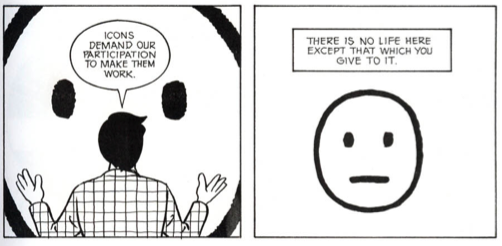
This abstraction of pictures from reality to icons is thus a powerful mode of expression that comics (and comic artists) have deliberately and meaningfully perfected over the years.  For, after all, (visually) quoting Scott..

Understanding Comics Pg 59

(Scott McCloud, Understanding Comics, Pg 59)

“There is no life in an icon except that which you give to it.”

While this insight forms the cornerstone of what constitutes the vocabulary of comics, it lends a very powerful commentary  that is relevant for our practical lives too. Let me explain.

Just like we are said to be exposed to thousands of marketing/ brand impressions per day, I’d wager that we are also exposed to as many (if not more) iconic impressions each day. While a brand’s logo – by definition – could also be called as an ‘icon’, my focus here is more on icons that constitute the typical signage/symbols that we are used to seeing all around us each day – e.g.,  traffic signage, safety signage, industrial signage, traveler signage etc.

dot_pictograms_full

(DOT Pictograms)

Since these signage icons have been around for years, most of us grow up intuitively accepting them as part of our unspoken language. Thereby they practically end up becoming the visual metaphors of our culture.

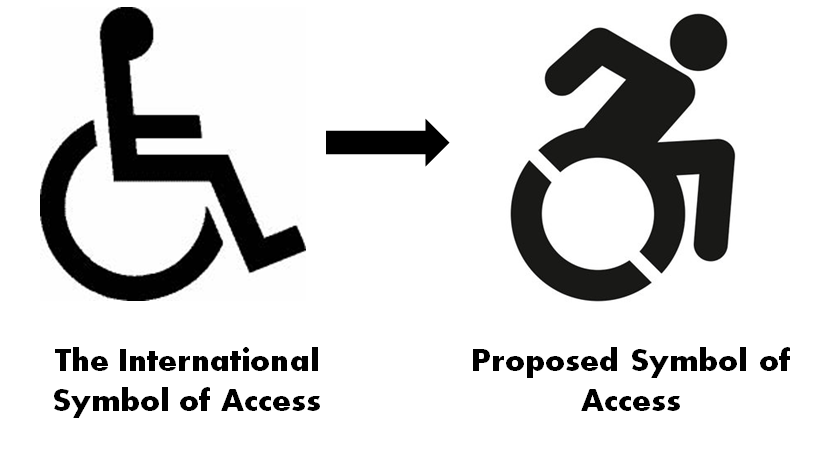
Armed with this insight – The Accessible Icon Project was born with a goal to  show a more humanized depiction of the differently abled in the International Symbol of Access.

Symbol of Access

I’ll let you read a comprehensive account of the project here, but the highlight of this guerrilla art project was that it succeeded in reorienting the visual focus of the symbol from the chair to the person, while replacing the rigid, static representation with something more dynamic and active.

Result: The idea has been gaining tremendous momentum around globally as we speak, with NYC becoming one of the first cities in the world to formalize and adopt this new symbol with many disability organizations around the world vehemently following suit.

Metaphors are said to have the power of influencing our ideas, challenging assumptions and creating new world views. And if a picture is worth a thousand words, the power of a visual metaphor like this new ‘access icon’ above can be said to be amplified a thousand fold in shaping our collective biases, informing our cultural opinions and influencing our societal attitudes as humanity.

That’s when things get interesting. Symbolically and literally.