Convenience – With Capital ‘C’

Quick Read: Recent innovations across sectors underscore how Convenience is at the core of their offering to the consumers who are happy to pay a premium for the same. While these could have disruptive implications to traditional business formats, they too are not far behind in figuring out the new playing field – otherwise called Convenience with a Capital ‘C’.  

Convenience as a core value proposition is getting all pervasive.

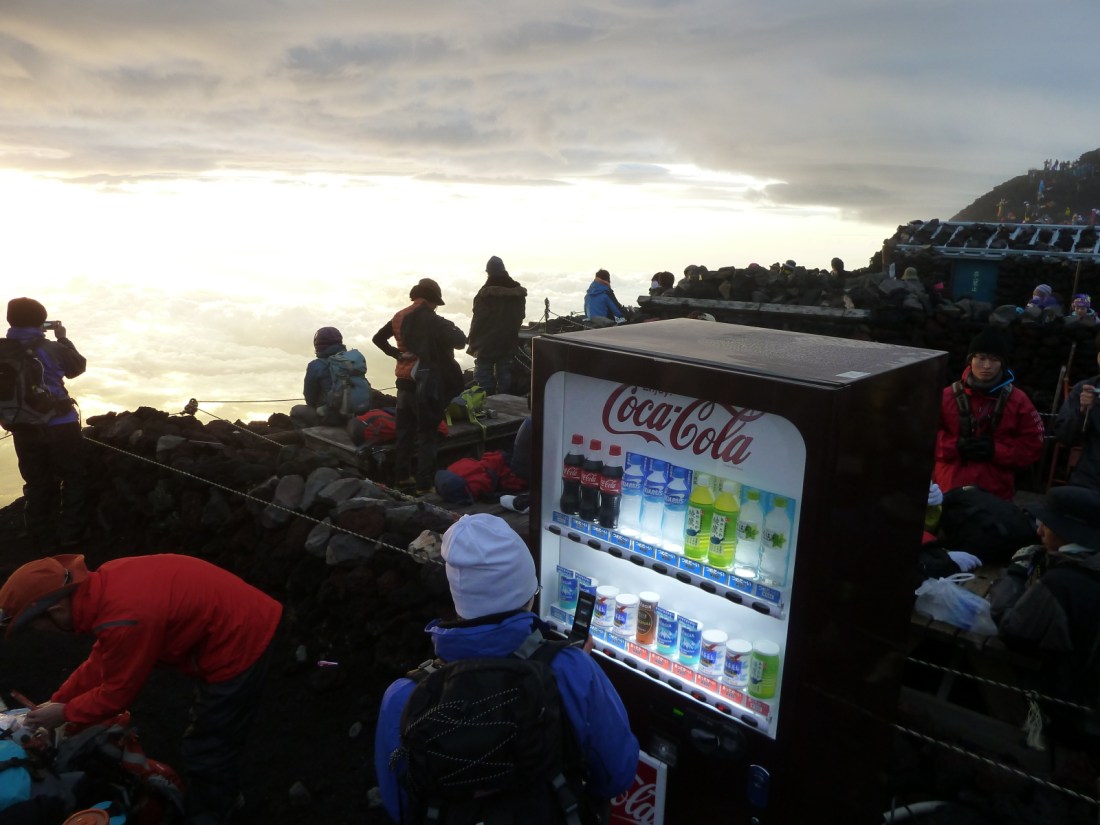
And for proof of this, one needs to just look at the vending machines in Japan or the jidohanbaiki as the Japanese call them.

Japan, they say, is like the spiritual hub of the vending machines. In fact according to this CNN report, there are currently around 5.5 million vending machines in Japan, which is one vending machine for every 23 people in the country! You have them across categories spanning every conceivable kind of location.

You have vending machines at street corners, restaurants, coffee shops, toilets, even in trams and on mountain tops selling everything from canned drinks to drinks that are supposed to be a surprise till you buy them, from hallucinogenic herbs to charms, from books peddling porn and erotica to those listing test questions for exams, from footwear to bras and panties. Almost everything and everywhere!

Regardless of the amusement that these jidohanbaiki or the vending machines in Japan evoke from people around the world, the simple grain of human truth that seems to emerge out of all this is the fact that people tend to value convenience over price on many an occasion –  irrespective of the category and location. And more so in the recent past.

More recently a Japanese food company Kagome has installed vending machines at the start/finish lines of one of the city’s major running routes to sell fresh red tomatoes to the exhausted runners. The tomatoes are priced at a 280-gram bag for 400 yen ($3.80) and a 180-gram bag for 300 yen ($2.80) which is nearly 270% higher than the price at which you would have gotten it at a supermarket in Tokyo. (as per Tokyo market prices at the time of writing this article). Despite the price premium, reports suggest that these tomatoes are selling well, given that these vending machines are said to be replenished every day.

Kagome(Kagome Tomato Vending Machine. Source)

What does the consumer value here? Kagome – it appears – is not actually selling tomatoes through their vending machines, but a natural alternative to energy drinks and bars delivered at your convenience.

Let’s Take Pharmacy

Disrupting the equation that patients traditionally had with their doctors, insurance agents and drug stores, IDEO has recently worked with a startup to design PillPack. This short video explains the concept neatly.

As this FastCompany article says, PillPack is an end-to-end pharmacy and delivery service for pharmaceuticals that is using design to vastly simplify the process of swallowing pills each day. You don’t have to worry about pillboxes, reminders, refills, insurance, co-pay, ad hoc doctors’ prescriptions etc; PillPack takes care of all that for you. All you need to do is tear off the latest M&M Fun Size packet and swallow what’s inside when it tells you to.

Costing $20 per month for the user, PillPack’s service is an interesting example of how – despite several regulatory, legal and FDA challenges that govern drug/drug delivery –  selling healthcare in a convenient package could indeed be big business. In fact, the company has now successfully raised $4M in funding from investors and is boldly stepping up its bid to become the top mail-order pharmacy disrupting all existing players in the traditional value chain.

PillPack

Again, which business is PillPack in? Drug delivery? Or is it Convenience in medication?   

Fashion Retailing

Lamoda is an online fashion retailer in Russia. Albeit with a twist. Not only does Lamoda’s uniformed deliveryman bring the clothes that a customer orders, but he also waits for her to try them on, offers fashion advice, takes returns, and processes her payment on the spot.

Lamoda(Delivering the experience of your local store at your door step, Lamoda. Picture source)

As per this Businessweek report, Lamoda currently employs about 700 couriers and services 1.5 million active users in Russia with sales of more than 6 billion rubles in 2013 despite the logistical challenge of having had to deliver mail orders to the world’s most sprawling nation, spanning nine time zones with an extremely unreliable postal service. The fact that Lamoda looks at it as a serious bet on the business of offering convenience to its customers becomes apparent when you look at its underlying cost structure.

Reports say that despite the cost of delivery for Lamoda accounting for as much as 25 percent of an order totaling less than $1oo, the company doesn’t charge for shipping and keeps prices at the same level as in stores. As a result, its 2013 annual expenses were expected to have exceeded its annual sales. And the interesting part is this. These current losses haven’t stopped investors from betting big on Lamoda’s potential. Over the past two years, Lamoda has raised more than $200 million from billionaire Len Blavatnik, JPMorgan Chase, Kering etc.

Is Lamoda selling clothes? Or Convenience? It appears to be a moot question again.

Retailers not far behind in the new game

Interestingly the underlying theme common in all these 3 examples – Japan’s ubiquitous vending machines, mail order pharmacy business model of PillPack and Lamoda‘s clothing courier with a twist of convenience – is unmissable. The brick and mortar store as it stands today is at threat.

But it appears they are not far behind. For the first time in decades US cities are said to be growing faster than suburbs with customers seeking convenience more than anything else. So, stores like Target and Walmart are embarking on major experiments in scaling down, finding the right locations while ensuring the right formats in order to cater to this convenience seeking urban dweller.

With emerging markets rapidly catching up in spending power, with money value of time increasing for average consumers and an infinite ocean of choice to choose from in virtually every single category, convenience has already become a key differentiating factor.

Probably in a very near future, most products and services will have offerings that sell convenience as their core value proposition. Otherwise they are perhaps in the fitness industry.

(Featured Image: Vending Machine atop Mt Fuji, Japan. Source)

The Business of Belief

Quick Read: Every business that we know of can be said to be in the ‘business of belief’. While a majority of these business thrive on building and sustaining our beliefs, there are also ones that thrive on breaking down and challenging our beliefs. 

Arguably every business that we can think of can be said to be in the Business of Belief.

While most businesses that we see around can prove this point, RIEDEL glasses are a very straight forward example.

RIEDEL is an expensive line of glassware designed to deliver the wine’s ‘message’ via the carefully crafted form of the receptacle. In other words, Riedel has built a thriving business of glassware by driving a belief that the shape of their glasses can make wines test better!

Skeptical? The story goes that even experts and wine critics were – several of them skeptical of this seemingly implausible claim.

And yet today, hundreds of wine experts, and thousands of customers now swear it’s true. Taste tests throughout Europe and the U.S. were said to have proven time and again that wine — expensive or inexpensive — tasted better in Riedel glasses.

riedelo

Except it’s not true. At least not empirically. (source)

When subjected to double-blind testing that doesn’t let the taster know the shape of the glass, people found no detectable difference in taste between glasses. Objectively, the shape of the glass just doesn’t matter.

But subjectively, when belief in the story and the experience of the glass are added back in the mix, it matters. And the wine does taste better to these people. Today some Riedel glasses sell for more than 100 dollars each and people covet these over other lower priced glass ware!

Therefore, sensing a branding opportunity that is waiting to be leveraged, Coke has recently tied up with Riedel to come up with a glass that “is designed to enhance the drinking experience”. The Coke site goes on to explain..

Shaped by trial and error by a panel of industry experts and Coca-Cola lovers, this form captures the distinct spices, aroma, and taste of Coca-Cola and creates a magical sensorial experience… A unique glass for a taste like no other.

RIEDEL+Coke(Riedel + Coke, Source)

While this ‘glass act’ by Coke drew myriad views from the F&B industry, it nevertheless makes for an interesting commentary on Riedel as a company that has thrived by systematically building a business of belief.

Meanwhile elsewhere…

Interestingly there also exist businesses that build a following for precisely the opposite reason – by belying beliefs and tearing down expectations each single time they offer something to the consumer.

Take The Art of Dining – a business that sets up theme based pop up dining experiences – as an example.

As part of their model, Ellen Parr and Alice Hodge, put on theme-based pop up restaurants mostly in London. The venues – always unusual and unexpected – have so far included a 16th century mansion, an eel and pie shop, the Victorian Dalston Boys Club, and the army barracks on City Road while the themes range from wartime rationing to the Food of Love. The whole experience is like eating within an interactive art installation. Each of their dining event is thus an experience that belies conventional expectations and common beliefs on what is to come.

A Night With The Mistress(Themed as ‘A Night With The Mistress’, guests were required to put on a blind fold when they ate, Picture Source)

Their recent series called Say Cheese – the photography of Martin Parr in five courses, is the duo’s latest example on how they have cemented their expertise in their signature experiential model – Set up expectations, evoke the guests’ pre conditioned beliefs and pull the rug off their feet as they take the plunge. 

This is how it works:

  • You enter a typical English café setting: gingham table cloths, plastic flowers on the table, pictures of Lady Diana and Mrs Tatcher, copies of the Sun etc
  • The waiting staff are mostly English, wearing floral pinnies
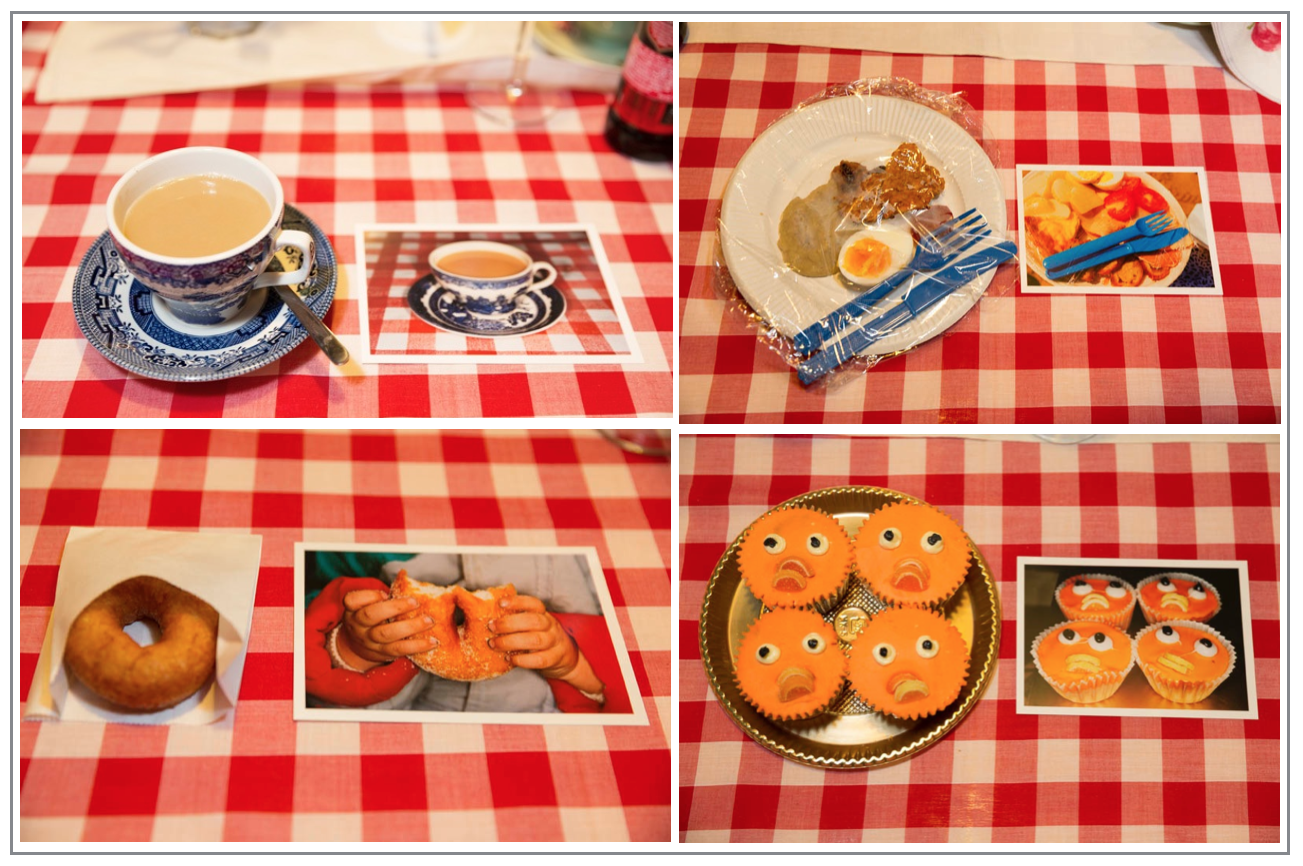
  • And this is where it starts to get interesting -You don’t get a conventional menu, but a set of 5 photos by Martin Parr – the legendary photographer
  • And here is the twist: the food looks just like the images but tastes completely unlike what you expect.
  • For eg. An English tea cup is filled with a tea coloured liquid, poured from a tea pot, which turns out to be a delicious Tom Yam Soup. A doughnut is actually a South Indian savoury, made from lentils and served with a coconut chutney. And it goes on

Martin Parr(Each of the five courses saw Martin Parr’s pictures come to life in bizarrely unexpected ways. Compilation of pictures from here)

See the short video here to get an idea on the actual execution

http://vimeo.com/69361520

Say Cheese! The World of Martin Parr in 5 Courses from GOLIGA on Vimeo.

This pop up experience was also offered in Tokyo in 2013 and as per Time Out Tokyo, the tickets costed  ¥12,000 per person, and were limited to 50 people per night. Food, it says, doesn’t get much more high-concept than this.

Now that’s a business that is actually built on belying beliefs!

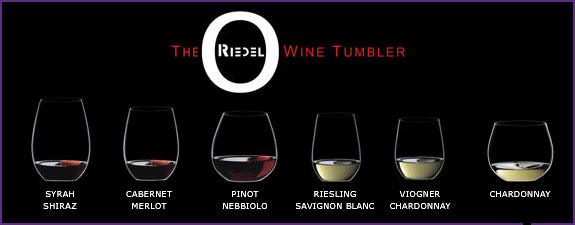
(Featured Image, Of Wine Glasses and Beliefs. The Riedel Wine Glass Company Brochure, Source)

The Best Touch Points To Market To SME Businesses In India

Imagine stepping into a market that has only 10% market penetration of the category that you specialize in.

Sounds like too good to be true?  Welcome to a new chapter in the Indian growth story. The  SME – Small and Medium Enterprises sector in India.

A few facts first.

In India, the size of the investment that a manufacturing or services company makes in its plants/machinery/equipment determines if it is to be classified as a Small, Medium or Micro Enterprise:

SME Classification INDIA(SME Classification: Indian Manufacturing and Service Enterprises, Source)

 Besides, today the SMEs in India are known to:

  • Contribute to 45% of the industrial output
  • Make up 40% of India’s exports
  • Employ 60 million people
  • Create 1.3 million jobs every year
  • Produce more than 8000 quality products for the Indian and international markets and
  • Have been growing at 8% per year (source)

In fact, by some accounts India has the largest number of SMEs in the world — at 48 million —second only to China!

But that’s not the most salivating part of the story. The magical statistic is the following:

As per a recent study conducted by Microsoft-Boston Consulting Group (BCG), nearly 90% of SMEs in India have no access to the Internet(!), compared with only 22% of SMEs in China and 5% in the US. A commensurate increase in technology adoption by SMEs can potentially add  $56 billion to the country’s economic output and create more than one million additional jobs, says the study.

This is a telling statistic on the growth potential for IT companies that market to SMEs, their wares related to Cloud computing (e.g., SAP, EMC), Productivity Solutions (e.g., Microsoft Office Suite, Xerox etc), Digital Marketing Solutions (eg, Google Adwords etc), Networking & Infrastructure Management Solutions (e.g., HP) etc.

No wonder then companies like Google have begun to make massive inroads to market to SMEs in India. Two recent examples:

  • As part of a massive campaign called ‘India Get Your Busisness Online‘ aimed at bringing down the barriers that prevents SMEs to get on the Internet, Google India & HostGator recently targeted popular traditional markets in Ahmedabad, Surat, Vadodara and Rajkot and built websites for over 5000 small businesses making them accessible to the world besides also creating Google maps listings and Google+ business pages for them. As part of this, Google India has recently announced its plan to get 50,000 SMEs in Gujarat online by end of 2014. (source)
  • Google India has partnered with Getit Infomedia to market Adwords to SMEs in South India. As part of this 50,000 SMEs in Coimbatore mainly in engineering, automotive components, textile machinery and pumps and motors would be targeted and educated on how to achieve global reach at lower cost with measurable results and personalisation. (source)

So while there doesn’t seem to be any dearth in the ambition and appetite of IT companies that target SMEs, the natural question that this begets is  – What is the best touch point to market to SMEs in India? What is the Zero Moment of Truth for these customers? 

My take on this  –  For IT vendors, banks are the best touch points to market to SMEs in India. The Zero Moment Of Truth in marketing (potentially any IT product/service) to SMEs is the time when they engage with their bank for their financing needs.

Why? My reasons as below:

  • Relationship: Given the role that banks play as lenders/financers/ advisers/ networking conduits for their SME customers, the latter tend to nurture their relationship with their banks for their long term interest. So the ‘lender – borrower’ equation in this context lends itself to exciting possibilities as a touch point for cross category marketing and info dissemination.
  • Reach: Banks have a very wide reach across the length and breadth of India.  For e.g., SBI – a government owned banking corporation has 14,816 branches in India, as on 31 March 2013, of which 9,851 (66%) were in Rural and Semi-urban areas (source). So they are naturally positioned as an incredibly powerful ‘distribution channel’ to market to SMEs.
  • A Customer Mindset that tends to be Future Oriented: The moment a SME operator steps into his bank to say, apply for a loan, his Zero Moment of Truth begins. After all, the sheer process of zeroing onto and applying for a loan are the most forward looking instances in terms of the customer mindset in setting up/sustaining his business. So can there be a better time to engage with him on possibilities and the cost benefit equations that are relevant to him from your product proposition stand point?
  • The Equation of Trust: From a psychological perspective, banks are traditionally about ‘trust’. So any message that gets seeded to a SME customer within the context of a banking relationship is bound to be enveloped with a liberal coating of feel good emotions like openness, good will and trust.   
  • Multiple Touch Points to Seed Content: A typical customer journey in a banking process is laden with multiple touch points from the multitude of application forms, the multiple approvals that need to be sought, the bulletin boards on the walls, the pamphlets that help the customers kill time as they wait for their turn, the tellers, the bank manager etc which can all seed compelling content on potentially any given new product/service that could be relevant for the SME.
  • A Win Win Relationship: Most banks tend to be big customers of IT services/products already. So they can be a willing accomplice to partner with an IT company to help market their wares to SMEs in return for say, a competitive pricing package for the coming year on their IT requirements. So a win win relationship can thus be effectively leveraged.
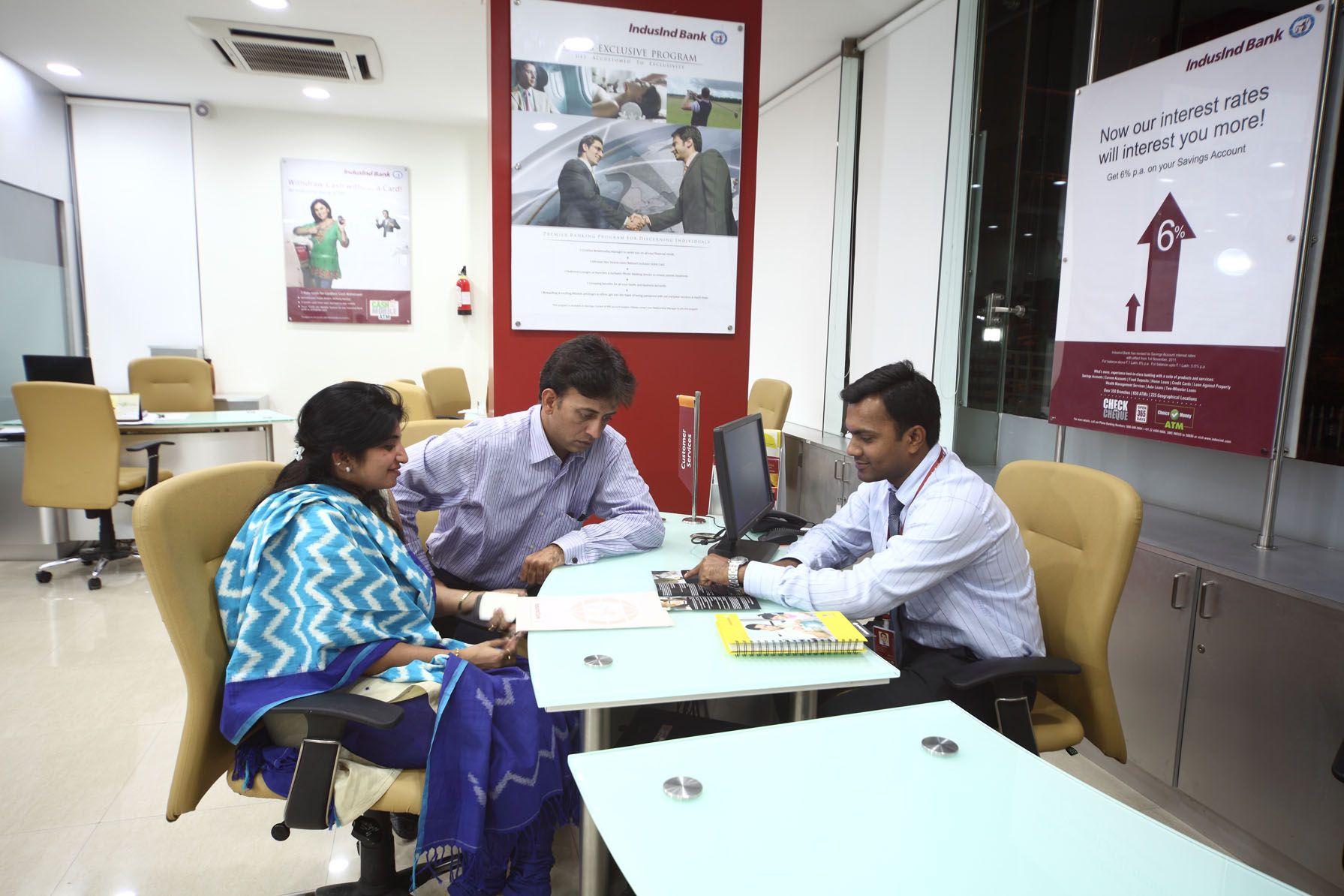
indusBank
(Image Source)
So there you have it, some food for thought. All along the purchase funnel right from building awareness, influencing consideration, driving sales to growing loyalty and retention, aren’t banks the strongest touch points to tap into when it comes to marketing to SMEs in India?

And for a category like ‘IT’ that is only 10% penetrated among the SMEs, what are we waiting for?

Twitter and Condoms

Two companies. Two successful IPO debuts in the same week. But two different stories.

Let’s start with Twitter.

Twitter shares surged 73% at market debut this week, and closed at $44.90, after hitting $50 at one point – or almost double its $26 offer price. Financial Times reports that at that level, Twitter was more valuable than market heavyweights such as Time Warner and Yahoo! In fact, by some reports, there is also a sentiment that by pricing its  shares at only $26, Twitter has ended up leaving an awful lot of money – nearly $1.3bn –  on the table!

[Amidst heaps of articles out there currently on Twitter, if there is one article that you need to read this week, this would be  it – Bloomberg Businessweek’s cover story on the ‘Surprising Sophistication of Twitter’.  

Twitter Businessweek

(Cover Page, Bloomberg Businessweek, November 11 – 17, 2013)

A small teaser from the article:

Millennia from now an intelligence coming across a single tweet could, like an archaeologist pondering a chunk of ancient skull, deduce an entire culture.

Deducing an entire culture from a single tweet? Do read the full post to appreciate the wealth of data that gets encapsulated in each tweet that we send out and its implications.]

For hints on how Twitter could possibly go about driving growth and revenue, one just need to look at these two statistics:

  • 77% of current Twitter users are from outside the United States. And given the potential swing of the demographics in many Asian economies in the coming years, Twitter’s target user base in these markets is expected to grow at a sustainable pace.
  • However while the advertising revenue that Twitter currently realises from every 1,000 interactions from the US is $2.58, this figure is only 36 cents for the other 77% of the interactions. (source)

These clearly underscore the tremendous growth potential that Twitter has in several Asian markets.  No wonder then Twitter has started to strengthen its focus in markets like India over the last 1 month.

Meanwhile on the other side of the world earlier this week…

Karex, a Malaysian company – the world’s largest maker of condoms –  has debuted on the Kuala Lumpur Stock Exchange with a 30% surge in share value on day one. The company, which supplies to prominent global brands like Durex besides also selling its own brand Carex, has nearly 10% global market share in condoms. (source)

Carex_Condoms_Firefly(Carex Condoms, Agency: Grey Group, Kula Lumpur, Source)

Today by Karex’s own estimates it cranks out almost 10 times more condoms than Trojan – the key condom brand in the U.S. Karex’s IPO was a tremendous success amidst analysts’ forecast that greater awareness of family planning in developing Asian countries will spur demand for condoms.

So while one company that went public this week has a story of exponential growth expected from the ‘powerhouse’ Asian markets, another company that went public during the same week from the other side of the world has a story that counts on the contrary – family planning and control in population growth in the Asian markets!

Couldn’t help noticing the contrasts.

Two companies. Two successful IPO debuts in the same week. But two slightly different stories.

(Featured Image, Source)

Taking Over The World One Mobile At A Time

These days it is not uncommon for food to get onto Facebook / Instagram or Pinterests of the world before it gets into the mouth. 

Armed with this insight, Spoon – one of the largest restaurant chains in Costa Rica created the following campaign.

Developed by GarnierBBDO, the beauty of this campaign is that it smartly builds upon an existing habit of people.  And why Facebook? Apparently, Costa Rica has one of the highest ratios of Facebook to internet users of 95% (source).

Damn smart! I’d say.

Such campaigns can be a great inspiration for restaurants and bars seeking to drive awareness and generate talkability with minimum investment and presumably a high ROI. In fact, fast food industry today is known to be one of the most represented on Instagram with a near 100% adoption rate!

Instagram Adoption by Brands per Industry

adoption-of-instagram-by-brands-per-industryFrom left to right: cars, fast food, soft drinks, apparel, telcos, retail, personal care, beer, luxury, financial institutes, insurance, technology, oil & gas

(Instagram adoption, MillwardBrown 2012 BrandZ index, Source)

And yes, Food happens to be the  #1 category of content on Pinterest too with 57% of Pinterest users known to have interacted with food-related content during 2012. (source)

Now, let’s take one step back in the process and look at another emergent habit

Even before we tag the food in our plates on our Social Media pages, what do we do? We place our order with the waiter/bartender. However this poor waiter today vies for our attention with – surprise, surprise –  our mobile phones.  Thanks to our emergent habit of ‘checking in’ also called ‘location tagging’.

In fact, during the two year period ended in September 2012, Facebook has seen 17 billion location tagged posts including check ins (source). And to put that number into perspective, using May 2013 statistics, this would equal every single user of Facebook in the world checking in/ location tagging at least 8 times in an year over 2011 and 2012!

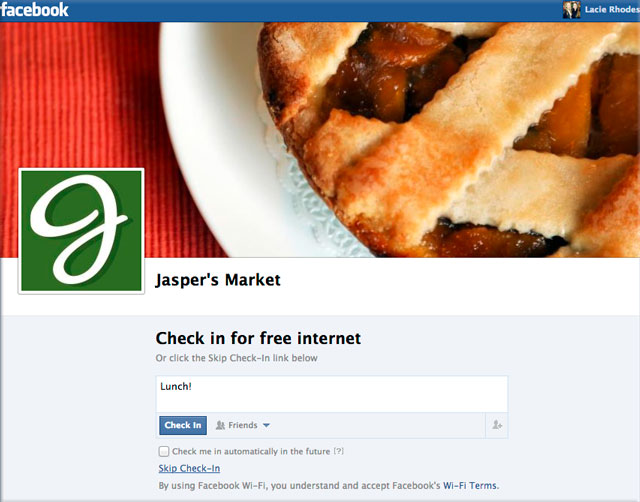
Understandably Facebook wants to make this key statistic- that of every user around the world checking in on Facebook – a reality. So after a pilot that was successfully run for over an year at over 1,000 SMEs in the US, Facebook – on October 2nd 2013 – has formalized an arrangement with CISCO. Named as ‘Facebook Wi-Fi‘ program, it converts retailers’ routers in the US into public Wi-Fi hotspots accessible to customers of the merchant establishment for free on one apparent condition. The deal? Go to the retailer’s/restaurant’s Facebook page and check in, and you have the Internet for free!

In other words, the three-step Facebook Wi-Fi system, which can be deployed by merchants running a Cisco router setup, lets people connect to a venue’s Wi-Fi, launch their browser, and click on the blue check-in button to gain unfettered access to the Internet.

Facebook WIFI

The deal for the merchant establishment?

  • Obviously each customer check in generates visibility leading to additional exposure that could pull in more customers or inspire more ‘likes’
  • While Facebook shares with the merchant an aggregate of anonymous demographic data such as age, gender, and interests on customers who sign-in to Facebook Wi-Fi, which they can potentially use for more effective targeting of their upcoming Facebook advertising campaigns

For Facebook, the Wi-Fi-with-check-in initiative is part of a broader plan to attack the local market by encouraging merchants to set up and maintain Pages on the social network and more importantly to seed – in the general public – the habit of ‘checking in’ on Facebook and thereby become the default gateway for the Internet.

Meanwhile on the other side of the world…

Chances are that you would have heard of Facebook Zero. If not, you should read this post right away. Essentially in 2010 Facebook collaborated with several mobile operators around the world and worked out an arrangement whereby the end users of these mobile networks can access  0.facebook.com – a faster and a free version of Facebook for your mobile, no matter which phone it is –  without any data charges.  People will only pay for data charges when they view photos or when they leave 0.facebook.com to browse other mobile sites. So, when they click to view a photo or browse another mobile site a notification page appears to confirm that they will be charged if they want to leave 0.facebook.com.

When this was launched in 2010, Facebook signed up 50 mobile carriers in 45 countries. The following image shows how Facebook made itself accessible on every class of phone through this initiative:

ubiquitous_mobile_facebook

How Facebook made itself accessible on every class of phone (Image source)

A smart way to drive usage of Facebook in emerging markets where the average monthly spend on mobile connectivity, which is often just voice and text, is 8-12% of the average take-home pay of a cell phone user. (source) In fact in just 10 months after its launch, Facebook Zero has become so popular in Africa that the site was said to have driven the adoption of broadband internet, just so users can have faster access to all those pictures and status updates!

Read this brilliant post on Quartz on how Facebook is conquering the world one mobile at a time.

Today, with more mobiles on earth than are people, and with smartphone penetration exponentially increasing in the emerging markets, the story has but just begun – after all there are 250 million Facebook users in Asia , more than on any other continent, and yet that’s just 6.5% of the population. In Africa, its penetration is less than 5%

And then Google launches Free Zone.

And the battle for world domination continues one mobile at a time.

Marketing Lessons From Emerging Markets

Successful marketing examples from emerging markets teach us many a lesson in getting the basics right.

Let’s take Indonesia for example. While Coke is the beverages leader globally, it is NOT so in Indonesia!

Teh Botol Sosro – The Indonesian Beverages Leader

After 80 years in Indonesia, Coke sells around 80 million cases per annum. Interestingly a local player by name Teh Botol Sosro (TBS) sells 2x that volume. Fascinatingly, TBS is not even a cola, it is a Ready To Drink Tea format and has become Indonesia’s favorite beverage in less than a decade! (source).

sosro

The reason? As per this insightful post on Occasion Based Marketing, it is two fold:

(1) TBS’s positioning is grounded in 3 local truths

  • Indonesians eat several times each day (3 square meals and 3 to 4 more snacking occasions)
  • Indonesia has a strong tea culture
  • When Indonesians eat or munch, they feel the need to drink something as well

Given these, TBS positioned itself with the simple and straight forward tagline

“Whatever the meal, Teh botol Sosro is the drink”  –  (“Apapun makanannya minumnya Teh botol Sosro”).

(2) Discipline in executing marketing strategy

Not only did TBS get the basics right w.r.t the beverages segment, it also ensured robust execution through:

  • Consistency of the brand messaging across all touch points
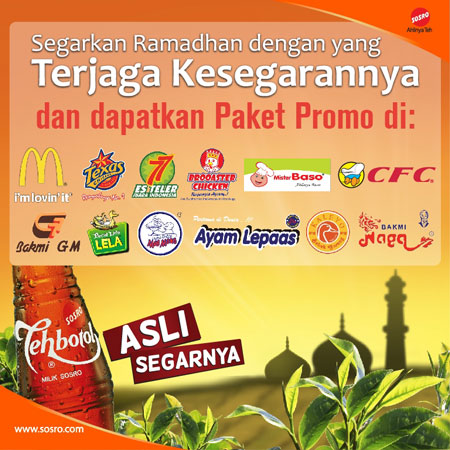
  • Ensuring Physical Availability i.e. solid distribution across retail and popular fast food chains like McDonalds and KFC
  • Building Mental Availability i.e, driving top of mind awareness and salience by leveraging on all media channels: ATL & BTL

TBS-Iklan-Ramadhan-01

(A Ramadan promo material for TBS,  shows the extent of its ‘Physical Availability’ – Image source)

McKinsey & Co Report On Building Brands In Emerging Markets

In many ways, each of the above principles strongly resonate with the findings of a recent McKinsey report titled “Building Brands In Emerging Markets”. Read the full article here for an elaborate report based on research conducted in nine product categories (including food and beverages, consumer electronics, and home and personal-care products) across various developed and emerging markets.

Essentially the report highlights 3 key differences between emerging and developed markets and its implications as:

  • Harnessing the power of word of mouth is invaluable, as it seems to play a disproportionate role in the decision journeys of emerging-market consumers.
  • Getting brands into a consumer’s initial consideration set is even more important in emerging markets, because that phase of the journey appears to have an out sized impact on purchase decisions.  
  • Finally, companies need to place special emphasis on what happens when products reach the shelves of retailers, because the in-store phase of the consumer decision journey tends to be longer and more important in emerging markets than in developed ones.

McKinsey Report On Emerging Markets(Exhibit Source, McKinsey Report On Emerging Markets)

While the above example and theory are inspiring and instructive in many ways, these miss out a commentary on an important characteristic of an emerging market.

How about speaking about building CATEGORY RELEVANCE first?

Emerging markets are essentially those where the categories / segments in question are under developed.  i.e., the target consumers in these markets don’t find the category/segment relevant to them – at least as yet. So if a segment itself is not seen as relevant in the market place, how crucial are word of mouth / perfect in-store experiences / or consistency in communications for a brand?

As a corollary, brands that start off by ‘setting up the dialogue on a category relevance’ can be said to be leveraging the opportunity to drive awareness of the category/segment and thereby establishing a strong salience of its branded offering in the market. If this key – setting up the context – activity is handled right by a brand, it can naturally have a solid advantage in the market place in the emerging category.  Let’s take 2 examples, one from a marketing strategy stand point and the other from a creative execution stand point.

1. Wines in India – Marketing Strategy In An Emerging Market

Wines in India is still an emerging market.  In 2012, wine (including imported varieties and sherry) only made up 0.45% of sales of 9 liter cases of alcohol in the country! (source). In other words (for various reasons) wines as an offering in India are still not seen as ‘relevant’ in the consideration set of alcoholic beverages category by most target consumers. So how do you build relevance for wines?

Sula Wines – a pioneer at the forefront of the Indian wine revolution shows by example. It embarked on a set of relevance building initiatives for the segment by going all out to promote wines domestically.For example, it holds about 1,600 wine tasting sessions a year to educate people on the finer points of enjoying a glass of wine, off late it has also been actively developing ‘wine tourism in India’ with vineyard tours and a music festivals held at its winery.

As a result the company produced 550,000 cases of wine last year and expects the number to rise by 25% in 2013. (source)

Sula Kebab Fest

(Image Source, Kebab Fest @ Sula Wines)

2. 4×4 Drives in Venezuela – Creative Executions In Emerging Markets

Venezuela has 147 motor vehicles per 1000 inhabitants. Compare this with 797 motor vehicles per 1000 that USA has (source). Motor vehicle here is defined as  automobiles, SUVs, vans, buses, commercial vehicles and freight motor road vehicles.

So how does Jeep communicate in each of these two markets?

You guessed it right! In a market like Venezuela,  Jeep focuses on setting the category context first – i.e. it’s communications are tuned towards building relevance of GETTING OUT as an activity ; and not so much on its technical specifications or competitive claims. See the following print ads by Leo Burnett developed for Venezuela. I love how Jeep manages to drive relevance of its segment without losing its tongue in cheek tone.

Jeep_Climber_ibelieveinadv   (Source, See the other ads in this series here, agency Leo Burnett)

On a related note, see how Jeep communicates in Bolivia here.  Similar theme here too –  More focus on setting up the category relevance than on proclaiming its uniqueness / superiority vs competition.

Now, as a contrast, how does Jeep communicate in the US?

It still speaks in its tongue in cheek tone, it still speaks about getting out or making the world your playground. But here, it also focuses on what makes Jeep the best in its segment by rattling off the pertinent technical specs or superiority credentials. See the following print ad from the US.

wrangler_garage(Source, Click on the ad for the enlarged version, agency BBDO)

The copy says: “Dana 44 solid axles, heavu duty Rock-Trac 4WD system, Tru-Lok fornt and rear differentails, front and rear mounted tow hooks, CD player, and seven speakers.”

On a related note, see Jeep’s print ad for Germany (another developed market) here and here.  Similar theme here too as that in the US – The focus here is on reinforcing its uniqueness and/or technical superiority vs competition and not so much on setting up the context / category relevance.

In Summary..

Whether it’s about a marketing strategy or even a creative execution,  whenever we see a success/failure of a brand in the context of an emerging market, probably the first questions to be asked could as well be:

  • Who was the first to drive the category/segment relevance in the market place? (who initiated the dialogue)
  • And How?  (is the dialogue grounded in local consumer truths?)

Once you have these answers, often times, you might not need to see the market shares for validation.

Don’t you think so?

(Featured Image –  BRIC Countries, Source)

The Goldfish Conundrum

The fact that Google has introduced ‘skippable pre-roll’ ads on YouTube is nothing new.  In fact nearly an year ago, it has also started to enable the same for mobile users.

skippable-youtube-ad-mobile

Three obvious things that stand out for me from these ‘skippable, pre-roll ads’ are:

(1) Permission Marketing: By placing these ads right at the beginning of the actual video and enabling the viewer full freedom to skip if necessary, YouTube has acknowledged the importance of gaining viewer permission (a.k.a a commitment of her attention span) before bombarding her with any message. This disincentives attention abuse by advertisers.  [Seth Godin must have said – I Told You So” 😉 ]

(2) Soft Wired: Understandably these ‘pre-roll ads’ are not ‘hard wired’ to the video ; meaning, YouTube can dynamically mix and match an ad to a video based on algorithms / user preferences / browsing history / relevance and advertiser criteria, with an objective to maximise advertiser revenues.  This disincentives lack of relevance of the spots to the viewer/ viewer context.

(3) The 5s litmus test: This is the most interesting implication for me. Irrespective of the length of the pre-roll ads (which typically are 15s or 30s), any ad is given a golden period of 5s within which it can either capture the attention of the viewer or fail at it (for various reasons) resulting in the ad getting skipped. This disincentives lack of the grip factor in the ad – by way of production values/ story / narrative etc. 

Not surprisingly, as a result, we now see many of these ads desperately trying to shock / awe / seduce  or lure us into seeing the full spot during the first few seconds of the roll. The fascinating thing for me however is this 5s mark that YouTube has set for itself and advertisers.  But why 5s?

Well,  as it turns out, we human beings are currently rated as a species with one of the lowest levels of attention spans. For eg., see the following table that compares the worsening of our attention spans and contrasts it with that of the Goldfish’s! (source of data)

The average attention span in 2012 8 seconds
The average attention span in 2000 12 seconds
The average attention span of a gold fish 9 seconds

Call it ADD (Attention Deficit Disorder) or Information Overload or Infobesity, it’s almost an intuitive thinking now that our attention spans are plummeting. As a result, today:

  • Movie trailers are getting insanely faster.
  • We now have movie tweasers: (A tweaser is a six-second teaser for a 20-second teaser for a two-minute teaser for a 2:32-length theatrical trailer for a feature-length movie. source)
  • Vine from twitter is capped at 6s (tweasers are hosted on vine)
  • And then we have delightful ‘marketoons’ like the one below:

130902.shortattention

(source and inspiration for this blog: Tom Fishburne)

Obviously, this only reinforces the fact that we are living in an Attention Economy – where attention has become a scarce commodity.

On a related note, you should read this amazing post titled – The Scarcest Resource You Don’t Even Know You Are Spendinghere. And do check out this though provoking video.

From the above two observations viz.,

  • We tend to be ruthless in our attention spans when it comes to consumption of entertainment /information.
  • We are given only a limited number of ‘attention bits’ to spend in our life time. …

…the insight for me here is that.,,

whilst proving ourselves to be (penny) wise in terms of how we exercise our ‘attention spans’ for certain tasks like say – media consumption, we sometimes tend to be (pound) foolish when it comes to expending this very resource for things that have far reaching implications in our lives like learning, decision making, productivity, interpersonal interaction etc.

Something for us to ponder and reflect upon?

h-armstrong-roberts-boy-leaning-head-on-hand-staring-at-lone-goldfish-in-fishbowl

(Image Source)  

The Wabi Sabi Edge

The Ise Grand Shrine – a Shinto Shrine – in Ise, Mie prefecture in Japan has been preserved exactly like it was around 2,000 years ago. Despite such a rich legacy, the UNESCO has refused to list the shrine in its list of historic places.

Why?

Shinto Shrine

(Shinto priests walking beside the Ise Grand Shrine, Japan. Source)

This is because the shrine is not built of a ‘permanent structure’. The ISe Grand Shrine is built of wood and hence it  gradually loses its structural integrity over years. So the Shinto priests have a solution;  every 20 years they tear down the structure and rebuild another – in an adjacent plot –  in exactly the same specifications as the original using the wood from the same forest that the original structure was built from. Result: the shrine  is  forever new,  ancient and original! The present structure, dating from 1993, is the 61st iteration to date and is scheduled for rebuilding in 2013!

A centuries old Shinto belief of death and renewal of nature and the transience  of all things called Wabi- Sabi underscores the philosophical and artistic significance of this shrine. To quote the wiki  page ….

Wabi Sabi nurtures all that is authentic by acknowledging three simple realities: nothing lasts, nothing is finished, and nothing is perfect.

Burning Man

Further to the west, in northern Nevada US is the Black Rock Desert –  an open swathe of desert land where a week long annual cultural festival called Burning Man is held every August/September. This iconic event is described as an annual experiment in community, art, radical self-expression, and radical self-reliance – a week long celebration of extreme creativity, art, spirituality and innovation. Often compared to TED for its potential to provoke, inspire, connect, indulge or just ‘let be’, Burning Man regularly attracts stalwarts like the Google founders, Eric Schmidt, Chip Conley among many many others. But what makes Burning Man stand out as an exceptional event is the fact that it is transient by nature. The whole venue, the structures and the shelters for the event are practically built from scratch and again torn to dust without leaving a trace at the end of the week!

See below the time lapse video of 2011 Burning Man to appreciate the ‘dust to dust’ cycle typical of the Burning Man.

As Business Strategy

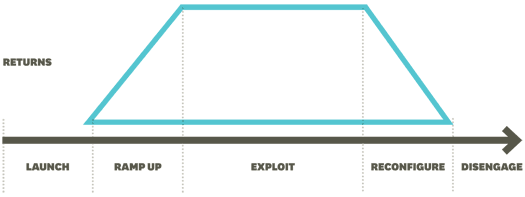
Transience as a method, an approach or a strategy is not just  an expressionist arts style or some exotic charm of a shrine.  It also has far reaching implications on contemporary business strategy. The June 2013 edition of Harvard Business Review features an interesting article by Rita Gunther McGrath on what she calls as Transient Advantage. She argues that  in a world where competitive advantage often evaporates in less than a year, companies can’t afford to spend months at a time crafting a single long-term strategy. She introduces what she calls as The Wave of Transient Advantage and explains its ‘curve’ (below). Companies possessing this edge constantly start new strategic initiatives, build, exploit, re configure and if need be even actively disengage from an initiative as a means to reprioritise, reinvent and renew their approach to growth.

Transient Advantage

(Wave of Transient Advantage, Source)
She posits that the thinking in this field “has reached an inflection point” leading to an acknowledgment from a multitude of strategy practitioners that “Sustainable competitive advantage is now the exception, not the rule. Transient advantage is the new normal.”

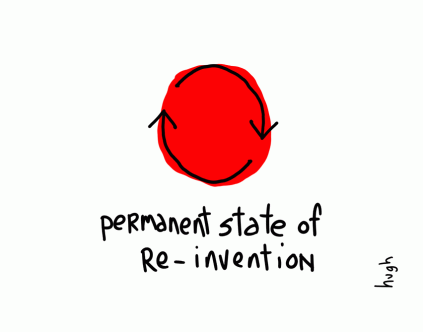
The latest post in the Gaping Void newsletter by Hugh Mac­Leod pays an artistic tribute to this concept through this delightful piece of ‘office art’.

permanent_state

(You must subscribe to his newsletter, sure to make your day!)

Essentially from which ever perspective you look at it – artistic, personal, emotional, professional or even strategic, the ability to accept transience as the new normal, the ability to let go of the status quo to rethink, re-invent and renew our  approach forms the bedrock of the new competitive edge – The Wabi Sabi Edge.

Nespresso – An Unsustainable Business Model?

 Single-serving coffee made at home.  That’s the category Nespresso operates in – a segment estimated to be 8 billion USD in 2012 (source).

Nespresso

Some laudable facts regarding Nespresso to start with:

  •  It took 30 years for Nespresso to get to where it is now.
  • Their first patent was registered in 1976 and it was launched internationally in 1991.
  • As of 2012,  their concept (machine, capsule, service) is subject to 1,700 patents.
  • Features celebrities, such as George Clooney and John Malkovich, as brand ambassadors.
  • At 55 cents for a 4-g capsule, Nespresso coffee works out to a nerve-jangling $62 per lb. ($137 per kg). And the hefty markup doesn’t seem to bother its fans.
  • Is rumored to command gross margins at about 85%, compared with 40% to 50% for regular drip-coffee brands.
  • The company confirmed that  Nespresso is targeting to grow sales by around half a billion francs in 2013.

(sources for the above information: 1, 2, 3, 4)

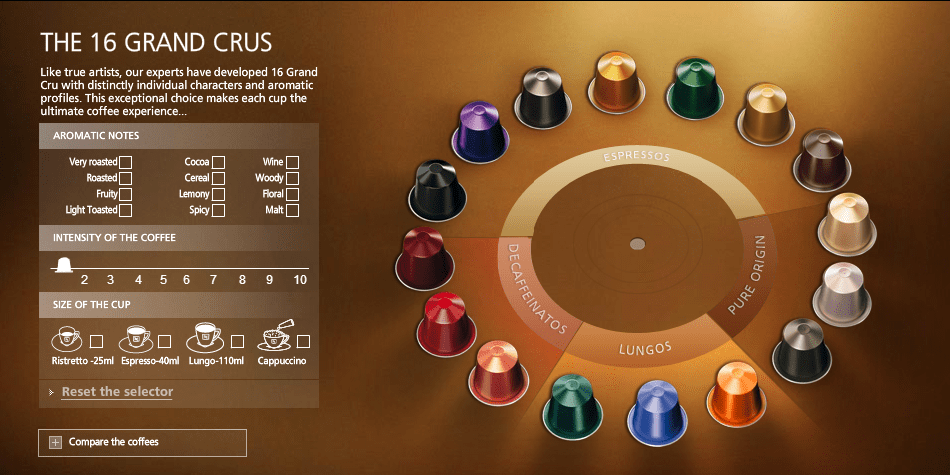
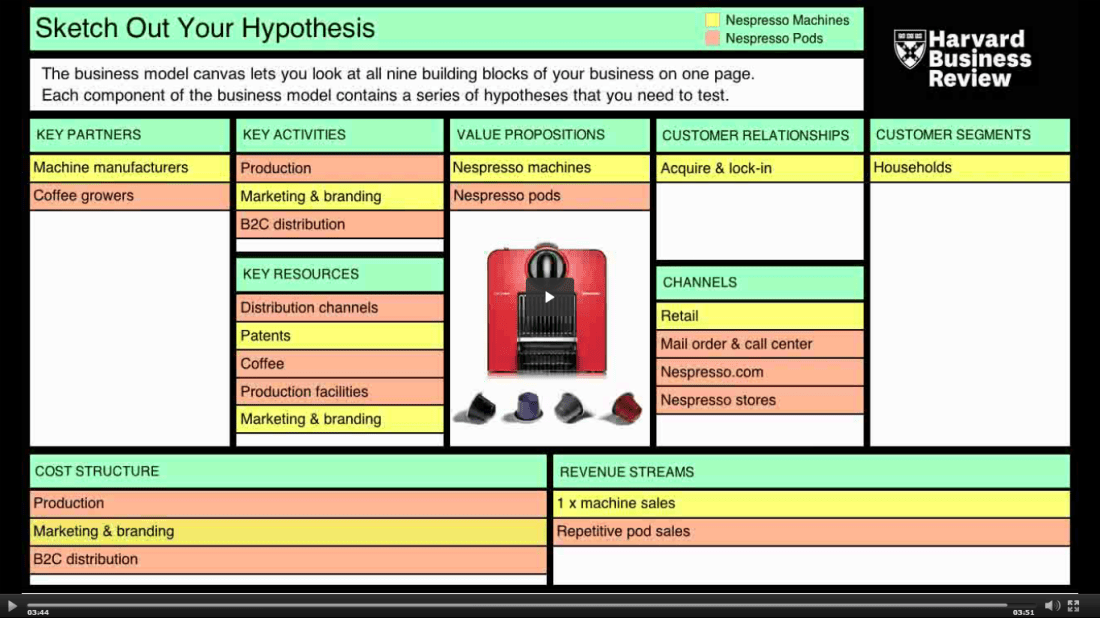
As a brand, Nespresso has been vaunted as the “Apple of coffee pods” riding high on the classic razor/razor-blade business model – otherwise called as the Vendor Lock In business model.  See an informative video here on the specifics of the Nespresso business model using the framework of Business Model Canvas.

Nespresso Business Model

Now the not so good news for Nespresso is the emergence of nearly 100 competitors around the world including 50 that claim compatibility with the Nespresso system (many of Nespresso’s patents have expired in 2012).  A more recent Reuters report on the latest threat to Nespresso from Mondelez…

Mondelez International, the world’s second-biggest coffee maker, is going head to head with larger rival Nestle by launching capsules compatible with its Nespresso system to steal a share of the premium coffee market.

The capsules will be sold under the Jacobs and Carte Noire brands in many EU markets in the second half of 2013 – the biggest challenge yet for the $4.4 billion (2.8 billion pounds) Nespresso brand that has sued many copycats.

These are just the warning bells for the company as many more brands jump onto the bandwagon of this fast growing coffee segment.

David Taylor on the brandgym blog posits that these moves can be in the larger interest of Nespresso as long as it ensures the following:

  • Benefit from market growth: Even if Nespresso’s share drops, sales can still increase if the market is growing.
  • Keep product quality up: Continue offering a better coffee experience through its select blend of coffee.
  • “Load” existing customers: Defend against the Mondelez launch by loading its existing customers with product, and so taking them out of the market.
  • Drive distribution: Drive distribution in new channels. e.g., store-within-store formats.
  • Tell a product story:  have a bit more product “sausage” to complement the emotional “sizzle”

I would however beg to disagree here, as I suspect if the current business model can be sustainable in the long term. And my argument is equally applicable to the Tassimo’s, Dolce Gusto’s, Keurig’s and Verismo’s of the world. Why?

Insight #1: Which business are the Nespresso’s of the world actually  into

These brands are not in the business of delivering convenient, barista like coffee at home. Instead they are in the business of making cup after cup of a consistent brew of coffee on demand with consistent being the operative word. Guardian reports

..while pod machines might not make great coffee, they do make a consistent cup. This is making them irresistible to high-end restaurants…. Nespresso machines can now be found in the kitchens of around 30% of the world’s 2,400 Michelin-starred restaurants. The appeal is obvious –they’re consistent, cheaper than hiring a barista and take up less space than a traditional espresso machine.

Insight #2: What can I learn from a cup of Starbucks coffee that bears my name? 

One thing I enjoy the most whenever I queue up at a Starbucks for my cuppa is eavesdropping on how different people want their coffee to be customized (a Quadriginoctuple Frappucino anyone?) and finally seeing them hold on to the cup with their name scribbled on it with an affection and warmth that comes out of familiarity and a sense of having co-created the cup coffee (by the sheer act of asking for a slightly personalized brew!)

The scribbled name on the cup just seals the deal in a magical way.  (speak about The IKEA Effect)

starbucks_cup

Now based on these 2 insights…

What if a ‘coffee pod’ sets up a unique proposition of designing a one of its kind, exclusive and a truly unique coffee blend concocted to your minutest specifications and delivered it to you as your own coffee pod  (like that cup of starbucks with your name on it) for you to be able to enjoy this very same cup of coffee day after day using the machine back home?

The benefits are obvious: enduring consumer relationships, deeper consumer insights, a treasure trove of data on how people love their coffee, a truly unique blend that only you can deliver, resulting in pods that consumers are willing to pay a premium for and finally pods that cannot be easily replicated by the “me too’s” of the world.

Speak about infusing authenticity to the  vendor lock in business model.

Toothbrush, Vitamins And Pain Killers

Starting from 2001, Google has made 127 mergers and acquisitions till date.

Which makes it nearly 6 acquisitions for every 7 months over the last 12.5 years. It is expected now that this M&A rate is further going to accelerate with Google – for the first time –  considering forging alliances with private-equity firms to help it structure deals.

During the recent Bloomberg Next Big Thing Summit, speaking about how Google evaluates a potential M&A target, Don Harrison –  Google’s mergers and acquisitions chief said

“We apply something called the toothbrush test, which is we ask ourselves, ‘Is this something people use once or twice a day and does it solve a problem?’”

Thanks to its immensely sticky nature (and aided by the current  rock star status of Google), this toothbrush analogy has seemed to have gained an instant global popularity and is shooting to newer heights in terms of recorded “interest over time” as we speak. I did a quick sense check myself  by entering  “the toothbrush test”  as the search term and this is what I see on Google Trends:

ToothBrush Test

(Click to see larger image)

While this sounded to me like a fascinating analogy that brings a powerful idea to life, the concept of The Toothbrush Test somehow didn’t quite fit in within the schema of what I had in my mind regarding so many things that Google does today.  For e.g., I began to wonder –  Is Google+ a ‘toothbrush’? i.e., does it solve a problem and is it something that people use once of twice a day? Or is Sparrow (acquired by Google in July ’12) a ‘toothbrush’?

May be it  is. Or  may be it isn’t. But probably for me there’s a missing piece to the jigsaw here.

That’s when I hit upon this very useful question that VCs are known to ask entrepreneurs. (source)

Is your product like candy, vitamins, or pain-killers for your market?

2806-940x626

(Image Source)
To elaborate:

  • Candy = a product that is a nice-to-have, that people enjoy and can be wildly successful if it becomes a fad (like Beanie Babies)
  • Vitamins = a product that is a nice-to-have and serves an emotional need, used to augment and improve things but sometimes harder to quantify and has an unknown market
  • Pain Killers = a product that is a need-to-have and serves an obvious need, or solves critical problems that need to be alleviated and has a quantifiable market and thereby immediately monetizable

While it might probably take a ‘marketing master stroke on steroids’ to sustain a successful company based on ‘candies’ alone, many product ideas can probably be placed in the continuum between ‘vitamins’ and ‘pain killers’.

Vitamin Painkiller

(Image Source)

In this context, as someone who blogs at the intersection of  psychology, technology, and business –  Nir Eyal at the Stanford Graduate School of Business posits that successful companies are known to be so good at embedding/implementing hooks in their products that they travel along the above continuum from being vitamins for ‘pleasure seeking’ consumers to becoming pain killers for their pain alleviation as they cement enduring habits in them.

In other words, a ‘cleverly designed vitamin product experience’ hooks the consumers and becomes so important in their lives that – because it becomes a habit, it becomes a pain relieving product.  Flip through the following presentation by Nir to get a more comprehensive view on his theory of  Hooked – The Psychology Of How Products Engage Us.

That’s when the insight stuck me:
For any well designed product/ experience the question is not IF it passes The Toothbrush Test.
The question is WHEN.
Don’t believe me? Ask the largest cigarette makers in the world who are currently making a gold rush to acquire/ develop e-cigarettes and they will tell you.