Marketing Nostalgia – Retro Innovation

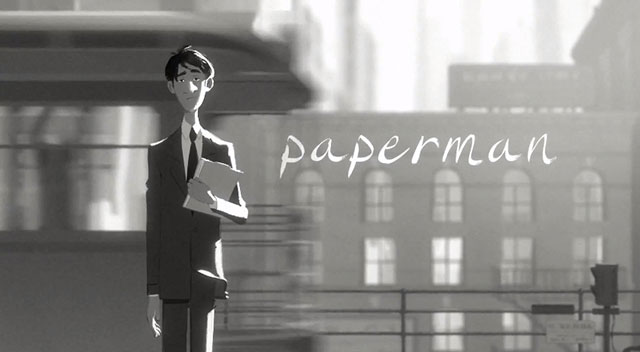
The first thing you notice about Paperman – an Academy Award nominee for Best Animated Short Film (2012) –  is how different it seems from most modern cartoons.

paperman_title

See the full 6mins version here. It has a distinct retro black & white look not just because it is a story based out of 1940s Manhattan, but also because it clearly feels like as if real people have drawn it  it on a piece of paper as opposed to say – like machines creating it on computers.  The result of Disney’s new in-house software called Meander, it seamlessly  blends the best of ‘hand drawn cartoon kinda’ look with CGI animation in a way the animation industry has never seen before; a game changing animation style so distinctive, innovative and beautiful that WIRED magazine even bills it as the future of animation as a whole!

This can be called out as an example of a unique kind of innovation – new technologies, new products or experiences that are designed around connecting us with the past that is nostalgic. Something that  calls as Retro Innovation.  In this FastCompany article he writes that Retro Innovations roughly fall into three categories:

  1. Innovations that authentically mimic a product or experience of the past to transport the user back into a gone era.
  2. Innovations that use a nostalgic format to meet a new need.
  3. Innovations that use a new format to meet an old need.

Read the whole article here and get a dose of some 10 emerging examples of Retro Innovations. My favorite example is Moleskine, regarding which he says..

The Italian paper notebook maker MDleskine, whose recent IPO was valued at more than $600 million, is a stunning anachronism in a business environment that glorifies tech startups and digital business models.

There are reams of case studies out there that extol the brilliance of Moleskine’s branding. But the best example of its retro innovation is its Moleskine Evernote Smart Notebook that bridges the digital and the analog world.

The key insight on which most successful retro innovations thrive on is brilliantly articulated in this Washington Post article that says..

With the rise in computing power, there has been an acceleration of the rate in which we build on new information technologies, leaving us clutching awkwardly for things we recognize from the past. The pace of change at times seems so overwhelming that it’s no wonder that sometimes we want to be transported back to an earlier era.

Think about this insight and you could possibly have explanations for things like:

  • The emergence of  a ‘modern retro’ trend in the  retro gaming culture.
  • The popularity of Mad Men – the only basic cable series to win Emmy Award for Outstanding Drama Series besides 14 other Emmys and 4 Golden Globes. (source)
  • Brands like Adidas and Puma having a dedicated innovation pipeline specially meant for their retro line ups: Adidas Originals and Puma Classics. In fact by many accounts, Adidas Originals can be considered to be a top of the pyramid brand in terms of their positioning and price points. Besides, the corporate logo of Adidas is distinctive from that of Adidas Originals recognizing the unique appeal and potential of this retro innovation line up from the sports brand.
  • The popularity of classics that are remastered to the new digital world – Jurassic Park 3D anyone?

And  in extreme case it might possibly even explain the rationale behind the existence of Skeuomorps – which might be a different discussion altogether!

While the jury is still out to argue whether the ‘retro trend’ actually cripples innovation, a few venture capitalists do concede that  retro innovation is indeed the most lucrative kind. After all, if innovations are about elevating and enriching human experiences, there would always be a market that values a more traditional notion of this experience and that’s where Retro Innovations kick in.

What other examples of Retro Innovations can you think of?
Sustainability Inc – A Case For Profitability In Charity

Can ‘Marketing’ and thereby a monetary value exchange  have a major role to play in non profits, NGOs and charities?  2 recent examples seem to prove a point.

Once Again

Once Again is a Bangalore based NGO that stands out for two reasons:

1. It accepts donations only in the form of old items. Not money.

2. It uses social media in a unique, relevant and a compelling way to trigger ‘action’ for its cause.

See its case study here:

The brilliance of their social media campaign to rake in donations notwithstanding, the big idea for me here is their fundamental business model: It collects items people don’t use anymore, and instead of donating these to the needy, it sells them at a  price (although minimal) to the underprivileged and uses this money for the empowerment of their community.

The exchange of monetary value in this equation triggers a chain reaction from ‘donation of the giver‘ to the ‘dignity of the receiver‘ while making the whole model sustainable. 

Cola Life

Can a crate of Coke save life? Most Likely – proves ColaLife, whose concept can be explained in 100 words as:

“You can buy a Coca-Cola virtually anywhere in developing countries but in these same places 1 in 9 children die before their 5th birthday from simple, preventable causes like dehydration from diarrhoea.

ColaLife, an independent non-profit, is working with Coca-Cola to open their distribution channels in developing countries to carry ‘social products’ – oral rehydration salts and Zinc supplements – to save children’s lives.”

Get a low down on its business model here.

The big idea for me here is two fold:

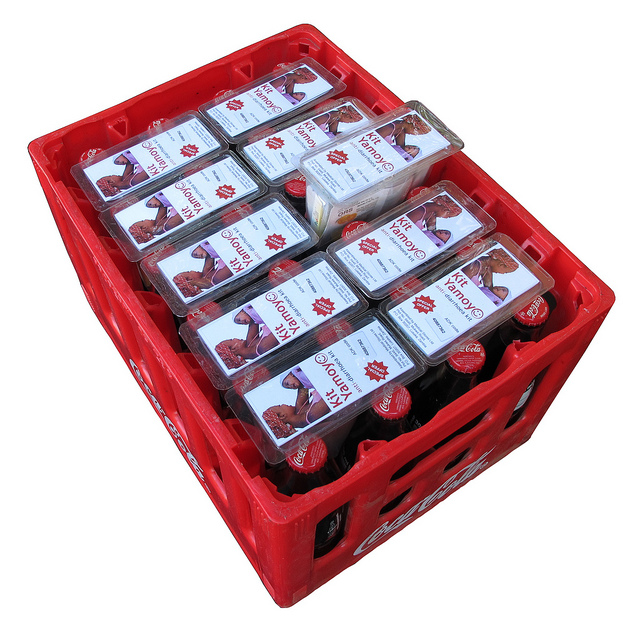
1. The design of AidPods: The oral rehydration salts (ORS) in the ColaLife network are distributed in specially designed packs called as AidPods. These are  wedge-shaped containers that are designed to fit within the unused space of a coke crate, i.e., between the necks of the bottles. The design of the AidPod also serves as a contaier for the salts, as a measure for water, as a storage device and as a cup for drinking the ORS. No wonder it won the Product Design of the Year Award for 2013.

Yamoyo Kit

2. The ‘Social Marketing’ Model: At the heart of ColaLife is its ‘Social Marketing Model’ –  in which users value the product more because they pay for it. (ORS products are typically provided free of charge by medical centres in Africa, but are frequently unavailable and misused as there is virtually no monetary exchange taking place at any stage of the value chain). As this FT article says,

“the idea was to copy Coca-Cola’s model, which includes giving financial in­cen­tives along the supply chain from factory to store in order to ensure that people at all stages are rewarded for getting the drink to the customer. By turning a public health commodity – the salt and sugar mix – into a branded consumer product and using marketing to create demand, everyone would benefit, and help make the project sustainable.”

These are just a few of several recent examples out there that have one point to prove:  ‘Marketing’ and thereby a monetary value exchange do and should have a major role to play in non profits, NGOs, humanitarian agencies and charities  in order to remain sustainable and have truly far reaching consequences to the needy.

In his recent TED talk, Dan Palotta  nails it when he says: “Business will move the mass of humanity forward, but will always leave behind that 10% of the most disadvantaged and unlucky- which is why we need philanthropy and nonprofits. But the non profit sector as we know it doesn’t seem to be working.”

And that begets the question – couldn’t the nonprofit sector use the same strategies as the businesses to sustainably serve the needy?   

Growing The Core – Innovating With Constraints

In his latest book called Grow The Core, David Taylor makes a definitive case for companies to bring back  focus to their ‘core’ business and thereby SMS (Sell More Stuff that is already being made). He identifies 3 key drivers for this ‘core growth’:

  • Distinctiveness: Creating a distinctive marketing mix for the core to strengthen and drive brand salience
  • Distribution: Boosting distribution / ‘go to market’ via new and relevant channels
  • Core Range Extension: Launching value added extensions to the core-offering

This ‘back to basics’ exposition has been featured as cover story in the latest edition of Market Leader magazine. Don’t s miss it.

Grown Not Made

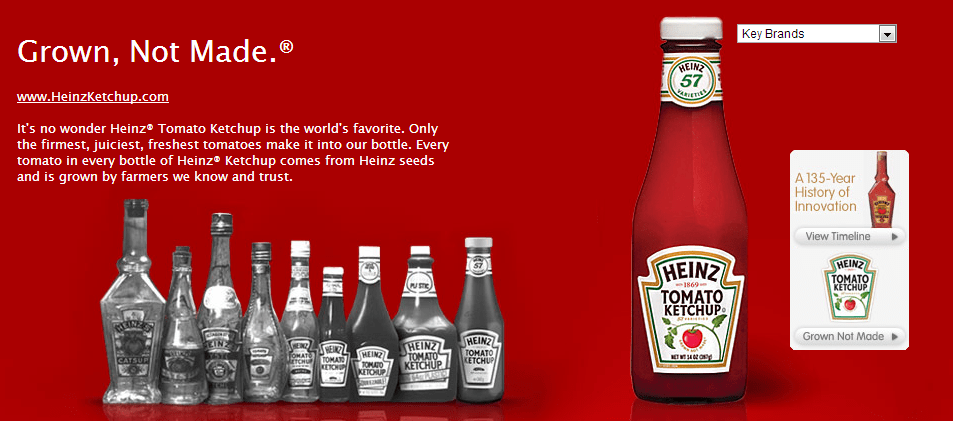
Successful companies are seen to be doing this really well. For example Kethcup & Sauces with sales of more than $5 billion globally (FY ’12) constitute the ‘core category’ for Heniz (source). In the 2012 Annual Report William R. Johnson CEO of Heinz proudly states (as if to prove the theoretical underpinnings of ‘Grow The Core’ framework)

Notably, we are proving that Heinz® Ketchup is far from mature after 136 years. In Fiscal 2012, our Global Ketchup business delivered excellent sales growth of 9.7% through innovation, increased distribution and continued expansion in Emerging Markets. 

Implication for Innovation 

The key insight for me here is about the possible implication that this “Focus & Grow The Core” strategy has for ‘innovation’. I guess focusing on the core and driving its growth needs an innovation strategy that is driven by tough and uncompromising choices. Tough choices based on questions like:  “What should we stop doing?”, “What should we further strip away from our new offerings in the pipeline”, etc. This might require what is called as “Innovation with Constraints”.

2 Examples:

1. Lego 

lego-story

A decade ago, Lego‘s balance sheet was in ‘red’ and part of their problem was doing too much – Lego had over diversified by moving into theme parks and clothing. And the once primary coloured bricks now came in a palette of 100 colors.

In 2005, one of the first questions the new CEO Jorgen Vig Knudstorp asked was,“What should we stop doing?” Lego sold the Legoland theme parks and halved the number of colours of bricks they were making. They began asking their designers to innovate with constraints, but to leverage those to become even more creative. Lego returned to profitability that same year. (source)

2. The Economist

With the advent of  iPad (and tablets) while many magazines were quick to launch their iPad Apps that were decidedly rich in their interactive multimedia possibilities (videos, hyperlinks, gifs, dynamic graphs, audio etc),  The Economist tok  a dramatically different approach to appeal to its target group – The Mass Intelligent.

They defined their strategy as Leanback 2.0 and went about designing a magazine App for iPad  that facilitates a real, simple, unfettered ‘Lean Back’ experience for its readers. What does it mean? Andrew Rashbass  –  CEO of The Economist Group says this meant  a conscious editorial decision to strip out even the their basic web innovations from their iPad App (let alone introducing something new).

The Economist(Source)

 Result: A reading experience that is more focused,  uncluttered and distraction free. Go through this insightful presentation by the CEO and read how radical simplicity and ‘finishability’ constitute the cornerstones of their Leanback 2.0 digital strategy.

Do you know of any other examples where a brand chose to focus on its core and made tough choices on its offerings or where a brand innovated within constraints to remain truthful to its core?

‘Method’ to say ‘Hello’ or ‘Help I am Horny’

There have been countless comparisons between how Microsoft ‘speaks’ via design and how Apple does.The best example is this classic  parody on Microsoft designing an iPod packaging.

Obviously neither of this is necessarily an always right/ always wrong approach to designing a pack or a pack  copy: as that depends upon many factors like the brand’s positioning, its design philosophy etc. But the key point here is that whenever any brand comes with a more inclusive/friendly/simple/’or whatever you chose to call it’  kind of positioning and design, it often breaks the ‘category codes’ and thereby creates a distinctive identity and appeal for itself. Sometimes it could even inspire the existing category codes and set new benchmarks (the recent redesign of Microsoft page for its Windows phone is the best example of how dramatically it is shifting away from its ‘past’ towards something that seems to be inspired by the Apple iPhone page)

Examples for this abound – even in categories like OTC Medication, Oral Care and Household Cleaning, where a handful of brands are slowly but certainly inspiring fresh category codes with their new positioning and design philosophy. A quick look at 3 such brands:

Over The Counter Medication:

Stripping away complexities that typical medicinal packaging bombards patients with, help positions itself as a simple medicine for simple health issues based on its “Take Less” philosophy

Take Less

Each package bears a “Help, I…” line of text, such as “Help, I can’t sleep” for a sleep aid, or “Help, I have a headache” for a package of acetaminophen.The simplicity of the packaging matches the promise of the products, which feature no dyes, coatings, and aim to use only the main chemical needed to treat the patient. By the way –  their recent product is called “Help I am Horny” and if you want to use it, you would “need to fill an application to convince them of your sexual superiority”!

Help

Oral Care: 

Imagine:  an army of germs marching  into ‘whatever it is’ only to be attacked by a flood of chemicals leading to a squeaky clean aftermath. Seems familiar? Interestingly, this imagery could be easily applicable to two diametrically opposite categories: Oral Care and (surprise, surprise..) toilet cleansers!

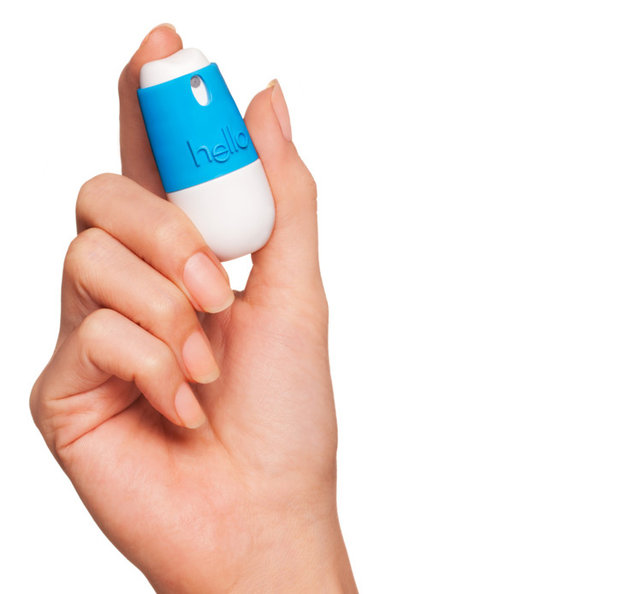
Armed with this insight about the oral care category increasingly assuming the codes of ‘toxic weaponry’ portraying themes of war going on inside your mouth– that need to be eliminated, destroyed & annihilated, Craig Dubitsky created hello– a ‘Seriously Friendly line of Oral Care Products’.

With packaging designed by BMW group’s creative consultancy DesignWorksUSA, hello is an accessible brand for the ‘average consumer’ with the entire mix designed towards one purpose: bring in a fresh breath of friendliness to Oral Care.

HELLO

Household Cleaning

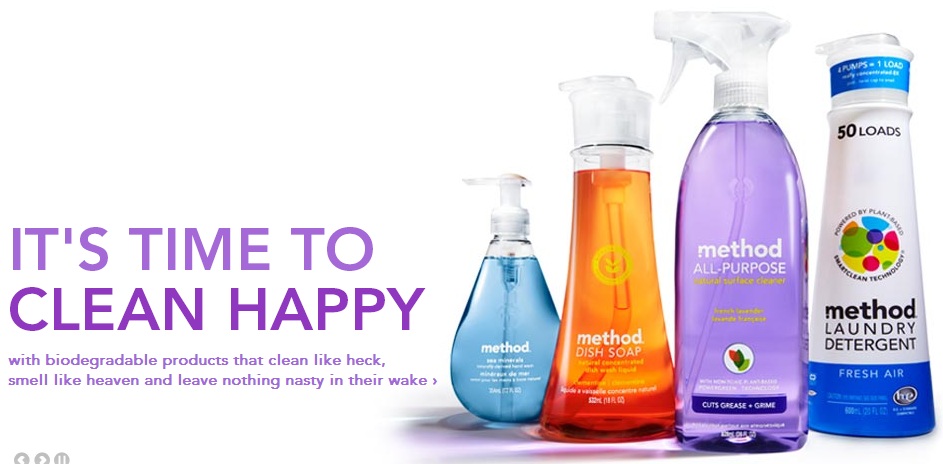
Speak of detergents, dish washing & household cleaning – and it might not always be the  most inspiring conversation and might not always bring a sparkle to the eyes or flushes of joy and excitement.  In 2001, Eric and Adam set out to change this – by creating cleaning products that “people didn’t have to hide under their sinks” and went on to become one of the fastest growing companies in the category. Read their story here.

Method

Method with its stylish, eco-friendly products has not only inspired legions of people with its products (did you hear of MethodLust – an independent blog titled as: “one man’s unsupressed lust for all things method”) it has also inspired people to start companies along similar lines (Craig Dubitsky: founder of hello – profiled above – was a board member for Method).

Speak about enlivening some of the most prosaic categories in consumer marketing.