Video Games As Disruptive Innovation?

Quick Read: Today’s video games like Grand Theft Auto V, are more than just stunning life like gaming experiences. We could have some exciting possibilities here – where experiential & interactive branding can be embedded in games. And more interestingly, a world where video games can be virtual beta testing grounds for new product and UX design. These could be potential disruptive innovations for fields like Market Research and Product Design. 

Visit Los Santos & Blaine County – where plastic surgery, bad movies and big sharks rule the roost – see for yourself.

So says the landing page of Grand Theft Auto V – the super hit block buster action adventure video game that has been rated as the fastest selling entertainment product in world history.

It broke industry sales records by earning US $800 million in the first 24 hours of its release, and US $1 billion within its first three days.

gta-5-grand-theft-auto-99

One of the key features of the game is that it has an Open World game level design – i.e., a world where a player can roam freely through the fictional city of Los Santos and is given considerable freedom in choosing how or when to approach objectives. So as a character in the game you have the freedom to spend your time pursuing adventure sports, lounge about by the beach, go shopping, visit the local artisan, enjoy music and other such entertainment options.

Los Santos(The Landing Page of GTA-V that lists the possibilities and features of Los Santos city and Blaine County)

But Fernando Pereira Gomes – a street photographer by passion and a game enthusiast who went to the midnight launch of the game and played the night away, noticed something even more interesting.

He noticed that the characters in the game had phones with cameras at all times during the game play. This means the players can practically take pictures from within the game(!) and upload these. So with this new tool, and the huge world of Los Santos and its streets, he started experimenting with the camera and went on to take some truly stunning photographs that he has started to share on his blog. Ever since its launch, his blog and the pictures have been rapidly climbing up the popularity charts – thanks to the ingenuity of his idea and the beauty he captures from within the game’s landscape. See a demo video on how he does it here. Now that is Street Photography taken to a completely new level!

He goes on to say..

What I found was remarkable. The game is so realistic that it felt like being in the streets outside, running around for shots, anticipating passersby’s movements and reactions. In a way, it was also incredibly frightening that these algorithms could look so real, or is it that we ourselves are becoming ever more algorithmic?

StreetPhotoV(Los Santos Street Photo by Fernando Pereira Gomes sourced from his blog)

On first look this is fascinating for two reasons:

  1. For the GTA V’s rich media, content and the game design that enables such  interesting possibilities (makes a definitive commentary on the evolution of game design).
  2. And for the creativity and ingenuity of someone like Fernando Gomes who has ventured beyond the apparent possibilities in the game and went on to make a mark for himself.

On second look, and from a marketer’s and a product designer’s stand point, I thought there could be even more compelling possibilities dormant here waiting to be realised. Two things I could think of:

In Game Experiential Branding

In game branding is nothing new. But how about adding an experiential / interactive angle to this ‘in game branding’? More specifically, how about, say a brand like Samsung, tying up with the game franchise and embedding its full camera functionality in the game’s camera phone? Wouldn’t it be an interesting way to let the gamers – many of whom tend to be tech’s early adopters and thereby potential customers of “the latest phone out there” –  try out the phone’s exciting new features?

The opportunities of ‘customer involvement’ here could be limitless – almost life like with little risk involved while affording an almost first person experience of the phone and/or its camera to the user. The best part is the free marketing that these early adopters could do for the brand if and when they share these pics on their social network.

A Virtual Beta Testing Ground For The Upcoming Wearables  

Let’s take Google Glass as an example  (one among the most awaited wearables in the market for 2014). As we speak now, it is in its Beta testing phase with some early adopters signing up to use, explore, develop and test new possibilities. In fact an Android developer Mike DiGiovanni looking to test the concept of using Glass as a second screen, has managed to capture Grand Theft Auto’s crucial in-game GPS interface, beaming it to the player’s Google Glass eyepiece in real time (source).

But how about embedding the functionality of  something like Google Glass within the game and let the players use it and explore its possibilities by themselves? I would guess something like this could give a treasure trove of real time feedback and insights to the product designers in order for them to refine its design and functionality.

Google Glass

Implications

Ben Hammersley  in his must read WIRED article on Wearables as the 3rd wave of computing, rightly says that when it comes to something like Google Glass, how our social progress plays out will be just as interesting as the technology itself. The social component of the implications would probably need to be tested and tried in real life, but the technology component and its possibilities can perhaps be tested in the game’s ‘reel’ life already today.

And may be when the game design becomes so smart to be able to reflect life like social dynamics – a not so unlikely prospect in the near future –  we might not even need the good old focus group or the hordes of beta testers!

Now, that could be a disruptive innovation for market research and product design!

Market research agencies and product designers of the world – hope you are investing in video games. No?

(Featured Image: Source, Fernando Pereira Gomes Street Photography on the streets of Los Santos within the game Grand Theft Auto V)

The Business of Belief

Quick Read: Every business that we know of can be said to be in the ‘business of belief’. While a majority of these business thrive on building and sustaining our beliefs, there are also ones that thrive on breaking down and challenging our beliefs. 

Arguably every business that we can think of can be said to be in the Business of Belief.

While most businesses that we see around can prove this point, RIEDEL glasses are a very straight forward example.

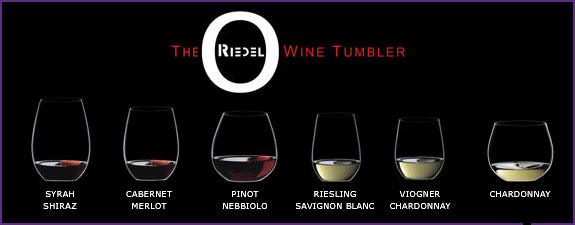
RIEDEL is an expensive line of glassware designed to deliver the wine’s ‘message’ via the carefully crafted form of the receptacle. In other words, Riedel has built a thriving business of glassware by driving a belief that the shape of their glasses can make wines test better!

Skeptical? The story goes that even experts and wine critics were – several of them skeptical of this seemingly implausible claim.

And yet today, hundreds of wine experts, and thousands of customers now swear it’s true. Taste tests throughout Europe and the U.S. were said to have proven time and again that wine — expensive or inexpensive — tasted better in Riedel glasses.

riedelo

Except it’s not true. At least not empirically. (source)

When subjected to double-blind testing that doesn’t let the taster know the shape of the glass, people found no detectable difference in taste between glasses. Objectively, the shape of the glass just doesn’t matter.

But subjectively, when belief in the story and the experience of the glass are added back in the mix, it matters. And the wine does taste better to these people. Today some Riedel glasses sell for more than 100 dollars each and people covet these over other lower priced glass ware!

Therefore, sensing a branding opportunity that is waiting to be leveraged, Coke has recently tied up with Riedel to come up with a glass that “is designed to enhance the drinking experience”. The Coke site goes on to explain..

Shaped by trial and error by a panel of industry experts and Coca-Cola lovers, this form captures the distinct spices, aroma, and taste of Coca-Cola and creates a magical sensorial experience… A unique glass for a taste like no other.

RIEDEL+Coke(Riedel + Coke, Source)

While this ‘glass act’ by Coke drew myriad views from the F&B industry, it nevertheless makes for an interesting commentary on Riedel as a company that has thrived by systematically building a business of belief.

Meanwhile elsewhere…

Interestingly there also exist businesses that build a following for precisely the opposite reason – by belying beliefs and tearing down expectations each single time they offer something to the consumer.

Take The Art of Dining – a business that sets up theme based pop up dining experiences – as an example.

As part of their model, Ellen Parr and Alice Hodge, put on theme-based pop up restaurants mostly in London. The venues – always unusual and unexpected – have so far included a 16th century mansion, an eel and pie shop, the Victorian Dalston Boys Club, and the army barracks on City Road while the themes range from wartime rationing to the Food of Love. The whole experience is like eating within an interactive art installation. Each of their dining event is thus an experience that belies conventional expectations and common beliefs on what is to come.

A Night With The Mistress(Themed as ‘A Night With The Mistress’, guests were required to put on a blind fold when they ate, Picture Source)

Their recent series called Say Cheese – the photography of Martin Parr in five courses, is the duo’s latest example on how they have cemented their expertise in their signature experiential model – Set up expectations, evoke the guests’ pre conditioned beliefs and pull the rug off their feet as they take the plunge. 

This is how it works:

  • You enter a typical English café setting: gingham table cloths, plastic flowers on the table, pictures of Lady Diana and Mrs Tatcher, copies of the Sun etc
  • The waiting staff are mostly English, wearing floral pinnies
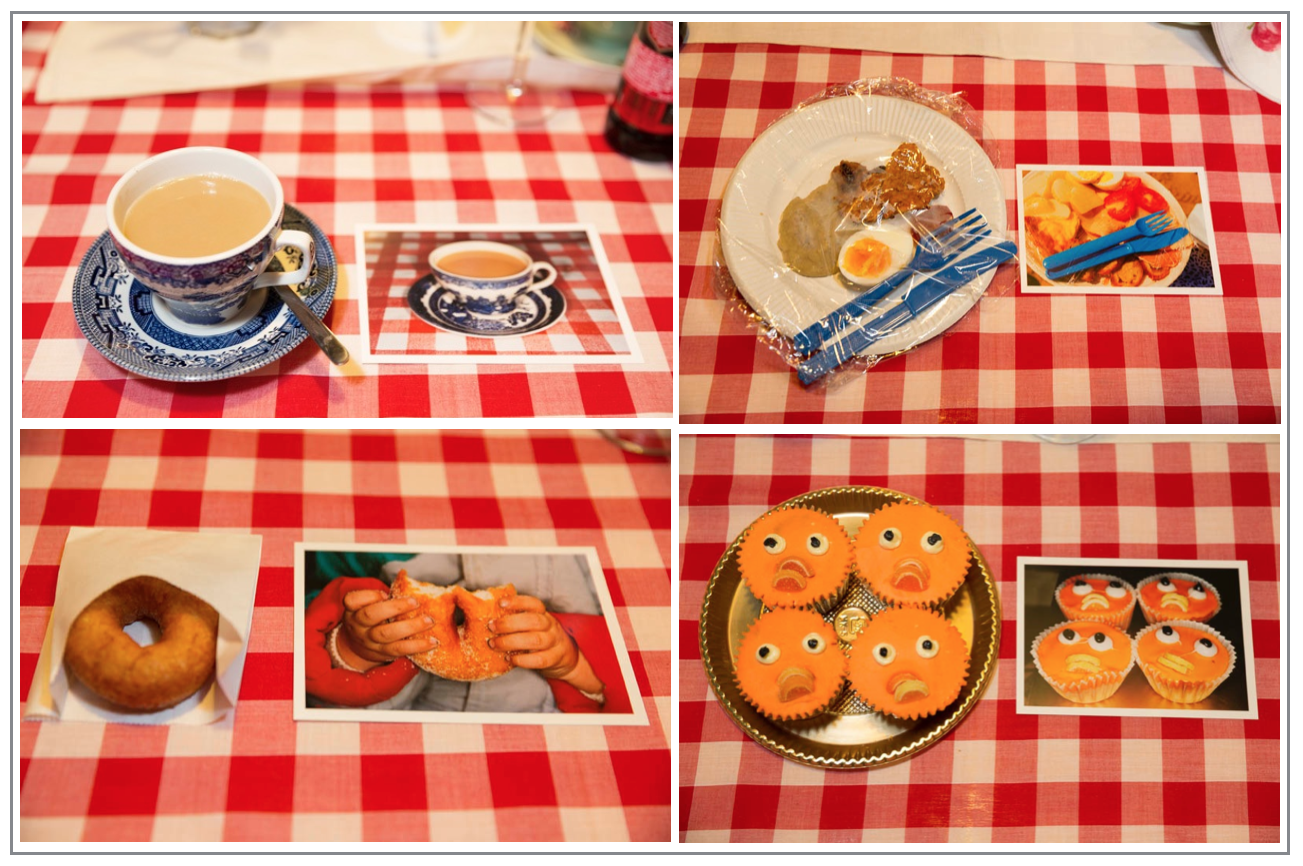
  • And this is where it starts to get interesting -You don’t get a conventional menu, but a set of 5 photos by Martin Parr – the legendary photographer
  • And here is the twist: the food looks just like the images but tastes completely unlike what you expect.
  • For eg. An English tea cup is filled with a tea coloured liquid, poured from a tea pot, which turns out to be a delicious Tom Yam Soup. A doughnut is actually a South Indian savoury, made from lentils and served with a coconut chutney. And it goes on

Martin Parr(Each of the five courses saw Martin Parr’s pictures come to life in bizarrely unexpected ways. Compilation of pictures from here)

See the short video here to get an idea on the actual execution

http://vimeo.com/69361520

Say Cheese! The World of Martin Parr in 5 Courses from GOLIGA on Vimeo.

This pop up experience was also offered in Tokyo in 2013 and as per Time Out Tokyo, the tickets costed  ¥12,000 per person, and were limited to 50 people per night. Food, it says, doesn’t get much more high-concept than this.

Now that’s a business that is actually built on belying beliefs!

(Featured Image, Of Wine Glasses and Beliefs. The Riedel Wine Glass Company Brochure, Source)

Commodities and Fakes. Branded

Can fakes be branded? 

Can fakes be differentiated and charged a premium for? Two recent examples show they bloody well can be!

1. Fakes with an accompanying personal escort flying first class  

A 24 hour escort is the norm for valuable paintings when they are transferred between museums. But a set of forged paintings have been recently extended security arrangements that rival that of the originals. Why?

Because these are not just any other fakes. They are imitation paintings by the world’s most notorious forger Han van Meegren the world war II era painter and master forger – who so well replicated the styles and colours of the legendary artists that the best art critics and experts of the time regarded his paintings as genuine and sometimes exquisite. His wikipedia page says that he is considered to be one of the most ingenious art forgers of the 20th century, so much so that his paintings including his signature have been subsequently forged as well!

Van_Meegeren_signatures(Source, Wikipedia. A collection of genuine and fake signatures of Han van Meegeren)

Today his forged paintings are a brand on to themselves and are treated as prestigious artworks that require the same measures of security as the authentic ones.

2. 3D printers being used to fake Vincent van Gogh 

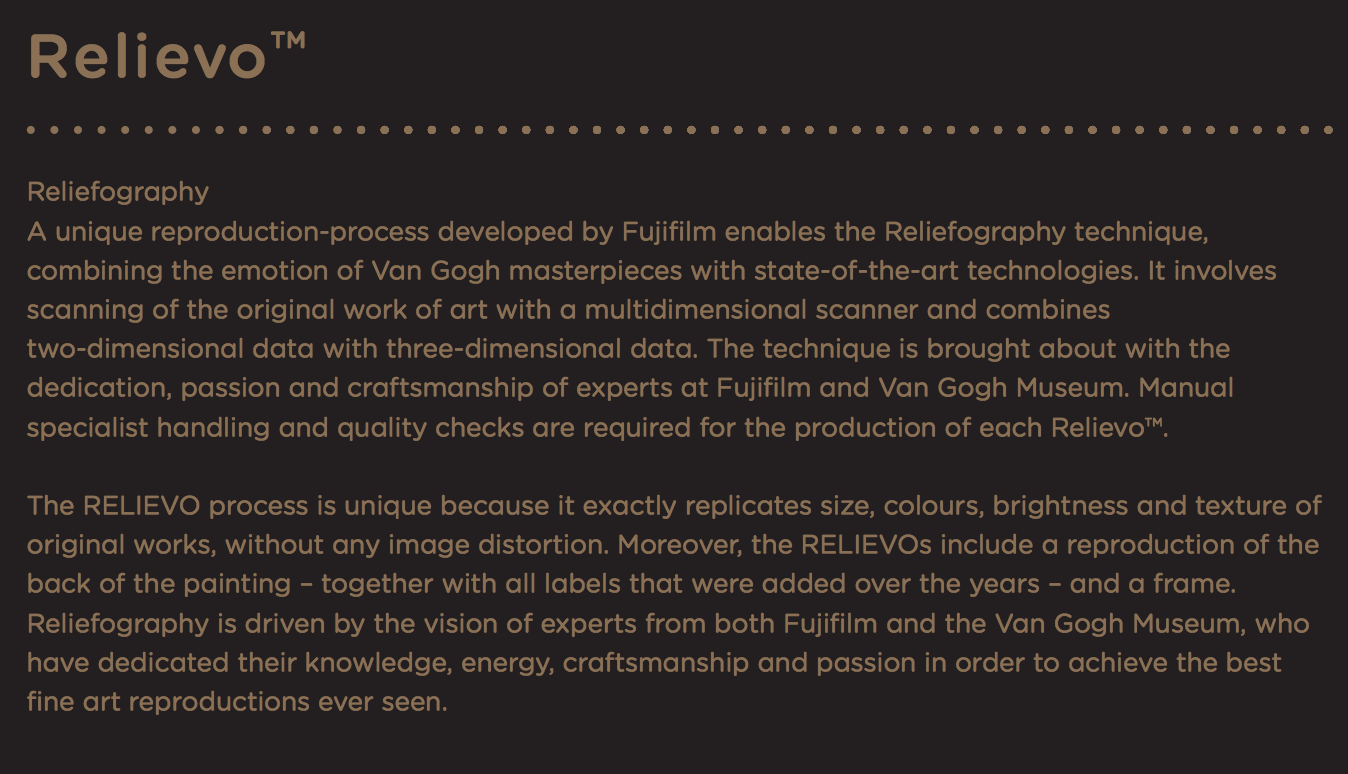
Now this time, the story to brand the fakes of none other than the works of Vincent van Gogh comes with  its own coined term and a trade mark! Introducing Relievo™

Relievo

(Source: PDF on the Relievo Collection by the van Gogh Museum)

Interestingly this initiative to develop and sell the fakes of the legendary artist is being led by none other than the official van Gogh museum.  Accordingly to this post, the museum is hoping to increase access to pictures which, if they were sold, would go for tens of millions of pounds to Russian oligarchs or American billionaires.

The replicas, called Relievos, are being created by the museum in partnership with Fujifilm, with which it has had an exclusive deal for three years. Such is the complexity of the technology, known as Reliefography, that it has taken more than seven years to develop. It combines a 3D scan of the painting with a high-resolution print. The “super-accurate” reproduction even extends to the frame and the back of the painting. Every Relievo is numbered and approved by a museum curator. And best of all – there is a limited edition of 260 copies per painting.

A limited edition of fakes with each copy uniquely numbered and approved by the curator!! 

Clearly, some fakes are more equal than others!

Commodity Branding 

On a related note, even among commodity products, some brands can be more equal than others. And when they are, as always they make for an interesting marketing case study.

Double A – the paper brand for office supplies and photocopiers has an understandable challenge. Drive user preference in an extremely commoditised category.

So how did they do it? The recent ad campaign by Double A is a case in point. Read the full story here and see all the 4 featured ads in the post by L.Bhat. My favourite 25s spot below. (For email subscribers the URL to the video here)

(Turn on closed captions for subtitles)

So, a paper is a paper? Or is it? 

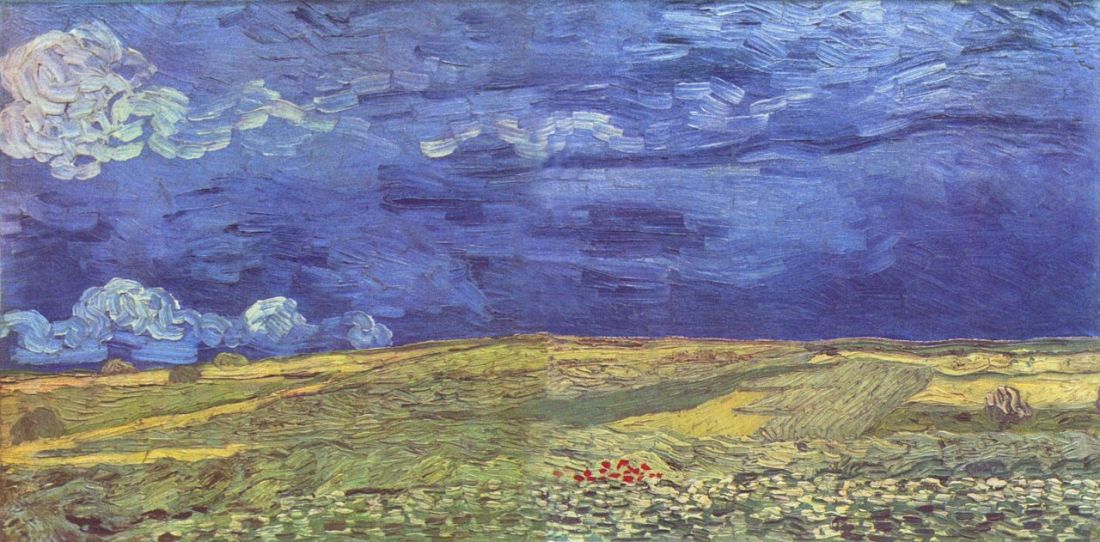
[Featured Image: Wheatfield Under Clouded Sky by Vincent van Gogh. One of the paintings to be reproduced using the 3D printing technique Relievo™]

The New Marketing Mindset

Invention and Innovation could sometimes be polar opposites.

Seems counter intuitive, right? But when you read this brilliant piece on Segway, it would seem almost commonsensical. Segway, the article posits, failed because it was focused solely on inventionbelieving that it alone has come up with the perfect idea for a great product. The company didn’t spend as much time or effort on innovation the ongoing iterative process of going back and forth with the consumers to test and understand what the market wants and ensuring that the product meet their needs.   

This on going iterative process with the consumer to test and understand what market wants and applying these learnings to make your product meet their needs has a specialised name today.

Growth Hacking.

Depending upon who you are / what you’ve been smoking / or what you’ve been reading recently, this could possibly be the first time you hear this term or probably even the zillionth! Whichever be the case, Growth Hacking as a term is topping the charts in popularity, appeal and relevance to describe a must have mindset in the world of product design and marketing.

Coined by Sean Ellis in this legendary article, Growth Hacking is essentially marketing albeit repurposed to the evolving dynamics of consumer, product and consumption today. Chances are that most of us would have been witness to, experienced, and were target consumers of live Growth Hacking experiments. Don’t believe me?

  • Did you yearn for an invite for a Gmail account back when Gmail was introduced? That was neat Growth Hack from Google!
  • Did you refer your friends to try out Dropbox to get free storage space in return? You were being Growth Hacked!
  • Do you remember those end lines in mails that said something like Sent from my Blackberry/iPad/iPhone..? Growth Hack, it was!

Read about the 10 of the best growth hacks of all time here. Aaron Ginn’s page is a great place to start on a journey to explore more resources on Growth Hacking and Ryan Holiday’s book Growth Hacker Marketing could make for a great primer on this topic over an afternoon meal.

Today ‘Growth Hacker’ as a term has gone mainstream even in the jobs’ lexicon. For it is not unusual to run into marketing job postings that come labelled as “Wanted Growth Hackers”!

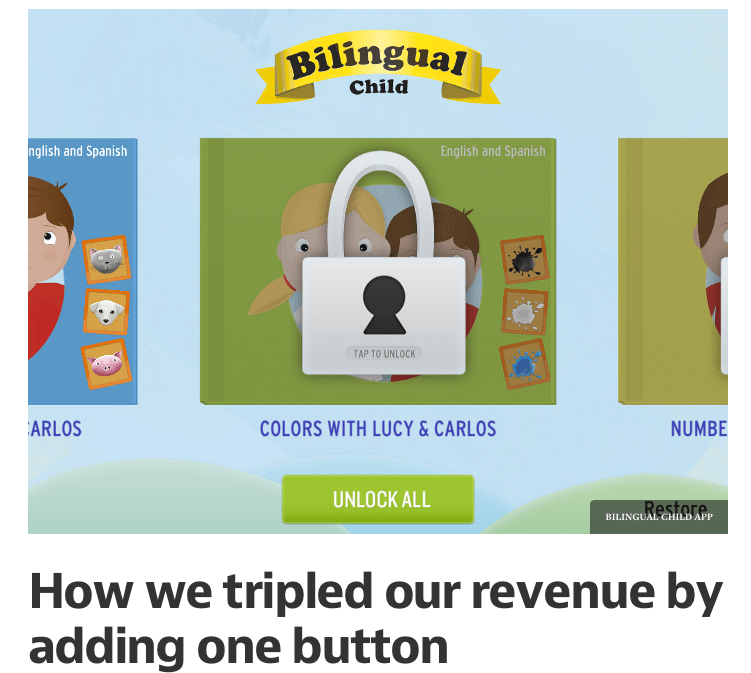
While case studies of how Growth Hacking has worked out for (now) big brands like Instagram, Pinterest or Airbnb make for a fascinating read, lesser known examples can give an equally compelling perspective and an insight on how Growth Hacking can actually move the needle. The story of Bilingual Child – an iOS App to teach Spanish for kids – is a recent example. Not content with how their sales were panning out, the team at Bilingual Child went on to delve a bit deeper into the data and discovered a Growth Hack. The result:  they tripled their revenue by adding one button! Read the story here.

Bilingual Child

(Source, Medium. Click on the picture to read the story)

Well, if you have come this far you could be forgiven for thinking that Growth Hacking is majorly applicable to software products or startups. But nothing could be farther from the truth.

Amy Webb was having no luck with online dating. So she figured out the system, monitored and measured the impact of her  ‘hacks’ and went about achieving what she set out to do – finding her match. Hear this story of how she went on to hack her online dating life — with frustrating, funny and life-changing results.

Is this Growth Hacking? You bet it is – Amy’s bold and calculated attempt to drive growth in the quantity and the quality of potential matches for her. The core essence of her approach is equally (if not more so) applicable to something like say updating my LinkedIn profile. And that for me is a compelling takeaway from her TED talk.

So the bottom line is clear, irrespective of the field of application – a company, a product or even a person, the ability to delve into data, bring in curiosity and operate with a mix of creativity and an analytical ability has huge implications in driving growth. No wonder then, Growth Hacking is said to be redefining the very mindset of marketing as we know it.

After all, when was the last time you had a name for a discipline that neatly encapsulated the objective and the enabler of the activity in a single breath?  

(Featured Image, Medium’s collection on Growth Hacking, Another great resource on this subject)

Remarkable And What Lies Beyond

When you look at a photograph, read a novel or eat at a good restaurant what do you expect?

A good capture of a single moment in time, a nice story and a decent meal. Right?

What if these expectations are messed up and you need to discover for yourself a whole new experience in consuming these products/services? Let’s start with Stephen Wilkes.

The Photograph

Each photographer tends to have an area of interest. i.e., a fascination of architecture or people or nature etc. But what if as a photographer, you are fascinated by architecture and people and cities and also nurture a love of ‘shooting history’? Stephen Wilkes is one such guy and has a way of going about it.

  • He starts at a vantage point that can afford a panoramic view of the location of an iconic land mark
  • Then he shoots what he calls the ‘naked plate’ – a shot of the land mark with absolutely no one in it – in other words  a completely deserted landscape of the location
  • Then over a span of over 12 to 15 hours from dawn to dusk in a day, he takes nearly 1,500 pictures of the same location from the same angle, while also taking mental notes of the shifting landscape and the random events unfolding below him
  • After this action at the location, he then selects about 50 final shots from which to over lay the final composite picture that seamlessly merges the action that had unfolded between dawn and dusk at that single place in a single shot!

Result – pictures of a place that are panoramas in ‘Day to Night’ that can throw your brain off the hook. Each picture in this series can look like a magical landscape suspended along a tapestry of time. Don’t believe me? Then let his pictures from his newest body of work titled ‘Day to Night‘ do the talking.

Shanghai

(Stephen Wilkes, Source, Shanghai, Bund)

Times Square

(Stephen Wilkes, Source, Times Square)

The November 25 Edition of TIME features a photo essay based on Stephen’s work. As the article puts it,

A lot can happen between sunrise and sunset especially when Stephen Wilkes is photographing it. 

The Novel

OK, so this is going to be difficult. For how do I write about a book that redefines the very experience of a book?

S. – a novel by JJ Abrams and Doug Dorst, released on Oct 29th 2013 is a first of its kind experiment in book design, layout, narratives and structure. It is a book that stands out because of its unprecedented ambition, creativity and inventiveness.

For the first time you might actually feel a need for a ‘guide’ on how to read a novel! There are three enmeshing story lines in S. :

  • First you have the story in this book by name “Ship Of Theseus”
  • Second you have the mystery about the fictional author of this book by name V.M. Straka
  • And third you have the dialogue between the two readers of this book by name Jennifer and Eric, who communicate to each other via hand written notes along the margins and inserts

Designed by the New York-based design firm Melcher Media, this is a book that can easily be an inspiration for a generation of designers, writers, novelists, publishers and marketers to come for years! Read this FastCompany article for more details.

As the article says..

It’s difficult to decide exactly how to start reading S.–a sort of 3D Infinite Jest with a pop sensibility–and nearly impossible to imagine how it ever got written.

See this video to get a feel of what is inside the book

Trying to explain this book is like trying to explain the plot of ‘Inception‘ and raving about the genius of its concept. The only way to appreciate the ingenuity of this art form is to get a book and start reading. I – for one – cannot wait to begin my magical adventure with S. and discover a whole new experience of consuming a novel!

The Restaurant

Earlier this month, DiverXo has become just the eighth Spanish restaurant to win an unbeatable third Michelin star. With an unassuming kitchen that measures just 30 square meters, it is the only establishment in the Spanish capital to hold the honour. But that’s not the big deal.

The big deal is how DiverXo – led by the Spanish chef David Munoz – turns every single convention on its head as a restaurant.

  • For starters, upon entering, every diner is given a one page manifesto on how to best enjoy the food in the restaurant. All they need is to surrender every preconceived notion and suspend judgement and just do as they are told
  • Once seated, DiverXo offers a choice between a ‘short menu’ (7 dishes,  €95, lasting 2.5 hrs) and a ‘long menu’ (11 dishes,  €140, lasting 4 hrs).  Both menus are exquisitely choreographed as unprecedented gastronomic experiences by the chefs
  • For e.g., as per TripAdvisor,when a dish arrives on the table prepare to be instructed to eat with even a spatula!
  • And as per this AFP article, no sooner do you dig into say – a raw cod fillet drizzled with boiling olive oil and accompanied by potato skins and pickled chilies, don’t be shocked if a cook bursts in to you and lays on hot mayonnaise
  • Later, as you chew more another chef could arrive with a cream of cod and sea urchin

And the shocks and surprises continue.

rp-diverxo-1

(DiverXo, Artful dishes that push the limits of fusion cuisine, Source)

Besides, as per this AFP article ..

  • Even the design of the food can tend to defy expectation. For e.g., a fiendish ketchup of chili and tabasco makes the dish of duck dumplings and fried ducks’ tongues resemble a blood-splattered murder scene
  • The menu lists not ingredients but rather sensations: sweet, sour and, in the case of one star dish, the “Hannibal Lecter”, sharp

As the article says..

The self-proclaimed “brutal” approach of this tiny eatery, where the cooks rush to add ingredients to diners’ plates mid-bite, has made it one of the most unusual restaurants ever to join the world’s gastronomic elite.

In summary DiverXo is a first of its kind restaurant where the rules are simple: Come with an open mind, trust the chefs, expect to be shocked and prepare to be surprised as you embark on a culinary adventure like never before.

May be food is almost besides the point here. Or may be it’s all about the magically shocking experience of what a restaurant has never been yet!   

All about experiences that redefine the product, category and consumer expectations

So the next time when we think of ‘elevating consumer experience’, it could be worthwhile to remind ourselves of these extra ordinary examples that go beyond this ‘elevating the experience’ mould. Three brave, ingenious and creative examples where the very experience of the product has been redefined, our expectations as consumers defied and all norms of the category disbanded.

So now you know. What lies beyond remarkable?

Magic –  after all –  could indeed be serious business!

The Best Touch Points To Market To SME Businesses In India

Imagine stepping into a market that has only 10% market penetration of the category that you specialize in.

Sounds like too good to be true?  Welcome to a new chapter in the Indian growth story. The  SME – Small and Medium Enterprises sector in India.

A few facts first.

In India, the size of the investment that a manufacturing or services company makes in its plants/machinery/equipment determines if it is to be classified as a Small, Medium or Micro Enterprise:

SME Classification INDIA(SME Classification: Indian Manufacturing and Service Enterprises, Source)

 Besides, today the SMEs in India are known to:

  • Contribute to 45% of the industrial output
  • Make up 40% of India’s exports
  • Employ 60 million people
  • Create 1.3 million jobs every year
  • Produce more than 8000 quality products for the Indian and international markets and
  • Have been growing at 8% per year (source)

In fact, by some accounts India has the largest number of SMEs in the world — at 48 million —second only to China!

But that’s not the most salivating part of the story. The magical statistic is the following:

As per a recent study conducted by Microsoft-Boston Consulting Group (BCG), nearly 90% of SMEs in India have no access to the Internet(!), compared with only 22% of SMEs in China and 5% in the US. A commensurate increase in technology adoption by SMEs can potentially add  $56 billion to the country’s economic output and create more than one million additional jobs, says the study.

This is a telling statistic on the growth potential for IT companies that market to SMEs, their wares related to Cloud computing (e.g., SAP, EMC), Productivity Solutions (e.g., Microsoft Office Suite, Xerox etc), Digital Marketing Solutions (eg, Google Adwords etc), Networking & Infrastructure Management Solutions (e.g., HP) etc.

No wonder then companies like Google have begun to make massive inroads to market to SMEs in India. Two recent examples:

  • As part of a massive campaign called ‘India Get Your Busisness Online‘ aimed at bringing down the barriers that prevents SMEs to get on the Internet, Google India & HostGator recently targeted popular traditional markets in Ahmedabad, Surat, Vadodara and Rajkot and built websites for over 5000 small businesses making them accessible to the world besides also creating Google maps listings and Google+ business pages for them. As part of this, Google India has recently announced its plan to get 50,000 SMEs in Gujarat online by end of 2014. (source)
  • Google India has partnered with Getit Infomedia to market Adwords to SMEs in South India. As part of this 50,000 SMEs in Coimbatore mainly in engineering, automotive components, textile machinery and pumps and motors would be targeted and educated on how to achieve global reach at lower cost with measurable results and personalisation. (source)

So while there doesn’t seem to be any dearth in the ambition and appetite of IT companies that target SMEs, the natural question that this begets is  – What is the best touch point to market to SMEs in India? What is the Zero Moment of Truth for these customers? 

My take on this  –  For IT vendors, banks are the best touch points to market to SMEs in India. The Zero Moment Of Truth in marketing (potentially any IT product/service) to SMEs is the time when they engage with their bank for their financing needs.

Why? My reasons as below:

  • Relationship: Given the role that banks play as lenders/financers/ advisers/ networking conduits for their SME customers, the latter tend to nurture their relationship with their banks for their long term interest. So the ‘lender – borrower’ equation in this context lends itself to exciting possibilities as a touch point for cross category marketing and info dissemination.
  • Reach: Banks have a very wide reach across the length and breadth of India.  For e.g., SBI – a government owned banking corporation has 14,816 branches in India, as on 31 March 2013, of which 9,851 (66%) were in Rural and Semi-urban areas (source). So they are naturally positioned as an incredibly powerful ‘distribution channel’ to market to SMEs.
  • A Customer Mindset that tends to be Future Oriented: The moment a SME operator steps into his bank to say, apply for a loan, his Zero Moment of Truth begins. After all, the sheer process of zeroing onto and applying for a loan are the most forward looking instances in terms of the customer mindset in setting up/sustaining his business. So can there be a better time to engage with him on possibilities and the cost benefit equations that are relevant to him from your product proposition stand point?
  • The Equation of Trust: From a psychological perspective, banks are traditionally about ‘trust’. So any message that gets seeded to a SME customer within the context of a banking relationship is bound to be enveloped with a liberal coating of feel good emotions like openness, good will and trust.   
  • Multiple Touch Points to Seed Content: A typical customer journey in a banking process is laden with multiple touch points from the multitude of application forms, the multiple approvals that need to be sought, the bulletin boards on the walls, the pamphlets that help the customers kill time as they wait for their turn, the tellers, the bank manager etc which can all seed compelling content on potentially any given new product/service that could be relevant for the SME.
  • A Win Win Relationship: Most banks tend to be big customers of IT services/products already. So they can be a willing accomplice to partner with an IT company to help market their wares to SMEs in return for say, a competitive pricing package for the coming year on their IT requirements. So a win win relationship can thus be effectively leveraged.
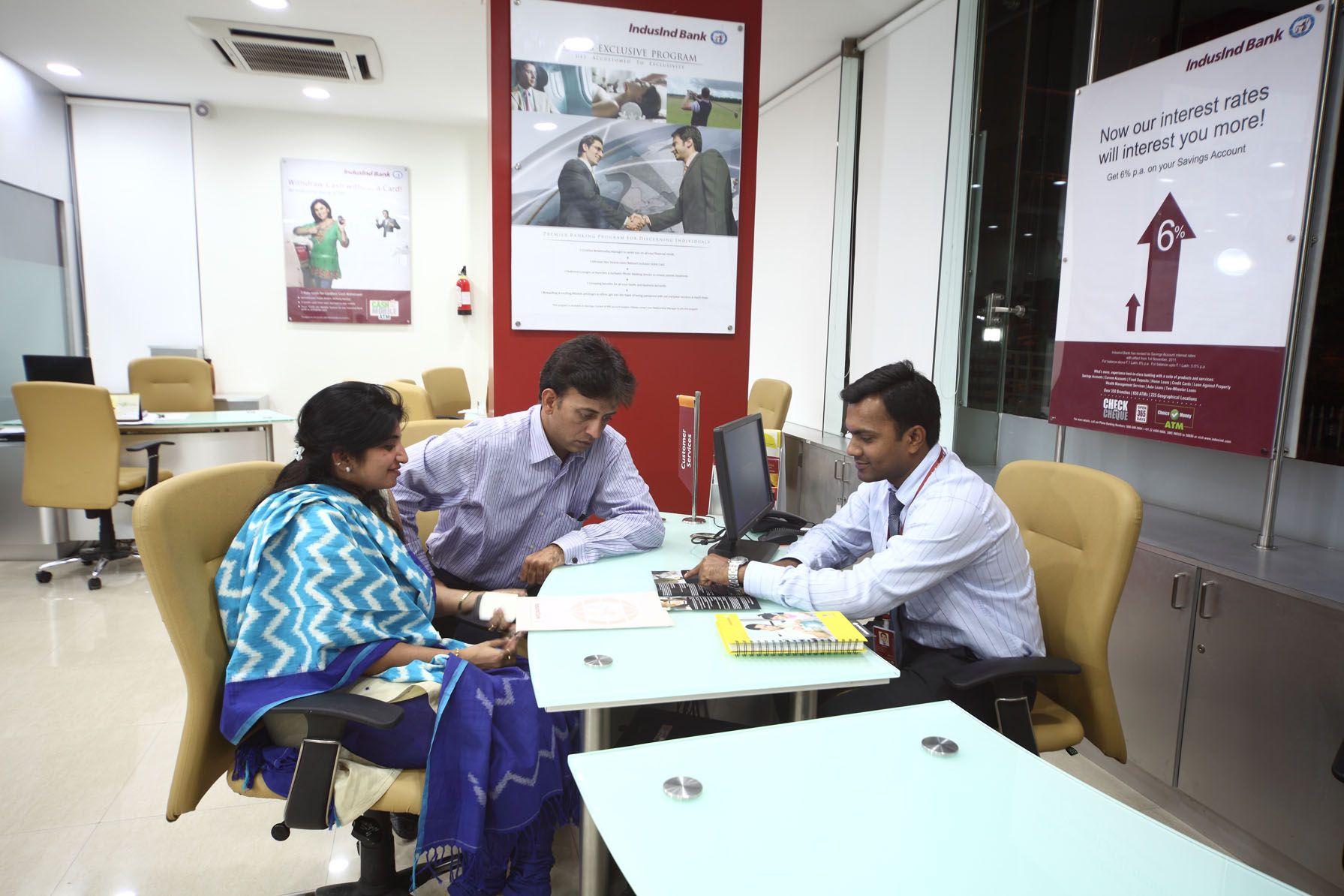
indusBank
(Image Source)
So there you have it, some food for thought. All along the purchase funnel right from building awareness, influencing consideration, driving sales to growing loyalty and retention, aren’t banks the strongest touch points to tap into when it comes to marketing to SMEs in India?

And for a category like ‘IT’ that is only 10% penetrated among the SMEs, what are we waiting for?

Twitter and Condoms

Two companies. Two successful IPO debuts in the same week. But two different stories.

Let’s start with Twitter.

Twitter shares surged 73% at market debut this week, and closed at $44.90, after hitting $50 at one point – or almost double its $26 offer price. Financial Times reports that at that level, Twitter was more valuable than market heavyweights such as Time Warner and Yahoo! In fact, by some reports, there is also a sentiment that by pricing its  shares at only $26, Twitter has ended up leaving an awful lot of money – nearly $1.3bn –  on the table!

[Amidst heaps of articles out there currently on Twitter, if there is one article that you need to read this week, this would be  it – Bloomberg Businessweek’s cover story on the ‘Surprising Sophistication of Twitter’.  

Twitter Businessweek

(Cover Page, Bloomberg Businessweek, November 11 – 17, 2013)

A small teaser from the article:

Millennia from now an intelligence coming across a single tweet could, like an archaeologist pondering a chunk of ancient skull, deduce an entire culture.

Deducing an entire culture from a single tweet? Do read the full post to appreciate the wealth of data that gets encapsulated in each tweet that we send out and its implications.]

For hints on how Twitter could possibly go about driving growth and revenue, one just need to look at these two statistics:

  • 77% of current Twitter users are from outside the United States. And given the potential swing of the demographics in many Asian economies in the coming years, Twitter’s target user base in these markets is expected to grow at a sustainable pace.
  • However while the advertising revenue that Twitter currently realises from every 1,000 interactions from the US is $2.58, this figure is only 36 cents for the other 77% of the interactions. (source)

These clearly underscore the tremendous growth potential that Twitter has in several Asian markets.  No wonder then Twitter has started to strengthen its focus in markets like India over the last 1 month.

Meanwhile on the other side of the world earlier this week…

Karex, a Malaysian company – the world’s largest maker of condoms –  has debuted on the Kuala Lumpur Stock Exchange with a 30% surge in share value on day one. The company, which supplies to prominent global brands like Durex besides also selling its own brand Carex, has nearly 10% global market share in condoms. (source)

Carex_Condoms_Firefly(Carex Condoms, Agency: Grey Group, Kula Lumpur, Source)

Today by Karex’s own estimates it cranks out almost 10 times more condoms than Trojan – the key condom brand in the U.S. Karex’s IPO was a tremendous success amidst analysts’ forecast that greater awareness of family planning in developing Asian countries will spur demand for condoms.

So while one company that went public this week has a story of exponential growth expected from the ‘powerhouse’ Asian markets, another company that went public during the same week from the other side of the world has a story that counts on the contrary – family planning and control in population growth in the Asian markets!

Couldn’t help noticing the contrasts.

Two companies. Two successful IPO debuts in the same week. But two slightly different stories.

(Featured Image, Source)

Know Thy Neighbor Nextdoor

Share it, Tweet It, Pin It, Like It, Stumble Upon It, Digg It and the list goes on..

Every conceivable kind of content that we consume on the internet today comes with explicit social networking markers.

Today with over 1000 Social Networking sites known to exist globally and 16 virtual communities with more than 100 million active users to date, Social Networks/ Virtual Communities have truly changed us and as also our definition of SELF(!). For most of the activities that we partake in our daily life like work, sports, hobbies, shopping, travel, dine, drive, and the list goes on, there is a virtual community / social network for each if it.

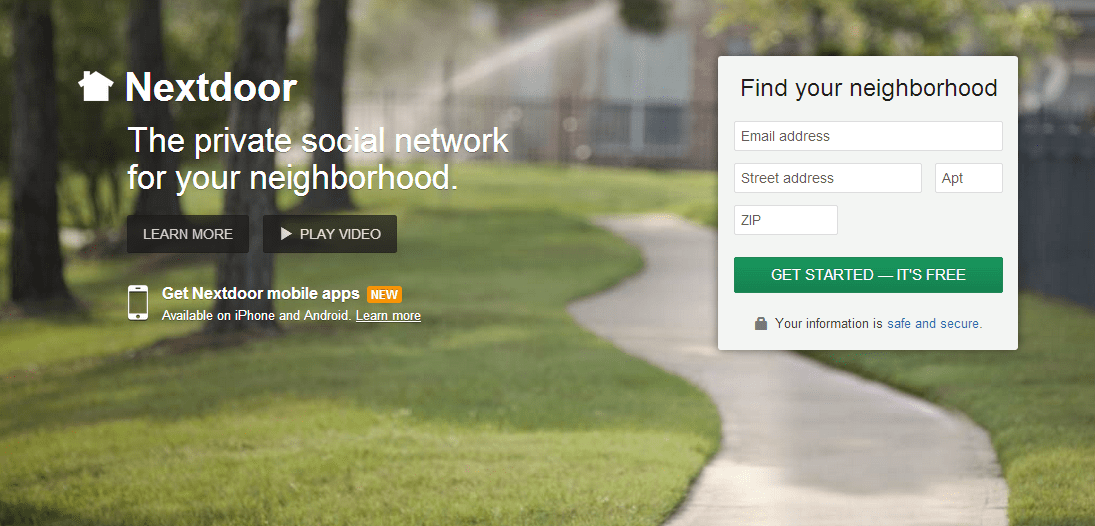
Now a social network built exclusively for local neighborhoods – called NextDoor is in the news for stepping into the elite territory of start ups.  On NextDoor.Com, each neighborhood is a closed social network where users have to verify their real name and address to gain membership. Once we are in, the idea is to be able to connect with our neighbors, strike conversations, while finding out everything from local deals, finding nearby help or even be alerted of neighborhood crime.

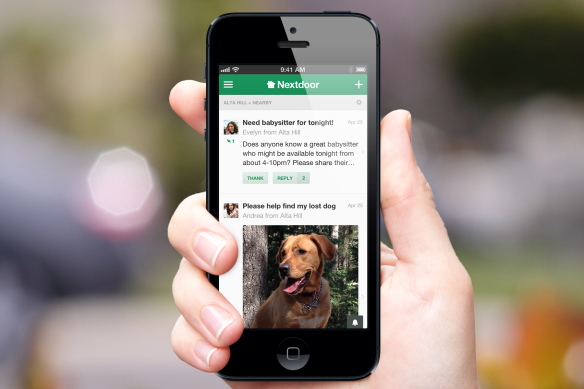
nextdoor_iphone_blog

(Image Source)

Developed on the insight that The Neighborhood has always been one of the “original social networks”, it has recently raised $60m fundraising led by John Doerr, the Kleiner Perkins Caufield Byers partner who led the IPOs of the likes of Amazon and Netscape and Tiger Global Management – prominent VC firms. (source)

This latest round of fund raising values the company at nearly $ 500 m as NextDoor.Com is slated to expand to more than the currently listed US neighborhoods on its site. Nirav Tolia, co-founder and CEO of Nextdoor, says there was already “incredible demand” abroad and goes on to say..

 “We see this whole notion of building safer and stronger communities is not an American thing at all, it is something all people share”.  

What I really like about the idea of a Neighborhood focused Social Network is the degree of relevance that can finally be attributed to the potential ads that can be placed in the network and the ways in which it can benefit all the players in the equation:

  • The Advertiser: Businesses in the locality can micro target the ‘captive’ user base in the neighborhood via their ads while also nurturing a local community of customers on an ongoing basis. The biggest opportunity here is for the SMBs.
  • The User: A user can find the most relevant offers from around her apartment rather than get bombarded by offers from across the country if not the world!
  • The Publisher: The publisher can facilitate the precious need of SMBs in the locality to micro target and reach out to their customer base in a very cost effective way, while also being able to track and optimize listings on a real time basis.

It’s almost like combining the best parts of Yelp, Craigslist, Foursquare, Path and Facebook with a liberal dash of a local flavor.  Like any other virtual community while it does come with its own privacy related nuances that need to be managed if it were to thrive across localities for the long term, one thing is nearly certain ..

We can finally get to know our neighbor. Albeit at least through the window of our screen.

PS: Two interesting things that you might want to check out:

  1.  To celebrate the ‘most neighborly holiday of the year’, Nextdoor launched just in time for this Halloween, a Treat Map to give you an insider’s guide to the best streets for treats in our neighborhood (relevant mostly to the US as of now)
  2. Funnily, Nextdoor has a page on Facebook 🙂

Soundscapes And Sonic Tapestries: Part 2/2

What do Cyborg Artists, Automobile Engineers, Game Designers and Branding Specialists have in common?

At least those featured in this blog post, that is. Surprise, surprise… all these have sound at the core of what they do!

See the part 1 of this thread here. In part 2, let me share some fascinating examples whereby sound and our ability to decode sound waves is complementing and supplementing our perceptual experience in truly astounding ways!

Sound As A Complement To Our Perceptual Experience

Sound (and its design) can be deployed in a very strategic manner to compliment our perceptual experience. Two compelling examples:

(1) Soundscaping In Product design: We know that there are armies of designers and engineers that work towards designing and developing  a car – it’s mechanics, electronics, aesthetics, thermodynamics, fluid dynamics etc. But did  you know that car companies  also employ sound experts to design the noise of a car? Read here a fascinating account of how GM makes a car sound like what a car is supposed to sound like. On that note meet Kara Gordon  – GM Noise & Vibration Performance Development Engineer who has designed the quietest Chevy.

(2) Sonic Logos In Branding/AdvertisingSonic Branding is big today. Think about the sound of ‘Intel Inside’, a call on Skype, the default ring/message tones on your phones and you’d get the idea. In fact Audi’s heart beat logo is said to be one of the most recognized sonic logos in the world today.  By the way did you know that after 14 years of using this sonic logo, BMW in March 2013, has changed it to this? This change didn’t get many fans by the way.

Sound As A Supplement To Our Perceptual Experience

Sound (and our ability to decode sound) can potentially also supplement our perceptual experience in new and interesting ways. Two examples again:

(1) Audio Games: What would happen if someone wanted to take the “video” out of video games and make users rely solely on their other senses?

At first the idea of Audio only games might sound like just another lateral marketing -isque variant (of video game formats).  But when you read about Deep Sea,  or about  Vanished you’d see that we are at the cusp of another revolution in game design and experience. These games are some of the best (if not the first) of its kind that explore the frontiers of what sound  (and our ability to decode sound) are truly capable of.

For e.g., Vanished – an iOS game as of Oct 2013 –  uses the iPhone’s internal compass and accelerometer to recreate a person’s movement. Players hold their phone in the direction they want to travel and touch the screen to walk. When in danger, they shake the phone to attack. All exploration is done with the help of audio only cues; as players move, the world “rotates” and provides different sounds.

Vanished

(iPhone Screenshot of Vanished – The Audio Game, Source)

(2) Hearing Colors: They say that you can see sound, but can you hear a color? Apparently Neil Harbisson can!  His profile on TED says this.

Artist Neil Harbisson was born completely color blind, but these days a device attached to his head turns color into audible frequencies. Instead of seeing a world in grayscale, Harbisson can hear a symphony of color — and yes, even listen to faces and paintings.

So there we have – some truly  fascinating examples from the recent past on how sound (and our ability to make sense of sound waves) is being leveraged in some truly exciting ways.

The next time you remind yourself to pause for a moment to appreciate the scenery and to ‘smell the flowers’, don’t forget that you could also take in the richness of the surrounding soundscapes in all their aural splendor.

All you need to do is incredibly simple. Listen.

(Featured image source)

Soundscapes And Sonic Tapestries: Part 1/2

See: Visualize :: Hear: (?)

Can you believe that there is officially no word in the English language that can encapsulate this? Doesn’t exactly do justice to our ability to invoke our mind’s ear to identify, create, re-create and remix sounds and thereby trigger emotions, memories and associations within us. No wonder, the aural realm remains an under exploited, and in some cases, under appreciated dimension to inform and enrich our perceptual experience. Take two of our most common habitats:

(1) Our Constructed Spaces (Architecture)  

So far the practice and purpose of architecture was anchored by the ‘eye’ and for the ‘eye’. Ears – apparently – were compelled to take a back seat and thereby had limited influence over design decisions (unless we speak about amphitheaters). Result –  offices, schools, homes, malls, restaurants and the list goes on, that are so poorly designed so much so that they actually do us more harm than any possible good! Not entirely convinced? See this TED video by Julian Treasure:

(2) Nature  

There was a time when wild soundscapes were considered just some exotic/charming artifacts of nature. But as it turns out,every habitat is believed to have its own unique sound signature – a sonic tapestry that can potentially convey an incredible amount of information about the present state and the future fate of any given place/habitat.

First a quick dose of general knowledge. A soundscape is made up of three basic sources:

  1. Geophony: these are non-biological sounds that occur in any given habitat, e.g., wind, water, waves etc.
  2. Biophony: these are sounds  generated by organisms in a given habitat at a given time and place.
  3. Anthrophony: these are sounds that we humans generate. e.g., our music, noise from machinery, automobiles etc.

So at any given point in time and place, anything that we hear is composed of these three kinds of sounds, and can be graphically represented in a Spectrogram – a graphic illustration of sound with time represented from left to right and sound frequencies represented from the bottom to the top, lowest to highest.

In an incredibly ‘earopening’ TED talk that is insightful, shocking, profound, inspiring and immensely thought provoking, Bernie Krause – a natural sounds expert –  proves that while a picture may be worth 1,000 words, a soundscape is worth 1,000 pictures. If there is one TED video that you need to see this week, let this one be the one – a must see:

In many ways these two talks could be said to be a call to action for us to resist our ‘natural’ instinct of zoning out most of the sound that reaches our ears and to start appreciating our faculty of hearing for how it can enrich our perceptual experience.

On a related note, let me submit my following hypothesis:

I started off by saying that in the English language we don’t seem to be having a word that can effortlessly fit in the following context

See: Visualize :: Hear: (?)

My guess would be that there might be some language out there (Chinese? Japanese? Korean? etc) that might have just the apt word for it. If so, my hypothesis would be that, such a country/culture must be having sonically richer traditions, must be producing relatively higher number of music prodigies and must be having general public with greater appreciation of sound and our faculty of hearing. And as an extension, I would also risk a bet that people from such a culture would also be adept at living in the now and here and appreciating everything about it.

Does your language have a word for this?

To Be Continued…

(Featured Image, Source)