Of Great News, Apple and Splotches

It has been a crazy week at work and it has robbed me off any available time to ideate and write. In fact there are quite a few topics in the pipeline about which I was planning to pen (rather ‘key’) about. But before that there is a very heartening update that I had wanted to share this week.

My blog post on The Best Touch Points in India for marketing Fabric Conditioners, has been referred to the Category Innovation Head of the Indian arm of my company! One of my manager’s at work has seen this post and has found it to be very interesting and has forwarded to the people concerned for the evaluation of the idea.

I do not know if this idea would be a reality (as the ground realities, legal and govt. technicalities involved could be challenging for a smooth implementation of this idea). But I felt extremely humbled when I discovered that some bytes of my ‘noise’ have actually become worthy of ‘that’ level of attention.

Though my blog has been a very recent endeavor, almost every post of mine has been commented/discussed by many learned people around – some in the company that I work for, some very famous bloggers, some FMCG enthusiasts, some marketing evangelists, some friends and some well wishers. I feel inspired at every such occasion and it makes me take my learning even more seriously and my ignorance even more seriously.

Thank you everyone. This reminds of a very famous live by Steve Jobs.

“Stay Hungry Stay Foolish”

And this reminds me of another super interesting thing – Apple and Jan 27th:

Never before has an Apple event been as anticipated, as debated and discussed about and as hyped as this one is. As David Colker of The Log Angeles Times says, With anticipation of the new Apple Inc. tablet computer — or whatever it is — at a fever pitch, every tiny thing the company does is noted, analyzed and discussed with an intensity the CIA might envy.

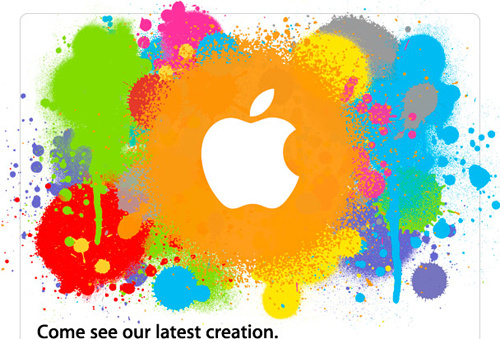
For example the following was the invite that was sent by Apple about the event to be held on January 27 at 10am PST.

There are literally thousands of posts and view points what each color/design element/message/splotch in this picture could mean about Apple’s next launch. I would not add to any of these. (just Google ‘Apple’ and you would literally see yourself lost marveling at a Global Marketing Case Study unfold live in front your eyes). As a sample, see an incisive analysis of this invite from Apple:

“In reference to the new invite, notice that some of the paint splotches were created while the “canvas” was laying flat while some of them are dripping as if to indicate an upright orientation during that part of creating the image, the last orange splotch is flat again.

A graphical device with orientation awareness. What could it possibly be?”

Let’s see what it would be on the 27th.

Indian Entertainment. Redefined

I guess it was some two years ago that I came across this one in some blog. It showed how some of even the best brands of the Indian media industry, sometimes fail to exercise even a minimal sense of prudence in the way they dish out news. Check this out:

Though there must have been some arcane and remote rationale behind presenting this particular news in the ‘entertainment’ section of this news paper, common sense dictates otherwise. Absolute common sense.

Anyway, that is about the Indian Media and News industry – one that has become a butt of jokes than a power to reckon with like CNN or BBC. Even NDTV, the channel that was considered to be a little more professional and worthy of even being considered as a challenger brand in this category has pandered to mass sensationalism in the resent past. Barkha Dutt’s minute by minute coverage of the Mumbai bombing episode would be remembered as one of the most misguided and ill conceived acts of journalism in the history of Indian News Industry.

It is in this context that I am saddened to find that even google can be a source of such slips. Google – a company that has assumed massive proportions of global muscle (it shall be remembered as the only entity till now that has succeeded at fluttering China’s feathers with economic and geo political implications), has come to assume the status of the Digital Big Brother of the world – like the one in George Orwell’s 1984, with it’s sphere of influence ranging from search, mails, social networking, real time news aggregation, blogs to maps and GPS systems that can potentially track you anywhere and everyhere.

Given this level of reach and influence that it wields over us, it is, but expected that it undertake every endeavor to safeguard its moral high ground with responsibility and integrity. But the recent slips from the part of Google News – a real time news aggregation platform have compelled me to cast aspersions over the laxity in the logic behind its world altering algorithms.

News categorization and presentation, it seems is a very low priority in Google News algorithm. I normally go to Google News India portal to get a pulse of just about everything for the moment from Political, Economic, Business, Health, Sports and Entertainment news about India. But the other day I was a little surprised and even a little amused to find news about the resignation of AP ministers over the Telangana issue under the entertainment section. Check this out:

Ofcourse, given my sense of mistrust and disrespect of Indian politics (of which I am not proud about), it really amused me to find this news in this section. On a lighter vein, I even wondered if the Google News algorithm has in fact did this on a deliberate note, given the large spread sentiment about the Telangana issue (that has literally become a parody of Indian politics).

But today (17 Jan 2010), when I went to http://news.google.co.in/, for my dose of Indian news, I was aghast to find this in the Entertainment Section of the portal:

OK, I am not a fan of any politician in India and worse still those of West Bengal. But I was really surprised to see the news of Jyoti Basu’s sinking health under the Entertainment section of Google News.

When the bottle itself becomes the hope

For those who missed the first part of this discussion, please read here. The question was, as a brand that is serious about its intentions, what can it do to break the vicious circle of ‘commoditising’ the entire men’s deo category in India?

Thank you everyone for taking time to post your views for my post. Especially the discussions that I had with my digital planner friend, and my FMCG passionate buddy brought about a clearer definition of the idea that I already had in mind. The idea that got crystallized was basically this – If I am the brand that has originally created a break through positioning and did everything to own it in the first place,  why should I now even tweak my proposition and thereby vacate the place to competition just because there are so many ‘me-too’ brands in the category?

So now the focus goes to the remaining P’s in the mix (believe me, as simplistic as it may sound but it’s always about getting the mix right in marketing. Always). So where would you now focus? Mind you this is in no way a breakthrough idea that I am proposing. All this could do is to give a better pedestal for the brand to further differentiate itself from the multitude of the me-too brands and reach out to the consumer in a way that is still consistent with its present positioning.

Now let me park this here while we try and ideate to come up with an idea for this challenge. If I were to think ‘out of this category’ and try to see if there is any other category with which I can draw parallels to this case, I find that there is one that has very successfully survived this sort of me-too syndrome of lower priced but similarly positioned competition. It is Vodka.

There was a time when every other middle to premium priced vodka spoke about very similar things – exotic places that were purportedly the sources of a vodka’s key ingredients (grain, rye, wheat, potatoes, or sugar beet molasses),  imagery of fun and frolic (sometimes in a very adulterous way) etc. While they really sounded exotic and sometimes even evoked the imagery associated with a place, most of them couldn’t reach a critical mass in terms of marketing effectiveness. So what did they do? Some tweaked around with prices, thereby decoupling themselves from their supposedly premium positioning and lost out. Some over priced themselves without an demonstrated claim to superiority. Some sought to differentiate themselves by line extending their core offering and started rolling out various flavours of vodka and so on. While some of these strategic moves could have worked for a few, most of them have only succeeded at further diluting the consistency of their identity and positioning.

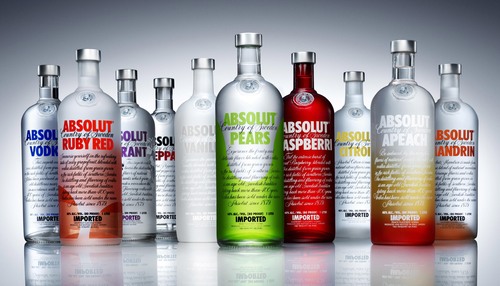
So what did some of the most iconic vodka brands that we know today have resorted to? They acted upon an insight that was in fact very obvious (insights, by very definition are obvious but unnoticed or ‘not acted upon’ spaces in the landscape of consumer behavior). Vodka is an alcoholic drink that is unlike other alcoholic drinks in many ways. While they arguably have a masculine appeal about them, they have an imagery of strength and resilience associated with them. A vodka is a very common additive in many cocktails and is also enjoyed on the rocks. So in many instances, a bottle of vodka finds itself with pretty much time and space as it becomes a part of the gathering for the occasion. So what should it ideally do? Simple. It should itself be a statement just like the people who drink it are. This was the insight that went into those brands that sought to differentiate themselves on the basis of their Packaging. That’s how Absolut and many other brands were born.

It was an incredibly simple insight. But the result – phenomenal. Absolut now has books written over just the shape of the bottle. The shape in itself is a brand so much so that it is the shape of the bottle that is the fundamental identity of the brand. It is then that it becomes almost a non-transferable and non-copyable identity of the brand. Even if someone tries to ape it today, the consumer becomes absolutely sure that has to be a rip-off as they know that if it has that shape it ought to be absolut.

So now you know the answer. You have a very powerful positioning in the men’s deo’s category. You try to bring in the imagery of an irresistible masculinity, fatal attraction, power (of a magnetic odor), confidence and charm of an uber sexy male. You work hard to own this space in your TG’s mind. But alas! You see a bunch of me-too’s jumping into your wagon (taking the short way out) to appeal to the similar class that you are trying to target. So what do you do?

Think of an even smarter way to reach out to your TG by subtly tweaking your core positioning? If so, aren’t you vacating your hard earned space. Why not stay put and try to reinforce your very own positioning in an albeit very tangible way? Just as an example, consider the design of Samurai vodka bottle: (This is a design by a Moscow based designer Arthur Schreiber)

Got my point? Why not explore the possibility of making your pack speak by itself? Why not break out of the very similar looking pumps and dispensers? I know this could eat into your Gross Margin as the packaging cost becomes a little more expensive. But doesn’t it give you a better reason to price yourself a little more? Your competitors are in fact doing you a favor by moving their prices south. So now you have a more premium space for yourself, the same positioning albeit reinforced in a stronger way and your TG who, given the increasing need of distinctiveness would only be willing to shell out a little more.

  • It does have a very loud pick me up factor from the shelves. In fact, just come to think of yourself walking along the aisles to pick up a brand of deo. You are sure to at least consider this, at least once
  • Now another threat of the Indian deo category – the rip-offs business of fakes and counterfeits would have an even difficult time catching up with you
  • It now becomes a very glamorous thing to be proudly exhibited on your dressing table – the best possible ad for a brand

Last but not the least, the packaging of the deo would then assume a life of it’s own. For eg., there is this forum that was discussing the implications of the design of the Samurai Vodka design above. A guy loved it so much that he couldn’t resist to associate a story to the bottle:

“THE BOTTLE WAS THROWN INTO THE AIR AND SLICED MID-AIR, THEN THE SCENE FROZE AND THATS WHY IT LOOKS LIKE IT DOES!!!”

(Disclaimer: I have no business interests in the marketing of deodorants. All this post seeks to do is to speak about a need to infuse some fresh thinking to seek some innovative yet simple ways to ‘decommoditise’ the deodorants category in India. The views expressed here are solely mine and in no way relate to the company that I work for.)

Of ice-creams and emotions

Ever wondered how exactly Cause Marketing works? It always intrigued me and sometimes interested me. Well ok, it does speak about a brand rallying behind an apparently noble cause, about an ostentatious association with some non profit/not for profit/not so non profit organizations to give them a better muscle to drive their endeavors etc. But if I were to apply some rational analysis to dissect how it makes business sense, the over all picture never always looked robust to me. It looked short lived and more as a tactic rather than as a long term association with a cause that translated to long term business results. Yes, I do know that there are certain brands that are known for their long term commitment and support to some noble causes. But again, as I said, it eludes me as to how they translate to a sustainable competitive advantage to the brands in the long term.

But now I guess I am beginning to connect the dots. I agree what I have discovered might not hold good in all cases. But in most cases, it does speak of a sound business case (if executed well). I agree that it is not a radically new thing that I am speaking about here. In fact it could just be a formalized way of  approaching a branding challenge that we have known intuitively all along. Let me explain.

Let’s speak about the Super Premium ice – cream category.  This is a category where people are literally flooded with options – Ben & Jerry’s, Haagen-Dazs, Sheer Bliss, Dreamery, Godiva, Pink Berry, Marble Slab Creamery, Dippin’ Dots and the list goes on. For a brand that is well entrenched and wants to gain share from competition, what does it need to do? Well, that’s what Haagen-Daz’s faced towards late 2007. So what did it do and why did it do?

What did it do?

Simple. It invented a cause. Yes! it almost did. Ever heard about Haagen-Daz’s Vanilla Honey Bee flavor? Well, it’s a fancy name for a flavor that has some droppings of honey on it. Yeah, but why that name? This was a new flavor launched in February 2008, that was created expressly to support actions to arrest and reverse the sudden decline of the honeybee population, which, because of pollination for flowering plants, is a direct risk to the production of all food brands. (Source: Bob Gilbreath).

The deal is simple. It donated a portion of its sales from all honey flavored ice creams to a research. So, it developed a website that increased the awareness about the issue in a way that gave exposure to the brand – and thereby brought forth a very humane element out of a super premium ice cream brand. Besides many other executions to communicate its affiliation to this cause, it came up with a first of its kind magazine ad – a plantable magazine insert. That’s right – an ad that can be planted! Check this out: (source of image)

Results

  • Haagen-Dazs fulfilled its full-year PR goal of 125 million media impressions in just the first two weeks!
  • Brand advocacy for Haagen-Dazs among consumers reached 69 % (the highest among 19 brands tracked)
  • Unaided brand awareness grew from 29 to 36 %
  • And over all sales increased by 16 % for the brand in 2008

(Source of results: Bob Gilbreath)

The first 3 outcomes are understandable and expected, given the way in which it went about making some noise worthy sound bytes in the media space – metrics like brand advocacy, unaided brand awareness for a period of time can be driven by pulling the right emotional triggers in the consumers’ minds. But sales? How can it really impact sales? I mean businesses and brands do not sail on the crest and troughs of some short lived whims and emotions of the consumers right? That could be suicidal. One moment you can see a spike in all brand metrics and the other you are no where.

So the question is – How exactly did Haagen-Dazs’s cause marketing strategy work in order to result in an over all sales increase of 16% for the brand and a commensurate gain of share in 2008?

It was literally a ‘Eureka’ moment for me when I could connect the dots (all by myself) and arrive at the right way of articulating it. I learnt many things on the way. Would share my learnings with you – very soon. In the meanwhile, any thoughts how it has resulted in actually increasing its sales by 16%? (That too in a category like Super Premium ice-creams, in which consumers have a very strong inertia to switch).

Do post your comments. Let’s explore.

Sell Hope in the twisted bottle in a better way

Let’s speak about getting an advantage in the mating game with stunning beauties. Let’s speak about having some of the hottest babes on our bikes. Let’s speak about your wildest fantasies coming true. Now before you start getting ideas let me clarify that we are talking about Deodorants and their Brand Positioning in India.

For an average Indian consumer, a deo – no matter which brand, has unfortunately come to signify just one thing – an imagery of a man’s wildest dreams coming true (except may be a very few brands). This is because this unique and original positioning that was tried and tested and owned by a very popular brand has been twisted and tamed by almost every new kid on the block. This has resulted in this iconic positioning becoming a mere symbolism being tried to be spoon fed to you (instead of getting it evoked in you) by literally every other deo brand in the market place for men. Some of the me too brands that have adopted the same positioning in India: Denver, Setwet, Wildstone, White Ice and still counting.

That’s when brand differentiation fades away with people ceasing to ascribe superiority to any particular brand over the others. No brand would then be capable of charging a price premium – as a consumer’s basis for making a choice becomes price and perceived superiority of one fragrance over the other which are all evident and functional attributes. This topples the very purpose of a brand over it’s head. Why? Because the grounds of differentiation are not based on any belief, expectation, story, imagery, perception of any intangible attributes or relationship (with the brand and even oneself).

That is when you are conversing with the consumer NOT as a brand but as a product – stripped off all its personality and character that are supposed to help you charge a premium in the market place. In spite of that, we see the very same brands doing the very same thing, perpetuating the inevitability of the same vicious circle. Prices go down, margins get squeezed thereby, profits get thinned and subsequent investments on branding get cut slowly but steadily. That’s when the brands start to get milked instead of being developed.

For the consumer, the category smacks of sameness with virtually every brand shouting “me-too” at him. Choosing a brand of deo for oneself – an activity that used to be a little sensuous and a little ostentatious experience has now been reduced to an experience of choosing a piece of scented candle in IKEA. With novelty robbed off and expectations blunted due to an infinite clutter in the ad space, any possible excitement about the category does down. They stick to using the same brands that they have been using and become unwilling to even try another brand. Because, for them every other respectable brand is a dumbed down version of the very same promise in a twisted bottle.

We therefore see that effectively it is a lose-lose situation for everyone in the transaction. Now the question is, as a brand that is serious about its intentions, what can we do to break this vicious circle of ‘commoditising’ the entire category?

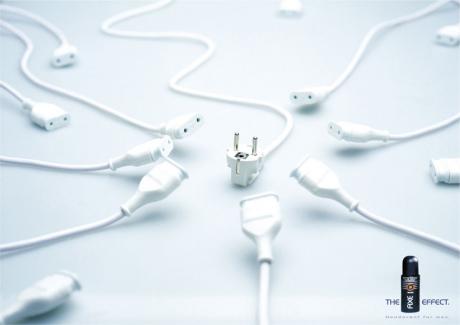
I shall post my ideas soon. Feel free to share your view and comments. However, I somehow love this ad and can’t resist posting it here:

Disclaimer: I have no business interests in marketing of deodorants. The ideas expressed are all mine and the post is merely for my ideation purposes.

The Best Touch Point for marketing Fabric Conditioners in India

For those who missed the first part regarding the Best Marketing Touch Points in India, please read here. The question is – in a country like India where the penetration level of Fabric Conditioners is almost insignificant, how do we leverage some of the most suitable touch points so as to interact with the consumers in a meaningful way and thereby drive trial (which is the first requirement if we were to start building a sizable market).

Ok now let’s start from the basics of Segmentation and Targeting for a typical Fabric Conditioner Brand. For a category like Fabric Conditioners that serves a purpose that is not deemed an exact necessity for most of the Indian Population, segmenting the market in terms of affordability and perceived relevance of such a product becomes imperative. Hence let’s use the SEC (Socio Economic Classification) segmentation for the sake of simplicity.

Now, given the price range of the Fabric Conditioner (which is greater than that of an equal quantity of a decent detergent) and its perceived need, we would obviously target the class of consumers who fall under SEC A1, A2 and B1. In very simplistic terms, these class of consumers belong to the Upper Middle Class and the Upper Class of the Indian Market. Let’s see what are their common characteristics that are relevant to us.

There are a minimum of around 14-15 million households of this class in India.  They own washing machines and although washing clothes per se is not a very high involvement process for them, they value fabric care for the longevity of their clothes and linen (as this class of consumers invest on expensive and branded apparels and home linen). In most cases, the homemaker of the household is the decision maker while buying products of this category. While they travel by air, they also take to train and bus travel for short to medium haul destinations (in some cases they take to train travel for long haul destinations too). As they can afford and prefer hassle free travel, they take to AC Bus and AC Train travel whenever they travel by road and rail.

While some of those who travel by the AC class in trains are single travelers who travel on business, a significant chunk of the passengers are families on a vacation visiting their near and dear. For them travel becomes an ‘annual ritual’ and hence they willingly take the pain to travel for over 6-18 hrs on an average by train (any longer, I think chances are that they can prefer a flight over train). In a country like India where we have major festivals, marriages and events throughout the year, we find the AC Compartments of the trains filled to capacity throughout the year. And given this travel time, in most cases these passengers find themselves having a lot of time to kill and hence their span of attention can be quite longer than that when they are at home or work.

Now, hang on. I have just one more thing to bring into picture to build a complete case for one of the best touch points for our Fabric Conditioner. What is the inevitable thing that greets the passengers in an AC Compartment? Something that they make sure is in order as soon as they alight their compartments, something that they are genuinely bothered about, something that they interact with for a decent period of time throughout their journey. We are talking about the bedsheets and the napkin set (commonly called as the bedding set) that is wrapped in a brown piece of paper – neatly washed and pressed and given for the passenger’s use during the journey in a typical AC compartment of the Indian Railways.

During the journey, passengers use the ‘bedding set’ that he/she gets for various purposes – as a bed sheet over the berth, as a blanket for some warmth, as a curtain or may be even as a shawl for some. Their interaction with the set starts right from the stage when they open the paper wrapping in which the set is packed in to the time they leave. Before they open it, chances are that they even notice the printing over the paper wrapping (which normally is blank or in some cases, has the contact details of the ombudsman in case of any complaints over the hygiene of the ‘bedding set’). This is because of the greater attention span that they typically have during the course of the journey as stated above.

So now we have a touch point that works for us just the way we – as marketers of our Fabric Conditioner, want it to be:

  • First thing is that this touch point is all about laundry – the bed sheets and the napkin have to be clean and neat. After all we are all about laundry
  • Further, any visible improvement in terms of the softness and fragrance of this bedding set is bound to be noticed by the passenger – given the high interaction time with this set
  • Things like a comfortable sleep, a cozy bed, a clean piece of napkin, a warm blanket, a fragrant pillow are all deeply appreciated by any Indian passenger – who is used to experiencing many types of inconveniences during his/her journey. Hence this touch point is bound to have a very high impact on our target consumers
  • Added to that I would also assume that most of the passengers travelling by this class are educated and hence can read. This means that any message or piece of communication that is placed along with this set is bound to be read or at least noticed, given their very co-operative attention span during the course of the journey. (compare this with the efficacy of a typical magazine ad that we might otherwise use to reach them)
  • For most Indians, any remarkable thing that happens during a journey doesn’t tend to be forgotten very soon

So you have everything in place in this touch point -to start with, we have exactly the kind of consumers we want to reach, interacting with our touch point, the setting is extremely relevant given the role that laundry plays here, it is a means with which a consumer is bound to interact with for long periods of time and it has the potential to create memorable interactions and experiences with the brand.

So how do we go about it? I would say that we have a very wide scope to harness this touch point. The following are some of the ideas that I could think of:

  • As the most basic means, have your Ad on the wrapping of the bedding set. It is bound to be noticed – all the while they are used to tearing apart the brown paper wrapping to get their bedsheets out. Anything colorful and with a message is bound to attract attention
  • In fact, have the bedsheets and the napkins treated with the fabric conditioner – and advertise the same as loudly as you can on the wrapping and pamphlets placed in the wrapping. That way your consumers can experience first hand, any the softness and the fragrance that your product can bring to fabrics with no risk or effort from their side. (Risks like Quality Assurance and Consistency are to be addressed for this. But this would be a very high impact means for reach)
  • Have a pamphlet that clearly and attractively explains the benefits of using a fabric conditioner and obviously, say why you are the best. People are sometimes bored to death in journeys, they would almost get your message by heart (!)
  • Don’t leave it at that. It’s not all. In fact this is just the starting point. Have a call-to-action mechanism in the form of a coupon or a free sample of a sachet of your conditioner. That is sure to drive trial to start with

Now compare the efficacy of this touch point with the conventional ones that we use to reach our target group for fabric conditioners. Instead of investing on expensive TVCs aired on National Channels with pan Indian reach with no certainty of appealing to the right group at the right time and right place and not to forget the costs of preview tests and the post view research for each of these Ads, doesn’t it make sense to invest in such a touch point?

As the first leg, how about starting with just the Rajadhanis? They connect the capital city Delhi with important destinations – most of them are metros, 1 tier or at least 2 tier cities. Let this be done say, for just a month. We presently have 18 pairs of Rajadhanis – running from 2 times a week to daily. Now count the number of unique journeys, the number of trains, the number of compartments, the number of seats. You get an idea of its incredible reach. And we are talking just one month!

Long Live Indian Railways.

Disclaimer: As I said in my previous post, I do not have any business interests in the marketing of fabric conditioners and these are just for my ideation purposes. This is free advice – use it or leave it. But as I always say – please feel free to criticize it 🙂

The Curious Case of the Pizza Turnaround Story

I shall fulfill my promise to continue the Fabric Conditioner story tomorrow. In fact even started writing my take on that. But accidentally I stumbled upon this very interesting piece. So, couldn’t resist to write on this for today. This is literally ‘flash.. flash’ for me.

I just realized that Domino’s has used a very bold strategy to create new news. And I should say – some very well planned and timely ‘news’ at that.

Ok, for those among you for whom this is news too, let me summarize it in the briefest way possible:

  • Domino’s has acknowledged that there are consumers who feel that a piece of its Pizza is as crappy ‘as a cardboard’ (yes they did!)
  • It has accepted the fact – went back to the kitchen (quite literally) and came up with a new Pizza
  • And it has done all this through a video – starring real people at Domino’s and real customers

As a teaser check this out.

Before you read any further, see the complete video of 4:21 mins that shows how and why Domino’s has gone about what it calls as ‘The Pizza Turnaround’ here.

So what is all this fuss all about?

Every once in a while a brand needs to re-invent itself. It needs to create some news and excite its customers. So it tweaks one or more of it’s P’s in its marketing mix and does what is called a Brand Relaunch. Some of the recent examples of major brand relaunches are:

  • Pepsi’s redesign of its logo and other design elements (interestingly there are more rants over this than raves. Read one such review here how this is branding lunacy to its max)
  • The iconic Liril soap in India has been relaunched as ‘Liril 2000’ (read the story here)

So you have here – a very smart and well crafted ‘Ad’ (in fact what you see here is just a part of a bigger plan) that communicates a brand relaunch of Domino’s. Yes all these words are well chosen. And I shall explain each of that here.

For starters it is the 50th year of the brand Domino’s. Many brands normally make use of such occasions to create some news to gain some share of voice in the minds of it’s consumers. Some make a sexy ad campaign to announce their celebration and create some sound bytes in the noisy ad mad world out there. Some give away freebies. Some adopt the path of promotions. Some bring in some add-ons to the brand. If not anything some at least say a big ‘Thank You’ for all its customers and propagate some ‘United – we – stand’ kind of message. All these have become common place. Almost every lever and string of every ‘P’ of the marketing mix has been pulled for this. And such tactics no longer count (forget even being called as a strategy).

So Domino’s had to do something to announce their 50th year in a big way. It had to be strategic. And at the same time as good marketers they had to ensure the following:

  • Drive relevance of their product
  • Show that they have come even closer to their customers
  • Prove that they are genuinely listening to even their strongest critics
  • Speak how passionate they are about their product
  • Show how seriously they take their Product that they sell to their customers and thereby build an interesting story around their Product

Now see the video again. You got it! This is a perfectly crafted Ad campaign that makes sure that they are bang on w.r.t each of the obvious objectives for a major Brand Relaunch. In fact the video that you have just seen is a campaign by the agency Crispin Porter + Bogusky. Now you can see that every word and gesture in the video has been very carefully scripted and shot with some drama and emotion packed in so as to create some excitement – something sensational and gain as much traction as possible with the target customers.

And wait, that’s not all. If you see the site carefully, you see icons that encourage you to mail, tweet and share this on face book. I would strongly recommend you to to click on these icons and see for yourself how they have built in a 360 degree kind of approach to Social Media Marketing to this Relaunch.

Now you can see all pieces falling into place – a major product over haul that has been sought to be communicated by a seemingly viral video with some drama and emotion, flanked by the instant social interactive means of e-mail, facebook and twitter. And not to forget blogs like this. [Disclaimer: I don’t have any business interests with Domino’s 🙂 ]

Now, lets see what is the worst that could happen as a result of this Brand Relaunch communicated in this way in each of the 3 scenarios:

  • You were a fan of Domino’s: You would only like the brand more and chances are that you would actively propagate this ‘news’ to your friends
  • You were indifferent to Domino’s: Chances are that the eternal sceptic in you sees its curiosity piqued. If you have to buy the story, you would first feel yourself pulled to the Domino’s Pizza the next time you have a Pizza so that you can evaluate their story first hand
  • You  hate Domino’s: Chances are that you are unwilling to believe this story and you want to disprove everything. But for that you know you need to buy the pizza and then write the story off!

As a result of this, at least the short term goal of a pretty good spurt in sales is guaranteed. For a long term loyalty from its customers: obviously the product has to speak for itself.

What if the product is still bad? Then it would be a dud and would in fact backfire. Else, this shall be one very interesting way to relaunch your brand. A damn ballsy way to celebrate your 50th anniversary!

The curious case of a smart editor and a lame drafter

I was almost done with my draft for a new blog post and then a divine mess happened. I inserted a html tag in the text and clicked on that in the editor and alas! I saw the editor opening the website of the link!

  • At first I was impressed by the seemingly multifaceted functionality of tumblr’s text editor – the editor didn’t seem to care about my ‘impression’
  • Then I coolly attempted to get the editor back to the draft mode from its unexpected avatar of a mini web browser – the editor refused to take back its original avatar
  • Attempted ‘Back’ing the editor with the help of the back arrow in the keyboad – by then a video in the website started playing in the text editor- whooaw!
  • Groped the toolbar of the editor for any hidden directions to get back to my treasure trove of text the result of the last 2 hours of though and articulation – there was no way
  • Tried right clicking in the editor field and toggled with ‘Back’ and ‘Forwarded’ – by then I started to get an inkling that either I was too lame or that the tumblr’s editor is too smart for me
  • With greater desperation I now tried all of the above again – tumblr too was relentless
  • One last time, for the sake of my original effort, enthusiasm and energy with which I was almost about to finish my blog post, I tried to mutter something under my breath – just in case it turns out to be a divine spell – result: tumblr logs out and asks for my password
  • Famished I dutifully enter my password and get in

and this is what I type for the day 😦

Lost my entire post. See you all tomorrow with the original post.

PS: Still wondering if I am a little too dumb for tumblr or is it just lame with a satanic bug in the editor. Whatever it is, now it’s my loss!

Thinking about the best marketing touch points in India

They say that Fabric Conditioners as a market is yet to take off in India. They say that the penetration for this category is very minuscule. Though I do not know the exact numbers for this, I know that this could be for real. The problem is trial – how do we drive greater levels of trial among consumers so that they can sample, test and see its utility over some period of time.

Now let’s not speak about the bottom of the pyramid in India. I understand that for them, having the means to wash clothes properly with even the most basic detergent is a luxury.  For them having a basic level of cleanliness in the clothes is in fact aspirational. With Fabric Conditioners we are looking at a segment which is far different and which is relatively very small in proportion. Even this segment of the consumers – most of whom own a washing machine, are happy with a clean load of clothes after a wash. And that’s about it. So what could be a good driver for trial?

Just to give you an intuitive idea, we are talking about the upper middle class and the uper class in India. Let’s say SEC A1,A2 and B1 (Socio Economic Class).  Washing clothes is naturally an unavoidable chore for them – mostly a low involvement, automated, time bound job unless the clothes are meant for a very special occassion or unless they are very expensive and delicate.

  • In some cases, they are not even directly involved in the laundry process. Hence chances are that they really don’t care as long as their clothes come to their wardrobe clean and pressed. Hence they are almost deaf to ads or promotions about Fabric Conditioners or even Detergents.
  • In the other cases, basic cleanliness is again what most of this class of consumers look for and that’s about it. So attributes like having the clothes fragrant and soft are not extremely relevant for them.

Now that means we really have a genuine problem. How do we increase the trial rate and possibly thereby the penetration for this category of products in a market like India? By cool Ads with cute kids and glamorous Moms? By offers and price reductions? Unlikely. I would say that it could be achieved by reaching out to the target group in a very relevant and an interesting way.

Clue: Think about some of the best touch points for a consumer with clean laundry – touch points where the consumer is assured to spend quite some time and with the greatest probability that she would even have the willingness to interact with your effort to reach her. Touch points that are extremely relevant and meaningful.

I have an idea and I shall post it tomorrow. Should you have any, feel free to post your ideas. And yeah needless to say, do mercilessly dissect and criticize my post tomorrow. See you soon!

In the meanwhile check out this interesting Print Ad for a South Korean brand of Fabric Conditioner called as Pigeon (Courtesy: Ads of the world)

Disclaimer: I don’t have any business interests whatsoever in the marketing of fabric conditioners. These are just my own views for my own ideation.

Newton and Apple

Well today happens to be Sir Isaac Newton’s b’day! Yeah the one on whom, legend says that, an apple has fallen and yuppie gravity was discovered! First check out this cool Google Doodle commemorating 4th Jan 2010 as Newton’s B’day.

Actually this is the first time that I noticed that Google Doodle has come up with a non-static design. I mean, as soon as you open google.com, this delicious doodle comes up and an apple literally falls off the branch on the screen!Please let me know if there have been any past instances of such non static Google Doodles. Loved it!

Anyway, coming back to the point. The reason why I have mentioned this is, incidentally it was only today (before I actually realized about the B’day thing) that I have read an interesting account that connects Newton – Apple – Gravity – Name – Marketing. Courtesy the book: The Big Moo by Seth Godin. It was both informative and intriguing. This short write up in this book that I am referring to is called as “Isaac Newton’s Head”. Below is the copy of this chapter from the book. Read it, it makes an interesting read:

ISAAC NEWTON’S HEAD

Ask any elementary-school kid about Isaac Newton and you’ll hear the same answer: “He invented gravity!”

Of course, Newton did no such thing. Newton certainly invented calculus. He also invented the reflecting telescope. He did not invent the Fig Newton, though. That was Charles M. Roser.

Newton gets credit for inventing gravity because of a tree in his backyard. He was sitting in his garden, thinking about the moon, when he looked up and noticed that an apple on the tree nearby was precisely the same size (to his eye) as the moon. As an object gets farther away, it appears to be smaller. In a flash, Newton realized that the apple was proportional to the moon in size, and the effect of “gravitas” on each must be proportional as well. Newton had figured out that gravity decreased over distance. More important to his reputation, he gave gravity its name. The apple never actually hit him on his head, but the term “gravity” stuck.

While Newton spent far more time on calculus and on alchemy, he’s known for discovering gravity. Why?

Because he named it.

To the average person, Newton’s contribution to science was a word. A word that described something that was already there, something that affected everyone, all the time. By naming gravity, he gave us power over it. He gave us a handle, which permitted both scientists and laypeople to talk about and interact with this mysterious force.

Organizations change when you give something a name. If it has a name, your peers can measure it. If it has a name, they can alter it. If it has a name, they can talk about it. And if it has a name, they can eliminate it.

Go ahead, name something. (Watch your head!)

What say? And yeah another trivia that I came across today. Sir Isaac Newton predicted the end of the world, and it isn’t 2012, it is 2060. He came up with this date through Biblical interpretation. (Source: This Article)

Long Live Newton! Long live the power of names around us!!