Gripping narratives around this same thingbut contextualized against two different ends of the ‘consumer & life spectrum’.
Every year about 2 million children under the age of 5 die of infections like diarrhoea and pneumonia. A lot of these deaths can be prevented by the simple act of washing hands with soap. How do you translate this statistic and message into something real, personal and powerful? Lifebuoy‘s brilliant campaign called helpachildreach5 shows how:
Over 30 percent of today’s children are obese due to physical inactivity. If action isn’t taken, one billion people will be affected less than two decades from now. Nike’s DesignedToMove campaign lands this through a shockingly powerful message.
Two iconic brands, selling two completely different kinds of products, targeting two different sets of consumers with two different ‘need stages’ (w.r.t Maslow’s Hierarchy of Needs) but with one unmissable similarity: using ‘5 years of life’ as a frame of reference to pack a powerful punch.
The ‘contrasts’ are as compelling as the ‘similarities’ are in these hard hitting campaigns. Just couldn’t resist from juxtaposing them together for their unmissable power of story telling and sheer brilliance of executions anchored around one central tenet – 5 years of life.
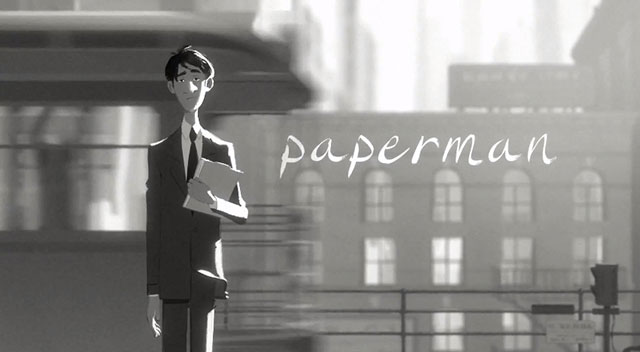
The first thing you notice about Paperman– an Academy Award nominee for Best Animated Short Film (2012) – is how different it seems from most modern cartoons.
See the full 6mins version here. It has a distinct retro black & white look not just because it is a story based out of 1940s Manhattan, but also because it clearly feels like as if real people have drawn it it on a piece of paper as opposed to say – like machines creating it on computers. The result of Disney’s new in-house software called Meander, it seamlessly blends the best of ‘hand drawn cartoon kinda’ look with CGI animation in a way the animation industry has never seen before; a game changing animation style so distinctive, innovative and beautiful that WIRED magazine even bills it as the future of animation as a whole!
This can be called out as an example of a unique kind of innovation – new technologies, new products or experiences that are designed around connecting us with the past that is nostalgic. Something that Tim Leberecht calls as Retro Innovation. In this FastCompany article he writes that Retro Innovations roughly fall into three categories:
Innovations that authentically mimic a product or experience of the past to transport the user back into a gone era.
Innovations that use a nostalgic format to meet a new need.
Innovations that use a new format to meet an old need.
Read the whole article here and get a dose of some 10 emerging examples of Retro Innovations. My favorite example is Moleskine, regarding which he says..
The Italian paper notebook maker MDleskine, whose recent IPO was valued at more than $600 million, is a stunning anachronism in a business environment that glorifies tech startups and digital business models.
There are reams of case studies out there that extol the brilliance of Moleskine’s branding. But the best example of its retro innovation is its Moleskine Evernote Smart Notebook that bridges the digital and the analog world.
The key insight on which most successful retro innovations thrive on is brilliantly articulated in this Washington Post article that says..
With the rise in computing power, there has been an acceleration of the rate in which we build on new information technologies, leaving us clutching awkwardly for things we recognize from the past. The pace of change at times seems so overwhelming that it’s no wonder that sometimes we want to be transported back to an earlier era.
Think about this insight and you could possibly have explanations for things like:
The emergence of a ‘modern retro’ trend in the retro gaming culture.
The popularity of Mad Men – the only basic cable series to win Emmy Award for Outstanding Drama Series besides 14 other Emmys and 4 Golden Globes. (source)
Brands like Adidas and Puma having a dedicated innovation pipeline specially meant for their retro line ups: Adidas Originals and Puma Classics. In fact by many accounts, Adidas Originals can be considered to be a top of the pyramid brand in terms of their positioning and price points. Besides, the corporate logo of Adidas is distinctive from that of Adidas Originals recognizing the unique appeal and potential of this retro innovation line up from the sports brand.
The popularity of classics that are remastered to the new digital world – Jurassic Park 3D anyone?
And in extreme case it might possibly even explain the rationale behind the existence of Skeuomorps – which might be a different discussion altogether!
While the jury is still out to argue whether the ‘retro trend’ actually cripples innovation, a few venture capitalists do concede that retro innovation is indeed the most lucrative kind. After all, if innovations are about elevating and enriching human experiences, there would always be a market that values a more traditional notion of this experience and that’s where Retro Innovations kick in.
What other examples of Retro Innovations can you think of?
Can ‘Marketing’ and thereby a monetary value exchange have a major role to play in non profits, NGOs and charities? 2 recent examples seem to prove a point.
Once Again
Once Again is a Bangalore based NGO that stands out for two reasons:
1. It accepts donations only in the form of old items. Not money.
2. It uses social media in a unique, relevant and a compelling way to trigger ‘action’ for its cause.
See its case study here:
The brilliance of their social media campaign to rake in donations notwithstanding, the big idea for me here is their fundamental business model: It collects items people don’t use anymore, and instead of donating these to the needy, it sells them at a price (although minimal) to the underprivileged and uses this money for the empowerment of their community.
The exchange of monetary value in this equation triggers a chain reaction from ‘donation of the giver‘ to the ‘dignity of the receiver‘ while making the whole model sustainable.
Cola Life
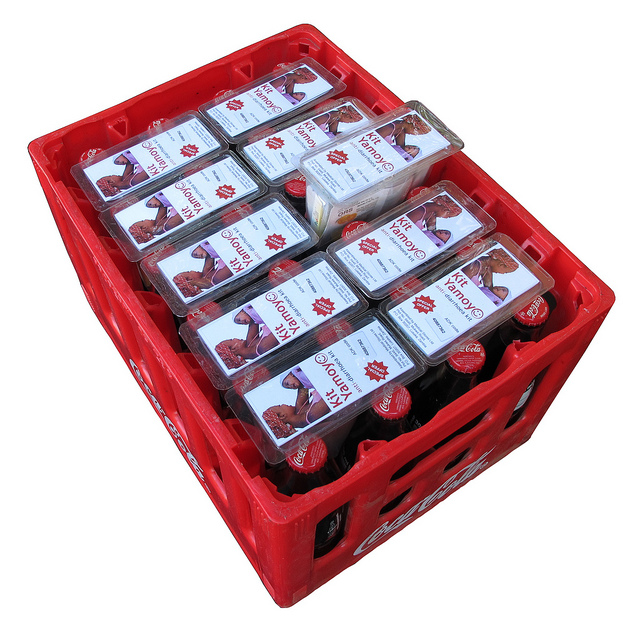
Can a crate of Coke save life? Most Likely – proves ColaLife, whose concept can be explained in 100 words as:
“You can buy a Coca-Cola virtually anywhere in developing countries but in these same places 1 in 9 children die before their 5th birthday from simple, preventable causes like dehydration from diarrhoea.
ColaLife, an independent non-profit, is working with Coca-Cola to open their distribution channels in developing countries to carry ‘social products’ – oral rehydration salts and Zinc supplements – to save children’s lives.”
1. The design of AidPods: The oral rehydration salts (ORS) in the ColaLife network are distributed in specially designed packs called as AidPods. These are wedge-shaped containers that are designed to fit within the unused space of a coke crate, i.e., between the necks of the bottles. The design of the AidPod also serves as a contaier for the salts, as a measure for water, as a storage device and as a cup for drinking the ORS. No wonder it won the Product Design of the Year Award for 2013.
2. The ‘Social Marketing’ Model: At the heart of ColaLife is its ‘Social Marketing Model’ – in which users value the product more because they pay for it. (ORS products are typically provided free of charge by medical centres in Africa, but are frequently unavailable and misused as there is virtually no monetary exchange taking place at any stage of the value chain). As this FT article says,
“the idea was to copy Coca-Cola’s model, which includes giving financial incentives along the supply chain from factory to store in order to ensure that people at all stages are rewarded for getting the drink to the customer. By turning a public health commodity – the salt and sugar mix – into a branded consumer product and using marketing to create demand, everyone would benefit, and help make the project sustainable.”
These are just a few of several recent examples out there that have one point to prove: ‘Marketing’ and thereby a monetary value exchange do and should have a major role to play in non profits, NGOs, humanitarian agencies and charities in order to remain sustainable and have truly far reaching consequences to the needy.
In his recent TED talk, Dan Palotta nails it when he says: “Business will move the mass of humanity forward, but will always leave behind that 10% of the most disadvantaged and unlucky- which is why we need philanthropy and nonprofits. But the non profit sector as we know it doesn’t seem to be working.”
And that begets the question – couldn’t the nonprofit sector use the same strategies as the businesses to sustainably serve the needy?



 Riffs on technology, marketing & culture