Visceral Targeting

Quick Read: We love ourselves so much that even the Mona Lisa could use our face to appear more engaging to us. No, seriously! But does that tell us something about the future of advertising? 

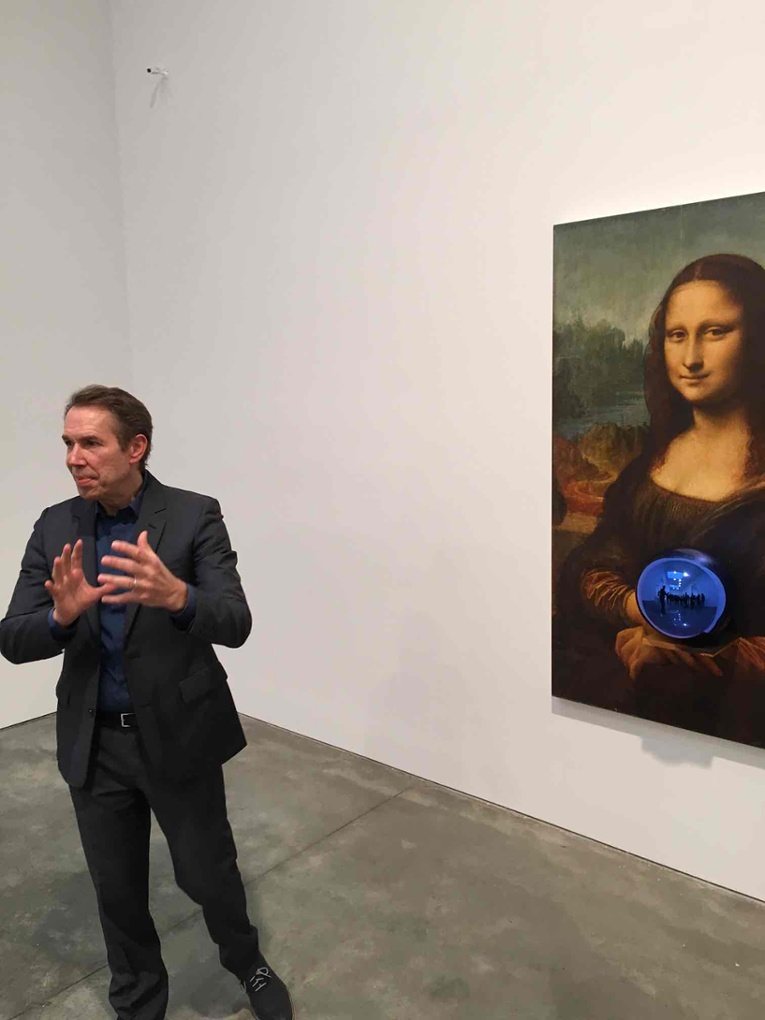
You stand in front of the Mona Lisa, only this version is around three times the size of the original and has a blue sphere on a shelf that juts out from the painting.

In the blue sphere – called the Gazing Ball – you see a reflection of yourself naturally juxtaposed against the Mona Lisa.

As part of this exhibition, Jeff Koons has taken 35 masterpieces, had them repainted in oil on canvas, added a little shelf, painted as if it had sprouted directly from the image and added the Gazing Ball on top of that.
JK_Mona_Lisa

(Jeff Koons with the Gazing Ball (da Vinci Mona Lisa).Photograph: Fruity MacGuinty)

Presenting his artworks, Koons (fancily) says that while the gazing ball “represents the vastness of the universe and at the same time the intimacy of right here, right now, this experience is about you, your desires, your interests, your participation, your relationship with this image.”

Now, is the joke here on us or is it on Leonardo da Vinci that even in the master piece we have to be able to see ourselves in order to evince a higher level of curiosity and appreciation- the heady mix that all artists crave for?

Pop-culture has become more narcissistic in recent decades. And we, being the most narcissistic species on the planet, obviously help perpetuate the trend even further.

The Doppelgänger Effect

Popular wisdom tells us that opposites attract. But as this post suggests, all we need to do is just take a look around us and bear witness to the thousands of couple twins, boyfriend twinscelebrity couple lookalikes and even facial recognition dating sites, and we’ll start to realize that what we might be most attracted to is, well, ourselves.

Today there is mounting scientific evidence to prove that we are friendlier to people who look like us.

And this has interesting ramifications on advertising. 

One knows that it’s easy to algorithmically construct an ‘average face’ – a composite image that averages the faces of any given sample of people.

Average_of_two_faces_2

(Image Source: Averageness – wikipedia)

(In fact earlier this year, Benetton used this approach to algorithmically construct a ‘Face of the City‘ for each of 6 global capitals in order to celebrate their status as a melting pot of various races and cultures. Video here.)

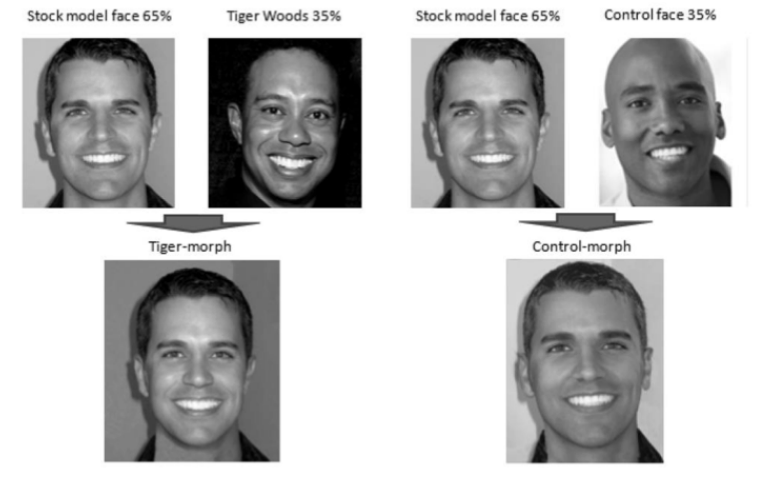
In the same way one can construct a composite morph using weighted average of individual faces. For example, the ‘Tiger Morph’ below is a weighted average of a stock model face and that of Tiger Woods.
Screen Shot 2016-06-26 at 8.21.56 PM

(Image Source: Personalized Face Composites for Implicitly Targeted Marketing)

Using similar means what if a social network were to subtly blend our profile picture  – almost on the fly- with that of a brand’s spokesmodel to make online ads more attractive?

Would these ‘Personalized Face Composites’ be more credible as spokesmodels in the ads?

And would such ads be more effective in increasing our purchase intent?

And let’s not even get started on user privacy. (Yes, I am looking at you Facebook!)

Welcome to the world of visceral targeting.

(H/T Austin Kleon: Jeff Koons Gazing Ball. H/T Rosie & Faris: The Doppelgänger Effect)

(Featured Image: United Colors of Benetton – Face of the City campaign )

Access Restricted

Quick Read: Want to generate footfall or demand? Sometimes all it could take is a board saying “Access Restricted”.

Iceland is renowned for its fairytale landscapes, waterfalls and dancing midnight lights. But of all the places, an unusual site has become one of its most talked about destinations – a site of a plane crash. 

Sólheimasandur beach in Iceland is a desolate site, but for the mangled remains of a US Navy’s C-117 aircraft. It was in November 1973 that the aircraft crashed at the site with the crew onboard having miraculously survived.

After the crash, the U.S. military removed everything that was salvageable in the aircraft and left behind the 10,000 pound shell by the beach. For over four decades since then nothing much happened around it.

The landowners of the site almost forgot about it and were perfectly content to let time and nature slowly eat away at the twisted wreck.

Iceland Plane Crash

(Photo Credit: Eliot Stein. Source)

But steadily over the years it has become a not so well kept secret among photographers – who lent it an extra air of surrealism, by way of their documentaries and photographs.

In recent times it came to be used as a location for destination weddings.  Not to be left behind Bollywood even managed to get Shah Rukh Khan to lean backwards, spread his arms while not forgetting to romance Kajol over its fuselage!

Dilwale

(Still from the song in Dilwale)

Hell even Justin Bieber skateboarded on the plane’s roof in a music video in November 2015.

Expectedly it led to a steady increase in visitors to the site and got people into driving all over the place with little consideration about the property around. So in March 2016 the landowners’ of the site decisively put up signs banning all access to the area. 

…and then things started to go crazy!

Google Search Trends - Iceland Plane Crash Site

(Google Trends showing a spike in searches for the crash site in March 2016)

All it took was a “No Entry” sign.

Now, hundreds of people every day are reportedly following GPS coordinates to a remote, unmarked gate on the side of the road and trekking four kilometers through a barren lava desert to try their chances at seeing the plane’s twisted remains.

How Hitchcock Got People To See “Psycho”

When Psycho hit theaters, critics weren’t given private screenings. Instead Hitchcock created buzz for the film by exerting an unusual degree of directorial control over the viewing experience of the audience.

Accordingly the showings of the film began on a tightly-controlled schedule in theatres in New York, Chicago, Boston, and Philadelphia.  And a firm “no late admission” policy was put in place.

hitchcok-rules

(A standee to announce No Late Admission policy for Psycho. Source)

Theatre managers initially balked at the idea, fearing financial losses. But Hitchcock had his way.

And he was right.

Long lines formed outside the theaters, pulled even more people in and Psycho went on to enjoy critical and commercial success.

Sydney Opera House says “Come On In”

Sydney Opera House is the most Instagrammed destination in Australia.

The challenge:  Only 1% of those who upload a photo ever go inside.

Sydney Opera House found who these people were, recorded personalised invitation videos on the fly, and got them to step in to experience the Opera House from inside with exclusive access and perks.

See the case study video here

While it is definitely a smart intervention that effectively leverages relevant consumer touch points on the fly to get people to step inside, I wonder if the management of the Sydney Opera house had considered the contra idea.

…that of putting up a sign saying “Access Restricted”.

(Featured Image: Sólheimasandur plane crash site by Eric Cheng. Source)

Modern Molinism

Quick Read: Want a sure shot ticket down a rabbit hole? Your bet: Choice Design. So much for free will. 

Morioka Shoten Ginza is a book store in Tokyo where you wouldn’t have a problem with deciding which book to buy.

Why?

Because in any given week it sells copies of a single title. Each title is displayed for six days in a row—Tuesday to Sunday—and then swapped out for a new book.

Yoshiyuki Morioka – the founder of this “single room with a single book” concept believes that focusing on a single book would help foster a deeper relationship between a book and its reader and drive up the pleasure of reading to a whole new level.

Additionally, every evening an event is organised to discuss the book and connect its author with readers, while pieces of art that relate to the book are displayed around the store for the readers to soak in and enjoy.

Morioka-Shoten-bookstore

(Morioka Shoten bookstore: Pic Source)

Unsurprisingly this approach of ‘choice design’ combats decision fatigue and stifles crippling indecision that customers tend to face in a conventional book store set up – online or offline.

Result: An invisible hand that influences its customers’ free will, subtly leading them from a cursory browsing mindset to that of a deeper meaningful engagement leading to purchase.

One customer at a time. And one book title at a time

According to Morioka, the store has sold more than 2,000 works since it opened last year and attracted numerous visitors from all over the world. (source)

Meanwhile at the other end of choice spectrum 

A unique adventure beckons you with the promise of debilitating you with mind boggling levels of choice at every turn of the journey.

Sample this.

You’re sitting alone in your apartment minding your own business when, out of nowhere, someone bursts through your front door. So what do you do? 

ClickHole

(Source: Clickventures)

So begins your adventure that starts off on a simple note.

But even before you realise, you will soon find yourself deep down a rabbit hole staring into frustrating levels of complexity and a ridiculous set of choices being thrown at you at each turn.

And surprisingly you find it addictive!

Clickventures, as they’re called, are exercises in absurdist escalation.

Despite the apparent air of triviality around them, each clickventure is an evil design experiment that lies at the intersection of comedy, interactive fiction, game design and behavioural research.

No wonder, brands are not far behind in tapping into this space.

For e.g, Old Spice has created a wild and wacky choose-your-own-adventure social experience on Instagram with Wieden + Kennedy.

The more you click, the further you go and the more wackiness you can experience. Exactly like in the Clickventures. Try out few of them here and see who wins.

Your “free” will? 

A basic tenet of Molinism is that in addition to knowing everything that will happen, God also knows what His creatures would freely choose if placed in any circumstance.

It’s essentially a doctrine which attempts to reconcile the providence of God with human free will.

Molinism is perhaps still going strong in the 21st century. It’s just that these molinists go by a slightly different name today.

And they subscribe to a doctrine that attempts to reconcile the providence of an invisible hand (also known as the ‘choice designer’) with human free will.

Now, did I just call marketers, the modern day molinists?

(Featured Image: Quote from the cult movie The Matrix)

Fata Morgana

Quick Read: What do you call an ad that brilliantly grabs our attention – by its balls? Not the ones that are made to work like click baits,  but those made to create a meaningful and an impactful closure. 

Fata Morgana

This picture recently shot by one Mr. Nick O’Donoghue at 30,000 ft from a plane has been doing the rounds on the Internet this week. (source)

Seeming to be featuring what looked like some huge robot walking along the clouds, these pictures got Reddit rife with juicy speculations.

An alien? An Iron Giant? Some astronaut?

Well the suspense seemed to have been solved.

Weather experts say that the phenomenon can be explained by what is called as Fata Morgana – a specific kind of mirage. (some cool explanation here)

No wonder, throughout history few phenomena have both fascinated and scared the hell out of sailors, saints, warriors and vacationers alike as it did.

But Fata Morgana is great because of what it quintessentially succeeds at.

Over centuries every Fata Morgana has attracted our attention, invoked curiosity, set our mental models in search of narratives that could explain it, and sent us on a great deal of wild goose chase.

But all Fata Morganas have one thing in common. They all made complete sense once the underlying logic and rationale were brought to bear.

In modern marketing terms..

..Fata Morgana is like an ad that brilliantly grabs our attention – by its balls. But not like those click baits, or those that come with some cheap attention grabbing visuals or effects.

These are stories ensconced in narratives that are deliberately layered to challenge our conventional expectations and shake up our notions of rationality. Yet when the closure arrives, these make eminent sense and leave an indelible impact in our minds.

Let’s take Abby Wambach

The 35-year-old superstar is said to be one of the greatest soccer players to ever step on the field. Besides leading her team to World Cup victory, she also won two Olympic gold medals, became the world’s all-time leading goal scorer (man or woman), and was recognized as one of TIME’s 100 in 2015.

On 16 December 2015 she played her final game in New Orleans.

And on 16 December 2015 when she took the field for the last time, Gatorade released this commercial.

Her message? “Forget Me

(Agency: TBWA\Chiat\Day)

Updated: Kobe Bryant seems join a similar discourse saying Hate Me for Nike.

(Agency: W+K)

(Featured Image: Fata Morgana.Louise Murray/Visuals Unlimited/Getty Images. Source)

Targeting Boredom

Quick Read: Marketers have always tried to dial up and capitalise on their consumers’ active interest and consideration levels. Now what if they could also leverage the lack of it? 

Let’s take boredom.

A common human emotion, boredom often makes us to instinctively reach out to our mobile phones.

With our attention spans thrown into a state of suspended animation, it is natural that we see ourselves seeking solace in the infinite scrolls of updates, tweets, videos, pics etc.

In fact there is research to prove that our boredom levels can be inferred from – surprise surprise – our mobile phone usage alone!

By leveraging features related to our mobile phone usage like recency of communication, usage intensity, time of day and demographics – the research has successfully built a machine learning model that can infer our state of boredom with an 83% accuracy!!

Bored-man-using-a-phone.jpg

(Pic source)

Interestingly, results from this research also suggest that people are more likely to engage with ‘recommended content’ when they are bored than when they are not.

Why?

Presumably because our ‘conscious choice’ takes a back seat when we are bored making us open to nibbling at a bit of whatever gets thrown our way.

Now these findings could have huge impact on targeting possibilities for marketers.

What if we could target not just by conventional cuts like demo, psychographics, affinities etc, but also by temporal mental states like say being bored, being excited, feeling low, feeling on top of the world etc? 

Not too unrealistic a prospect. Is it?

But when that happens, we are looking at dramatic implications for brands from across a range of industries – be it for media platforms marketing content, or for e-commerce players seeking to deploy real time pricing interventions  etc.

Now that’s interesting.

(Featured Image Source)

TGFA

Quick Read: Some communities resort to fascinatingly extreme means to preserve and propagate their culture. Fortunately for the rest of us there is advertising.

On the outskirts of Pretoria, South Africa is an extremely closed community called Kleinfontein.

It is home to a small group of 1,200 Christian Afrikaners who embrace traditional Afrikaner culture and exclude all others from their settlement.  

They are so excluded from the larger population that at the entrance of the settlement is a gate monitored by security guards 24 hours per day who let in visitors only if they have an invitation.

NatGeo

(Pic Erica Canepa, source: Nat Geo)

No wonder then, when Erica Canepa – a freelance Italian photographer started researching the community she couldn’t find even a single photo of the place. Thus began her quest to get into the community that culminated in a brilliant NatGeo piece.

The big insight that dawns from her NatGeo picture story is that the Kleinfontein’s way of life is more about preserving their unique cultural identity than simply keeping others out. 

“I found it’s not about the race; everything is about the culture, and racism became a consequence of their desire to protect themselves and their culture.”

After all, isn’t this need to preserve our collective DNA (a.k.a culture) universally applicable?

Ask the ultra orthodox Rabbis if you are still in doubt. 

Recently as part of their long struggle to keep the modern media from corrupting their ultra orthodox Rabbi community also called the Haredi, their council gathered earlier this year to discuss a “great spiritual danger” a.k.a WhatsApp.

Why?

Because it turns out, it has become a popular method for their followers to form groups for exchanging gossip and even “immodest” images and video clips. (source)

Consequently, as the economist reports..

The ultra-Orthodox community’s purchasing power is such that Israeli mobile-phone providers agreed to market special “kosher connection” smartphones, without the offending apps and allowing only carefully regulated information services. To make sure the faithful use them, these devices have their own group of phone numbers and a distinctive ringtone.

Haredi Phone

(A Haredi man with a mobile phone. Pic Source)

Apparently, what do the younger Haredim that want to ignore the edict do?

Interestingly, as the report says, they buy two mobile devices: one for calls within the community, while tucked away in another pocket is a smart phone to keep up with the outside world.

The extent to which these younger Rabbis go to, to get what they want while still ostensibly trying to appear “kosher compliant” speaks (ironically) about their commitment to be part of the larger community moment to preserve and propagate their core cultural ideals and ideas.

Meanwhile elsewhere..

Did you know of this ongoing plot to liberate North Korea with smuggled episodes of Friends?

Not just Friends. In fact by the estimates of the group that has been meticulously executing this cross border “culture smuggling”, over 3,000 USB drives filled with foreign movies, music, and ebooks land into the North Korean territory annually.

Kang Chol-hwan, the founder of this group likens the USB sticks to the red pill from The Matrix: a mind-altering treatment that has the power to shatter a world of illusions.

north_korea_lead

(Kang Chol-hwan and the thumb drive guerrilla invasion. Pic Source)

Now that’s some real transformative power of cultural propagation.

Fortunately for the rest us there’s advertising to lend a helping hand. 

See any festive ad now – anything that you can think of.

And arguably it would be about this one single thing – preserving and propagating our culture, within communities and across generations.

This festive season, amidst all the fun and frolic, among family and friends as you exchange your warmest gifts and greetings why not reflect for a moment and ask yourself..

Would this festive occasion still hold the same special meaning to us with all its finer nuances and rich textures without this thing called ‘advertising’?  

Festive Greetings and Thank God For Advertising! 

(Featured image source)

Could a Great Insight Backfire?

Quick Read: Rooted in a universal insight about play and its potential, Barbie’s new film is brilliant. But could that very insight be its undoing? 

Using imagination as the USP to sell something is nothing new.

But using imagination as a means to reshape a brand’s narrative into that of a more affirmative and purportedly more inclusive discourse is.

At least that’s what the new Barbie campaign does. To good effect.

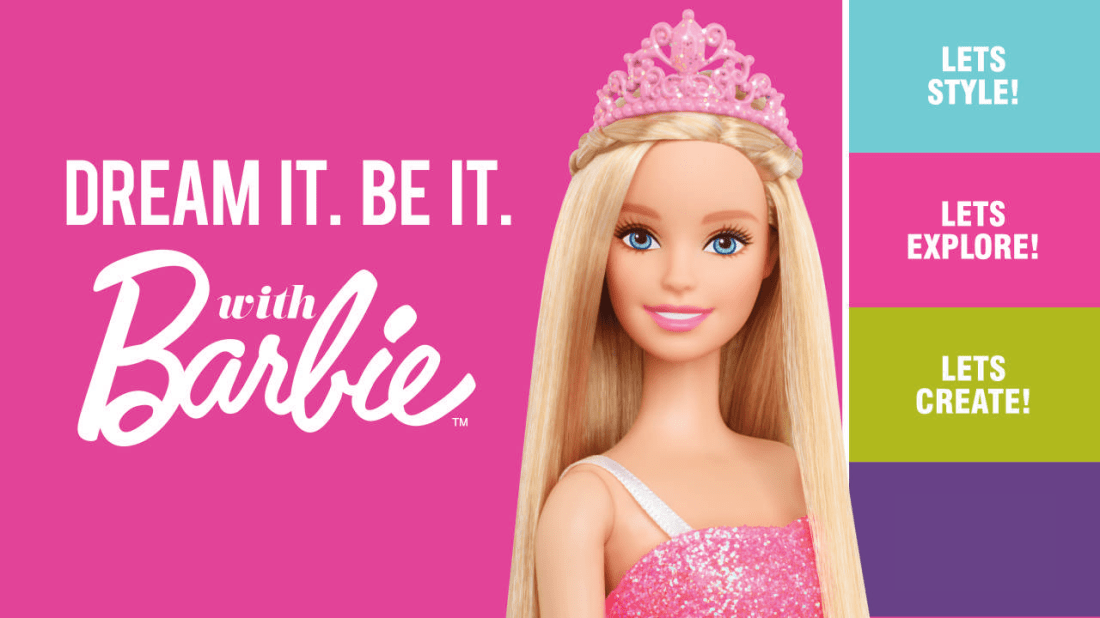
In a new film by BBDO called “Imagine The Possibilities”, Barbie speaks of the power of imagination that allows girls to explore their potential.

It’s twitter page shows how the brand has begun to drive conversations around topics like inspiring confidence, celebrating boldness, encouraging self expression and calling out the ‘inner superstar’.

For a brand that has often been accused of perpetuating an epidemic of body hatred, this campaign seems to hold promise in getting parents to reappraise the role Barbie can play in a child’s life. At least a cursory look into the comments in the film’s YouTube page seems to suggest so.

The film is great because of its brilliant insight – when a girl plays with Barbie she imagines everything that she can become.

But ironically it is this very insight that could be its undoing. 

If when a girl plays with Barbie, she imagines everything that she can become, wouldn’t such an imagination naturally get rooted in a (misguided) notion –  i.e., the notion that her dream of becoming this someone could be a function of her growing up to look as ‘perfect & pretty’ as the Barbie dolls seem to her?

The jury is out.

Only time will tell if this can make any substantial dent in the brand imagery for Barbie in the long term beyond the seemingly positive discourse of “seek your inner superstar”.

Meanwhile, did you hear about Lammily?

Lammily

It is feted as as the “first fashion doll with realistic proportions”.

[Bonus Link: Did you know that every woman in every Disney/Pixar movie in the past decade has the exact same face? You should check this out.]

(Featured Image source: Barbie.com)

On Points Of View

Quick Read: Some businesses thrive by driving a singular POV regarding their offering amongst their target audience. And there are some that take pride in celebrating multiple POVs regarding theirs. 

Some elite restaurants in Japan are ichigen-san okotowari (first-time customers not allowed), meaning a regular customer has to introduce you before you can make a reservation.

The genius of this system is that it ensures that you buy yourself into a singular and a specific POV about its food, experience and its clientele if you want to be able to get a reservation at the restaurant.

Almost by definition.

And the story continues. One customer at a time.

It works because the ichigen-san okotowari system ensures that a single consistent POV gets bought into, replicated and passed on.

Meanwhile elsewhere..

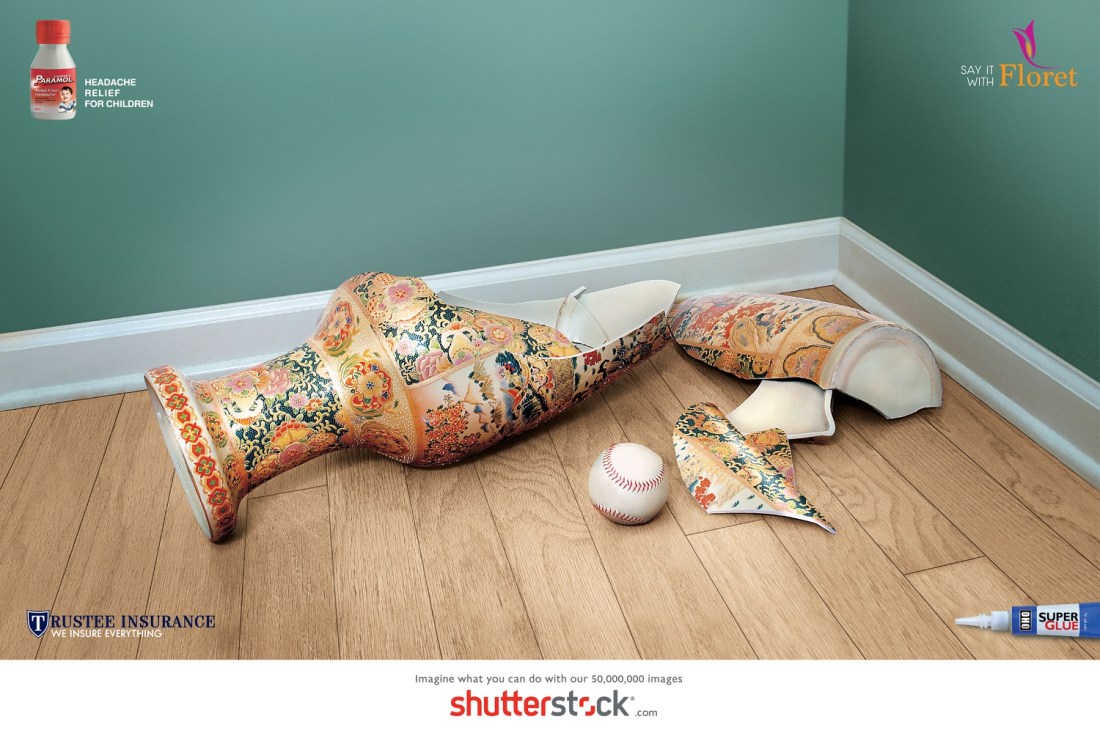
A recent print campaign by Shutterstock made it to the shortlist of Clio Awards 2015 under the Print category.

As a purveyor of stock photos, Shutterstock.com wanted to celebrate the fact that an image can potentially fire up your imagiation in multiple ways.

So it brought this idea to life through the following executions.

ShutterStock_Shark

ShutterStock_Broken

ShutterStock_Baby

[Click on the images for a larger view]

Agency: Leo Burnett. Images via: Clio Awards. (HT Bhatnaturally)

A truly insighful execution that celebrates the multiple POVs that an image can inspire. As Mr. Bhat says..

The irony is that this is too close to reality. We’ve all seen how art directors search for inspiring images first and then try and retrofit an idea. Also, a visual idea which was rejected or didn’t make the cut for a pitch in one category can be adapted to a totally unrelated category. This campaign actually puts a positive spin on that.

Does your brand – and by extension its strategy and execution –  thrive on driving and sustaining a singular POV or does it celebrate multiple POVs? 

[Bonus Link: Speaking of POVs, you should check out Hardcore – the world’s first action POV film that got premiered in the latest Toronto International Film Festival to critical acclaim.  The entire movie is shot from a single POV and boy is it intense!]

(Featured Image: Shutterstock Print Execution. Source)

Is The Classic Purchase Funnel Flawed?

Quick Read: With most products in any given category tending to have total functional parity, the only way to drive trial could possibly be through a singular route – curioisty.

Often times I am curious why “curiosity” doesn’t even figure in the classic purchase funnel.

In fact I tend to believe that without inciting a threshold level of curiosity in a consumer, awareness and consideration could end up proving to be moot pursuits.

Let’s take Kaviar. (or Smörgåskaviar to be specific)

Kaviar is a Scandinavian spread – a paste consisting mainly of lightly smoked cod roe that has a salty/sweet/fishy taste and a gooey pink/orange colour. Packed full of omega-3 goodness, kaviar can be eaten at anytime and practically spread on anything edible – breads, eggs, meat, cheese etc. (source)

Mills Kaviar

(Source: Mills Kaviar)

No wonder the Scandivaians swear by them, with the category that is sufficiently crowded with brands like MillsStabburet, Kalles, Kavli etc battling out for market share by commanding fierce loyalties.

However kaviar supposedly has one catch – it is an acquired taste and a first timer might find the taste disgusting

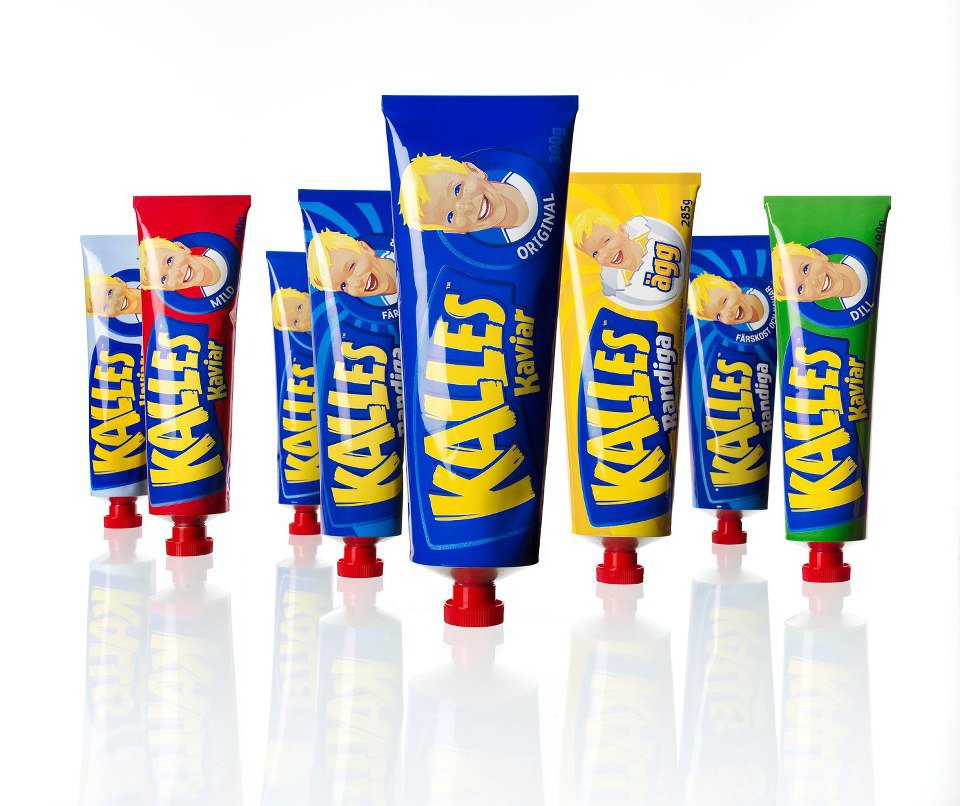
Now that’s where the Kalles Campaign proves to be a genius. (Kalles is a Swedish Kaviar brand)

The campaign holds a mirror to other nationalities’ incomprehension and their reaction at having something that tastes – let’s just say – strong and funny.

It starts with Los Angeles where obviously the Californians don’t hold back their feelings upon tasting something weird.

As it moves to Switzerland, the taste test yields more hand and eyebrow gestures than actual verbal responses.

“It tastes … ” a serious looking man in a tie says. “It tastes … ”

“Fantastic?” the Swede asks.

“No,” the Swiss man replies, with a resolute firmness.

In Budapest, the reaction is icier. A woman takes a bite, exchanges cold glances and upon being asked if she likes it, she smiles, and says “yes,” with a look that clearly says no.

The Costa Ricans laugh and gesticulate.

And the Japanese are very polite even as they appear to be gagging at the taste.

 The Kalles commercials began in 2012 and were made by the Swedish ad firm Forsman & Bodenfors.

As this NYTimes article says, if nothing else these ads are a whimsical cultural excursion into manners.

Now, can anyone get me a Kalles Kaviar please?

I want to try my own gag reflex.

I am really curious!

Now, where am I in the purchase funnel?

(Featured Image Source: My Guilty Pleasures)

Duality And Everything In Between

Quick Read: We seem to have a thing for things that are dual in nature. Be it a town, a person or perhaps even a brand.

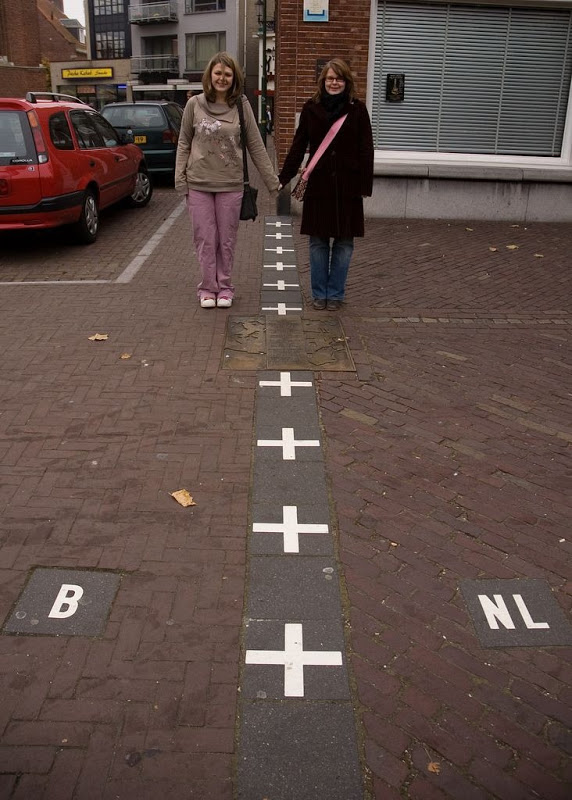
Baarle –  a town at the border of the Netherlands and Belgium, is perhaps the world’s strangest international border.

Why?

Because the town is an enclave that consists of pockets of the Netherlands nested inside Belgium, nestled inside the Netherlands.

The result?

The international border cuts through Baarle indiscriminately, crossing streets, dividing roads and slicing through buildings forming Baarle-Nassau and Baarle-Hertog – two municipalities that are in Netherlands and Belgium respectively.

Naturally many peculiarities arise.

For e.g., many homes are cut in half by the border, so as a matter of convention each household’s nationality is determined by the location of its front door. Which also decides where taxes are paid. So some houses apparently swap the location of their front doors between countries to benefit from the most favourable taxes!

Baarle House

(Pic: Source )

And if the border runs through the front door, the two parts then belong in different countries, and this is indicated by two street numbers on the building.

So duality has become the central character of Baarle where everything is two fold: two churches, two town halls, two post offices, two fire stations and even two police forces and so on.

And it is this charm of duality that makes Baarle quite popular with tourists around the year.

baarle-nassau-hertog

(Pic Source. HT Credit)

Caitlyn Jenner

Recently an unknown 65-year-old woman has become an internet senstion overnight. She was revleaed to the world through the cover page of Vanity Fair and a Twitter account that amassed 1 million followers in four hours – faster than the account launched by the US president, Barack Obama! Four days later she was up to 2.37 million followers, with another 1.5 million followers on Instagram! (source)

Why?

Perhaps it is the enigma of a duality the Vanity Fair’s cover story revealed.

Caitlyn Jenner

(Pic sources: Bruce Jenner | Caitlyn Jenner)

During the 70s, the Olympic hero William Bruce Jenner had the unofficial title of “world’s greatest athlete” and nearly 40 years later, in 2015, Bruce became the world’s most high-profile transgender woman named Caitlyn Jenner.

She has now become a hugely powerful cultural figure almost overnight and could soon become an important voice in the transgender rights movement. Apparently even Obama tweeted in response saying “It takes courage to share your story”.

Duality, it seems, has a certain enigma to it! Ask Buzz Bissinger – the Pulitzer winning journalist who crafted Caitlyn’s reveal for Vanity Fair over a period of 3+ months leading to this watershed of a cover story.

Duality & Brands

The human brain is said to possess this intrinsic nature of actively labeling everything it encounters into neatly defined buckets. That’s probably why anything that has a strong duality ends up becoming such a tease to our minds and perceptions.

No wonder then, there are brands that thrive on duality. (The classic Coffy Bite and more recent Cadbury Oreo are some well known Indian exmples)

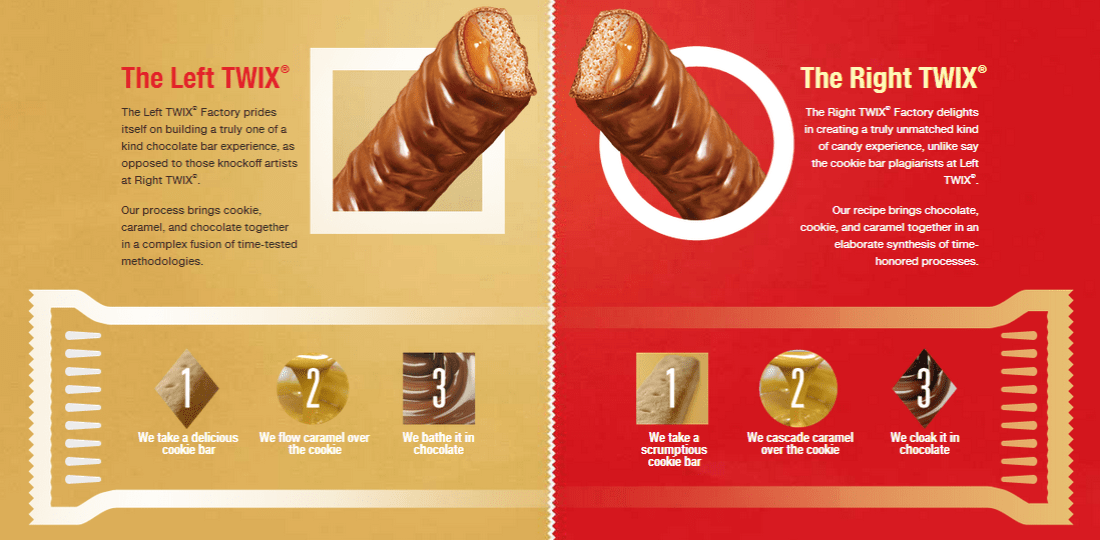
In fact, this allure of duality seems so high for Twix – a Mars’ chocolate bar brand –  that the brand thrives on teasing out a duality that never actually exists.

twix Dual2

(Source: Twix.com)

See a reel of its “Left Twix vs Right Twix – Pick a side” ads here.

Can you think of any other brands that leverage ‘duality’?

(Featured Image: Twix)