The Allure Of Being Limited: Part 1/2

Quick Read: Value as a concept to a consumer has 2 key dimensions: perceived benefit and perceived cost (of a product). But the moment a third dimension called ‘availability’ is introduced, the equation becomes intriguing and interesting, especially when the former is limited – in reach or time.

Value is an interesting concept. It can be defined as  the consumer’s perceived benefit derived from a product in relation to its perceived cost, and can be represented by the equation:

Value = Benefit / Cost 

What generates value? Dial up the benefit and/or dial down the cost of your product for the consumer. Simple. Isn’t it? But that is conventional.

Let’s take the concept of Limited Availability. When something becomes limited in availability, the concept of value can become a bit unconventional and even compelling – almost as intriguing and compelling as the concept of turbulence is for physicists.

Don’t believe me? Let’s take 3 examples.

What if the sun were to become limited edition?

Difficult to imagine, right? But for the 3,300 odd people living in the small Norwegian town of Rjukan they don’t have to. Because sunlight for them is literally limited – to just 6 months in an year. The towering peaks that surround the town rise to almost 2,000 meters above sea level and block out the sunlight for 6 months, meaning Rjukan residents live in a permanent shadow from September to March. Every year.

So in October 2013, the town of Rjukan created history by getting sunlight to shine on the town.

And the day that happened, the town square was reportedly abuzz with cheering families, delighted children, sun loungers doning shades and drinking cocktails while waving Norwegian flags as TV cameras flocked from around the world. It was almost like a spectacle, an epochal moment for the town.

How did they do it? 

NORWAY/(Giant mirrors reflecting sun light into the Town Square of Rjukan. Source)

Giant mirrors.

At a  cost of 5 million Norwegian kroner, they installed giant mirrors on a mountainside to reflect the sun into the town. Using computer controlled technology, these mirrors, called heliostats are powered to shift every 10 seconds to track the movements of the sun and reflect sunlight into the town square throughout the day.

Regardless of the cost involved per capita for Rjukan, this unique solar project stands out as a sculpture, an installation that makes us think about the value that we attribute to something as fundamental as sun especially when it becomes limited. Limited in reach and time. 

An insanely irritating game with bad graphics = a viral hit?

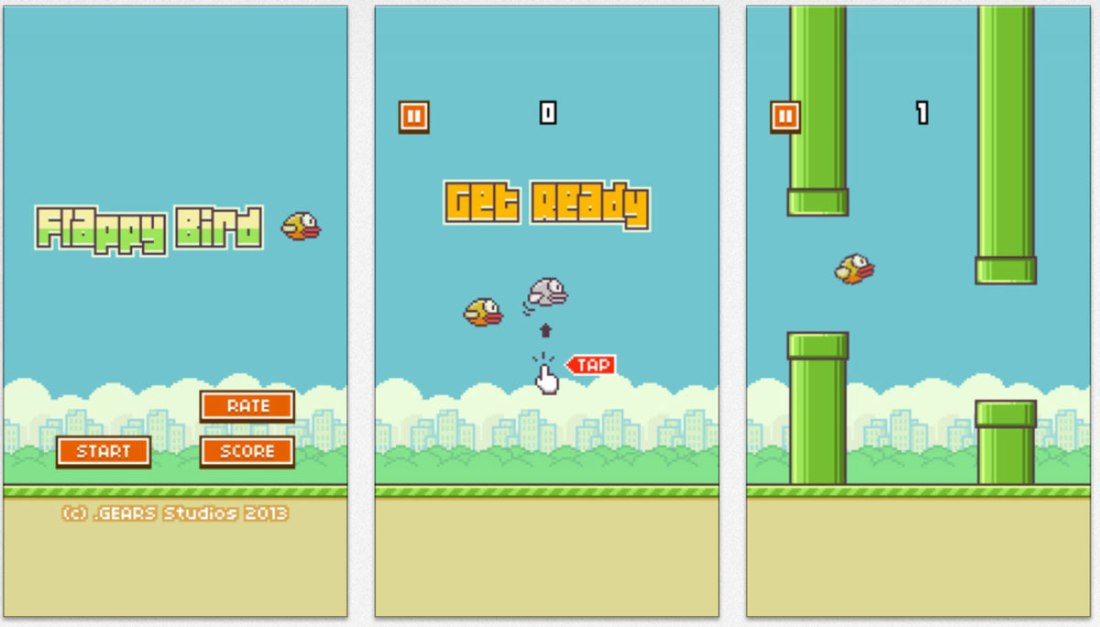
Flappy Bird is a 2013 game developed by Dong Nguyen – a Vietnam based developer. For the uninitiated, the following lines from this Verge article can give you a quick sneak view into the ‘Flappy Bird Phenomenon’:

..the game goes as follows: you tap the screen to propel a tiny, pixelated bird upwards. If you hit any of the green pipes on your way … the game is over. The goal is simply to accumulate the highest score possible. The catch? You’ll very likely spend an hour even reaching a score of five. The app has been downloaded 50 million times, and has accumulated over 47,000 reviews in the App Store — as many as apps like Evernote and Gmail. Mobile games studios generally spend months coding up deliberately addictive and viral titles, but Nguyen did it by spending a few nights coding when he got home from work.

See the video of the game play here:

But for many gaming industry experts Flappy Bird is an enigma. Huffington Post described it as “insanely irritating, difficult and frustrating game which combines a super-steep difficulty curve with bad, boring graphics and jerky movement”. Despite that by early 2014 it was  one of the top free games on the App Store and Google Play in the US and the UK and was touted as “the new Angry Birds.” And was reportedly earning around $50,000 a day in revenue through its in game advertising. But that’s not the most interesting part.

On the 8th of Feb, when Flappy Birds was soaring past stratospheric heights in popularity and cult status, Dong Nguyen tweeted the following.
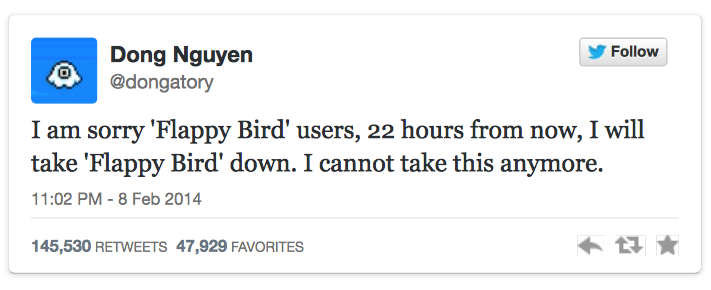
Flappy Bird

With this single tweet (dutifully reported by the likes of The Wall Street Journal, Guardian, Forbes, Reuters etc. and aided by the existing popularity of his game) Dong was instantly catapulted to a status of cult guru trying to pull an act of ‘Limited Edition’ to his game.

This promnise of limited availability has unleashed an instant panic in the gamers, fuelled debates among gaming experts globally and even invited suspcisions that this could just be a marketing stunt.

Not surprisingly, the game was taken down on App Store and Google Play within the next day while the whole phenomenon has become a viral hit globally. And spectacularly, following the removal, many media outlets reported that several merchants on eBay were offering phones that had the app pre-installed for US$1499 or more, with some receiving bids of over $90,000!! (source 1,2, 3)

As mind blowing as this might prove to be, the story nevertheless tells us two things:

  1. That Flappy Bird is proof that no one really knows what the audience wants. (Do read this article by the same name)
  2. And that the promise of limited availability can sometimes stretch the definition of the word irrationality or insanity (depending upon who you are)

So that’s two examples so far on how compelling the perception of value can turn out to be when driven by a promise of limited availability.

The third example is my personal favorite and deserves a seperate blog post.

To be continued..
Convenience – With Capital ‘C’

Quick Read: Recent innovations across sectors underscore how Convenience is at the core of their offering to the consumers who are happy to pay a premium for the same. While these could have disruptive implications to traditional business formats, they too are not far behind in figuring out the new playing field – otherwise called Convenience with a Capital ‘C’.  

Convenience as a core value proposition is getting all pervasive.

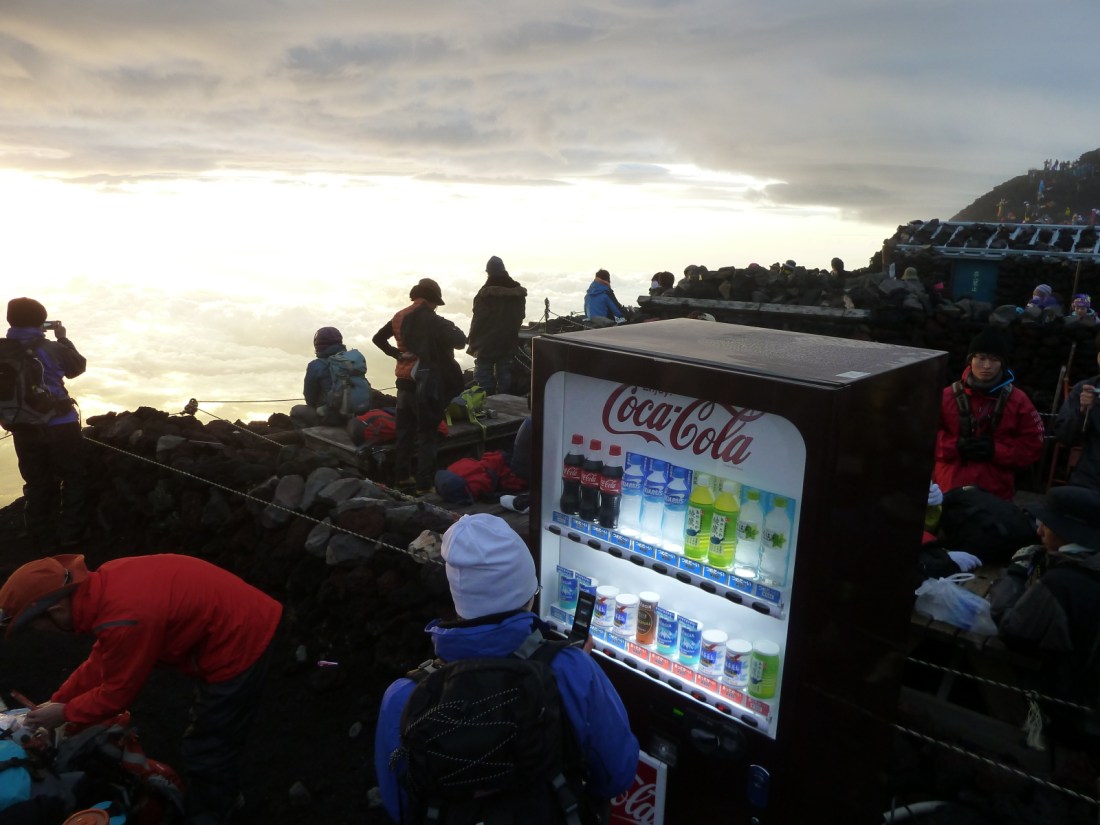
And for proof of this, one needs to just look at the vending machines in Japan or the jidohanbaiki as the Japanese call them.

Japan, they say, is like the spiritual hub of the vending machines. In fact according to this CNN report, there are currently around 5.5 million vending machines in Japan, which is one vending machine for every 23 people in the country! You have them across categories spanning every conceivable kind of location.

You have vending machines at street corners, restaurants, coffee shops, toilets, even in trams and on mountain tops selling everything from canned drinks to drinks that are supposed to be a surprise till you buy them, from hallucinogenic herbs to charms, from books peddling porn and erotica to those listing test questions for exams, from footwear to bras and panties. Almost everything and everywhere!

Regardless of the amusement that these jidohanbaiki or the vending machines in Japan evoke from people around the world, the simple grain of human truth that seems to emerge out of all this is the fact that people tend to value convenience over price on many an occasion –  irrespective of the category and location. And more so in the recent past.

More recently a Japanese food company Kagome has installed vending machines at the start/finish lines of one of the city’s major running routes to sell fresh red tomatoes to the exhausted runners. The tomatoes are priced at a 280-gram bag for 400 yen ($3.80) and a 180-gram bag for 300 yen ($2.80) which is nearly 270% higher than the price at which you would have gotten it at a supermarket in Tokyo. (as per Tokyo market prices at the time of writing this article). Despite the price premium, reports suggest that these tomatoes are selling well, given that these vending machines are said to be replenished every day.

Kagome(Kagome Tomato Vending Machine. Source)

What does the consumer value here? Kagome – it appears – is not actually selling tomatoes through their vending machines, but a natural alternative to energy drinks and bars delivered at your convenience.

Let’s Take Pharmacy

Disrupting the equation that patients traditionally had with their doctors, insurance agents and drug stores, IDEO has recently worked with a startup to design PillPack. This short video explains the concept neatly.

As this FastCompany article says, PillPack is an end-to-end pharmacy and delivery service for pharmaceuticals that is using design to vastly simplify the process of swallowing pills each day. You don’t have to worry about pillboxes, reminders, refills, insurance, co-pay, ad hoc doctors’ prescriptions etc; PillPack takes care of all that for you. All you need to do is tear off the latest M&M Fun Size packet and swallow what’s inside when it tells you to.

Costing $20 per month for the user, PillPack’s service is an interesting example of how – despite several regulatory, legal and FDA challenges that govern drug/drug delivery –  selling healthcare in a convenient package could indeed be big business. In fact, the company has now successfully raised $4M in funding from investors and is boldly stepping up its bid to become the top mail-order pharmacy disrupting all existing players in the traditional value chain.

PillPack

Again, which business is PillPack in? Drug delivery? Or is it Convenience in medication?   

Fashion Retailing

Lamoda is an online fashion retailer in Russia. Albeit with a twist. Not only does Lamoda’s uniformed deliveryman bring the clothes that a customer orders, but he also waits for her to try them on, offers fashion advice, takes returns, and processes her payment on the spot.

Lamoda(Delivering the experience of your local store at your door step, Lamoda. Picture source)

As per this Businessweek report, Lamoda currently employs about 700 couriers and services 1.5 million active users in Russia with sales of more than 6 billion rubles in 2013 despite the logistical challenge of having had to deliver mail orders to the world’s most sprawling nation, spanning nine time zones with an extremely unreliable postal service. The fact that Lamoda looks at it as a serious bet on the business of offering convenience to its customers becomes apparent when you look at its underlying cost structure.

Reports say that despite the cost of delivery for Lamoda accounting for as much as 25 percent of an order totaling less than $1oo, the company doesn’t charge for shipping and keeps prices at the same level as in stores. As a result, its 2013 annual expenses were expected to have exceeded its annual sales. And the interesting part is this. These current losses haven’t stopped investors from betting big on Lamoda’s potential. Over the past two years, Lamoda has raised more than $200 million from billionaire Len Blavatnik, JPMorgan Chase, Kering etc.

Is Lamoda selling clothes? Or Convenience? It appears to be a moot question again.

Retailers not far behind in the new game

Interestingly the underlying theme common in all these 3 examples – Japan’s ubiquitous vending machines, mail order pharmacy business model of PillPack and Lamoda‘s clothing courier with a twist of convenience – is unmissable. The brick and mortar store as it stands today is at threat.

But it appears they are not far behind. For the first time in decades US cities are said to be growing faster than suburbs with customers seeking convenience more than anything else. So, stores like Target and Walmart are embarking on major experiments in scaling down, finding the right locations while ensuring the right formats in order to cater to this convenience seeking urban dweller.

With emerging markets rapidly catching up in spending power, with money value of time increasing for average consumers and an infinite ocean of choice to choose from in virtually every single category, convenience has already become a key differentiating factor.

Probably in a very near future, most products and services will have offerings that sell convenience as their core value proposition. Otherwise they are perhaps in the fitness industry.

(Featured Image: Vending Machine atop Mt Fuji, Japan. Source)

When Sub Cultures Influence Brands

Quick Read: There are several fascinating Sub Cultures and Urban Tribes around the world that could give us insights and compelling perspectives into consumer behaviour by way of their unique shared values and behaviours. In each such instance they exemplify how anthropology can influence advertising and vice versa. The Floggers in Argentina and The Sapeurs in Congo are two cases in point.

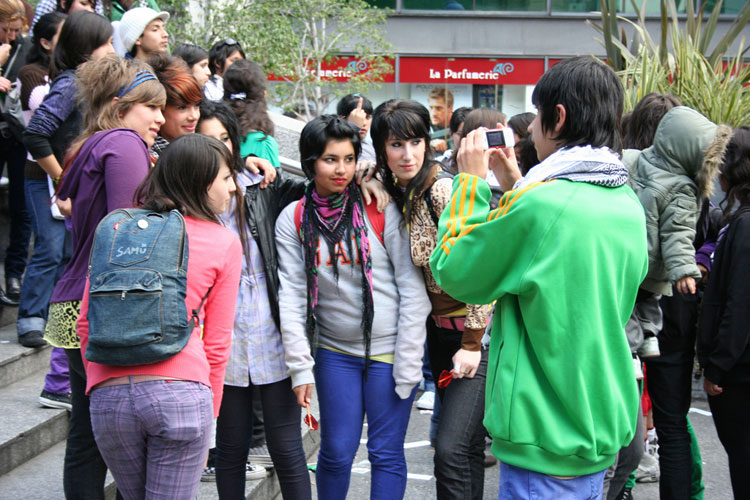
As a Youth sub culture, THE FLOGGERS originated in Argentina at the end of 2004 and have become popular through their unique fashion and went on to popularise the concept of picture sharing via photo blogs.

Essentially the floggers have two key characteristics:

  • They are dressed up in unique style: Floggers wear bright coloured unisex clothing – commonly tight trousers , V-neck T-shirts and canvas trainers and have dyed hair with long emo side fringes which cover their eyes and lip piercings. They have even developed a particular way of dancing to electro/techno music called Electro. 
  • They share their pics on Fotologs: Floggers take photos of themselves and friends and post them on photo blogs. Among FloggersFotolog.com is one such popular platform and lists more than 5.5 million users in Argentina, which is one of the two biggest markets for the site (Chile is the other). Here users comment on one another’s photos. The more comments, the more famous the flogger. (source)

floggers09(Flogging Frenzy, Source –  The Argentina Independent)

As a sub culture, if you come to think of it, the Floggers represent an interesting niche that are at the intersection of fashion, photography, social media, music and dance. Elite members of such a unique urban tribe naturally become trend setters in fashion and are the de facto voice of their generation cutting across class, creed and hierarchy.

Augustina Vivero a.ka. Cumbio is one such Flogger. She has a fotolog site that is said to be the most viewed Internet sites in Argentina logging 36 million visits in a single year alone! She is known to be the most popular and by many accounts the most influential flogger in the world and by age 17 has catapulted herself to stardom and unexpected affluence by transforming her Internet fame into marketing muscle –  signing modeling contracts, promoting dance clubs and writing a book about her life. (source)

Not surprisingly Nike enlisted her for a three month campaign including a giant sneaker-shaped slide that the floggers could slide down while posing for pictures.

cumbio(Agustina Vivero a.k.a Cumbio holding a NIKE poster featuring her, Source)

 Active members of sub cultures like the Floggers being ‘extreme users’, make for a rich minefield of emerging trends, attitudes, values and vibes of a whole generational cohort for the marketers. Thus they make for an interesting case study on how Anthropology influences Advertising (and arguably vice versa).

The Gentlemen of Bacongo

Take the Sapeurs – one of the world’s most exclusive fashion clubs in a city that you least expect – Congo.

SAPE – which loosely translates to The Society of The Elegant Persons of Congo – are a group of people whose life is not defined by occupation or wealth, but by respect, a moral code and an inspirational display of flair and creativity by way of their stylish dressing.

SAPE(Of Style and Swagger – The Sapeur. Picture by Daniele Tamagni. Also a cover page of his book)

In the words of Hector Mediavilla – who photographed the Sapeurs in his outstanding project, the SAPE can be considered to be the most interesting anthropological phenomenon for several reasonsDespite being surrounded by poverty and civil war the Sapeurs:

  • Dream on and survive the harsh reality.
  • Bring joy to those around them by way of their clothing and
  • Are required at funerals, parties and other celebrations to bring a touch of stylishness to these events.

Essentially, while everybody knows their elegance is just a façade but nevertheless, they perform an important social function for their fellow citizens. And in journalist Tom Downey’s words “when men dress as Sapeurs they become different people. Their gait, their gestures, and their manner of speaking are all transformed. The clothes are the gateway into a whole other way of being in the world.”

No wonder, the Sapeurs have inspired some fascinating photography projectsbooks and even music videos. More recently Guinness has brilliantly weaved the sartorial sub culture of the Sapeurs into their latest campaign, as part of which they enlisted Hector Mediavilla to shoot an inspiring documentary and a TVC.

Don’t miss this 5 mins documentary and the TV Spot.

Sapeurs Documentary

Guinness Sapeurs TV Ad, Agency AMV, BBDO London

For me, the connect between Guinness as a brand and Sapeurs as a spirit is a creative masterstroke truly befitting the flair and the flamboyance of ‘The SAPE Spirit’.

Do you know of any other marketing initiative that has sought to tap into a sub culture or an urban tribe

(Featured Image:  Sapeurs of Congo, Hector Mediavilla, Source.)

Video Games As Disruptive Innovation?

Quick Read: Today’s video games like Grand Theft Auto V, are more than just stunning life like gaming experiences. We could have some exciting possibilities here – where experiential & interactive branding can be embedded in games. And more interestingly, a world where video games can be virtual beta testing grounds for new product and UX design. These could be potential disruptive innovations for fields like Market Research and Product Design. 

Visit Los Santos & Blaine County – where plastic surgery, bad movies and big sharks rule the roost – see for yourself.

So says the landing page of Grand Theft Auto V – the super hit block buster action adventure video game that has been rated as the fastest selling entertainment product in world history.

It broke industry sales records by earning US $800 million in the first 24 hours of its release, and US $1 billion within its first three days.

gta-5-grand-theft-auto-99

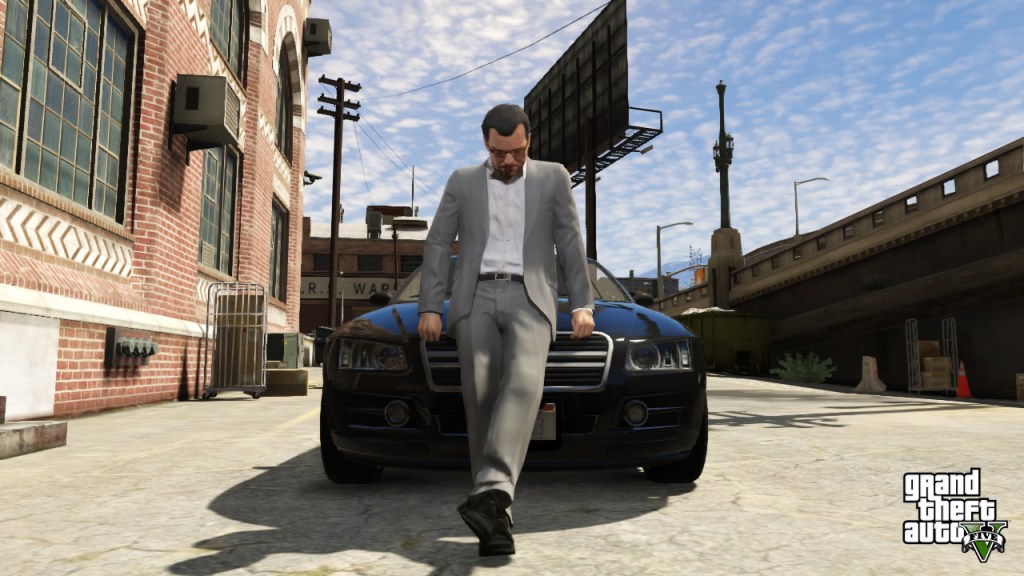
One of the key features of the game is that it has an Open World game level design – i.e., a world where a player can roam freely through the fictional city of Los Santos and is given considerable freedom in choosing how or when to approach objectives. So as a character in the game you have the freedom to spend your time pursuing adventure sports, lounge about by the beach, go shopping, visit the local artisan, enjoy music and other such entertainment options.

Los Santos(The Landing Page of GTA-V that lists the possibilities and features of Los Santos city and Blaine County)

But Fernando Pereira Gomes – a street photographer by passion and a game enthusiast who went to the midnight launch of the game and played the night away, noticed something even more interesting.

He noticed that the characters in the game had phones with cameras at all times during the game play. This means the players can practically take pictures from within the game(!) and upload these. So with this new tool, and the huge world of Los Santos and its streets, he started experimenting with the camera and went on to take some truly stunning photographs that he has started to share on his blog. Ever since its launch, his blog and the pictures have been rapidly climbing up the popularity charts – thanks to the ingenuity of his idea and the beauty he captures from within the game’s landscape. See a demo video on how he does it here. Now that is Street Photography taken to a completely new level!

He goes on to say..

What I found was remarkable. The game is so realistic that it felt like being in the streets outside, running around for shots, anticipating passersby’s movements and reactions. In a way, it was also incredibly frightening that these algorithms could look so real, or is it that we ourselves are becoming ever more algorithmic?

StreetPhotoV(Los Santos Street Photo by Fernando Pereira Gomes sourced from his blog)

On first look this is fascinating for two reasons:

  1. For the GTA V’s rich media, content and the game design that enables such  interesting possibilities (makes a definitive commentary on the evolution of game design).
  2. And for the creativity and ingenuity of someone like Fernando Gomes who has ventured beyond the apparent possibilities in the game and went on to make a mark for himself.

On second look, and from a marketer’s and a product designer’s stand point, I thought there could be even more compelling possibilities dormant here waiting to be realised. Two things I could think of:

In Game Experiential Branding

In game branding is nothing new. But how about adding an experiential / interactive angle to this ‘in game branding’? More specifically, how about, say a brand like Samsung, tying up with the game franchise and embedding its full camera functionality in the game’s camera phone? Wouldn’t it be an interesting way to let the gamers – many of whom tend to be tech’s early adopters and thereby potential customers of “the latest phone out there” –  try out the phone’s exciting new features?

The opportunities of ‘customer involvement’ here could be limitless – almost life like with little risk involved while affording an almost first person experience of the phone and/or its camera to the user. The best part is the free marketing that these early adopters could do for the brand if and when they share these pics on their social network.

A Virtual Beta Testing Ground For The Upcoming Wearables  

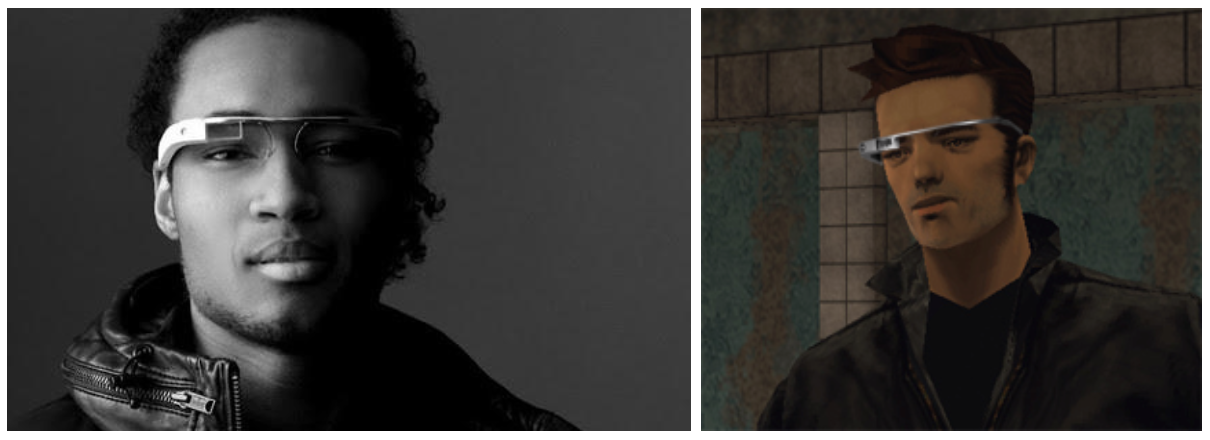
Let’s take Google Glass as an example  (one among the most awaited wearables in the market for 2014). As we speak now, it is in its Beta testing phase with some early adopters signing up to use, explore, develop and test new possibilities. In fact an Android developer Mike DiGiovanni looking to test the concept of using Glass as a second screen, has managed to capture Grand Theft Auto’s crucial in-game GPS interface, beaming it to the player’s Google Glass eyepiece in real time (source).

But how about embedding the functionality of  something like Google Glass within the game and let the players use it and explore its possibilities by themselves? I would guess something like this could give a treasure trove of real time feedback and insights to the product designers in order for them to refine its design and functionality.

Google Glass

Implications

Ben Hammersley  in his must read WIRED article on Wearables as the 3rd wave of computing, rightly says that when it comes to something like Google Glass, how our social progress plays out will be just as interesting as the technology itself. The social component of the implications would probably need to be tested and tried in real life, but the technology component and its possibilities can perhaps be tested in the game’s ‘reel’ life already today.

And may be when the game design becomes so smart to be able to reflect life like social dynamics – a not so unlikely prospect in the near future –  we might not even need the good old focus group or the hordes of beta testers!

Now, that could be a disruptive innovation for market research and product design!

Market research agencies and product designers of the world – hope you are investing in video games. No?

(Featured Image: Source, Fernando Pereira Gomes Street Photography on the streets of Los Santos within the game Grand Theft Auto V)

The Business of Belief

Quick Read: Every business that we know of can be said to be in the ‘business of belief’. While a majority of these business thrive on building and sustaining our beliefs, there are also ones that thrive on breaking down and challenging our beliefs. 

Arguably every business that we can think of can be said to be in the Business of Belief.

While most businesses that we see around can prove this point, RIEDEL glasses are a very straight forward example.

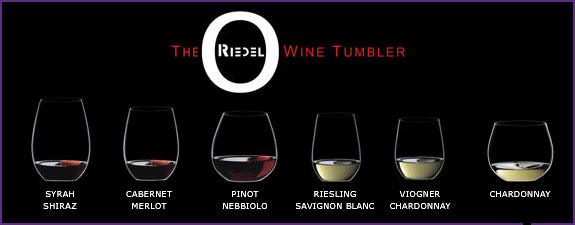
RIEDEL is an expensive line of glassware designed to deliver the wine’s ‘message’ via the carefully crafted form of the receptacle. In other words, Riedel has built a thriving business of glassware by driving a belief that the shape of their glasses can make wines test better!

Skeptical? The story goes that even experts and wine critics were – several of them skeptical of this seemingly implausible claim.

And yet today, hundreds of wine experts, and thousands of customers now swear it’s true. Taste tests throughout Europe and the U.S. were said to have proven time and again that wine — expensive or inexpensive — tasted better in Riedel glasses.

riedelo

Except it’s not true. At least not empirically. (source)

When subjected to double-blind testing that doesn’t let the taster know the shape of the glass, people found no detectable difference in taste between glasses. Objectively, the shape of the glass just doesn’t matter.

But subjectively, when belief in the story and the experience of the glass are added back in the mix, it matters. And the wine does taste better to these people. Today some Riedel glasses sell for more than 100 dollars each and people covet these over other lower priced glass ware!

Therefore, sensing a branding opportunity that is waiting to be leveraged, Coke has recently tied up with Riedel to come up with a glass that “is designed to enhance the drinking experience”. The Coke site goes on to explain..

Shaped by trial and error by a panel of industry experts and Coca-Cola lovers, this form captures the distinct spices, aroma, and taste of Coca-Cola and creates a magical sensorial experience… A unique glass for a taste like no other.

RIEDEL+Coke(Riedel + Coke, Source)

While this ‘glass act’ by Coke drew myriad views from the F&B industry, it nevertheless makes for an interesting commentary on Riedel as a company that has thrived by systematically building a business of belief.

Meanwhile elsewhere…

Interestingly there also exist businesses that build a following for precisely the opposite reason – by belying beliefs and tearing down expectations each single time they offer something to the consumer.

Take The Art of Dining – a business that sets up theme based pop up dining experiences – as an example.

As part of their model, Ellen Parr and Alice Hodge, put on theme-based pop up restaurants mostly in London. The venues – always unusual and unexpected – have so far included a 16th century mansion, an eel and pie shop, the Victorian Dalston Boys Club, and the army barracks on City Road while the themes range from wartime rationing to the Food of Love. The whole experience is like eating within an interactive art installation. Each of their dining event is thus an experience that belies conventional expectations and common beliefs on what is to come.

A Night With The Mistress(Themed as ‘A Night With The Mistress’, guests were required to put on a blind fold when they ate, Picture Source)

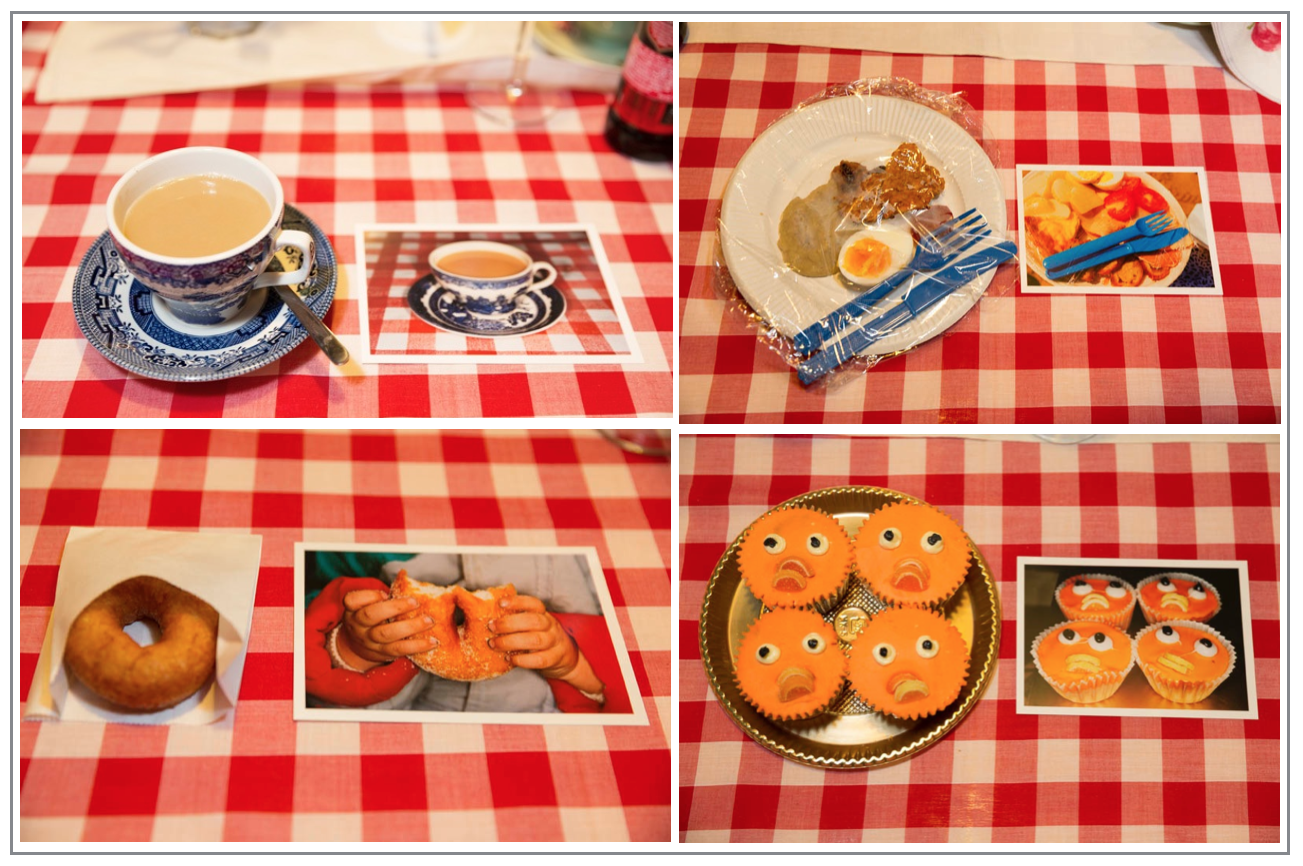
Their recent series called Say Cheese – the photography of Martin Parr in five courses, is the duo’s latest example on how they have cemented their expertise in their signature experiential model – Set up expectations, evoke the guests’ pre conditioned beliefs and pull the rug off their feet as they take the plunge. 

This is how it works:

  • You enter a typical English café setting: gingham table cloths, plastic flowers on the table, pictures of Lady Diana and Mrs Tatcher, copies of the Sun etc
  • The waiting staff are mostly English, wearing floral pinnies
  • And this is where it starts to get interesting -You don’t get a conventional menu, but a set of 5 photos by Martin Parr – the legendary photographer
  • And here is the twist: the food looks just like the images but tastes completely unlike what you expect.
  • For eg. An English tea cup is filled with a tea coloured liquid, poured from a tea pot, which turns out to be a delicious Tom Yam Soup. A doughnut is actually a South Indian savoury, made from lentils and served with a coconut chutney. And it goes on

Martin Parr(Each of the five courses saw Martin Parr’s pictures come to life in bizarrely unexpected ways. Compilation of pictures from here)

See the short video here to get an idea on the actual execution

http://vimeo.com/69361520

Say Cheese! The World of Martin Parr in 5 Courses from GOLIGA on Vimeo.

This pop up experience was also offered in Tokyo in 2013 and as per Time Out Tokyo, the tickets costed  ¥12,000 per person, and were limited to 50 people per night. Food, it says, doesn’t get much more high-concept than this.

Now that’s a business that is actually built on belying beliefs!

(Featured Image, Of Wine Glasses and Beliefs. The Riedel Wine Glass Company Brochure, Source)

Remarkable And What Lies Beyond

When you look at a photograph, read a novel or eat at a good restaurant what do you expect?

A good capture of a single moment in time, a nice story and a decent meal. Right?

What if these expectations are messed up and you need to discover for yourself a whole new experience in consuming these products/services? Let’s start with Stephen Wilkes.

The Photograph

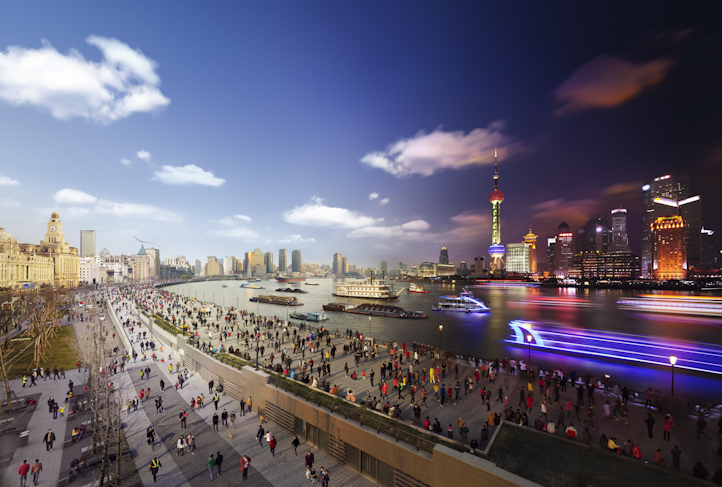
Each photographer tends to have an area of interest. i.e., a fascination of architecture or people or nature etc. But what if as a photographer, you are fascinated by architecture and people and cities and also nurture a love of ‘shooting history’? Stephen Wilkes is one such guy and has a way of going about it.

  • He starts at a vantage point that can afford a panoramic view of the location of an iconic land mark
  • Then he shoots what he calls the ‘naked plate’ – a shot of the land mark with absolutely no one in it – in other words  a completely deserted landscape of the location
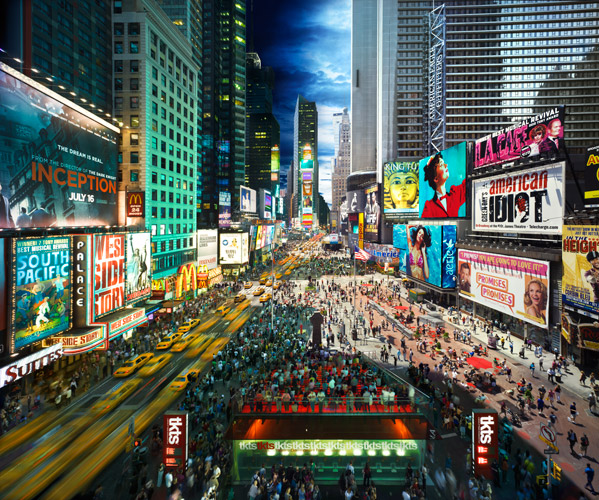
  • Then over a span of over 12 to 15 hours from dawn to dusk in a day, he takes nearly 1,500 pictures of the same location from the same angle, while also taking mental notes of the shifting landscape and the random events unfolding below him
  • After this action at the location, he then selects about 50 final shots from which to over lay the final composite picture that seamlessly merges the action that had unfolded between dawn and dusk at that single place in a single shot!

Result – pictures of a place that are panoramas in ‘Day to Night’ that can throw your brain off the hook. Each picture in this series can look like a magical landscape suspended along a tapestry of time. Don’t believe me? Then let his pictures from his newest body of work titled ‘Day to Night‘ do the talking.

Shanghai

(Stephen Wilkes, Source, Shanghai, Bund)

Times Square

(Stephen Wilkes, Source, Times Square)

The November 25 Edition of TIME features a photo essay based on Stephen’s work. As the article puts it,

A lot can happen between sunrise and sunset especially when Stephen Wilkes is photographing it. 

The Novel

OK, so this is going to be difficult. For how do I write about a book that redefines the very experience of a book?

S. – a novel by JJ Abrams and Doug Dorst, released on Oct 29th 2013 is a first of its kind experiment in book design, layout, narratives and structure. It is a book that stands out because of its unprecedented ambition, creativity and inventiveness.

For the first time you might actually feel a need for a ‘guide’ on how to read a novel! There are three enmeshing story lines in S. :

  • First you have the story in this book by name “Ship Of Theseus”
  • Second you have the mystery about the fictional author of this book by name V.M. Straka
  • And third you have the dialogue between the two readers of this book by name Jennifer and Eric, who communicate to each other via hand written notes along the margins and inserts

Designed by the New York-based design firm Melcher Media, this is a book that can easily be an inspiration for a generation of designers, writers, novelists, publishers and marketers to come for years! Read this FastCompany article for more details.

As the article says..

It’s difficult to decide exactly how to start reading S.–a sort of 3D Infinite Jest with a pop sensibility–and nearly impossible to imagine how it ever got written.

See this video to get a feel of what is inside the book

Trying to explain this book is like trying to explain the plot of ‘Inception‘ and raving about the genius of its concept. The only way to appreciate the ingenuity of this art form is to get a book and start reading. I – for one – cannot wait to begin my magical adventure with S. and discover a whole new experience of consuming a novel!

The Restaurant

Earlier this month, DiverXo has become just the eighth Spanish restaurant to win an unbeatable third Michelin star. With an unassuming kitchen that measures just 30 square meters, it is the only establishment in the Spanish capital to hold the honour. But that’s not the big deal.

The big deal is how DiverXo – led by the Spanish chef David Munoz – turns every single convention on its head as a restaurant.

  • For starters, upon entering, every diner is given a one page manifesto on how to best enjoy the food in the restaurant. All they need is to surrender every preconceived notion and suspend judgement and just do as they are told
  • Once seated, DiverXo offers a choice between a ‘short menu’ (7 dishes,  €95, lasting 2.5 hrs) and a ‘long menu’ (11 dishes,  €140, lasting 4 hrs).  Both menus are exquisitely choreographed as unprecedented gastronomic experiences by the chefs
  • For e.g., as per TripAdvisor,when a dish arrives on the table prepare to be instructed to eat with even a spatula!
  • And as per this AFP article, no sooner do you dig into say – a raw cod fillet drizzled with boiling olive oil and accompanied by potato skins and pickled chilies, don’t be shocked if a cook bursts in to you and lays on hot mayonnaise
  • Later, as you chew more another chef could arrive with a cream of cod and sea urchin

And the shocks and surprises continue.

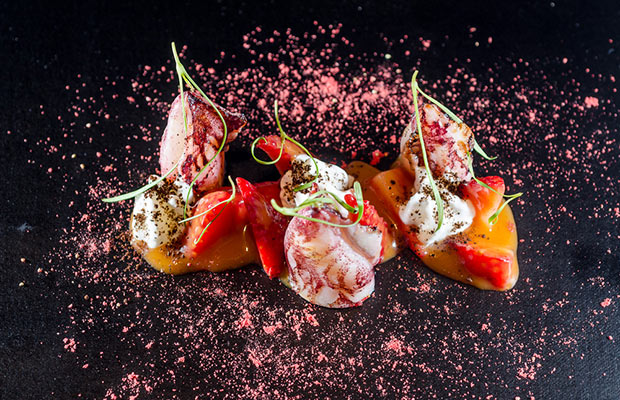
rp-diverxo-1

(DiverXo, Artful dishes that push the limits of fusion cuisine, Source)

Besides, as per this AFP article ..

  • Even the design of the food can tend to defy expectation. For e.g., a fiendish ketchup of chili and tabasco makes the dish of duck dumplings and fried ducks’ tongues resemble a blood-splattered murder scene
  • The menu lists not ingredients but rather sensations: sweet, sour and, in the case of one star dish, the “Hannibal Lecter”, sharp

As the article says..

The self-proclaimed “brutal” approach of this tiny eatery, where the cooks rush to add ingredients to diners’ plates mid-bite, has made it one of the most unusual restaurants ever to join the world’s gastronomic elite.

In summary DiverXo is a first of its kind restaurant where the rules are simple: Come with an open mind, trust the chefs, expect to be shocked and prepare to be surprised as you embark on a culinary adventure like never before.

May be food is almost besides the point here. Or may be it’s all about the magically shocking experience of what a restaurant has never been yet!   

All about experiences that redefine the product, category and consumer expectations

So the next time when we think of ‘elevating consumer experience’, it could be worthwhile to remind ourselves of these extra ordinary examples that go beyond this ‘elevating the experience’ mould. Three brave, ingenious and creative examples where the very experience of the product has been redefined, our expectations as consumers defied and all norms of the category disbanded.

So now you know. What lies beyond remarkable?

Magic –  after all –  could indeed be serious business!

Taking Over The World One Mobile At A Time

These days it is not uncommon for food to get onto Facebook / Instagram or Pinterests of the world before it gets into the mouth. 

Armed with this insight, Spoon – one of the largest restaurant chains in Costa Rica created the following campaign.

Developed by GarnierBBDO, the beauty of this campaign is that it smartly builds upon an existing habit of people.  And why Facebook? Apparently, Costa Rica has one of the highest ratios of Facebook to internet users of 95% (source).

Damn smart! I’d say.

Such campaigns can be a great inspiration for restaurants and bars seeking to drive awareness and generate talkability with minimum investment and presumably a high ROI. In fact, fast food industry today is known to be one of the most represented on Instagram with a near 100% adoption rate!

Instagram Adoption by Brands per Industry

adoption-of-instagram-by-brands-per-industryFrom left to right: cars, fast food, soft drinks, apparel, telcos, retail, personal care, beer, luxury, financial institutes, insurance, technology, oil & gas

(Instagram adoption, MillwardBrown 2012 BrandZ index, Source)

And yes, Food happens to be the  #1 category of content on Pinterest too with 57% of Pinterest users known to have interacted with food-related content during 2012. (source)

Now, let’s take one step back in the process and look at another emergent habit

Even before we tag the food in our plates on our Social Media pages, what do we do? We place our order with the waiter/bartender. However this poor waiter today vies for our attention with – surprise, surprise –  our mobile phones.  Thanks to our emergent habit of ‘checking in’ also called ‘location tagging’.

In fact, during the two year period ended in September 2012, Facebook has seen 17 billion location tagged posts including check ins (source). And to put that number into perspective, using May 2013 statistics, this would equal every single user of Facebook in the world checking in/ location tagging at least 8 times in an year over 2011 and 2012!

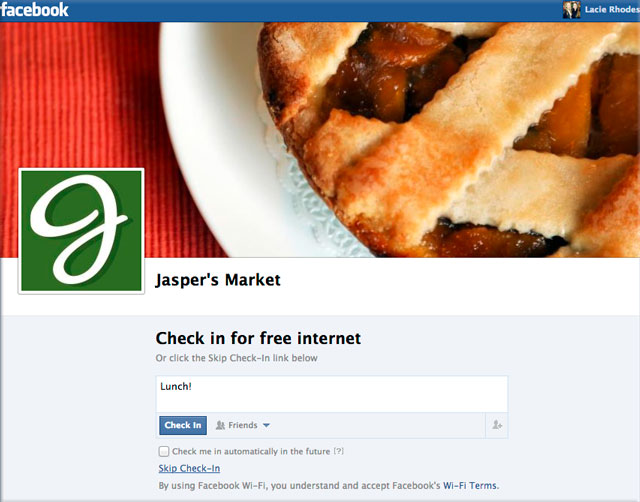
Understandably Facebook wants to make this key statistic- that of every user around the world checking in on Facebook – a reality. So after a pilot that was successfully run for over an year at over 1,000 SMEs in the US, Facebook – on October 2nd 2013 – has formalized an arrangement with CISCO. Named as ‘Facebook Wi-Fi‘ program, it converts retailers’ routers in the US into public Wi-Fi hotspots accessible to customers of the merchant establishment for free on one apparent condition. The deal? Go to the retailer’s/restaurant’s Facebook page and check in, and you have the Internet for free!

In other words, the three-step Facebook Wi-Fi system, which can be deployed by merchants running a Cisco router setup, lets people connect to a venue’s Wi-Fi, launch their browser, and click on the blue check-in button to gain unfettered access to the Internet.

Facebook WIFI

The deal for the merchant establishment?

  • Obviously each customer check in generates visibility leading to additional exposure that could pull in more customers or inspire more ‘likes’
  • While Facebook shares with the merchant an aggregate of anonymous demographic data such as age, gender, and interests on customers who sign-in to Facebook Wi-Fi, which they can potentially use for more effective targeting of their upcoming Facebook advertising campaigns

For Facebook, the Wi-Fi-with-check-in initiative is part of a broader plan to attack the local market by encouraging merchants to set up and maintain Pages on the social network and more importantly to seed – in the general public – the habit of ‘checking in’ on Facebook and thereby become the default gateway for the Internet.

Meanwhile on the other side of the world…

Chances are that you would have heard of Facebook Zero. If not, you should read this post right away. Essentially in 2010 Facebook collaborated with several mobile operators around the world and worked out an arrangement whereby the end users of these mobile networks can access  0.facebook.com – a faster and a free version of Facebook for your mobile, no matter which phone it is –  without any data charges.  People will only pay for data charges when they view photos or when they leave 0.facebook.com to browse other mobile sites. So, when they click to view a photo or browse another mobile site a notification page appears to confirm that they will be charged if they want to leave 0.facebook.com.

When this was launched in 2010, Facebook signed up 50 mobile carriers in 45 countries. The following image shows how Facebook made itself accessible on every class of phone through this initiative:

ubiquitous_mobile_facebook

How Facebook made itself accessible on every class of phone (Image source)

A smart way to drive usage of Facebook in emerging markets where the average monthly spend on mobile connectivity, which is often just voice and text, is 8-12% of the average take-home pay of a cell phone user. (source) In fact in just 10 months after its launch, Facebook Zero has become so popular in Africa that the site was said to have driven the adoption of broadband internet, just so users can have faster access to all those pictures and status updates!

Read this brilliant post on Quartz on how Facebook is conquering the world one mobile at a time.

Today, with more mobiles on earth than are people, and with smartphone penetration exponentially increasing in the emerging markets, the story has but just begun – after all there are 250 million Facebook users in Asia , more than on any other continent, and yet that’s just 6.5% of the population. In Africa, its penetration is less than 5%

And then Google launches Free Zone.

And the battle for world domination continues one mobile at a time.

The Goldfish Conundrum

The fact that Google has introduced ‘skippable pre-roll’ ads on YouTube is nothing new.  In fact nearly an year ago, it has also started to enable the same for mobile users.

skippable-youtube-ad-mobile

Three obvious things that stand out for me from these ‘skippable, pre-roll ads’ are:

(1) Permission Marketing: By placing these ads right at the beginning of the actual video and enabling the viewer full freedom to skip if necessary, YouTube has acknowledged the importance of gaining viewer permission (a.k.a a commitment of her attention span) before bombarding her with any message. This disincentives attention abuse by advertisers.  [Seth Godin must have said – I Told You So” 😉 ]

(2) Soft Wired: Understandably these ‘pre-roll ads’ are not ‘hard wired’ to the video ; meaning, YouTube can dynamically mix and match an ad to a video based on algorithms / user preferences / browsing history / relevance and advertiser criteria, with an objective to maximise advertiser revenues.  This disincentives lack of relevance of the spots to the viewer/ viewer context.

(3) The 5s litmus test: This is the most interesting implication for me. Irrespective of the length of the pre-roll ads (which typically are 15s or 30s), any ad is given a golden period of 5s within which it can either capture the attention of the viewer or fail at it (for various reasons) resulting in the ad getting skipped. This disincentives lack of the grip factor in the ad – by way of production values/ story / narrative etc. 

Not surprisingly, as a result, we now see many of these ads desperately trying to shock / awe / seduce  or lure us into seeing the full spot during the first few seconds of the roll. The fascinating thing for me however is this 5s mark that YouTube has set for itself and advertisers.  But why 5s?

Well,  as it turns out, we human beings are currently rated as a species with one of the lowest levels of attention spans. For eg., see the following table that compares the worsening of our attention spans and contrasts it with that of the Goldfish’s! (source of data)

The average attention span in 2012 8 seconds
The average attention span in 2000 12 seconds
The average attention span of a gold fish 9 seconds

Call it ADD (Attention Deficit Disorder) or Information Overload or Infobesity, it’s almost an intuitive thinking now that our attention spans are plummeting. As a result, today:

  • Movie trailers are getting insanely faster.
  • We now have movie tweasers: (A tweaser is a six-second teaser for a 20-second teaser for a two-minute teaser for a 2:32-length theatrical trailer for a feature-length movie. source)
  • Vine from twitter is capped at 6s (tweasers are hosted on vine)
  • And then we have delightful ‘marketoons’ like the one below:

130902.shortattention

(source and inspiration for this blog: Tom Fishburne)

Obviously, this only reinforces the fact that we are living in an Attention Economy – where attention has become a scarce commodity.

On a related note, you should read this amazing post titled – The Scarcest Resource You Don’t Even Know You Are Spendinghere. And do check out this though provoking video.

From the above two observations viz.,

  • We tend to be ruthless in our attention spans when it comes to consumption of entertainment /information.
  • We are given only a limited number of ‘attention bits’ to spend in our life time. …

…the insight for me here is that.,,

whilst proving ourselves to be (penny) wise in terms of how we exercise our ‘attention spans’ for certain tasks like say – media consumption, we sometimes tend to be (pound) foolish when it comes to expending this very resource for things that have far reaching implications in our lives like learning, decision making, productivity, interpersonal interaction etc.

Something for us to ponder and reflect upon?

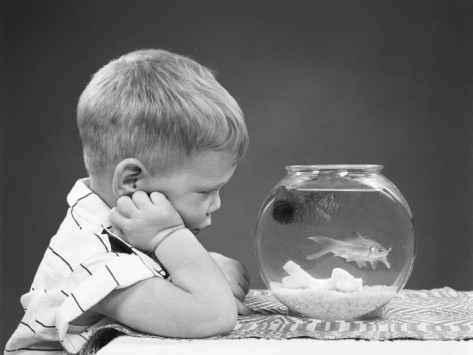
h-armstrong-roberts-boy-leaning-head-on-hand-staring-at-lone-goldfish-in-fishbowl

(Image Source)