Duality And Everything In Between

Quick Read: We seem to have a thing for things that are dual in nature. Be it a town, a person or perhaps even a brand.

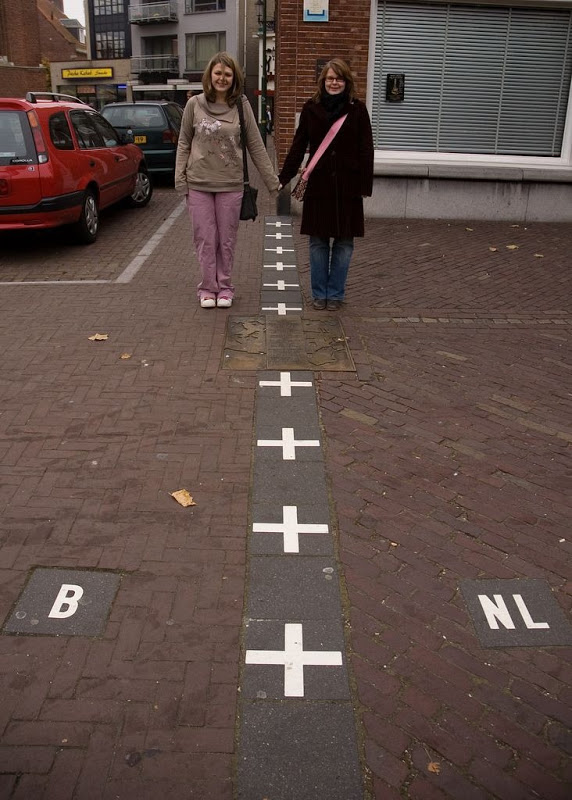
Baarle –  a town at the border of the Netherlands and Belgium, is perhaps the world’s strangest international border.

Why?

Because the town is an enclave that consists of pockets of the Netherlands nested inside Belgium, nestled inside the Netherlands.

The result?

The international border cuts through Baarle indiscriminately, crossing streets, dividing roads and slicing through buildings forming Baarle-Nassau and Baarle-Hertog – two municipalities that are in Netherlands and Belgium respectively.

Naturally many peculiarities arise.

For e.g., many homes are cut in half by the border, so as a matter of convention each household’s nationality is determined by the location of its front door. Which also decides where taxes are paid. So some houses apparently swap the location of their front doors between countries to benefit from the most favourable taxes!

Baarle House

(Pic: Source )

And if the border runs through the front door, the two parts then belong in different countries, and this is indicated by two street numbers on the building.

So duality has become the central character of Baarle where everything is two fold: two churches, two town halls, two post offices, two fire stations and even two police forces and so on.

And it is this charm of duality that makes Baarle quite popular with tourists around the year.
baarle-nassau-hertog

(Pic Source. HT Credit)

Caitlyn Jenner

Recently an unknown 65-year-old woman has become an internet senstion overnight. She was revleaed to the world through the cover page of Vanity Fair and a Twitter account that amassed 1 million followers in four hours – faster than the account launched by the US president, Barack Obama! Four days later she was up to 2.37 million followers, with another 1.5 million followers on Instagram! (source)

Why?

Perhaps it is the enigma of a duality the Vanity Fair’s cover story revealed.

Caitlyn Jenner

(Pic sources: Bruce Jenner | Caitlyn Jenner)

During the 70s, the Olympic hero William Bruce Jenner had the unofficial title of “world’s greatest athlete” and nearly 40 years later, in 2015, Bruce became the world’s most high-profile transgender woman named Caitlyn Jenner.

She has now become a hugely powerful cultural figure almost overnight and could soon become an important voice in the transgender rights movement. Apparently even Obama tweeted in response saying “It takes courage to share your story”.

Duality, it seems, has a certain enigma to it! Ask Buzz Bissinger – the Pulitzer winning journalist who crafted Caitlyn’s reveal for Vanity Fair over a period of 3+ months leading to this watershed of a cover story.

Duality & Brands

The human brain is said to possess this intrinsic nature of actively labeling everything it encounters into neatly defined buckets. That’s probably why anything that has a strong duality ends up becoming such a tease to our minds and perceptions.

No wonder then, there are brands that thrive on duality. (The classic Coffy Bite and more recent Cadbury Oreo are some well known Indian exmples)

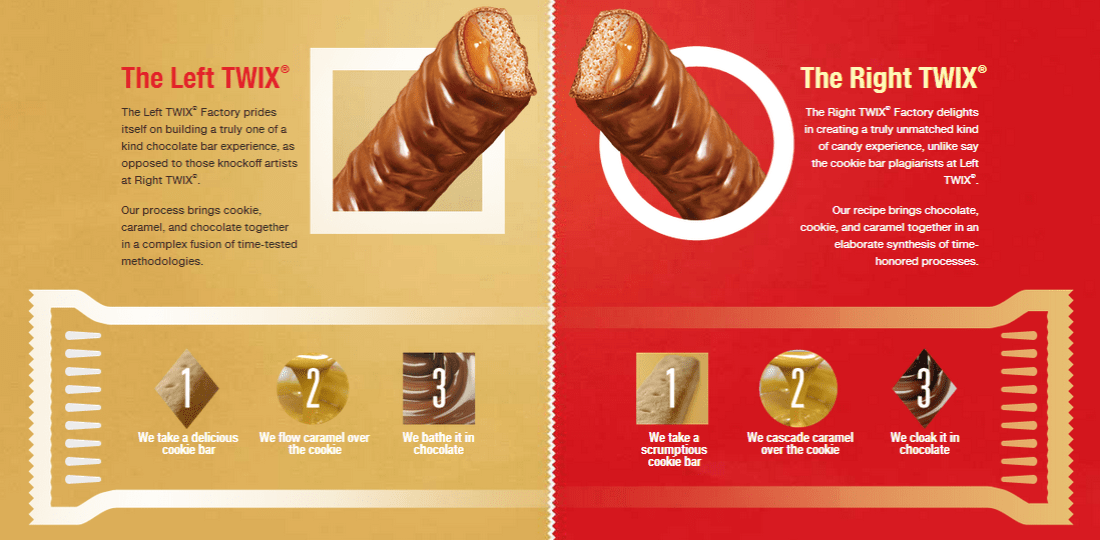
In fact, this allure of duality seems so high for Twix – a Mars’ chocolate bar brand –  that the brand thrives on teasing out a duality that never actually exists.
twix Dual2

(Source: Twix.com)

See a reel of its “Left Twix vs Right Twix – Pick a side” ads here.

Can you think of any other brands that leverage ‘duality’?

(Featured Image: Twix)

Is Sweden a Low Context Culture?

Quick Read: Differences between high context and low context cultures in branding could just be theoretical. All it takes is some brilliant marketing to blur the lines in between.

High-context culture and low-context culture are terms coined by the anthropologist Edward Hall.

Theoretically this categorisation between culutures has implications on branding and communications associated to them.

For example, according to this recent article, in a high cultural context, inherent cultural cues (e.g, symbols and emotions) add a lot of meaning to asociated marketing communications. Think of ads that reference cultures like Indian, Latin American or Middle Eastern for example and you get the picture. 

(A great ad that references Indian culture)

Low cultural contexts, by contrast, are those where there is little influence of emotions, gestures and cultural cues over the associated marketing communications.

For example – the article goes on to state – Sweden has a low cultural context. In other words, Swedish cues and metaphors are believed to contribute little meaning to any branding/communication.

But is it? 

While differences between these cultural contexts might help us to justify to ourselves the relative decibel levels of ‘cultural noise’ that gets thrown into their respective communications (e.g., narratives in films, ads etc), communications that reflect a culture are more complex and do not necesarily confine themselves to these siloed definitions.

Let’s take Sweden for example. Why is there a stereotype that Swedish metaphors add little meaning to any associated branding or advertising?

This cultural guide to Sweden encaplsulates it well when it says “Despite the generally contented natures of the Swedes, there is an underlying melancholy most often attributed to the long, dark and cold winters.” In other words, theoretically there is nothing much beyond a brooding sense of gloom to add as ‘cultural cues’ when it comes to referencing anything Swedish.

But lately, marketers seem to have used this very subdued under tone of melancholy and turned it into a state of mind (and soul) to be celebrated as uniquely Swedish!

Now that’s not exactly how a low context culture is meant to work. Right?

Volvo ‘Vintersaga’ – Embrace the Swedish melancholy

With a montage that celebrates the miserable weather conditions of Sweden aided by some spectacular photography and echoey music, Volvo recently paid a “tribute to Sweden at it’s worst” through its Vintersaga (Winter’s tale) campaign.

By capturing the country’s bleakest weather, Volvo goes on to explain that without the harsh Swedish winters it would not have become what it is today, or make the cars that it does.

Stutterheim Raincoats – ‘Swedish melancholy at its driest’

Being melancholic is an essential part of being a human being. 

…so says the philosophy page of Stutterheim’s rain coats. What for Mr. Stutterheim was initially an art project, has transformed – with a stroke of marketing genius coupled with a sharp positioning – into a line up of raincoats that are now shipped worldwide, with a price tag between $370 –  $1,400.

Stutterheim

(Source: Stutterheim’s philosophy on Melancholy and Creativity)

Apparently Swedish gloom seems to have a tremendous market demand with the brand today seeing strong growth in Europe and the U.S., with sales estimated to reach $4.8 million in 2015, up from $180,000 in 2011. (source)

After all as its philosophy goes on to say …

Through our melancholy we come up with new ways of seeing the world and new ways of being in the world. Let’s embrace Swedish melancholy. Embracing rain is a good start.

Now that’s some smart marketing that has converted something as monochromatic as Swedish melancholy into a unique (and dare I say sufficiently loud) motif of the Swedish culture.

Bonus Links: Check out this Volvo campaign that celebrates Swedish wilderness and this recent one by Grey London that celebrates Swedish….. (hold your breath & drum rolls)…. air!

Now, do you still believe Sweden is a low context culture?

Any classifications exists only as long as marketers allow it to.

Isn’t it?

(Featutured Image: Sutterheim – Swedish Melancholy At It’s Driest)

Imagination. For Selling and Unselling

Quick Read: Evoking imagination has always been a classic trick in the marketers’ book. Let’s see some recent examples where it’s been used to sell. And to unsell.

Man-eaters and the ritual of imagination

For four years, Dutch designer Daniel Disselkoen made the same journey on the same tram route to his art academy, and realised that he had stopped looking out of the window and being curious about what he might see. So he developed a simple little real-world hack called Man-eater.

Predicated around the idea that familiarity with a subject, our environment, surroundings or routine can limit discovery, Man-eater is a simple yet compelling call to action to invoke our imagination to make extra ordinary out of the ordinary.

Is at about seeing the world through a child’s eyes? 

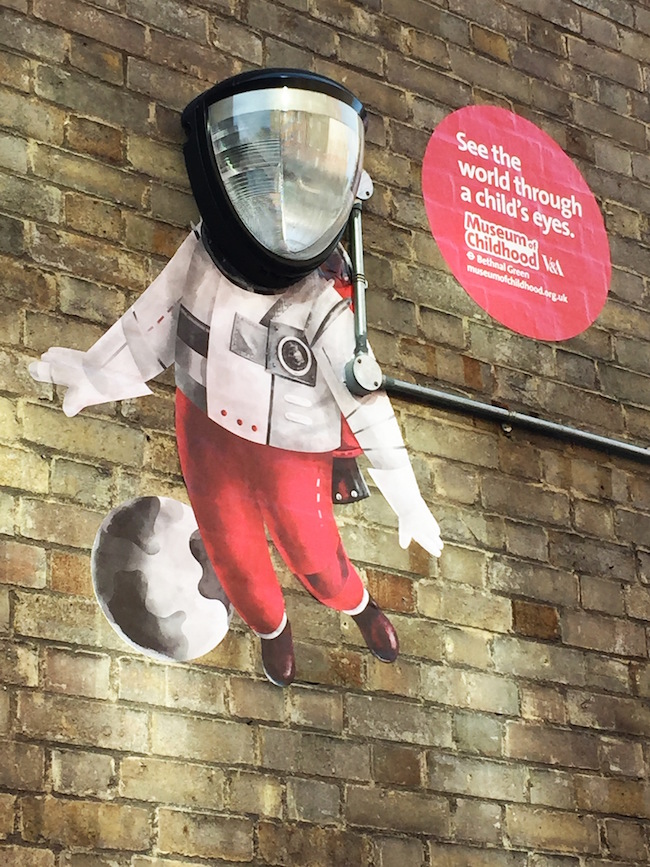
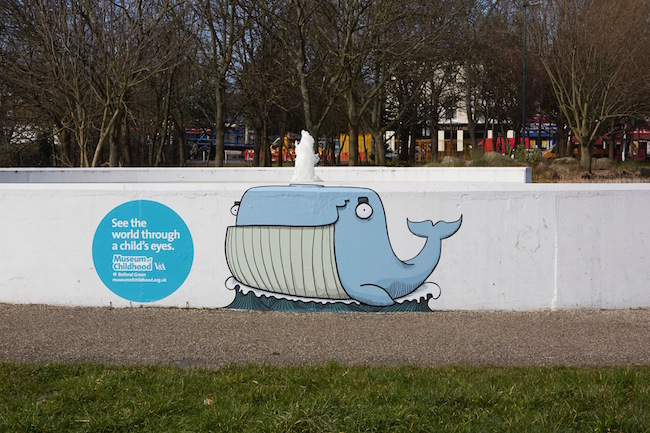
Museum of Childhood

Museum of Childhood (yes, there indeed is a museum by that name!) says exactly the same thing in its recent campaign – wherein with a bit of imagination, the medium and the context become the key parts of it’s message. spaceman_aotw

whale_aotw

(Check out the other executions at this blog post)

Banana Bunkers that look like…um.. bananas?

It appears that it doesn’t require a hell lot of imagination to see why this particular product of GroupOn turned to be its most popular post on Facebook ever! Screen Shot 2015-04-01 at 11.28.33 PM But GroupOn’s real imaginativeness came to the forefront in what happened after the post went live.

Knowing full well of what is to come, they decided to stay ahead of the hilarity and replied each and every one of the comments on their Facebook post. Check out this snapshot of the epic comments that followed!

Now that’s some great imaginativeness to combat (and perhaps even abet) imagination!

And meanwhile else where..

Can imagination be used to ‘unsell’?

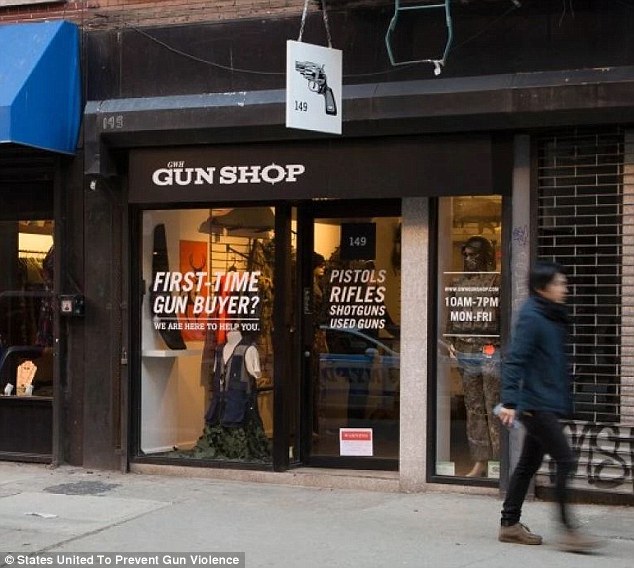
The Gun Shop‘ had recently popped up on Manhattan with a store front that read “First Time Gun Owners” in big, bold letters. The catch? Each gun in the store had been tagged with its history: from shooting a mom in Walmart to the Sandy Hook massacres. The result: imagination that just ‘unsells’!

This video captures it well.

The Gun Shop has been a pop-up demonstration created by New Yorkers Against Gun Violence – a partner of States United Against Gun Violence that seeks to make families and communities safer.

Can you think of any other examples? 

(Man-eater –  H/T Neil Perkin | Museum of Childhood – H/T L.Bhat)

Featured Image: The Gun Shop store front on Manhattan, Source

Food Is Food Is Food. Or Is It?

Quick Read: Good design can drive a price premium –  and this adage could hold good even in a category like perishables. 

Have you heard of flour by Prada, infant formula by Chanel, coffee by Cartier,  fruits by Nike and pasta by Ferrari?

coffee1

(Source: Peddy Mergui: Wheat is Wheat is Wheat)

Well they do ineed exist. Albeit as exhibits by Peddy Mergui under his series titled Wheat is Wheat is Wheat. These funny and provocative exhibits challenge our notions of branding and perception by casting them against a category like perishables/food.

Eggs by Versace anyone?

Let’s drop brand names for a moment and see how else can a product possibly command a price premium. We know tons of examples across different categories where design has helped a product command a premium.

Now, could design play a prominent role in commanding a premium within a category such as perishables? These two examples prove this point.

1. Whole Foods: 

When it comes to applying design for selling something as commoditised as veggies, there’s only one name. Whole Foods.

Avinash Kaushik recently posted this picture and the following lines regarding what he found at a Whole Foods store.

Avinash Kaushik Whole Foods

(Source: Avinask Kaushik)

“Do we shop at Whole Foods simply because the produce is so exquisitely displayed? And we pay a premium?

I think there is something to that. Look at it! Everything so perfectly symmetrical and lovely. There was a sprinkling of mist on all the veggies, drawing out the color and freshness.

For an engineer, me, all this organization definitely had an impact. It looks good, it shows people care deeply about the food, they went into extra trouble, it must be all good (and it was!).

What a great way to get someone to pay a premium.”

His lines encapsulate everything in this context.

2. Nuna Ice – Cream:

Billed by PSFK as a molecular-gastronomy popsicle that is set to take next summer by storm, Nuna is a design innovation in ice-cream born at the intersection of disciplines such as architecture, design and science.

Nuna(Source: Nuna)

According to it’s spokesperson, the Nuna Popsicle is design innovation in a crystal/pyramid shape, and stands for the ultimate refreshment that reflects the sensation of ice crystals bursting on the tongue while causing a unique and intense tingling in the mouth.

While it is expected to have a soft launch in art openings, fashion shows and music festivals during 2015, Nuna – which got its name trademarked recently – is expected to contract with a major manufacturer soon. (source)

Now that’s form following taste!

(Featured Image: Tiffany & Co Yogurt byPeddy Mergui)

Rationalising The Emotional

Quick Read: At one end we have ads with heavy emotional messaging and at the other we have those with hardcore rational, persuasive messaging. And then there are those that make interesting attempts at occupying the space in between.  

My contention is that truly great advertising does something far more important than deliver a rational message, and far more important than entertain: what it does is to establish associations. (Heath, 2002)

Seducing the Subconscious is an acclaimed book by Robert Heath on how advertising works. A key argument that he makes in this book is that the best advertising actually works through emotive as opposed to persuasive messaging, and emotional content is processed most efficiently at low levels of attention, not high.

Read this great post by Steve Genco for a more detailed commentary on Heath’s theory. He says..

..a substantial body of research has shown that emotional associations established at low levels of attention lead to longer-lasting influences on attitudes and behavior than rational arguments (i.e., traditional persuasion).

This is because they facilitate the memory activation mechanism of recognition rather than recall.  Recall requires effort, fades relatively quickly, and has to be reinforced regularly.  But recognition is triggered effortlessly and lasts indefinitely.  So recognition, unlike recall, is more likely to result from low attention processing.

(So the thumb rule?) Combine a brand with an emotionally engaging ad, repeat the association under low attention conditions like TV watching, and you will get both recognition and a favorable default attitude toward your brand.

That’s probably why the new John Lewis ad works. And that’s probably why we have attempts at advertising like this one for Obsession by CK.

While this ad and its iconic print campaign by Robert R. Taylor are said to be some of the most memorable advertisements of all time, it is also billed by many as “the ultimate in abstract and meaningless advertising”. (source)

Arguably it does take a strategic leap of faith for a marketer to ride on just emotion and disband the century old model of ‘rational’ or ‘persuasive’ messaging that much of marketing communication still cleaves to. So it’s not uncommon to see many ads that – while narrating an emotional story – also ensure they rationalise it and close the spot with a persuasive messaging for the viewer.

Interestingly, almost as if to exemplify the above point, Pfister‘s new ad on its touch free range of faucets called REACT takes a dig at ‘Obsession’-isque narratives by attempting to unwrap the enveloped message for us.

Talk about rationalising the emotional.

(H/T this nytimes report)

(Featured Image: React Faucet by Pfister)

Straddle Categories, Redefine Competition

Quick Read: Straddling categories can sometimes help redefine competition and build a unique position in the market place. 

“If I should have a daughter, instead of Mom, she’s gonna call me Point B … “

began Sarah Kay, in a talk that inspired two standing ovations at TED2011.

Sarah Kay is called a genius. She has invented a new medium, a new way of sharing an idea. It’s called Spoken Word Poetry. Arguably others have done spoken word poetry before, but not like this.

Mixing in the magic of her poetry, presence, and exuberant energy her art form straddles two categories – poetry and theatre. This unique combination has helped her redefine her ‘comparison set’ – not poets and not theatre artistes, but someone at the intersection of both to become a truly unique voice to reckon with.

Today she is the founder and co-director of Project V.O.I.C.E., founded in 2004, a group dedicated to using spoken word as an educational and inspirational tool. Her TED talk has been loved so much that Seth Godin has published her poem ‘B’ by himself.

Why Do We Love Some Comic Strips More Than Others?

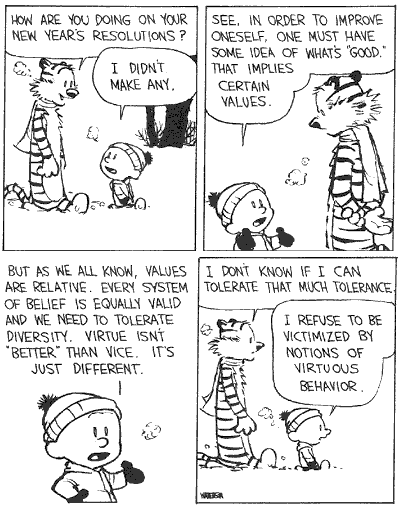
Most of us have our favorite four paneled comic strips that we enjoy and share on a regular basis. Why do we love them so much? Is it because they resonate with us at a deeper level? Is it because they have that spark of insight – a blinding flash of the obvious? Or is it because they remind each one of us that we are not alone?

calvin-and-hobbes-relativism(Source: Calvin and Hobbes)

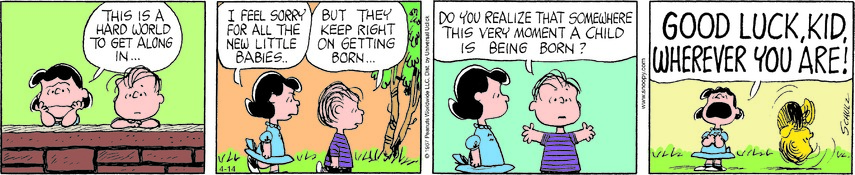
Seth is a cartoonist, illustrator and book designer based in Guelph, Ontario. Based  on his research on Charles Schulz’s Peanuts, his insight is that most of the best known four paneled comic strips have one thing in commonthey straddle the art forms of graphic design and poetry and occupy a truly unique space of artistic expression. He calls such comic strips Visual Haiku and elaborates.. 

It seemed so clear that his four-panel setup was just like reading a haiku; it had a specific rhythm to how he set up the panels and the dialogue.Three beats:doot doot doot— followed by an infinitesimal pause, and then the final beat:doot. Anyone can recognize this when reading a Peanuts strip.These strips have that sameness of rhythm that haikus have — the haikus mostly ending with a nature reference separated off in the final line. (source)

Peanuts - pe_c140414.tif(Source: Peanuts)

What Sets Brita Filters Apart?

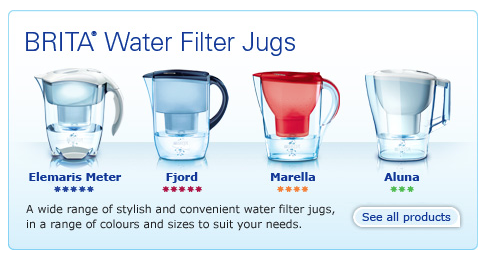
Ever heard of Brita Filters? A leading company in portable household water filtration, its products are distributed in more than 60 countries world wide. But what sets it apart is how it straddles categories and redefines competition. As per this HBR article..

Brita filters compete against other filters when they are placed in the kitchen appliances section at big-box stores, for instance. But Brita changes both its comparison set and the economics of the consumer decision when the filters are placed in the bottled-water aisle at supermarkets. Here Brita filters have a competitive cost advantage, delivering several more gallons of clean water per dollar than bottled water. Of course, not all buyers of bottled water are buying solely for the criterion of cost (some are buying for portability, for example), but for those who are, Brita is an attractive choice.

Brita Filter Jugs

As the article goes on to say, in choosing how to position products, there’s a tendency to pay attention to the size and growth of the market and overlook the intensity and identity of the competition. Such times, all it might take is to challenge our playing field (the category) and see new niches emerge for tapping into a new consumer base.

Opportunity – it seems – could sometimes be rife at the intersections.  

For artistic forms of expressions or water filters.

(Featured image: Calvin and Hobbes by Bill Watterson May 05, 2014)

Making And Breaking Memory Structures

Quick Read: Generating awareness or influencing consideration, driving distinctiveness or establishing differentiation, the key is to effectively leverage memory structures.

Distinctiveness is said to be the key in driving penetration and hence growth. But what sort of distinctiveness is most effective? 

In other words, when a brand is launched/re-launched, how do you strike that elsuive balance –  between being rooted in the current to drive enough familiarity, yet bring in an element of newness to drive differentiation along a chosen set of dimensions to drive favorability. 

The key lies in memory structures. 

As this insightful paper says, while driving distinctiveness for a brand, a key consideration is how much of your mix should reflect the existing perceptions of your brand locked in consumers’ “memory structure”, and how much should break with this.

And why are memory structures important?

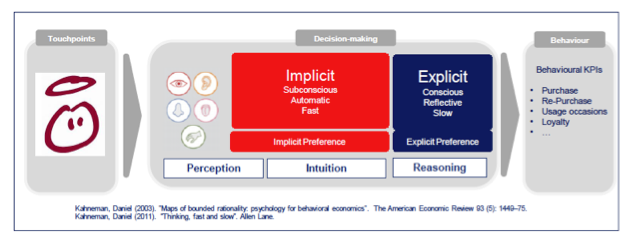
This is because, as per Phil Barden in Decoded, we are known to first process any new stimulus from a brand (advertising, packaging, activation) “implicitly”. This is a subconscious reaction based on our intuition & past experiences locked in our memory structures. And that’s where most of the heavy lifting is said to happen before the rational mind kicks in for decision making.

Blog Decision Making(Implict and Explicit processing of stimulus, Source)

So it must come as no surprise that some of the smartest techniques in creating awareness for new brands are those that do a great job at playing with our existing memory structures.

Two recent, notable (and slightly non traditional) examples.

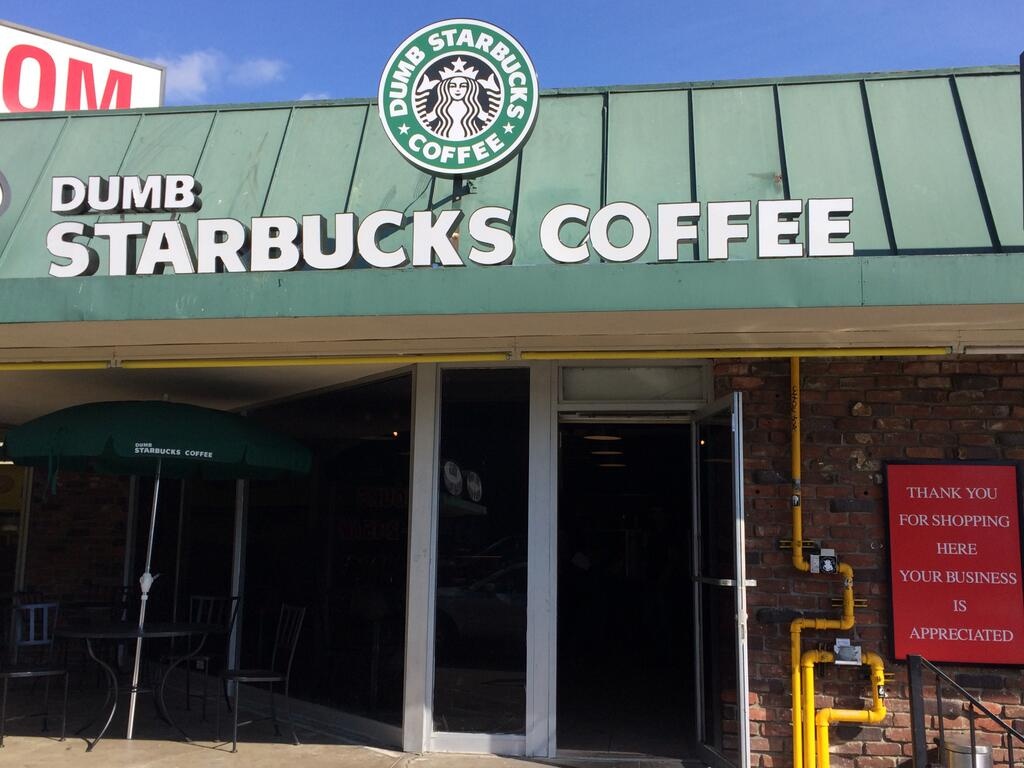
Dumb Starbucks Coffee

Dumb Starbucks Coffee(The Dumb Starbucks Coffee store in LA. Source)

No it’s not a joke. This has been an actual store with everything from the signage, menu, the cup sizes, right till the music CDs sold by the cahsier looking exactly like that in a Starbucks Store, albeit with one small modifier – the word ‘DUMB’ as a prefix.

And why DUMB? Parody law. 

As this awesome FAQ reads: “Although we are a fully functioning coffee shop, for legal reasons Dumb Starbusks needs to be categorized as a work of parody art. So, in the eyes of the law, our “coffee shop” is actually an art gallery and the “coffee” you’re buying is considered the art. But that’s for our lawyers to worry about. All you need to do is enjoy our delicious coffee!”

Rated as one of smartest Guerrilla Marketing stunt by Comedy Central to generate buzz around their new show, this attempt created a social media sensation in just 2 days before it faced a ‘notice of closure’.

Despite being a shortlived ‘experiment’/art installation (or whatever we chose to call it), by playing smartly on our existing memory structures “Dumb Starbucks” proved itself to be an ingenuous idea from a venture that wanted a big bang for a small budget.

And boy did they get it!

CitizenM Hotels

Can you create awareness by challenging our existing memory structures of a category?

A new campaign from CitizenM hotels shows how. See the ad here

I liked how it evokes all the memories that we have of conventional hotels untill it just shatters them, thereby piquing our interest levels in the brand. In fact – depending upon the viewer’s context –  I would argue that it does a briliant job at more than just generating awareness.

All managed by neatly piggy backing on our existing memory structures of a category.

(H/T to L Bhat for the CitizenM film, and to Robert for this riff on Dumb Starbucks. Featured Image: source)

Selfies And The Art Of Sky Diving

Quick Read: Selfies as a mode of expression via pictures, videos or 3D shapes is gaining main stream traction. GoPro is a fascinating company that took an unmet ‘selfie need’ and expanded it to encompass newer grounds with great success, while gaining a cult like status.   

It is believed that Robert Cornelius took the first ever selfie in the year 1839. 

Ever since then, over the span of  175 years, the humble selfie has evidently made spectacular inroads into our popular culture. Today we see world leaders, hollywood celebrities, protesters in police vans and even the Pope having all smiles for the selfie. No wonder then, today we have:

In fact – given our recent advancements in 3D printing – it is inevitable that we even have the 3D printed selfie today!

twinkind_window_5126(3D Selfies. Source, TWINKIND)

According to this paper, while selfies have been called different names like  a symptom of social media-driven narcissisma way to control others’ images of usa new way not only of representing ourselves to others, but of communicating with one another through images, or even as the masturbation of self-image, the one that stands out the most for me is the concept of selfie as a device to control others’ images of us. 

This primal urge to control others’ image of us seemed to have proven to be a gold mine for a company that is now on its way to a hotly anticipated IPO. Think Video Selfies. And think about all the exciting activities like surfing, skiing, snowboarding, auto racing, river rafting, sky diving etc. And you get the picture.

Hang on. Did we just say ‘Video Selfie’?

GoPro

2002. On a surfing trip to Australia, Nick Woodman wanted to take a selfie. Albeit with a twist. He wanted to capture quality action photos of his surfing. Having met with limited success, his desire for a camera that could capture him surfing in ‘professional angles’ started to take shape. And thus the name ‘GoPro’ was born for his company that would subsequently go on to sell small, waterproof, wearable cameras that you can use while doing exciting stuff.

GoPro-surfing-longboard-600x400(How to take kickass selfies with GoPro. Source)

Today GoPro makes what it calls ‘smaller, lighter, mightier still’ HD video cameras with a 170-degree angle view under their line up of HERO series to capture and produce high quality content along with an entire ecosystem of mounts, accessories, software and applications.

But what makes GoPro an extremely fascinating brand is the street cred that it earned for itself as an unconventional media company. Sample these..

The GoPro Ad: Instead of advertising, the company aggressively hands out GoPro cameras to extreme athletes asking them to simply shoot and bring back their footage. A small in house team then edits the footage, slaps a hip sound track, throws in the GoPro logo and boom – A stunning free GoPro Ad! (Interestingly – given the versatility of the GoPro camera – a lot of footage that they get from users is so astounding that people are known to insist it had to be fake.)

GoPro on YouTube: GoPro’s YouTube channel ranks among the top 100 with nearly 2 million subscribers and 455 million views of its 1600+ videos posted till date. In fact as per this article, the number of videos with “GoPro” in the title has grown so much—60 percent from 2012 to 2013—that watching 2013’s crop alone would take you 2.8 years. Reportedly GoPro is expected to make about $1.7 million per year from its YouTube channel alone.

The GoPro Channel: In CES 2014, GoPro announced plans to unleash its unique brand of action sport videos on Xbox Live for both the Xbox One and 360. In fact, Virgin America inflight entertainment system already lists this channel that features curated GoPro content where users will also be able to purchase GoPro products directly online.

Expanding cultural footprint of GoPro’s media content: GoPro has strategically carved an outsized cultural footprint for itself by being part of several high points in recent history. Take the recent opening ceremony of the Sochi Olympics, where many athletes were seen filming themselves with GoPros or Felix Baumgartner‘s record-breaking jump from 128,100 feet for the Red Bull Stratos mission. Chances are that you must have seen the footage filmed by one or more of the seven HD GoPro cameras used in the mission.

(GoPro Super Bowl Ad 2014 featuring the Red Bull Stratos mission)

GoPro, Apple and Red Bull: While some observers see GoPro as a company that clearly wants to create a kind of ecosystem, similar to that of Apple, with a devoted fan base addicted to its hardware and software and a thriving core of creators and consumers, there are also those that think, GoPro could make for a new sort of hybrid company, the way Red Bull is both a drink maker and powerful media brand.

Jason Stein, founder of Laundry Service, a digital media agency in New York even says:

“Red Bull has become this media entity, created around the lifestyle of people who drink Red Bull, GoPro is doing the same, but the reason I think they have more potential is that their product is an actual media device.”

Hence analysts expect that GoPro could create revolutionary possibilities in content creation and consumption in the days to come. This article even speaks about a future possibility where the company could sign agreements with sports leagues to place GoPros within the games. So when you tune into your NBA or NFL or IPL, imagine getting a live feed from whichever player you want!

Beyond Hardware

Evidently the GoPro story is no longer about a hardware maker that had captured two-thirds of U.S. sales and 45 percent of the global pie of the pocket digital camcorder segment (source).

It’s about software and experiences. It’s about enabling awesome creative expression and adrenaline packed content production – the non traditional way. It’s about brilliant marketing that is inspired by this unique culture. All borne out of one key human need – to be able to influence other’s image of us by showcasing those fleeting experiences and moments that (we think) could define us.

Like perhaps a selfie.

The Business of Belief

Quick Read: Every business that we know of can be said to be in the ‘business of belief’. While a majority of these business thrive on building and sustaining our beliefs, there are also ones that thrive on breaking down and challenging our beliefs. 

Arguably every business that we can think of can be said to be in the Business of Belief.

While most businesses that we see around can prove this point, RIEDEL glasses are a very straight forward example.

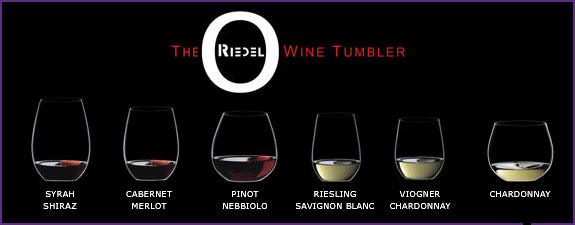
RIEDEL is an expensive line of glassware designed to deliver the wine’s ‘message’ via the carefully crafted form of the receptacle. In other words, Riedel has built a thriving business of glassware by driving a belief that the shape of their glasses can make wines test better!

Skeptical? The story goes that even experts and wine critics were – several of them skeptical of this seemingly implausible claim.

And yet today, hundreds of wine experts, and thousands of customers now swear it’s true. Taste tests throughout Europe and the U.S. were said to have proven time and again that wine — expensive or inexpensive — tasted better in Riedel glasses.

riedelo

Except it’s not true. At least not empirically. (source)

When subjected to double-blind testing that doesn’t let the taster know the shape of the glass, people found no detectable difference in taste between glasses. Objectively, the shape of the glass just doesn’t matter.

But subjectively, when belief in the story and the experience of the glass are added back in the mix, it matters. And the wine does taste better to these people. Today some Riedel glasses sell for more than 100 dollars each and people covet these over other lower priced glass ware!

Therefore, sensing a branding opportunity that is waiting to be leveraged, Coke has recently tied up with Riedel to come up with a glass that “is designed to enhance the drinking experience”. The Coke site goes on to explain..

Shaped by trial and error by a panel of industry experts and Coca-Cola lovers, this form captures the distinct spices, aroma, and taste of Coca-Cola and creates a magical sensorial experience… A unique glass for a taste like no other.

RIEDEL+Coke(Riedel + Coke, Source)

While this ‘glass act’ by Coke drew myriad views from the F&B industry, it nevertheless makes for an interesting commentary on Riedel as a company that has thrived by systematically building a business of belief.

Meanwhile elsewhere…

Interestingly there also exist businesses that build a following for precisely the opposite reason – by belying beliefs and tearing down expectations each single time they offer something to the consumer.

Take The Art of Dining – a business that sets up theme based pop up dining experiences – as an example.

As part of their model, Ellen Parr and Alice Hodge, put on theme-based pop up restaurants mostly in London. The venues – always unusual and unexpected – have so far included a 16th century mansion, an eel and pie shop, the Victorian Dalston Boys Club, and the army barracks on City Road while the themes range from wartime rationing to the Food of Love. The whole experience is like eating within an interactive art installation. Each of their dining event is thus an experience that belies conventional expectations and common beliefs on what is to come.

A Night With The Mistress(Themed as ‘A Night With The Mistress’, guests were required to put on a blind fold when they ate, Picture Source)

Their recent series called Say Cheese – the photography of Martin Parr in five courses, is the duo’s latest example on how they have cemented their expertise in their signature experiential model – Set up expectations, evoke the guests’ pre conditioned beliefs and pull the rug off their feet as they take the plunge. 

This is how it works:

  • You enter a typical English café setting: gingham table cloths, plastic flowers on the table, pictures of Lady Diana and Mrs Tatcher, copies of the Sun etc
  • The waiting staff are mostly English, wearing floral pinnies
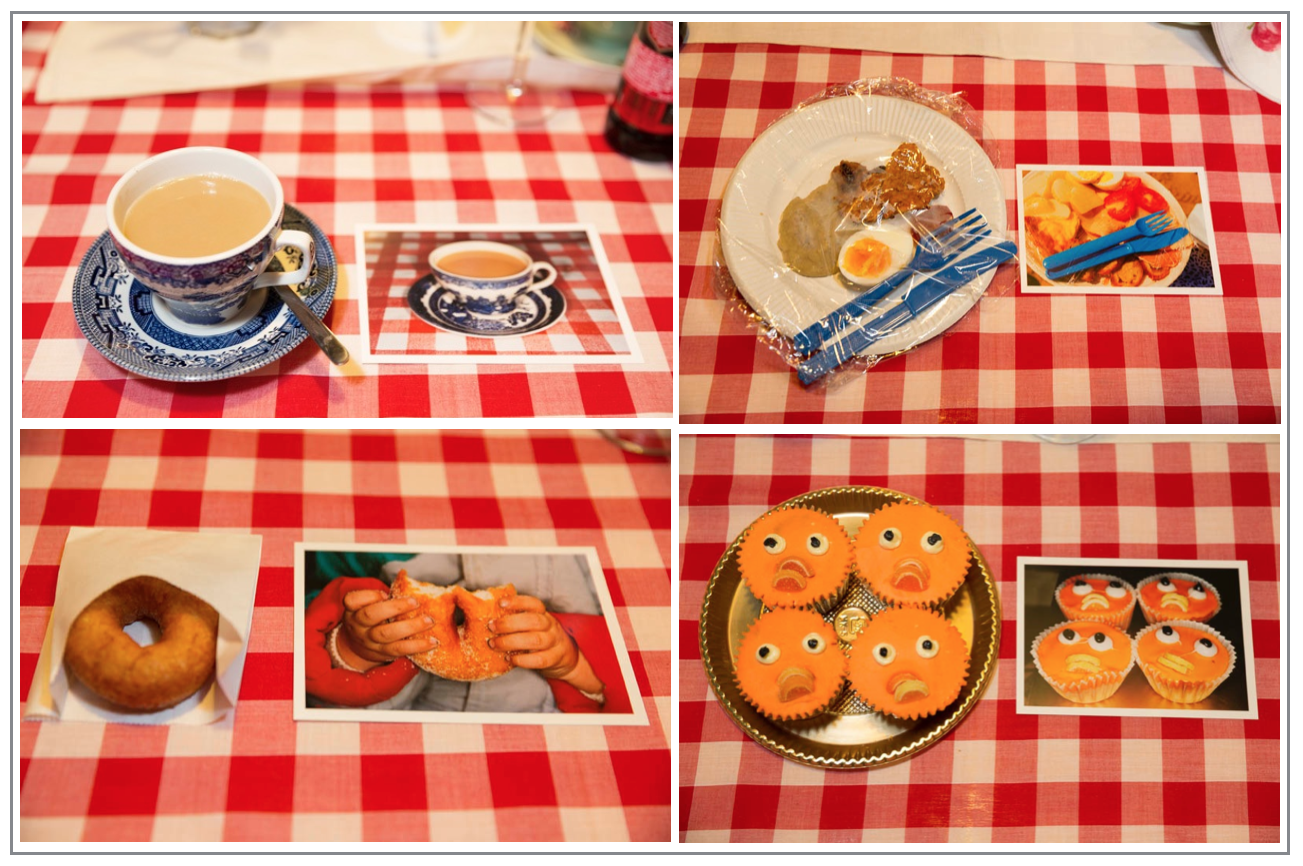
  • And this is where it starts to get interesting -You don’t get a conventional menu, but a set of 5 photos by Martin Parr – the legendary photographer
  • And here is the twist: the food looks just like the images but tastes completely unlike what you expect.
  • For eg. An English tea cup is filled with a tea coloured liquid, poured from a tea pot, which turns out to be a delicious Tom Yam Soup. A doughnut is actually a South Indian savoury, made from lentils and served with a coconut chutney. And it goes on

Martin Parr(Each of the five courses saw Martin Parr’s pictures come to life in bizarrely unexpected ways. Compilation of pictures from here)

See the short video here to get an idea on the actual execution

http://vimeo.com/69361520

Say Cheese! The World of Martin Parr in 5 Courses from GOLIGA on Vimeo.

This pop up experience was also offered in Tokyo in 2013 and as per Time Out Tokyo, the tickets costed  ¥12,000 per person, and were limited to 50 people per night. Food, it says, doesn’t get much more high-concept than this.

Now that’s a business that is actually built on belying beliefs!

(Featured Image, Of Wine Glasses and Beliefs. The Riedel Wine Glass Company Brochure, Source)

Commodities and Fakes. Branded

Can fakes be branded? 

Can fakes be differentiated and charged a premium for? Two recent examples show they bloody well can be!

1. Fakes with an accompanying personal escort flying first class  

A 24 hour escort is the norm for valuable paintings when they are transferred between museums. But a set of forged paintings have been recently extended security arrangements that rival that of the originals. Why?

Because these are not just any other fakes. They are imitation paintings by the world’s most notorious forger Han van Meegren the world war II era painter and master forger – who so well replicated the styles and colours of the legendary artists that the best art critics and experts of the time regarded his paintings as genuine and sometimes exquisite. His wikipedia page says that he is considered to be one of the most ingenious art forgers of the 20th century, so much so that his paintings including his signature have been subsequently forged as well!

Van_Meegeren_signatures(Source, Wikipedia. A collection of genuine and fake signatures of Han van Meegeren)

Today his forged paintings are a brand on to themselves and are treated as prestigious artworks that require the same measures of security as the authentic ones.

2. 3D printers being used to fake Vincent van Gogh 

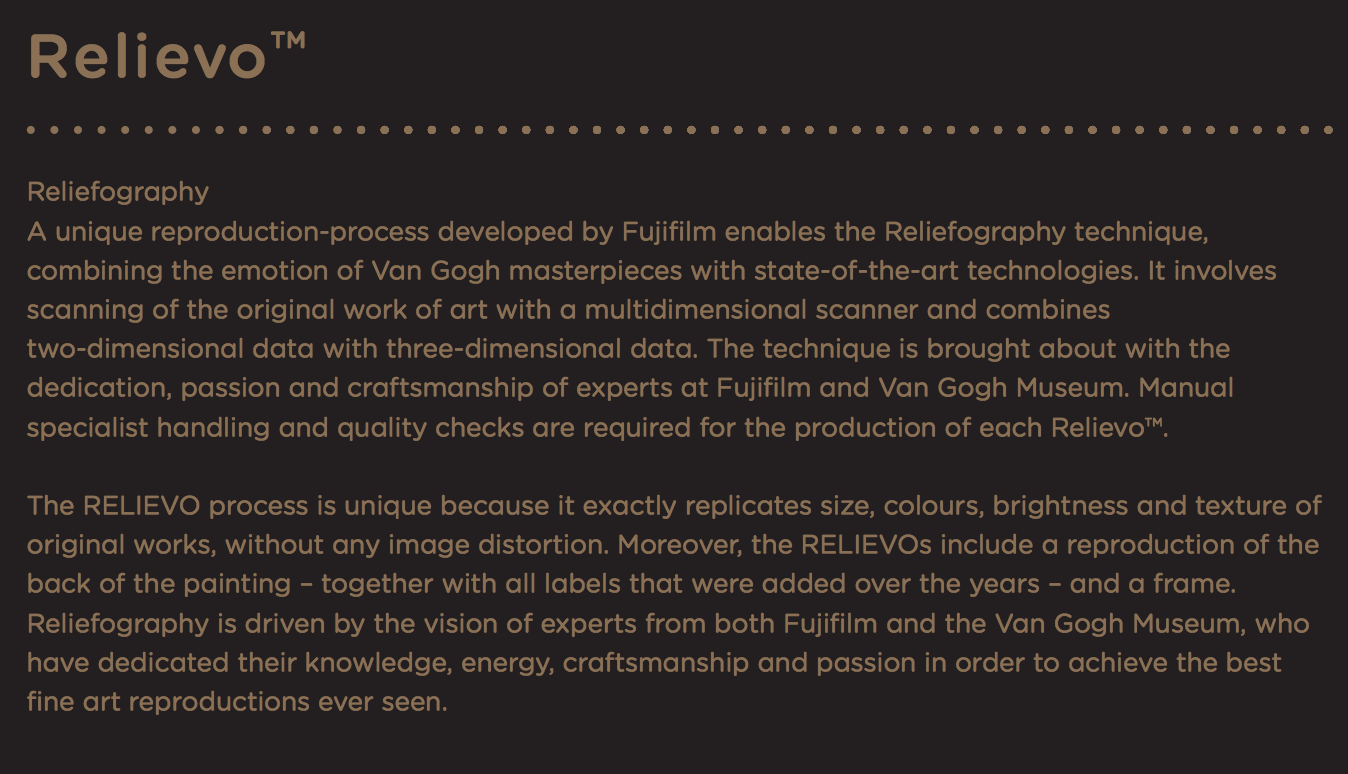
Now this time, the story to brand the fakes of none other than the works of Vincent van Gogh comes with  its own coined term and a trade mark! Introducing Relievo™

Relievo

(Source: PDF on the Relievo Collection by the van Gogh Museum)

Interestingly this initiative to develop and sell the fakes of the legendary artist is being led by none other than the official van Gogh museum.  Accordingly to this post, the museum is hoping to increase access to pictures which, if they were sold, would go for tens of millions of pounds to Russian oligarchs or American billionaires.

The replicas, called Relievos, are being created by the museum in partnership with Fujifilm, with which it has had an exclusive deal for three years. Such is the complexity of the technology, known as Reliefography, that it has taken more than seven years to develop. It combines a 3D scan of the painting with a high-resolution print. The “super-accurate” reproduction even extends to the frame and the back of the painting. Every Relievo is numbered and approved by a museum curator. And best of all – there is a limited edition of 260 copies per painting.

A limited edition of fakes with each copy uniquely numbered and approved by the curator!! 

Clearly, some fakes are more equal than others!

Commodity Branding 

On a related note, even among commodity products, some brands can be more equal than others. And when they are, as always they make for an interesting marketing case study.

Double A – the paper brand for office supplies and photocopiers has an understandable challenge. Drive user preference in an extremely commoditised category.

So how did they do it? The recent ad campaign by Double A is a case in point. Read the full story here and see all the 4 featured ads in the post by L.Bhat. My favourite 25s spot below. (For email subscribers the URL to the video here)

(Turn on closed captions for subtitles)

So, a paper is a paper? Or is it? 

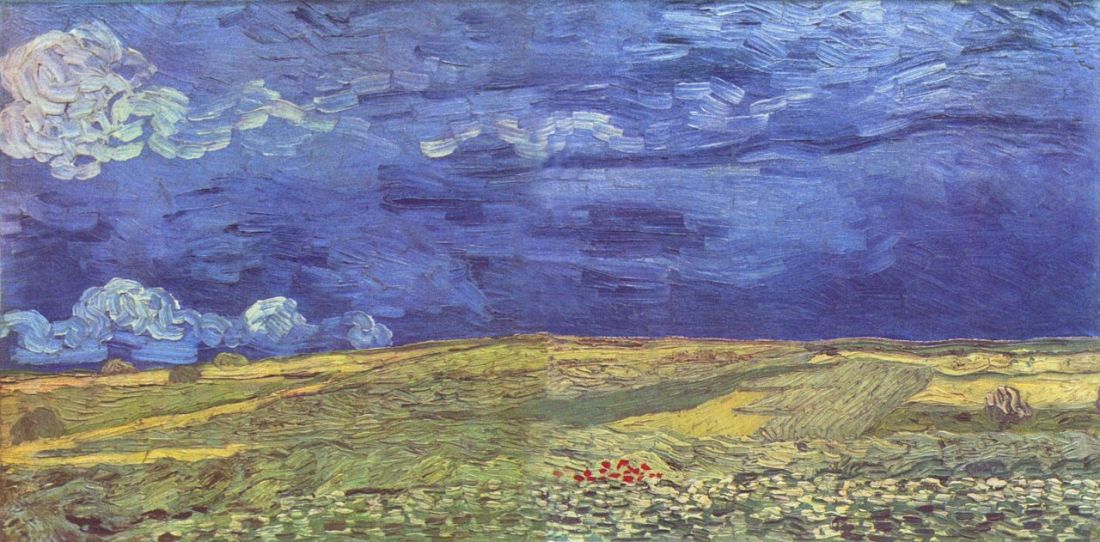
[Featured Image: Wheatfield Under Clouded Sky by Vincent van Gogh. One of the paintings to be reproduced using the 3D printing technique Relievo™]