

Story Tellers, Super Powers And Second Lives

Quick Read: For the first time in the history of story telling we seem to be having the means to explore the dimensions of *actual* time and space in building narratives. Story telling might just be at an inflection point.

Andrew Stanton while talking about The Clues to a Great Story quotes an incredibly insightful definition of what constitites drama.

Drama is anticipation mingled with uncertainty.” 

Now, while keeping the uncertainty element constant, what if you can build anticipation at the rate of actual human experience?

Wouldn’t the drama get amplified?

Let’s elaborate.

World’s Most Boring Television 

Stick a camera to an ordinary train on an ordinary day. Shoot the entire 7 hr + footage of this ordinary journey as the train pulls from station to station, and put it on national TV with almost no editing.

Sounds like the most boring television show in the history of mankind. Right?

Wrong.

The results of this Norwegian TV show were extra-ordinary, fascinating and even bizarely insightful.

Welcome to the world of ‘Slow TV‘.

What began as a pilot by the Norwegian TV producer Thomas Hellum and his team turned out to become a national phenomenon leading to more shows such as an 18 hour fishing expedition, a 5.5 day ferry voyage along the coast of Norway and many more.

These went on to receive extensive attention in global media, and were considered a great success with coverage numbers exceeding all expectations and record ratings for the NRK2 channel!

But why were these ostensibly boring shows so popular?

To paraphrase Thomas Hellum from the following must watch TED Talk..

Slow TV is so popular because it builds drama by letting the viewer make the story themeslves. 

In otherwords Slow TV is an amazing example of a narrative that rides on building anticipation at the rate of actual human experience in time.

Not to be left behind, the advertising/marketing world has also begun to experiment with the concept.

Virgin America has produced a six-hour-long commercial (!) about how unbearably dull the average plane ride is. The video shows passengers on a flight across the US, playing out its events in real time.

And it has clocked around 850K views till date!

Now moving over to the other dimension.

A New Photographic Language Is Born 

..so says dronestagram – an instagram for footage shot with dones. We even have drone film festivals celebrating the art of films shot with drones.

Meanwhile, YouTube this year has begun supporting 360 degree videos.  And we already see several brands experimenting with this format to create truly amazing ads like the one below by Nike that lets you be Neymar on the field as you check out the action in all its 360 degree glory.

And then you have the likes of Oculus and Google Cardboard pushing the envelope in bringing immersive VR experiences to life. The Economist in its recent feature has in fact taken a serious take on VR and believes that its time may have truly come.

This year the Tribeca Film Festival has even called for ‘virtual reality’ submissions.

So why are we raving about films shot with drones, 360 degree videos and VR experiences?

It is possibly because they all have one thing in common.

Thanks to these, for the first time ever, we see possibilities in constructing narratives that can build anticipation at the rate of actual human experience in space

So what’s next?

From Story Telling To Crafting Experiences To Creating Parallel Lives

As story tellers build increasingly immersive narratives that progress at the rate of actual human expereince in time and space, it ceases being just a story and moves on to becoming an experience.

Now throw in sensory elements to this and you suddently have multi dimensional multi sensory experiences that could possibly shift the business of story telling to that of building parallel realms of existence.

What does that mean?

I don’t know.

But at the least it could herald a second life for the likes of Second Life.

(Featured Image, Source)
3D Printing, Value Chain and Lawyers

Quick Read: 3D Printing as a technology can can have revolutionary implications on all the 3 key stages of a value chain –  Manufacturing, Distribution and Retail. And not to forget lawyers!

Let’s Start With Manufacturing

Today Lego finds itself going to war with the 3D Printing technology. Why?

Because, what has happened over the last decade to music, newsprint, film and photography now seems to be threatining the world of shapes and objects. As this Washinton Post says..

Soon hobbyists…. will be able to craft their own (lego) bricks, thanks to 3D printers that make fabricating those plastic parts as convenient as going to Toys R Us. With such technology, entire structures can now be reverse-engineered, reduced into a pile of components and snapped together in minutes. 

Lego’s sophisticated molding process that currently enables it to produce 55 billion Lego pieces a year is probably not under an immediate threat from the 3D printers. But once the technical challenges like being able to meet the established tolerance levels for finish, texture and fit of various materials and being able to operate at scale are solved, which –  many experts believe is just a matter of time – Lego might be at a major  risk.

lego_ironman(Lego Ironman, Source)

So the recent remarks from Lego’s CFO John Goodwin who said “3-D printing is a fascinating development and certainly opens up a lot of new avenues” gain significance as a first ever major acknowledgment by Lego about the impending storm.

This has even led to some analysts predicting that the future for Lego could be as an Intellectual Property publisher of the digital models of their blocks, not unlike the modern record company which doesn’t actually create physical tracks anymore but just owns the IP rights of their music.

Moving Over To Distribution

Distribution (and inventory management) are known to be Amazon‘s expertise. But faster shipping can come at a price. For e.g, in Q1 2013, Amazon’s shipping costs were 4.7 percent of revenue (source). So it has reportedly been testing the grounds for newer, cheaper and faster delivery methods like drones.

But here is – what could potentially be – the billion dollar question. 

What if the whole value chain starting from maintaining inventories of raw materials, industrial scale manufacturing, packaging, palletising, shipping, bulk breaking, transporting, warehousing to distributing were to become redundant? What if we manufacture goods just in time near the final destination?  

As this article says, that’s where 3D printing comes in –  by producing goods in exactly the ordered configuration precisely when they’re needed, 3D printing is ideal for filling gaps in the supply chain (which reduces uncertainty), keeping inventory low more generally (which saves companies money on shelving) and reducing waste (which occurs when the goods aren’t sold).

Called as Just In Time manufacturing, UPS has already started to venture into this business model in a small but significant way. And the initial results are reported to be more than encouraging.

3D Printer UPS Store(3D Printer at a UPS Store, Source)

So when the largest shipment/logistics company in the world begins such seemingly ‘odd’ experiment around On demand 3D printing, it can only indicate one thing.

Even the distribution behemoths are swearing by the mantra – if you can’t beat them join them. 

And Finally Speaking Of Retail

This year’s SXSW – the annual music, film, and interactive festival being held in Austin as we speak now (from March 7 – 11) has been generating a good amount of buzz.

Oreo‘s Trending Vending Machine is an example.

Envisaged by Mondelez as a fun experiment with Twitter, the concept is a mash up between the vending machine experience and social media based real time marketing. Named, Trending Vending Machine, it has been offering the SXSW attendees Oreos with 3D printed flavours picked from trending tweets and delivered to the attendees in 2 minutes (source). This marketing effort includes the hashtag #eatthetweet.

While this certainly makes for a pretty good engagement driving initiative by Mondelez where the world of social media hashtags meets cookie cutter biscuits – literally, the underlying story here could be that of the emergent possibilities of 3D printing in the retail sector where:

  • Inventories for the retailer are non-existent and limitless at the same time!
  • Shopper engagement becomes the norm, in fact the key enabler for the whole set up
  • And finally personalisation becomes a category code, and not just a fancy differentiation strategy

In fact, going by this logic, 3 D printers could even upend the very concept of retail sector as we know it today!

After all, why would anyone even bother to walk down an aisle when all they need to do is perhaps just download a design, chose a nearest 3D printer and click PRINT?

Or shall we call it MAKE?

Some food for thought on a related note: Thanks to 3D Printing, professions like Intellectual Property and Law can be in good demand for a long long time to come!

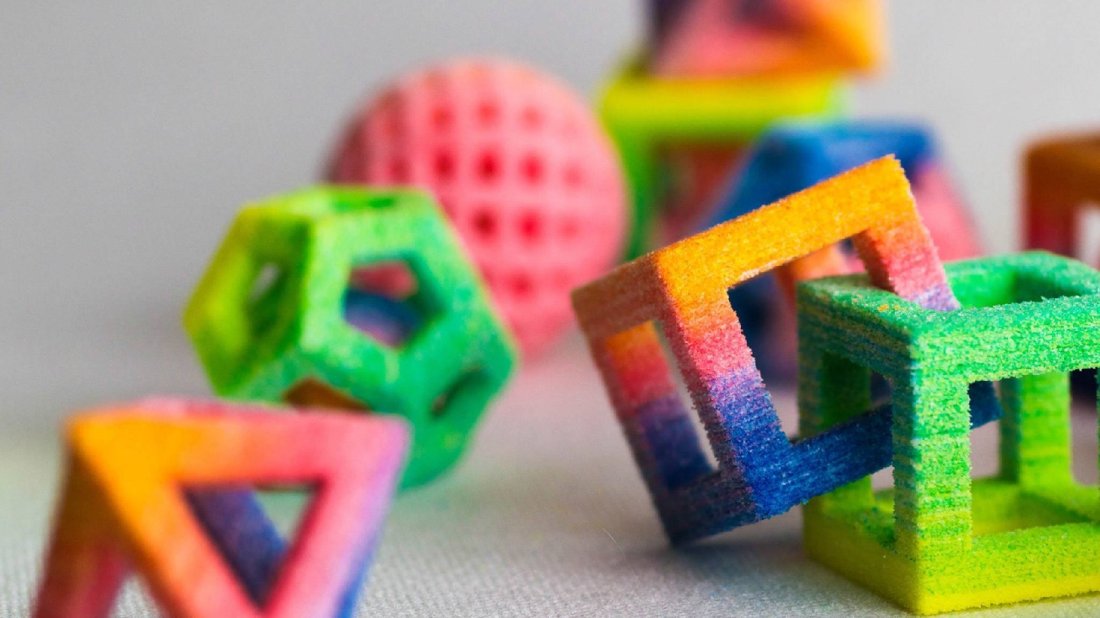
(Featured Image: 3D Printed edible Lollies at CES 2014, Source)