Video Games As Disruptive Innovation?

Quick Read: Today’s video games like Grand Theft Auto V, are more than just stunning life like gaming experiences. We could have some exciting possibilities here – where experiential & interactive branding can be embedded in games. And more interestingly, a world where video games can be virtual beta testing grounds for new product and UX design. These could be potential disruptive innovations for fields like Market Research and Product Design. 

Visit Los Santos & Blaine County – where plastic surgery, bad movies and big sharks rule the roost – see for yourself.

So says the landing page of Grand Theft Auto V – the super hit block buster action adventure video game that has been rated as the fastest selling entertainment product in world history.

It broke industry sales records by earning US $800 million in the first 24 hours of its release, and US $1 billion within its first three days.
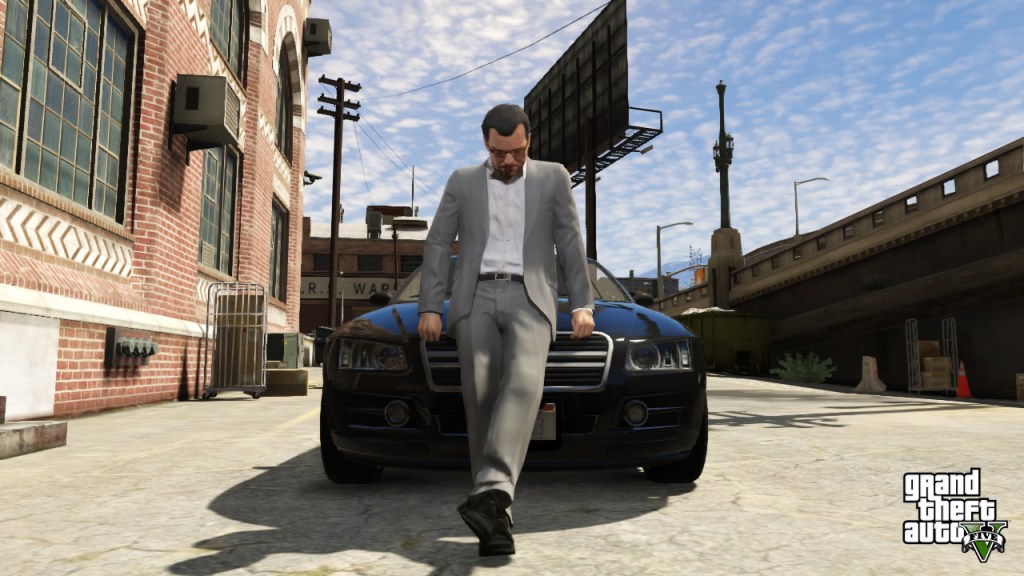
gta-5-grand-theft-auto-99

One of the key features of the game is that it has an Open World game level design – i.e., a world where a player can roam freely through the fictional city of Los Santos and is given considerable freedom in choosing how or when to approach objectives. So as a character in the game you have the freedom to spend your time pursuing adventure sports, lounge about by the beach, go shopping, visit the local artisan, enjoy music and other such entertainment options.

Los Santos(The Landing Page of GTA-V that lists the possibilities and features of Los Santos city and Blaine County)

But Fernando Pereira Gomes – a street photographer by passion and a game enthusiast who went to the midnight launch of the game and played the night away, noticed something even more interesting.

He noticed that the characters in the game had phones with cameras at all times during the game play. This means the players can practically take pictures from within the game(!) and upload these. So with this new tool, and the huge world of Los Santos and its streets, he started experimenting with the camera and went on to take some truly stunning photographs that he has started to share on his blog. Ever since its launch, his blog and the pictures have been rapidly climbing up the popularity charts – thanks to the ingenuity of his idea and the beauty he captures from within the game’s landscape. See a demo video on how he does it here. Now that is Street Photography taken to a completely new level!

He goes on to say..

What I found was remarkable. The game is so realistic that it felt like being in the streets outside, running around for shots, anticipating passersby’s movements and reactions. In a way, it was also incredibly frightening that these algorithms could look so real, or is it that we ourselves are becoming ever more algorithmic?

StreetPhotoV(Los Santos Street Photo by Fernando Pereira Gomes sourced from his blog)

On first look this is fascinating for two reasons:

  1. For the GTA V’s rich media, content and the game design that enables such  interesting possibilities (makes a definitive commentary on the evolution of game design).
  2. And for the creativity and ingenuity of someone like Fernando Gomes who has ventured beyond the apparent possibilities in the game and went on to make a mark for himself.

On second look, and from a marketer’s and a product designer’s stand point, I thought there could be even more compelling possibilities dormant here waiting to be realised. Two things I could think of:

In Game Experiential Branding

In game branding is nothing new. But how about adding an experiential / interactive angle to this ‘in game branding’? More specifically, how about, say a brand like Samsung, tying up with the game franchise and embedding its full camera functionality in the game’s camera phone? Wouldn’t it be an interesting way to let the gamers – many of whom tend to be tech’s early adopters and thereby potential customers of “the latest phone out there” –  try out the phone’s exciting new features?

The opportunities of ‘customer involvement’ here could be limitless – almost life like with little risk involved while affording an almost first person experience of the phone and/or its camera to the user. The best part is the free marketing that these early adopters could do for the brand if and when they share these pics on their social network.

A Virtual Beta Testing Ground For The Upcoming Wearables  

Let’s take Google Glass as an example  (one among the most awaited wearables in the market for 2014). As we speak now, it is in its Beta testing phase with some early adopters signing up to use, explore, develop and test new possibilities. In fact an Android developer Mike DiGiovanni looking to test the concept of using Glass as a second screen, has managed to capture Grand Theft Auto’s crucial in-game GPS interface, beaming it to the player’s Google Glass eyepiece in real time (source).

But how about embedding the functionality of  something like Google Glass within the game and let the players use it and explore its possibilities by themselves? I would guess something like this could give a treasure trove of real time feedback and insights to the product designers in order for them to refine its design and functionality.
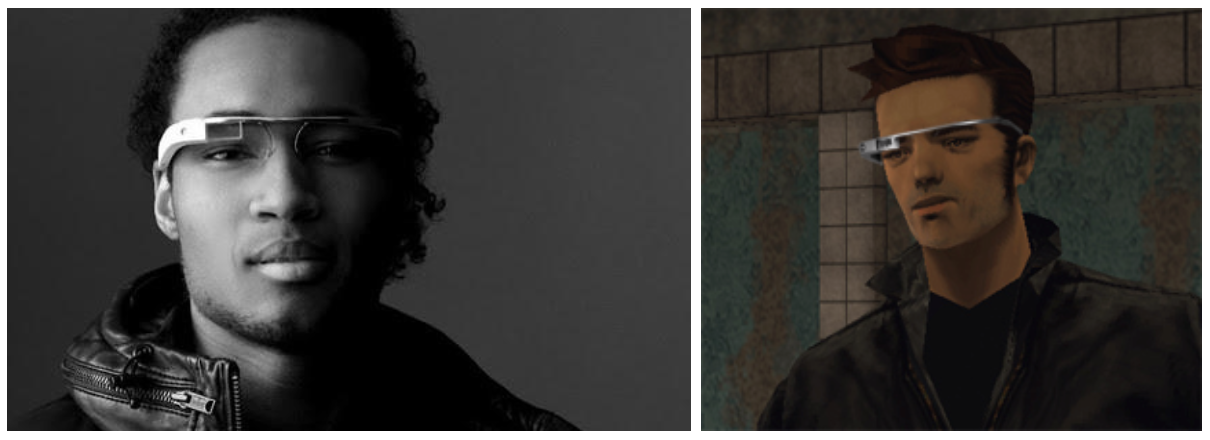
Google Glass

Implications

Ben Hammersley  in his must read WIRED article on Wearables as the 3rd wave of computing, rightly says that when it comes to something like Google Glass, how our social progress plays out will be just as interesting as the technology itself. The social component of the implications would probably need to be tested and tried in real life, but the technology component and its possibilities can perhaps be tested in the game’s ‘reel’ life already today.

And may be when the game design becomes so smart to be able to reflect life like social dynamics – a not so unlikely prospect in the near future –  we might not even need the good old focus group or the hordes of beta testers!

Now, that could be a disruptive innovation for market research and product design!

Market research agencies and product designers of the world – hope you are investing in video games. No?

(Featured Image: Source, Fernando Pereira Gomes Street Photography on the streets of Los Santos within the game Grand Theft Auto V)

The Business of Belief

Quick Read: Every business that we know of can be said to be in the ‘business of belief’. While a majority of these business thrive on building and sustaining our beliefs, there are also ones that thrive on breaking down and challenging our beliefs. 

Arguably every business that we can think of can be said to be in the Business of Belief.

While most businesses that we see around can prove this point, RIEDEL glasses are a very straight forward example.

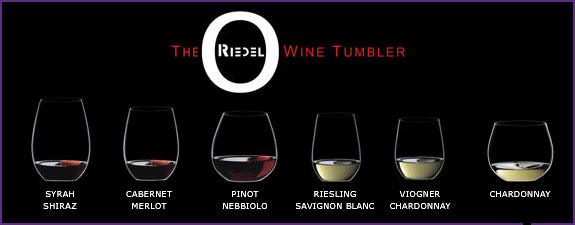
RIEDEL is an expensive line of glassware designed to deliver the wine’s ‘message’ via the carefully crafted form of the receptacle. In other words, Riedel has built a thriving business of glassware by driving a belief that the shape of their glasses can make wines test better!

Skeptical? The story goes that even experts and wine critics were – several of them skeptical of this seemingly implausible claim.

And yet today, hundreds of wine experts, and thousands of customers now swear it’s true. Taste tests throughout Europe and the U.S. were said to have proven time and again that wine — expensive or inexpensive — tasted better in Riedel glasses.

riedelo

Except it’s not true. At least not empirically. (source)

When subjected to double-blind testing that doesn’t let the taster know the shape of the glass, people found no detectable difference in taste between glasses. Objectively, the shape of the glass just doesn’t matter.

But subjectively, when belief in the story and the experience of the glass are added back in the mix, it matters. And the wine does taste better to these people. Today some Riedel glasses sell for more than 100 dollars each and people covet these over other lower priced glass ware!

Therefore, sensing a branding opportunity that is waiting to be leveraged, Coke has recently tied up with Riedel to come up with a glass that “is designed to enhance the drinking experience”. The Coke site goes on to explain..

Shaped by trial and error by a panel of industry experts and Coca-Cola lovers, this form captures the distinct spices, aroma, and taste of Coca-Cola and creates a magical sensorial experience… A unique glass for a taste like no other.

RIEDEL+Coke(Riedel + Coke, Source)

While this ‘glass act’ by Coke drew myriad views from the F&B industry, it nevertheless makes for an interesting commentary on Riedel as a company that has thrived by systematically building a business of belief.

Meanwhile elsewhere…

Interestingly there also exist businesses that build a following for precisely the opposite reason – by belying beliefs and tearing down expectations each single time they offer something to the consumer.

Take The Art of Dining – a business that sets up theme based pop up dining experiences – as an example.

As part of their model, Ellen Parr and Alice Hodge, put on theme-based pop up restaurants mostly in London. The venues – always unusual and unexpected – have so far included a 16th century mansion, an eel and pie shop, the Victorian Dalston Boys Club, and the army barracks on City Road while the themes range from wartime rationing to the Food of Love. The whole experience is like eating within an interactive art installation. Each of their dining event is thus an experience that belies conventional expectations and common beliefs on what is to come.

A Night With The Mistress(Themed as ‘A Night With The Mistress’, guests were required to put on a blind fold when they ate, Picture Source)

Their recent series called Say Cheese – the photography of Martin Parr in five courses, is the duo’s latest example on how they have cemented their expertise in their signature experiential model – Set up expectations, evoke the guests’ pre conditioned beliefs and pull the rug off their feet as they take the plunge. 

This is how it works:

  • You enter a typical English café setting: gingham table cloths, plastic flowers on the table, pictures of Lady Diana and Mrs Tatcher, copies of the Sun etc
  • The waiting staff are mostly English, wearing floral pinnies
  • And this is where it starts to get interesting -You don’t get a conventional menu, but a set of 5 photos by Martin Parr – the legendary photographer
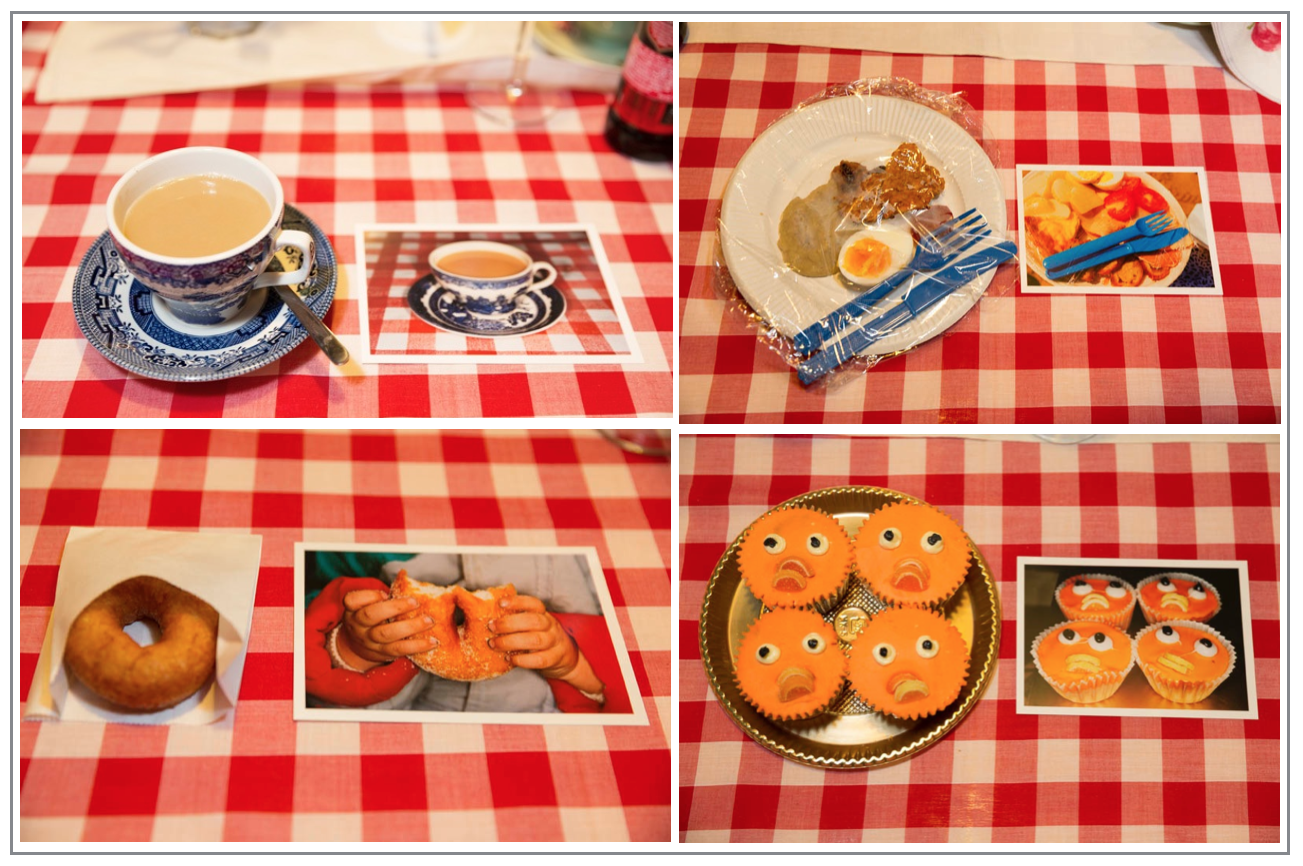
  • And here is the twist: the food looks just like the images but tastes completely unlike what you expect.
  • For eg. An English tea cup is filled with a tea coloured liquid, poured from a tea pot, which turns out to be a delicious Tom Yam Soup. A doughnut is actually a South Indian savoury, made from lentils and served with a coconut chutney. And it goes on

Martin Parr(Each of the five courses saw Martin Parr’s pictures come to life in bizarrely unexpected ways. Compilation of pictures from here)

See the short video here to get an idea on the actual execution

http://vimeo.com/69361520

Say Cheese! The World of Martin Parr in 5 Courses from GOLIGA on Vimeo.

This pop up experience was also offered in Tokyo in 2013 and as per Time Out Tokyo, the tickets costed  ¥12,000 per person, and were limited to 50 people per night. Food, it says, doesn’t get much more high-concept than this.

Now that’s a business that is actually built on belying beliefs!

(Featured Image, Of Wine Glasses and Beliefs. The Riedel Wine Glass Company Brochure, Source)

Commodities and Fakes. Branded

Can fakes be branded? 

Can fakes be differentiated and charged a premium for? Two recent examples show they bloody well can be!

1. Fakes with an accompanying personal escort flying first class  

A 24 hour escort is the norm for valuable paintings when they are transferred between museums. But a set of forged paintings have been recently extended security arrangements that rival that of the originals. Why?

Because these are not just any other fakes. They are imitation paintings by the world’s most notorious forger Han van Meegren the world war II era painter and master forger – who so well replicated the styles and colours of the legendary artists that the best art critics and experts of the time regarded his paintings as genuine and sometimes exquisite. His wikipedia page says that he is considered to be one of the most ingenious art forgers of the 20th century, so much so that his paintings including his signature have been subsequently forged as well!

Van_Meegeren_signatures(Source, Wikipedia. A collection of genuine and fake signatures of Han van Meegeren)

Today his forged paintings are a brand on to themselves and are treated as prestigious artworks that require the same measures of security as the authentic ones.

2. 3D printers being used to fake Vincent van Gogh 

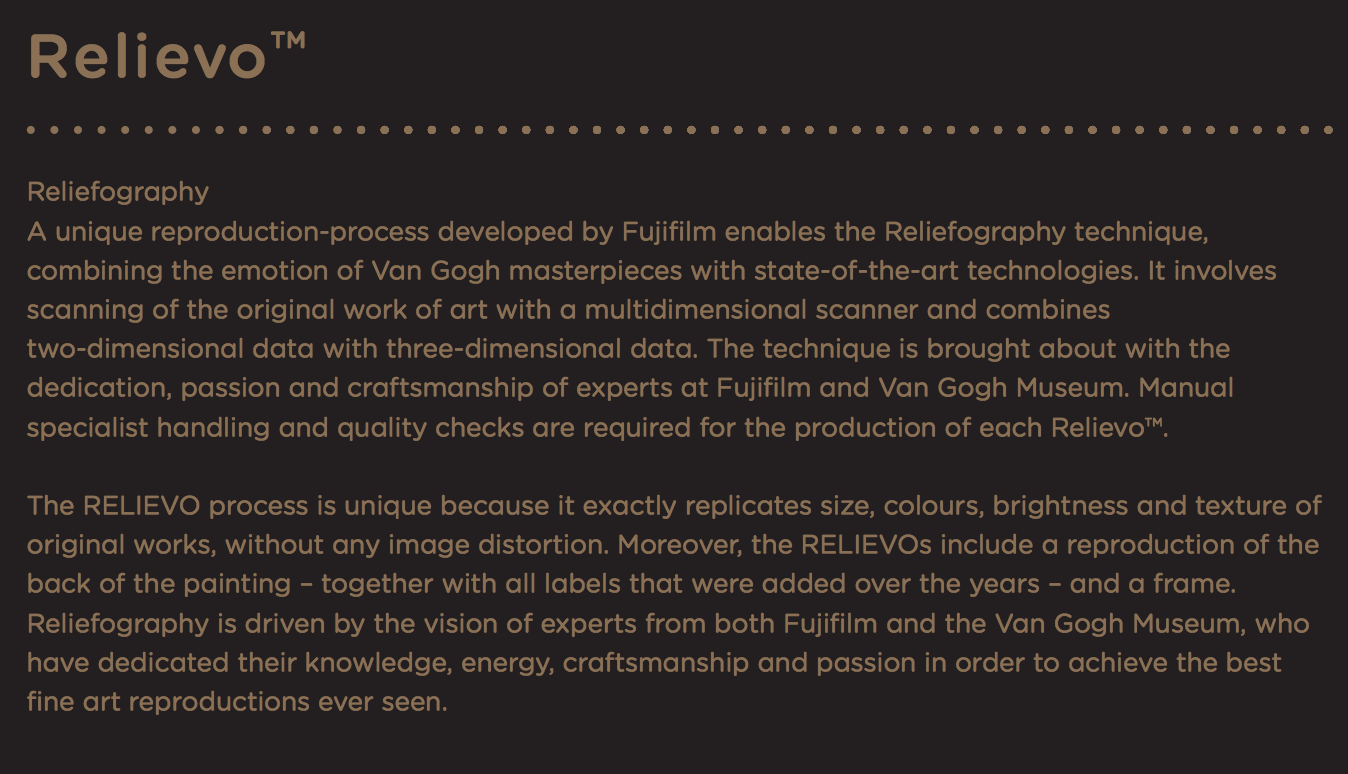
Now this time, the story to brand the fakes of none other than the works of Vincent van Gogh comes with  its own coined term and a trade mark! Introducing Relievo™

Relievo

(Source: PDF on the Relievo Collection by the van Gogh Museum)

Interestingly this initiative to develop and sell the fakes of the legendary artist is being led by none other than the official van Gogh museum.  Accordingly to this post, the museum is hoping to increase access to pictures which, if they were sold, would go for tens of millions of pounds to Russian oligarchs or American billionaires.

The replicas, called Relievos, are being created by the museum in partnership with Fujifilm, with which it has had an exclusive deal for three years. Such is the complexity of the technology, known as Reliefography, that it has taken more than seven years to develop. It combines a 3D scan of the painting with a high-resolution print. The “super-accurate” reproduction even extends to the frame and the back of the painting. Every Relievo is numbered and approved by a museum curator. And best of all – there is a limited edition of 260 copies per painting.

A limited edition of fakes with each copy uniquely numbered and approved by the curator!! 

Clearly, some fakes are more equal than others!

Commodity Branding 

On a related note, even among commodity products, some brands can be more equal than others. And when they are, as always they make for an interesting marketing case study.

Double A – the paper brand for office supplies and photocopiers has an understandable challenge. Drive user preference in an extremely commoditised category.

So how did they do it? The recent ad campaign by Double A is a case in point. Read the full story here and see all the 4 featured ads in the post by L.Bhat. My favourite 25s spot below. (For email subscribers the URL to the video here)

(Turn on closed captions for subtitles)

So, a paper is a paper? Or is it? 

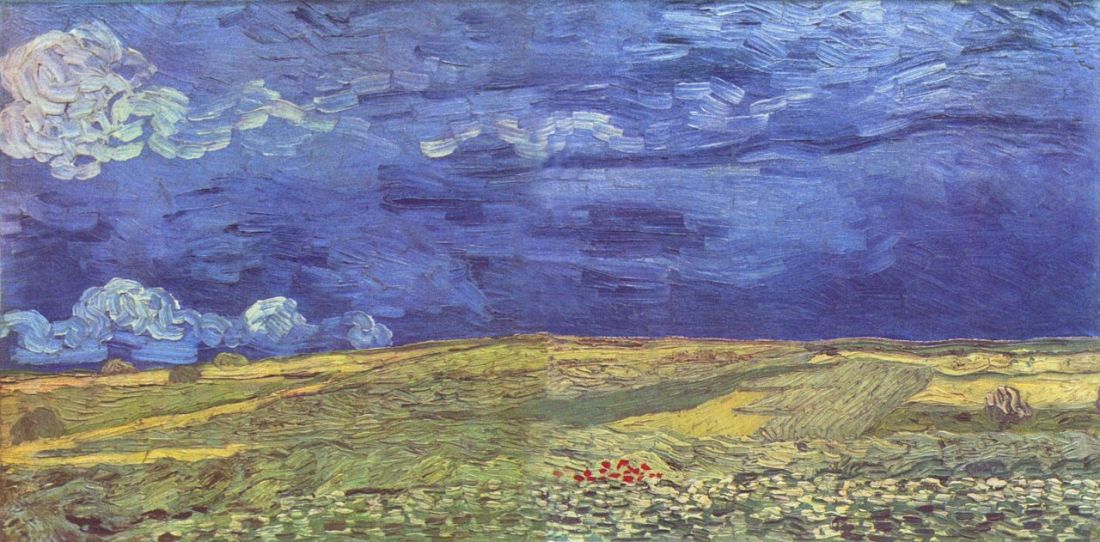
[Featured Image: Wheatfield Under Clouded Sky by Vincent van Gogh. One of the paintings to be reproduced using the 3D printing technique Relievo™]