Quick Read: Marketers have always tried to dial up and capitalise on their consumers’ active interest and consideration levels. Now what if they could also leverage the lack of it?
Let’s take boredom.
A common human emotion, boredom often makes us to instinctively reach out to our mobile phones.
With our attention spans thrown into a state of suspended animation, it is natural that we see ourselves seeking solace in the infinite scrolls of updates, tweets, videos, pics etc.
In fact there is research to prove that our boredom levels can be inferred from – surprise surprise – our mobile phone usage alone!
By leveraging features related to our mobile phone usage like recency of communication, usage intensity, time of day and demographics – the research has successfully built a machine learning model that can infer our state of boredom with an 83% accuracy!!
Interestingly, results from this research also suggest that people are more likely to engage with ‘recommended content’ when they are bored than when they are not.
Why?
Presumably because our ‘conscious choice’ takes a back seat when we are bored making us open to nibbling at a bit of whatever gets thrown our way.
Now these findings could have huge impact on targeting possibilities for marketers.
What if we could target not just by conventional cuts like demo, psychographics, affinities etc, but also by temporal mental states like say being bored, being excited, feeling low, feeling on top of the world etc?
Not too unrealistic a prospect. Is it?
But when that happens, we are looking at dramatic implications for brands from across a range of industries – be it for media platforms marketing content, or for e-commerce players seeking to deploy real time pricing interventions etc.
Quick Read: Some communities resort to fascinatingly extreme means to preserve and propagate their culture. Fortunately for the rest of us there is advertising.
On the outskirts of Pretoria, South Africa is an extremely closed community called Kleinfontein.
It is home to a small group of 1,200 Christian Afrikaners who embrace traditional Afrikaner culture and exclude all others from their settlement.
They are so excluded from the larger population that at the entrance of the settlement is a gate monitored by security guards 24 hours per day who let in visitors only if they have an invitation.
No wonder then, when Erica Canepa – a freelance Italian photographer started researching the community she couldn’t find even a single photo of the place. Thus began her quest to get into the community that culminated in a brilliant NatGeo piece.
The big insight that dawns from her NatGeo picture story is that the Kleinfontein’s way of life is more about preserving their unique cultural identity than simply keeping others out.
“I found it’s not about the race; everything is about the culture, and racism became a consequence of their desire to protect themselves and their culture.”
After all, isn’t this need to preserve our collective DNA (a.k.a culture) universally applicable?
Ask the ultra orthodox Rabbis if you are still in doubt.
Recently as part of their long struggle to keep the modern media from corrupting their ultra orthodox Rabbi community also called the Haredi, their council gathered earlier this year to discuss a “great spiritual danger” a.k.a WhatsApp.
Why?
Because it turns out, it has become a popular method for their followers to form groups for exchanging gossip and even “immodest” images and video clips. (source)
The ultra-Orthodox community’s purchasing power is such that Israeli mobile-phone providers agreed to market special “kosher connection” smartphones, without the offending apps and allowing only carefully regulated information services. To make sure the faithful use them, these devices have their own group of phone numbers and a distinctive ringtone.
Apparently, what do the younger Haredim that want to ignore the edict do?
Interestingly, as the report says, they buy two mobile devices: one for calls within the community, while tucked away in another pocket is a smart phone to keep up with the outside world.
The extent to which these younger Rabbis go to, to get what they want while still ostensibly trying to appear “kosher compliant” speaks (ironically) about their commitment to be part of the larger community moment to preserve and propagate their core cultural ideals and ideas.
Meanwhile elsewhere..
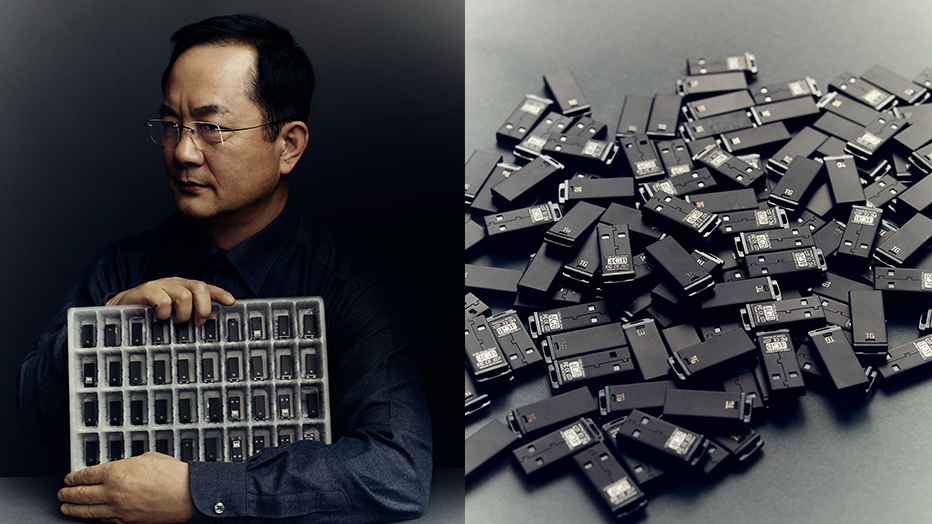
Did you know of this ongoing plot to liberate North Korea with smuggled episodes of Friends?
Not just Friends. In fact by the estimates of the group that has been meticulously executing this cross border “culture smuggling”, over 3,000 USB drives filled with foreign movies, music, and ebooks land into the North Korean territory annually.
Kang Chol-hwan, the founder of this group likens the USB sticks to the red pill from The Matrix: a mind-altering treatment that has the power to shatter a world of illusions.
(Kang Chol-hwan and the thumb drive guerrilla invasion. Pic Source)
Now that’s some real transformative power of cultural propagation.
Fortunately for the rest us there’s advertising to lend a helping hand.
See any festive ad now – anything that you can think of.
And arguably it would be about this one single thing – preserving and propagating our culture, within communities and across generations.
This festive season, amidst all the fun and frolic, among family and friends as you exchange your warmest gifts and greetings why not reflect for a moment and ask yourself..
Would this festive occasion still hold the same special meaning to us with all its finer nuances and rich textures without this thing called ‘advertising’?
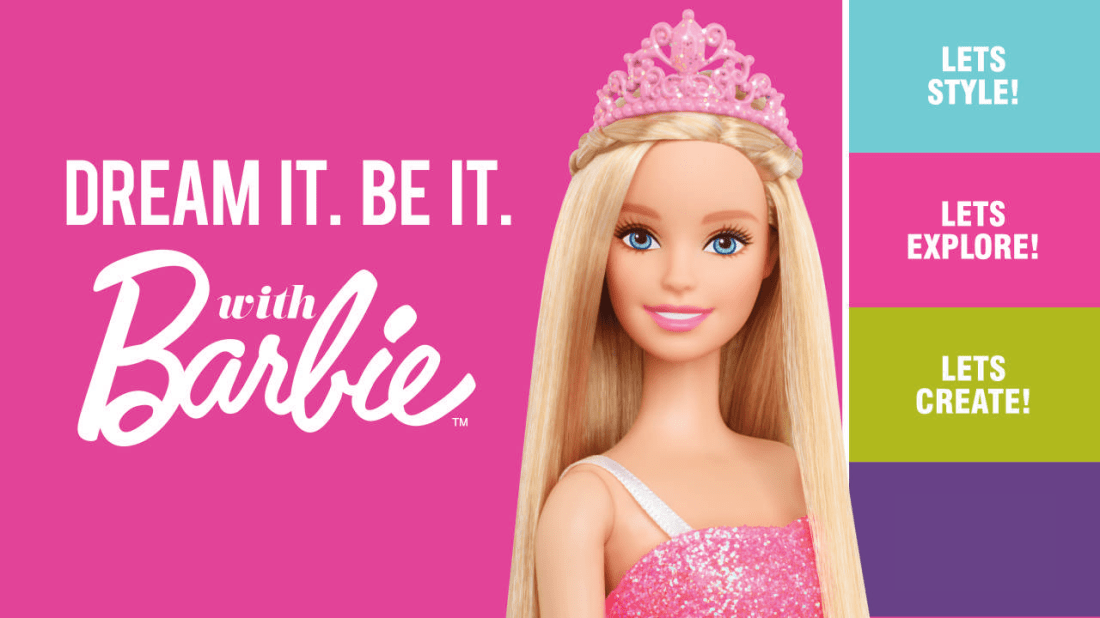
In a new film by BBDO called “Imagine The Possibilities”, Barbie speaks of the power of imagination that allows girls to explore their potential.
It’s twitter page shows how the brand has begun to drive conversations around topics like inspiring confidence, celebrating boldness, encouraging self expression and calling out the ‘inner superstar’.
For a brand that has often been accused of perpetuating an epidemic of body hatred, this campaign seems to hold promise in getting parents to reappraise the role Barbie can play in a child’s life. At least a cursory look into the comments in the film’s YouTube page seems to suggest so.
The film is great because of its brilliant insight – when a girl plays with Barbie she imagines everything that she can become.
But ironically it is this very insight that could be its undoing.
If when a girl plays with Barbie, she imagines everything that she can become, wouldn’t such an imagination naturally get rooted in a (misguided) notion – i.e., the notion that her dream of becoming this someone could be a function of her growing up to look as ‘perfect & pretty’ as the Barbie dolls seem to her?
The jury is out.
Only time will tell if this can make any substantial dent in the brand imagery for Barbie in the long term beyond the seemingly positive discourse of “seek your inner superstar”.
Quick Read: Some businesses thrive by driving a singular POV regarding their offering amongst their target audience. And there are some that take pride in celebrating multiple POVs regarding theirs.
Some elite restaurants in Japan areichigen-san okotowari (first-time customers not allowed), meaning a regular customer has to introduce you before you can make a reservation.
The genius of this system is that it ensures that you buy yourself into a singular and a specific POV about its food, experience and its clientele if you want to be able to get a reservation at the restaurant.
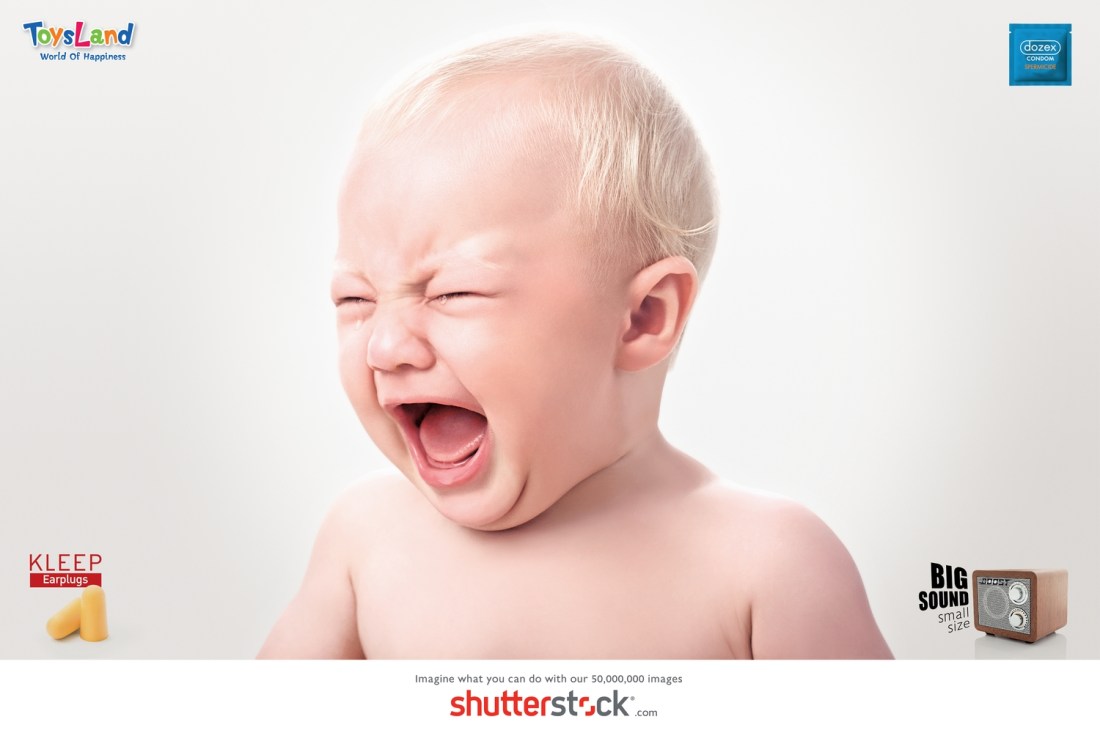
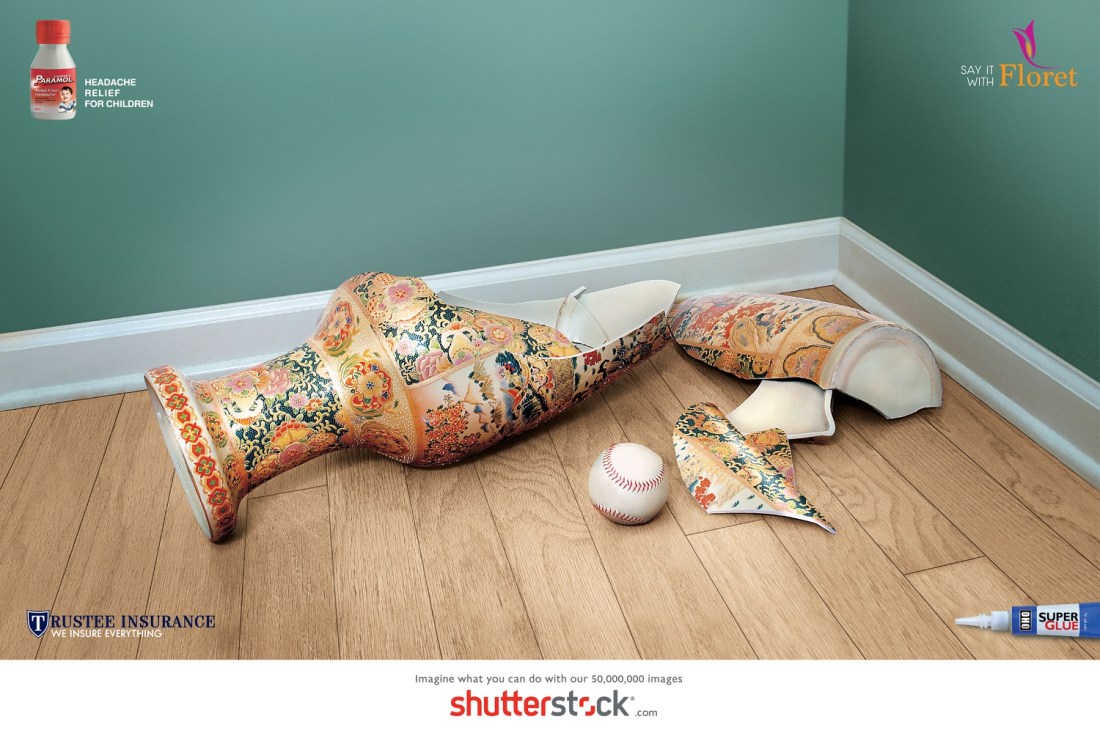
A recent print campaign by Shutterstock made it to the shortlist of Clio Awards 2015 under the Print category.
As a purveyor of stock photos, Shutterstock.com wanted to celebrate the fact that an image can potentially fire up your imagiation in multiple ways.
So it brought this idea to life through the following executions.
[Click on the images for a larger view]
Agency: Leo Burnett. Images via: Clio Awards. (HT Bhatnaturally)
A truly insighful execution that celebrates the multiple POVs that an image can inspire. As Mr. Bhat says..
The irony is that this is too close to reality. We’ve all seen how art directors search for inspiring images first and then try and retrofit an idea. Also, a visual idea which was rejected or didn’t make the cut for a pitch in one category can be adapted to a totally unrelated category. This campaign actually puts a positive spin on that.
Does your brand – and by extension its strategy and execution – thrive on driving and sustaining a singular POV or does it celebrate multiple POVs?
[Bonus Link: Speaking of POVs, you should check out Hardcore – the world’s first action POV film that got premiered in the latest Toronto International Film Festival to critical acclaim. The entire movie is shot from a single POV and boy is it intense!]
Quick Read: For the first time in the history of story telling we seem to be having the means to explore the dimensions of *actual* time and space in building narratives. Story telling might just be at an inflection point.
Now, while keeping the uncertainty element constant, what if you can build anticipation at the rate of actual human experience?
Wouldn’t the drama get amplified?
Let’s elaborate.
World’s Most Boring Television
Stick a camera to an ordinary train on an ordinary day. Shoot the entire 7 hr + footage of this ordinary journey as the train pulls from station to station, and put it on national TV with almost no editing.
Sounds like the most boring television show in the history of mankind. Right?
Wrong.
The results of this Norwegian TV show were extra-ordinary, fascinating and even bizarely insightful.
What began as a pilot by the Norwegian TV producer Thomas Hellum and his team turned out to become a national phenomenon leading to more shows such as an 18 hour fishing expedition, a 5.5 day ferry voyage along the coast of Norway and many more.
These went on to receive extensive attention in global media, and were considered a great success with coverage numbers exceeding all expectations and record ratings for the NRK2 channel!
But why were these ostensibly boring shows so popular?
To paraphrase Thomas Hellum from the following must watch TED Talk..
Slow TV is so popular because it builds drama by letting the viewer make the story themeslves.
In otherwords Slow TV is an amazing example of a narrative that rides on building anticipation at the rate of actual human experience in time.
Not to be left behind, the advertising/marketing world has also begun to experiment with the concept.
Virgin America has produced a six-hour-long commercial (!) about how unbearably dull the average plane ride is. The video shows passengers on a flight across the US, playing out its events in real time.
And it has clocked around 850K views till date!
Now moving over to the other dimension.
A New Photographic Language Is Born
..so says dronestagram – an instagram for footage shot with dones. We even have drone film festivals celebrating the art of films shot with drones.
Meanwhile, YouTube this year has begun supporting 360 degree videos. And we already see severalbrands experimenting with this format to create truly amazing ads like the one below by Nike that lets you be Neymar on the field as you check out the action in all its 360 degree glory.
And then you have the likes of Oculus and Google Cardboard pushing the envelope in bringing immersive VR experiences to life. The Economist in its recent feature has in fact taken a serious take on VR and believes that its time may have truly come.
So why are we raving about films shot with drones, 360 degree videos and VR experiences?
It is possibly because they all have one thing in common.
Thanks to these, for the first time ever, we see possibilities in constructing narratives that can build anticipation at the rate of actual human experience in space.
So what’s next?
From Story Telling To Crafting Experiences To Creating Parallel Lives
As story tellers build increasingly immersive narratives that progress at the rate of actual human expereince in time and space, it ceases being just a story and moves on to becoming an experience.
Now throw in sensory elements to this and you suddently have multi dimensional multi sensory experiences that could possibly shift the business of story telling to that of building parallel realms of existence.
What does that mean?
I don’t know.
But at the least it could herald a second life for the likes of Second Life.
Quick Read: With most products in any given category tending to have total functional parity, the only way to drive trial could possibly be through a singular route – curioisty.
Often times I am curious why “curiosity” doesn’t even figure in the classic purchase funnel.
In fact I tend to believe that without inciting a threshold level of curiosity in a consumer, awareness and consideration could end up proving to be moot pursuits.
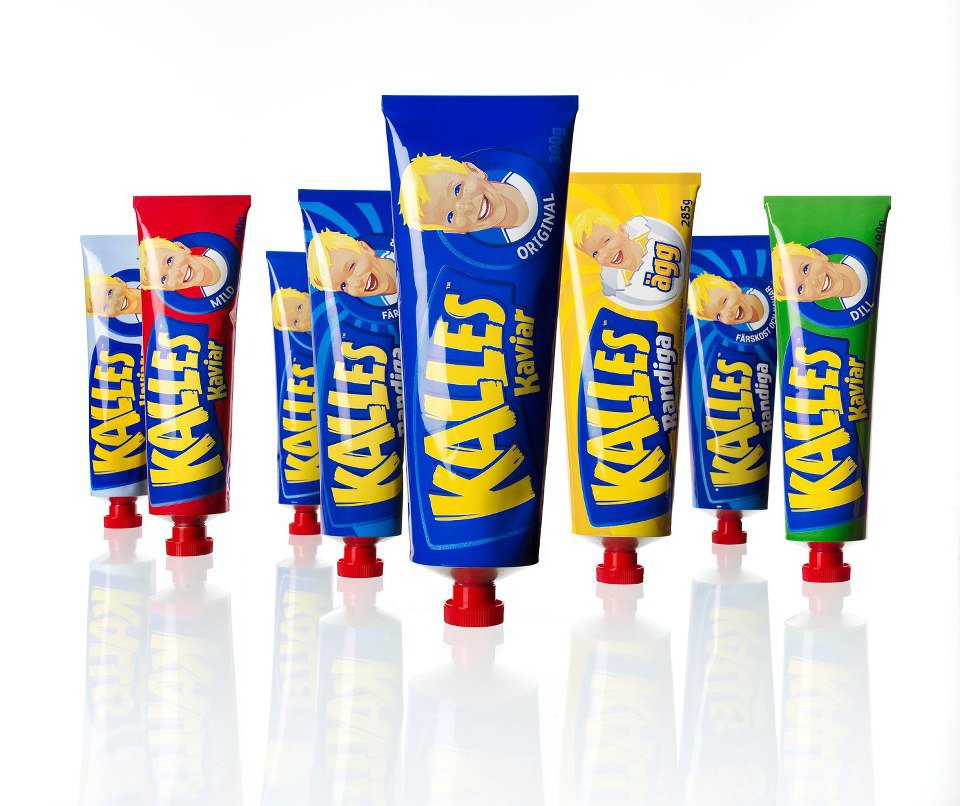
Let’s take Kaviar. (or Smörgåskaviar to be specific)
Kaviar is a Scandinavian spread – a paste consisting mainly of lightly smoked cod roe that has a salty/sweet/fishy taste and a gooey pink/orange colour. Packed full of omega-3 goodness, kaviar can be eaten at anytime and practically spread on anything edible – breads, eggs, meat, cheese etc. (source)
However kaviar supposedly has one catch – it is an acquired taste and a first timer might find the taste disgusting.
Now that’s where the Kalles Campaign proves to be a genius. (Kalles is a Swedish Kaviar brand)
The campaign holds a mirror to other nationalities’ incomprehension and their reaction at having something that tastes – let’s just say – strong and funny.
It starts with Los Angeles where obviously the Californians don’t hold back their feelings upon tasting something weird.
As it moves to Switzerland, the taste test yields more hand and eyebrow gestures than actual verbal responses.
“It tastes … ” a serious looking man in a tie says. “It tastes … ”
“Fantastic?” the Swede asks.
“No,” the Swiss man replies, with a resolute firmness.
In Budapest, the reaction is icier. A woman takes a bite, exchanges cold glances and upon being asked if she likes it, she smiles, and says “yes,” with a look that clearly says no.
Quick Read: We seem to have a thing for things that are dual in nature. Be it a town, a person or perhaps even a brand.
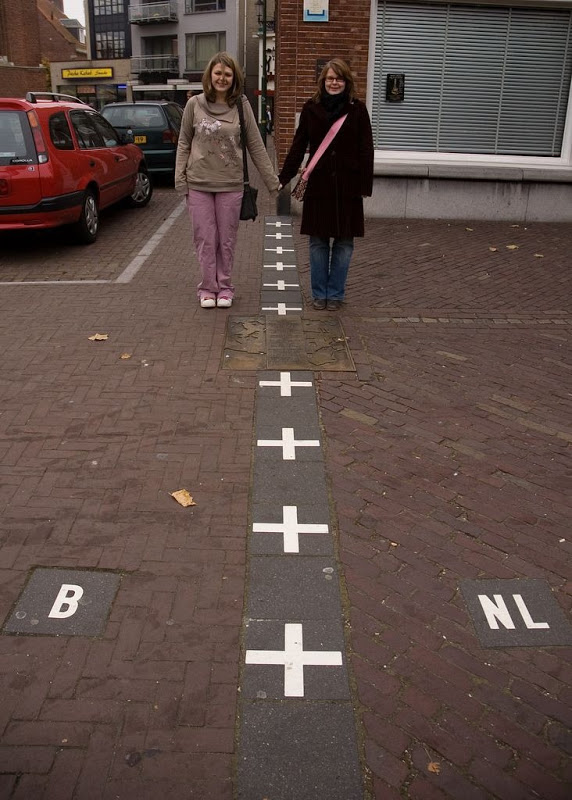
Baarle – a town at the border of the Netherlands and Belgium, is perhaps the world’s strangest international border.
Why?
Because the town is an enclave that consists of pockets of the Netherlands nested inside Belgium, nestled inside the Netherlands.
The result?
The international border cuts through Baarle indiscriminately, crossing streets, dividing roads and slicing through buildings forming Baarle-Nassau and Baarle-Hertog – two municipalities that are in Netherlands and Belgium respectively.
For e.g., many homes are cut in half by the border, so as a matter of convention each household’s nationality is determined by the location of its front door. Which also decides where taxes are paid. So some houses apparently swap the location of their front doors between countries to benefit from the most favourable taxes!
And if the border runs through the front door, the two parts then belong in different countries, and this is indicated by two street numbers on the building.
So duality has become the central character of Baarle where everything is two fold: two churches, two town halls, two post offices, two fire stations and even two police forces and so on.
And it is this charm of duality that makes Baarle quite popular with tourists around the year.
Recently an unknown 65-year-old woman has become an internet senstion overnight. She was revleaed to the world through the cover page of Vanity Fair and a Twitter account that amassed 1 million followers in four hours – faster than the account launched by the US president, Barack Obama! Four days later she was up to 2.37 million followers, with another 1.5 million followers on Instagram! (source)
Why?
Perhaps it is the enigma of a duality the Vanity Fair’s cover story revealed.
She has now become a hugely powerful cultural figure almost overnight and could soon become an important voice in the transgender rights movement. Apparently even Obama tweeted in response saying “It takes courage to share your story”.
Duality, it seems, has a certain enigma to it! Ask Buzz Bissinger – the Pulitzer winning journalist who crafted Caitlyn’s reveal for Vanity Fair over a period of 3+ months leading to this watershed of a cover story.
Duality & Brands
The human brain is said to possess this intrinsic nature of actively labeling everything it encounters into neatly defined buckets. That’s probably why anything that has a strong duality ends up becoming such a tease to our minds and perceptions.
No wonder then, there are brands that thrive on duality. (The classic Coffy Bite and more recent Cadbury Oreo are some well known Indian exmples)
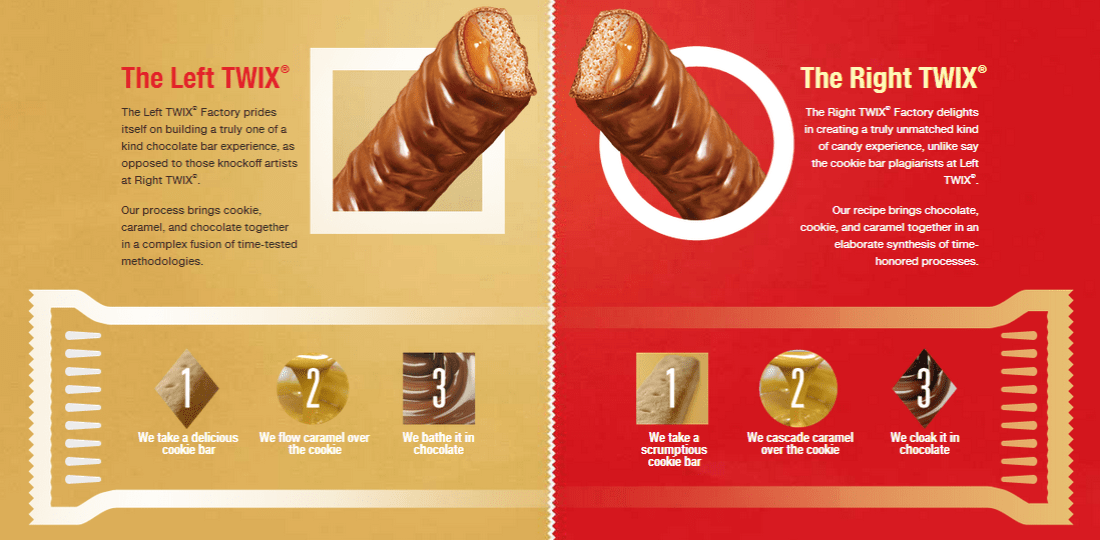
In fact, this allure of duality seems so high for Twix – a Mars’ chocolate bar brand – that the brand thrives on teasing out a duality that never actually exists.
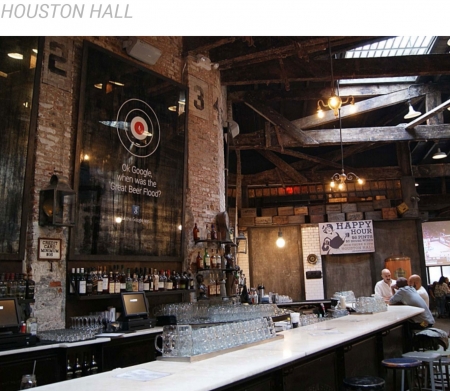
The great thing about such embedded ads is that depsite the obviously limited direct reach, their creative genius transcends borders through earned media (including blog posts like this).
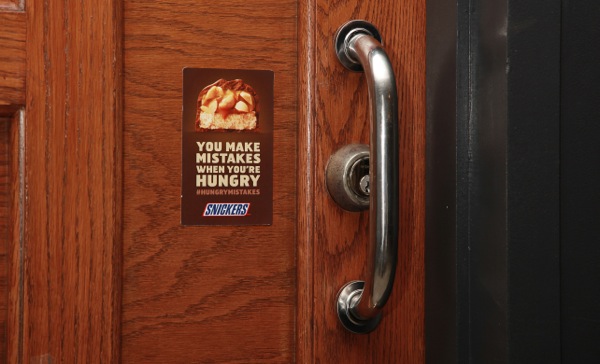
This month, Snickers embedded its “You make mistakes when you’re hungry” message across NYC’s outdoor “fails”. Examples include a handrail that goes up when the stairs are going down, or a door that says both “Enter here” and “No entry.”
Quick Read: Invert the traditional workflows, dispel orthodox notions and see lateral thinking come to life for newer ways of going about things.
Every once in a while there come initiatives and executions that turn the tables on traditional concepts that we have always taken for granted. Such instances compel us to re-evaluate our existing notions of what we consider to be the norm and thereby make great fodder for some lateral thinking.
What is interesting about this project? In this series the photographer is naked, the subjects are not.
According to him: The photographer/subject paradigm is one of inequality. Nude Portraits is about leveling the playing field in an unorthodox way. Instead of focusing on bringing the subject to a place of ease–where I am, this project brings me to a place of vulnerability.
The results are an interesting commentary on the photographer/subject paradigm and hold a thought provoking mirror to the subject and photographer’s feelings around vulnerability, shame, guilt and self composure.
What is interesting about the project? It is art that appears when it rains! Check this video out:
This cool project challenges our notions around negative space and opens up newer possibilities of creative expression.
Talking of negative space, meanwhile elsewhere…
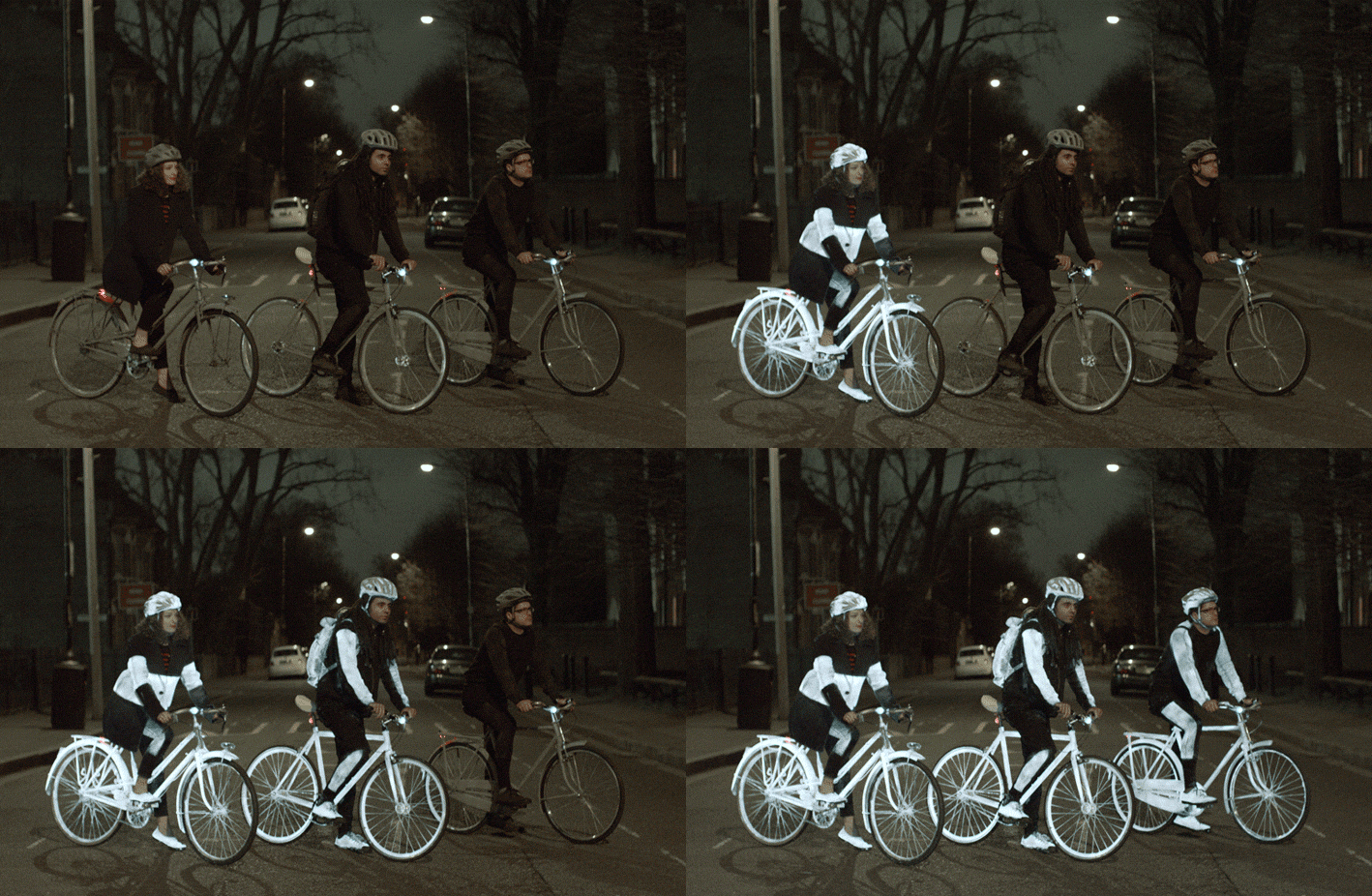
Volvo introduces Life Paint to promote safety for those both inside and outside its cars.
According to this must read post, Life Paint is a unique reflective safety spray aimed at increasing the visibility and safety of cyclists, and other vulnerable road users.
What makes it special? It is invisible by daylight, but glows brightly in the glare of car headlights, making the invisible, visible at night.
The Life Paint concept was developed by creative agency Grey London, in collaboration with Swedish startup Albedo100 and is one of a series of projects to highlight the key product innovations of the all-new Volvo XC90.
3. Reviews
Online reviews have become both a boon and a bane for many a marketer. As this HBR post says,
The idea that a new (reviews) website or app can undercut years of careful messaging may be deeply frustrating to marketers—but it is a reality they must face.
But what if we turn the tables around on the traditional concept of reviews. Australia based Art Series Hotel Group has recently initaited what it calls ‘Reverse Reviews‘.
What is interesting about the concept? While you review their hotels, you would also be reviewed by the hotel. Get five stars and get a free night to stay again (applicable between April 17 until May 31 2015).
Today’s new world of ‘on-demand everything’ is being touted as The Shut In Economy.
Read this brilliant piece on why this is so and you would probably agree that institutionalising a ‘Reverse Review’ system could just be what the doctor would have ordered to make our world a better place.
Result: People behind the doors (who use the apps, platforms and services to place their orders online) and the people outside the doors (those that deliver) could live in a world that is more inclusive and respectful of each other.
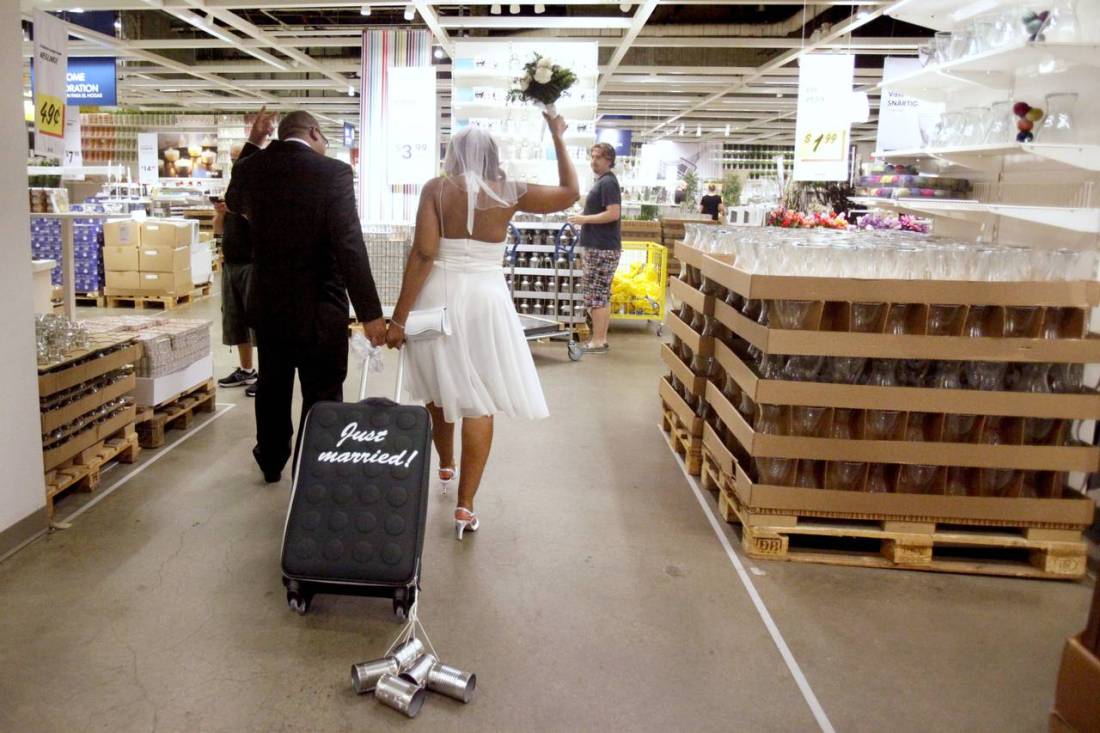
Quick Read: Well let’s just say that if IKEA had considered opening a couples’ relationship counselling centre at each of its stores, it might give the couples’ counsellors a run for their money!
If there were to be a prep school for wannabe couples, the final test for graduation could argaubly be throwing them at the task of shopping for furniture… together.
Full discosure: Mrs and I somehow aced that test – though she derives an indescribable pleasure everytime she sees thisPepperFry commercial.
No wonder then IKEA is parodied to be the #1 place where couples could realise that they actually can’t stand each other!
Probably armed with this insight, Ramani Durvasula – a California-based clinical psychologist is actually using IKEA shopping runs as a communications exercise for her couples therapy. (H/T Racked)
Ask her if IKEA is a domestic wonderland or a map of a relationship nightmare, and you are told that it could be the later. In fact, according to this WSJ report, she thinks the Ikea shopping experience is fraught with anxiety for couples, for example the kitchen models can lead to arguments about who doesn’t do the dishes and so forth.
Speaking of which, doing dishes could be a seperate thesis altogether on the perils of matrimony.
Actually make it ‘doing dishes’ + ‘trying to own the remote’ and you could have a perfect reciple for domestic disaster.
This commercial for Pril dishwashing liquid is a little undiscovered gem along those lines (though it could be accused of packing a little too many of a punch in one single ad).
(sorry non Hindi readers, wish there were sub titles)
And by the way there even seems to be a compelling case that says – when in need of a marriage therapy, just do the dishes!
So the next time someone tells you that brands could do with some insights from ethnographic and psycho-analytical research. Tell them that the later could also be true.
[Bonus (and unrelated) Read: Nearly 3 years ago, BrandedNoise featured a post called ‘The IKEA Effect‘]
(Featured Image: Rashid and Shirley Smith got married at the IKEA in Elizabeth, N.J., in 2013. Source)





















 Riffs on technology, marketing & culture