
Repeat After Me

Quick Read: Some deep seated cultural values that we project on to our children are in need of a massive over haul. Nike and Dove have brilliantly brought this to life in their recent campaigns. 

Handwriting just doesn’t matter.

Or does it?

For a long time it was believed that cursive writing identifies us as much as our physical features do, revealing something unique and distinctive about our inner being.

But over a century, the focus on cursive handwriting in schools actually ended up achieving the opposite. Mastering it was dull, repetitive work, intended to make every student’s handwriting match a pre-defined standard.

In fact in the 19th century America, students were reportedly taught to become “writing machines”, holding their arms and shoulders in awkward poses for hours to get into shape for writing drills.

Or take this Lego ad from 1981. See anything unusual here? 

1981+Lego+Ad

(What it is is beautiful. Source |HT Seth Godin “Stop Stealing Dreams“)

Those were the days when LEGO blocks were sold by the “bucket” with blocks of different sizes and colors thrown in together and labelled “Universal Building Sets”.

This approach celebrated a child’s creativity regardless of what she has created. As the ad copy above goes on to say..

“…how proud it’s made her. It’s a look you’ll see whenever children build something all by themselves. No matter what they’ve created”

Sadly this approach didn’t sell a lot of LEGO blocks presumably because it required too much risk on the part of parents and kids—the risk of making something that wasn’t perfect or expected.

So what did LEGO do?

They switched from these all purpose “Universal Building Sets” to a lineup that included more of predefined kits – models that must be assembled precisely one way, or they’re wrong.

Why would these pre-defined kits of LEGO blocks sell so many more copies? As Seth Godin says, it is because they match what parents expect and what kids have been trained to do.

Lego Products Page

(The LEGO products page today, with a disproportionate focus on predefined kits)

These discourses on cursive handwriting or LEGO are metaphors of what’s happening with schools around. 

By the turn of the 19th century, the biggest challenges of our newly minted industrial economy were two fold.

  1. finding enough compliant workers and
  2. finding enough eager customers

The school system – that most of us would have been brought up under – evidently solved both problems.

But the world around has changed into a culture that celebrates ideals like ingenuity, connection, ideas, courage and risk Vs one that only promoted values like conformity, obedience and risk aversion.

Sadly our schooling system has changed little from that originally envisaged for a completely different era. (More in Seth Godin’s must read manifesto ‘Stop Stealing Dreams – What is school for?’)

So a scene with a class full of students repeating ad nauseam after their teacher, rhymes or lessons that only serve the purpose of further perpetuating outdated or worse still outlandish values against today’s realities is certain to provoke anger and perhaps even instigate an active change in our world view. 

Two brands have recently used this very scene, to demonstrate how deeply we have tried to graft our misplaced conceptions of ideas around individualism and beauty in our children.

Nike’s Minohodoshirazu

Earlier this month, Nike Japan  launched a new campaign with a spot that redefines the phrase ‘Minohodoshirazu’, which translates to “Don’t know your place.” While the term is typically used as an insult towards the overly ambitious, the anthem ad tells viewers that not knowing your place can instead be a mindset for athletes to strive for. (source)

Created by W+K Tokyo and directed by Omri Cohen, the ad manages to contrast the values being embedded in children with shots of athletic achievements that run counter to these messages of compliance and obedience. Video here.

https://www.youtube.com/watch?v=WvvpKGVOf0Q

Dove’s Is That You? 

The famous nursery rhyme ‘Chubby Cheeks, Rosy Lips…’ is used as the background score for this video created by Culture Machine (and subsequently pitched to Dove).

The rhyme and the contrasting visuals make you wonder if this is how we have sought to institutionalize a misguided set of beauty ideals in generation after generation of young girls, every single year. Video here.

It is always interesting to see different brands, different agencies from different parts of the world adopt a similar executional approach to land their respective ideas.

(Featured Image: Source)

Access Restricted

Quick Read: Want to generate footfall or demand? Sometimes all it could take is a board saying “Access Restricted”.

Iceland is renowned for its fairytale landscapes, waterfalls and dancing midnight lights. But of all the places, an unusual site has become one of its most talked about destinations – a site of a plane crash. 

Sólheimasandur beach in Iceland is a desolate site, but for the mangled remains of a US Navy’s C-117 aircraft. It was in November 1973 that the aircraft crashed at the site with the crew onboard having miraculously survived.

After the crash, the U.S. military removed everything that was salvageable in the aircraft and left behind the 10,000 pound shell by the beach. For over four decades since then nothing much happened around it.

The landowners of the site almost forgot about it and were perfectly content to let time and nature slowly eat away at the twisted wreck.

Iceland Plane Crash

(Photo Credit: Eliot Stein. Source)
But steadily over the years it has become a not so well kept secret among photographers – who lent it an extra air of surrealism, by way of their documentaries and photographs.

In recent times it came to be used as a location for destination weddings.  Not to be left behind Bollywood even managed to get Shah Rukh Khan to lean backwards, spread his arms while not forgetting to romance Kajol over its fuselage!

Dilwale

(Still from the song in Dilwale)

Hell even Justin Bieber skateboarded on the plane’s roof in a music video in November 2015.

Expectedly it led to a steady increase in visitors to the site and got people into driving all over the place with little consideration about the property around. So in March 2016 the landowners’ of the site decisively put up signs banning all access to the area. 

…and then things started to go crazy!

Google Search Trends - Iceland Plane Crash Site

(Google Trends showing a spike in searches for the crash site in March 2016)

All it took was a “No Entry” sign.

Now, hundreds of people every day are reportedly following GPS coordinates to a remote, unmarked gate on the side of the road and trekking four kilometers through a barren lava desert to try their chances at seeing the plane’s twisted remains.

How Hitchcock Got People To See “Psycho”

When Psycho hit theaters, critics weren’t given private screenings. Instead Hitchcock created buzz for the film by exerting an unusual degree of directorial control over the viewing experience of the audience.

Accordingly the showings of the film began on a tightly-controlled schedule in theatres in New York, Chicago, Boston, and Philadelphia.  And a firm “no late admission” policy was put in place.

hitchcok-rules

(A standee to announce No Late Admission policy for Psycho. Source)

Theatre managers initially balked at the idea, fearing financial losses. But Hitchcock had his way.

And he was right.

Long lines formed outside the theaters, pulled even more people in and Psycho went on to enjoy critical and commercial success.

Sydney Opera House says “Come On In”

Sydney Opera House is the most Instagrammed destination in Australia.

The challenge:  Only 1% of those who upload a photo ever go inside.

Sydney Opera House found who these people were, recorded personalised invitation videos on the fly, and got them to step in to experience the Opera House from inside with exclusive access and perks.

See the case study video here

While it is definitely a smart intervention that effectively leverages relevant consumer touch points on the fly to get people to step inside, I wonder if the management of the Sydney Opera house had considered the contra idea.

…that of putting up a sign saying “Access Restricted”.

(Featured Image: Sólheimasandur plane crash site by Eric Cheng. Source)

Modern Molinism

Quick Read: Want a sure shot ticket down a rabbit hole? Your bet: Choice Design. So much for free will. 

Morioka Shoten Ginza is a book store in Tokyo where you wouldn’t have a problem with deciding which book to buy.

Why?

Because in any given week it sells copies of a single title. Each title is displayed for six days in a row—Tuesday to Sunday—and then swapped out for a new book.

Yoshiyuki Morioka – the founder of this “single room with a single book” concept believes that focusing on a single book would help foster a deeper relationship between a book and its reader and drive up the pleasure of reading to a whole new level.

Additionally, every evening an event is organised to discuss the book and connect its author with readers, while pieces of art that relate to the book are displayed around the store for the readers to soak in and enjoy.

Morioka-Shoten-bookstore

(Morioka Shoten bookstore: Pic Source)

Unsurprisingly this approach of ‘choice design’ combats decision fatigue and stifles crippling indecision that customers tend to face in a conventional book store set up – online or offline.

Result: An invisible hand that influences its customers’ free will, subtly leading them from a cursory browsing mindset to that of a deeper meaningful engagement leading to purchase.

One customer at a time. And one book title at a time

According to Morioka, the store has sold more than 2,000 works since it opened last year and attracted numerous visitors from all over the world. (source)

Meanwhile at the other end of choice spectrum 

A unique adventure beckons you with the promise of debilitating you with mind boggling levels of choice at every turn of the journey.

Sample this.

You’re sitting alone in your apartment minding your own business when, out of nowhere, someone bursts through your front door. So what do you do? 

ClickHole

(Source: Clickventures)

So begins your adventure that starts off on a simple note.

But even before you realise, you will soon find yourself deep down a rabbit hole staring into frustrating levels of complexity and a ridiculous set of choices being thrown at you at each turn.

And surprisingly you find it addictive!

Clickventures, as they’re called, are exercises in absurdist escalation.

Despite the apparent air of triviality around them, each clickventure is an evil design experiment that lies at the intersection of comedy, interactive fiction, game design and behavioural research.

No wonder, brands are not far behind in tapping into this space.

For e.g, Old Spice has created a wild and wacky choose-your-own-adventure social experience on Instagram with Wieden + Kennedy.

The more you click, the further you go and the more wackiness you can experience. Exactly like in the Clickventures. Try out few of them here and see who wins.

Your “free” will? 

A basic tenet of Molinism is that in addition to knowing everything that will happen, God also knows what His creatures would freely choose if placed in any circumstance.

It’s essentially a doctrine which attempts to reconcile the providence of God with human free will.

Molinism is perhaps still going strong in the 21st century. It’s just that these molinists go by a slightly different name today.

And they subscribe to a doctrine that attempts to reconcile the providence of an invisible hand (also known as the ‘choice designer’) with human free will.

Now, did I just call marketers, the modern day molinists?

(Featured Image: Quote from the cult movie The Matrix)

Fata Morgana

Quick Read: What do you call an ad that brilliantly grabs our attention – by its balls? Not the ones that are made to work like click baits,  but those made to create a meaningful and an impactful closure. 

Fata Morgana

This picture recently shot by one Mr. Nick O’Donoghue at 30,000 ft from a plane has been doing the rounds on the Internet this week. (source)

Seeming to be featuring what looked like some huge robot walking along the clouds, these pictures got Reddit rife with juicy speculations.

An alien? An Iron Giant? Some astronaut?

Well the suspense seemed to have been solved.

Weather experts say that the phenomenon can be explained by what is called as Fata Morgana – a specific kind of mirage. (some cool explanation here)

No wonder, throughout history few phenomena have both fascinated and scared the hell out of sailors, saints, warriors and vacationers alike as it did.

But Fata Morgana is great because of what it quintessentially succeeds at.

Over centuries every Fata Morgana has attracted our attention, invoked curiosity, set our mental models in search of narratives that could explain it, and sent us on a great deal of wild goose chase.

But all Fata Morganas have one thing in common. They all made complete sense once the underlying logic and rationale were brought to bear.

In modern marketing terms..

..Fata Morgana is like an ad that brilliantly grabs our attention – by its balls. But not like those click baits, or those that come with some cheap attention grabbing visuals or effects.

These are stories ensconced in narratives that are deliberately layered to challenge our conventional expectations and shake up our notions of rationality. Yet when the closure arrives, these make eminent sense and leave an indelible impact in our minds.

Let’s take Abby Wambach

The 35-year-old superstar is said to be one of the greatest soccer players to ever step on the field. Besides leading her team to World Cup victory, she also won two Olympic gold medals, became the world’s all-time leading goal scorer (man or woman), and was recognized as one of TIME’s 100 in 2015.

On 16 December 2015 she played her final game in New Orleans.

And on 16 December 2015 when she took the field for the last time, Gatorade released this commercial.

Her message? “Forget Me

(Agency: TBWA\Chiat\Day)

Updated: Kobe Bryant seems join a similar discourse saying Hate Me for Nike.

(Agency: W+K)

(Featured Image: Fata Morgana.Louise Murray/Visuals Unlimited/Getty Images. Source)

Could a Great Insight Backfire?

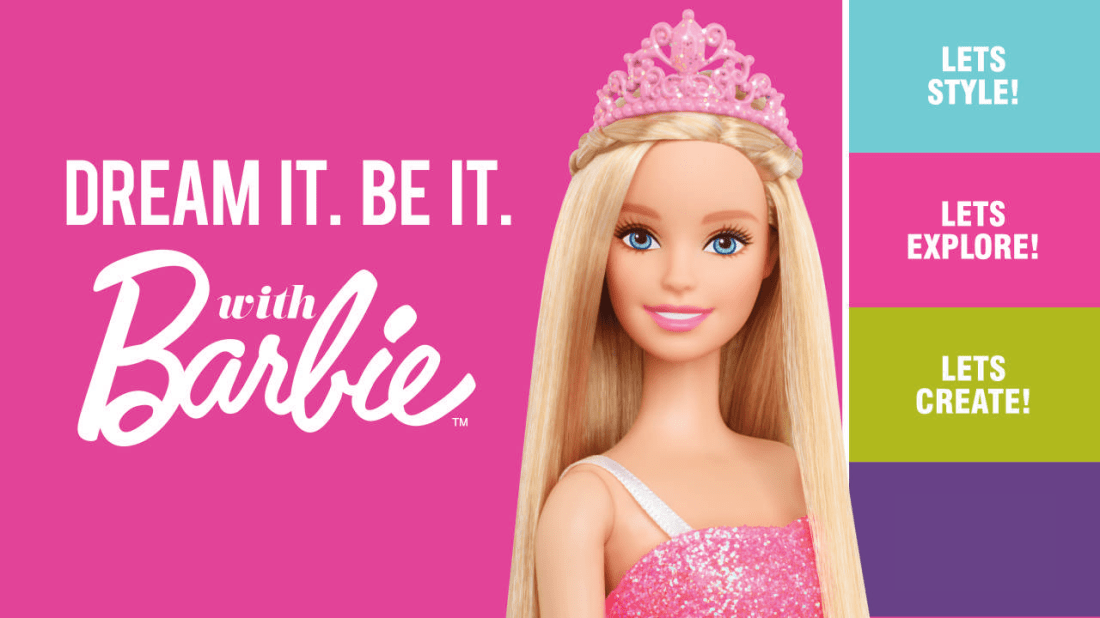
Quick Read: Rooted in a universal insight about play and its potential, Barbie’s new film is brilliant. But could that very insight be its undoing? 

Using imagination as the USP to sell something is nothing new.

But using imagination as a means to reshape a brand’s narrative into that of a more affirmative and purportedly more inclusive discourse is.

At least that’s what the new Barbie campaign does. To good effect.

In a new film by BBDO called “Imagine The Possibilities”, Barbie speaks of the power of imagination that allows girls to explore their potential.

It’s twitter page shows how the brand has begun to drive conversations around topics like inspiring confidence, celebrating boldness, encouraging self expression and calling out the ‘inner superstar’.

For a brand that has often been accused of perpetuating an epidemic of body hatred, this campaign seems to hold promise in getting parents to reappraise the role Barbie can play in a child’s life. At least a cursory look into the comments in the film’s YouTube page seems to suggest so.

The film is great because of its brilliant insight – when a girl plays with Barbie she imagines everything that she can become.

But ironically it is this very insight that could be its undoing. 

If when a girl plays with Barbie, she imagines everything that she can become, wouldn’t such an imagination naturally get rooted in a (misguided) notion –  i.e., the notion that her dream of becoming this someone could be a function of her growing up to look as ‘perfect & pretty’ as the Barbie dolls seem to her?

The jury is out.

Only time will tell if this can make any substantial dent in the brand imagery for Barbie in the long term beyond the seemingly positive discourse of “seek your inner superstar”.

Meanwhile, did you hear about Lammily?

Lammily

It is feted as as the “first fashion doll with realistic proportions”.

[Bonus Link: Did you know that every woman in every Disney/Pixar movie in the past decade has the exact same face? You should check this out.]

(Featured Image source: Barbie.com)

Is The Classic Purchase Funnel Flawed?

Quick Read: With most products in any given category tending to have total functional parity, the only way to drive trial could possibly be through a singular route – curioisty.

Often times I am curious why “curiosity” doesn’t even figure in the classic purchase funnel.

In fact I tend to believe that without inciting a threshold level of curiosity in a consumer, awareness and consideration could end up proving to be moot pursuits.

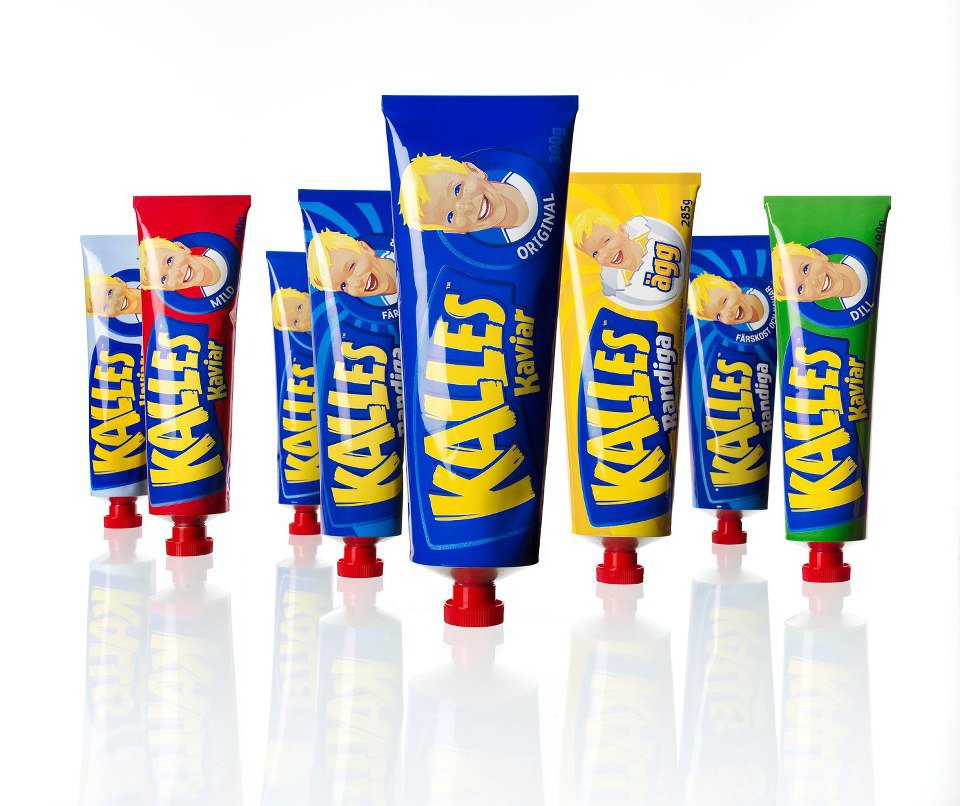
Let’s take Kaviar. (or Smörgåskaviar to be specific)

Kaviar is a Scandinavian spread – a paste consisting mainly of lightly smoked cod roe that has a salty/sweet/fishy taste and a gooey pink/orange colour. Packed full of omega-3 goodness, kaviar can be eaten at anytime and practically spread on anything edible – breads, eggs, meat, cheese etc. (source)

Mills Kaviar

(Source: Mills Kaviar)

No wonder the Scandivaians swear by them, with the category that is sufficiently crowded with brands like MillsStabburet, Kalles, Kavli etc battling out for market share by commanding fierce loyalties.

However kaviar supposedly has one catch – it is an acquired taste and a first timer might find the taste disgusting

Now that’s where the Kalles Campaign proves to be a genius. (Kalles is a Swedish Kaviar brand)

The campaign holds a mirror to other nationalities’ incomprehension and their reaction at having something that tastes – let’s just say – strong and funny.

It starts with Los Angeles where obviously the Californians don’t hold back their feelings upon tasting something weird.

As it moves to Switzerland, the taste test yields more hand and eyebrow gestures than actual verbal responses.

“It tastes … ” a serious looking man in a tie says. “It tastes … ”

“Fantastic?” the Swede asks.

“No,” the Swiss man replies, with a resolute firmness.

In Budapest, the reaction is icier. A woman takes a bite, exchanges cold glances and upon being asked if she likes it, she smiles, and says “yes,” with a look that clearly says no.

The Costa Ricans laugh and gesticulate.

And the Japanese are very polite even as they appear to be gagging at the taste.

 The Kalles commercials began in 2012 and were made by the Swedish ad firm Forsman & Bodenfors.

As this NYTimes article says, if nothing else these ads are a whimsical cultural excursion into manners.

Now, can anyone get me a Kalles Kaviar please?

I want to try my own gag reflex.

I am really curious!

Now, where am I in the purchase funnel?

(Featured Image Source: My Guilty Pleasures)

Duality And Everything In Between

Quick Read: We seem to have a thing for things that are dual in nature. Be it a town, a person or perhaps even a brand.

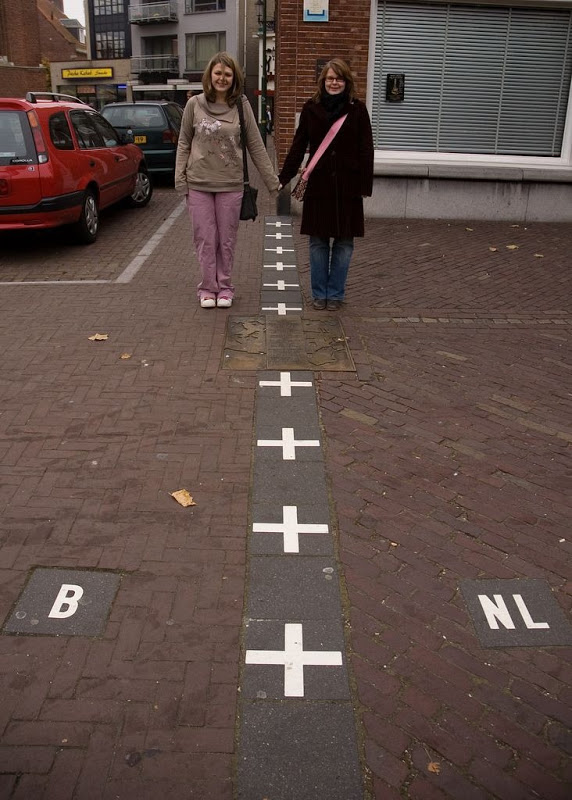
Baarle –  a town at the border of the Netherlands and Belgium, is perhaps the world’s strangest international border.

Why?

Because the town is an enclave that consists of pockets of the Netherlands nested inside Belgium, nestled inside the Netherlands.

The result?

The international border cuts through Baarle indiscriminately, crossing streets, dividing roads and slicing through buildings forming Baarle-Nassau and Baarle-Hertog – two municipalities that are in Netherlands and Belgium respectively.

Naturally many peculiarities arise.

For e.g., many homes are cut in half by the border, so as a matter of convention each household’s nationality is determined by the location of its front door. Which also decides where taxes are paid. So some houses apparently swap the location of their front doors between countries to benefit from the most favourable taxes!

Baarle House

(Pic: Source )

And if the border runs through the front door, the two parts then belong in different countries, and this is indicated by two street numbers on the building.

So duality has become the central character of Baarle where everything is two fold: two churches, two town halls, two post offices, two fire stations and even two police forces and so on.

And it is this charm of duality that makes Baarle quite popular with tourists around the year.

baarle-nassau-hertog

(Pic Source. HT Credit)

Caitlyn Jenner

Recently an unknown 65-year-old woman has become an internet senstion overnight. She was revleaed to the world through the cover page of Vanity Fair and a Twitter account that amassed 1 million followers in four hours – faster than the account launched by the US president, Barack Obama! Four days later she was up to 2.37 million followers, with another 1.5 million followers on Instagram! (source)

Why?

Perhaps it is the enigma of a duality the Vanity Fair’s cover story revealed.

Caitlyn Jenner

(Pic sources: Bruce Jenner | Caitlyn Jenner)

During the 70s, the Olympic hero William Bruce Jenner had the unofficial title of “world’s greatest athlete” and nearly 40 years later, in 2015, Bruce became the world’s most high-profile transgender woman named Caitlyn Jenner.

She has now become a hugely powerful cultural figure almost overnight and could soon become an important voice in the transgender rights movement. Apparently even Obama tweeted in response saying “It takes courage to share your story”.

Duality, it seems, has a certain enigma to it! Ask Buzz Bissinger – the Pulitzer winning journalist who crafted Caitlyn’s reveal for Vanity Fair over a period of 3+ months leading to this watershed of a cover story.

Duality & Brands

The human brain is said to possess this intrinsic nature of actively labeling everything it encounters into neatly defined buckets. That’s probably why anything that has a strong duality ends up becoming such a tease to our minds and perceptions.

No wonder then, there are brands that thrive on duality. (The classic Coffy Bite and more recent Cadbury Oreo are some well known Indian exmples)

In fact, this allure of duality seems so high for Twix – a Mars’ chocolate bar brand –  that the brand thrives on teasing out a duality that never actually exists.

twix Dual2

(Source: Twix.com)

See a reel of its “Left Twix vs Right Twix – Pick a side” ads here.

Can you think of any other brands that leverage ‘duality’?

(Featured Image: Twix)

Embedded Moments of Truth

Quick Read: With some creative genius ‘moments of truth’ can lend themselves to some quirky embedded ads. Ask Banksy if you need greater proof. 

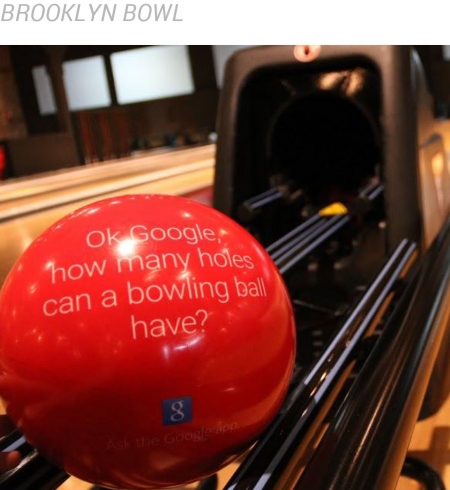
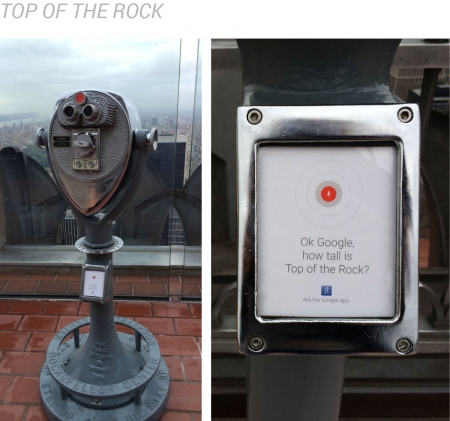
Late last year Google embedded itself in NYC with some delightful site-specific outdoor ads.

Created by 72andSunny, these wonderfully embedded site-specific ads brought several “OK Google, moments” to life.

Beer Bar Bowl Top of rockCoffee

(Images source)

The great thing about such embedded ads is that depsite the obviously limited direct reach, their creative genius transcends borders through earned media (including blog posts like this).

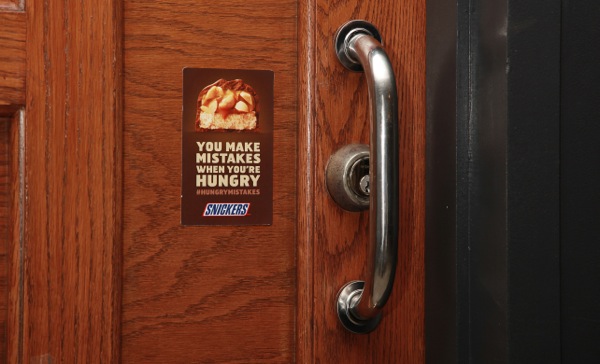
This month, Snickers embedded its “You make mistakes when you’re hungry” message across NYC’s outdoor “fails”. Examples include a handrail that goes up when the stairs are going down, or a door that says both “Enter here” and “No entry.”

snickers_1 snickers_2 snickers_3 snickers_6

(Images source. Agency BBDO)

Again, very limited direct reach. But the ROI from earned media stand point? It’s anybody’s guess.

To celebrate such genius, it could be worthwhile to have a seperate awards category for “embedded ads”, as opposed to just calling them “outdoor”.

And may be Banksy should judge those 🙂

(Featured Image: Banksy’s “The Street Is In Play” street art in NYC. Source)

The Other Side Up

Quick Read: Invert the traditional workflows, dispel orthodox notions and see lateral thinking come to life for newer ways of going about things.  

Every once in a while there come initiatives and executions that turn the tables on traditional concepts that we have always taken for granted. Such instances compel us to re-evaluate our existing notions of what we consider to be the norm and thereby make great fodder for some lateral thinking.

Three such recent examples.

1. Photography

Trevor Christensen is a photographer who shot to international acclaim with his recent series called Nude Portraits.

What is interesting about this project? In this series the photographer is naked, the subjects are not.

According to himThe photographer/subject paradigm is one of inequality. Nude Portraits is about leveling the playing field in an unorthodox way. Instead of focusing on bringing the subject to a place of ease–where I am, this project brings me to a place of vulnerability.

Nude Portraits

(Source: Nude Portraits by Trevor Christensen)

The results are an interesting commentary on the photographer/subject paradigm and hold a thought provoking mirror to the subject and photographer’s feelings around vulnerability, shame, guilt and self composure.

Talking of portraits, meanwhile elsewhere…

Samsung had an interesting set of executions that reframed selfies as Self Portraits.

2. Painting 

Rainworks is a project  by Peregrine Church.

What is interesting about the project? It is art that appears when it rains! Check this video out:

This cool project challenges our notions around negative space and opens up newer possibilities of creative expression.

Talking of negative space, meanwhile elsewhere…

Volvo introduces Life Paint to promote safety for those both inside and outside its cars.

According to this must read post, Life Paint is a unique reflective safety spray aimed at increasing the visibility and safety of cyclists, and other vulnerable road users.

What makes it special? It is invisible by daylight, but glows brightly in the glare of car headlights, making the invisible, visible at night.

Life Paint

(Source: Life Paint by Grey London for Volvo)

The Life Paint concept was developed by creative agency Grey London, in collaboration with Swedish startup Albedo100 and is one of a series of projects to highlight the key product innovations of the all-new Volvo XC90.

3. Reviews

Online reviews have become both a boon and a bane for many a marketer. As this HBR post says,

The idea that a new (reviews) website or app can undercut years of careful messaging may be deeply frustrating to marketers—but it is a reality they must face.

But what if we turn the tables around on the traditional concept of reviews. Australia based Art Series Hotel Group has recently initaited what it calls Reverse Reviews‘. 

What is interesting about the concept? While you review their hotels, you would also be reviewed by the hotel. Get five stars and get a free night to stay again (applicable between April 17 until May 31 2015).

Reverse Reviews AU

(Source: Art Series Hotels )

Talking of reviews, meanwhile elsewhere…

Today’s new world of ‘on-demand everything’ is being touted as The Shut In Economy.

Read this brilliant piece on why this is so and you would probably agree that institutionalising a ‘Reverse Review’ system could just be what the doctor would have ordered to make our world a better place.

Result: People behind the doors (who use the apps, platforms and services to place their orders online) and the people outside the doors (those that deliver) could live in a world that is more inclusive and respectful of each other.

Isn’t it?

(Featured Image: ‘This Side Up’ table design by DEDE DextrousDesign)

The IKEA Test

Quick Read: Well let’s just say that if IKEA had considered opening a couples’ relationship counselling centre at each of its stores, it might give the couples’ counsellors a run for their money! 

If there were to be a prep school for wannabe couples, the final test for graduation could argaubly be throwing them at the task of shopping for furniture… together.

Full discosure: Mrs and I somehow aced that test – though she derives an indescribable pleasure everytime she sees this PepperFry commercial.

No wonder then IKEA is parodied to be the #1 place where couples could realise that they actually can’t stand each other!

Probably armed with this insight, Ramani Durvasula – a California-based clinical psychologist is actually using IKEA shopping runs as a communications exercise for her couples therapy. (H/T Racked)

Ask her if IKEA is a domestic wonderland or a map of a relationship nightmare, and you are told that it could be the later. In fact, according to this WSJ report, she thinks the Ikea shopping experience is fraught with anxiety for couples, for example the kitchen models can lead to arguments about who doesn’t do the dishes and so forth.

Speaking of which, doing dishes could be a seperate thesis altogether on the perils of matrimony.

Actually make it ‘doing dishes’ + ‘trying to own the remote’ and you could have a perfect reciple for domestic disaster.

This commercial for Pril dishwashing liquid is a little undiscovered gem along those lines (though it could be accused of packing a little too many of a punch in one single ad).

(sorry non Hindi readers, wish there were sub titles)

And by the way there even seems to be a compelling case that says  – when in need of a marriage therapy, just do the dishes!

So the next time someone tells you that brands could do with some insights from ethnographic and psycho-analytical research. Tell them that the later could also be true.

[Bonus (and unrelated) Read: Nearly 3 years ago, BrandedNoise featured a post called ‘The IKEA Effect‘]

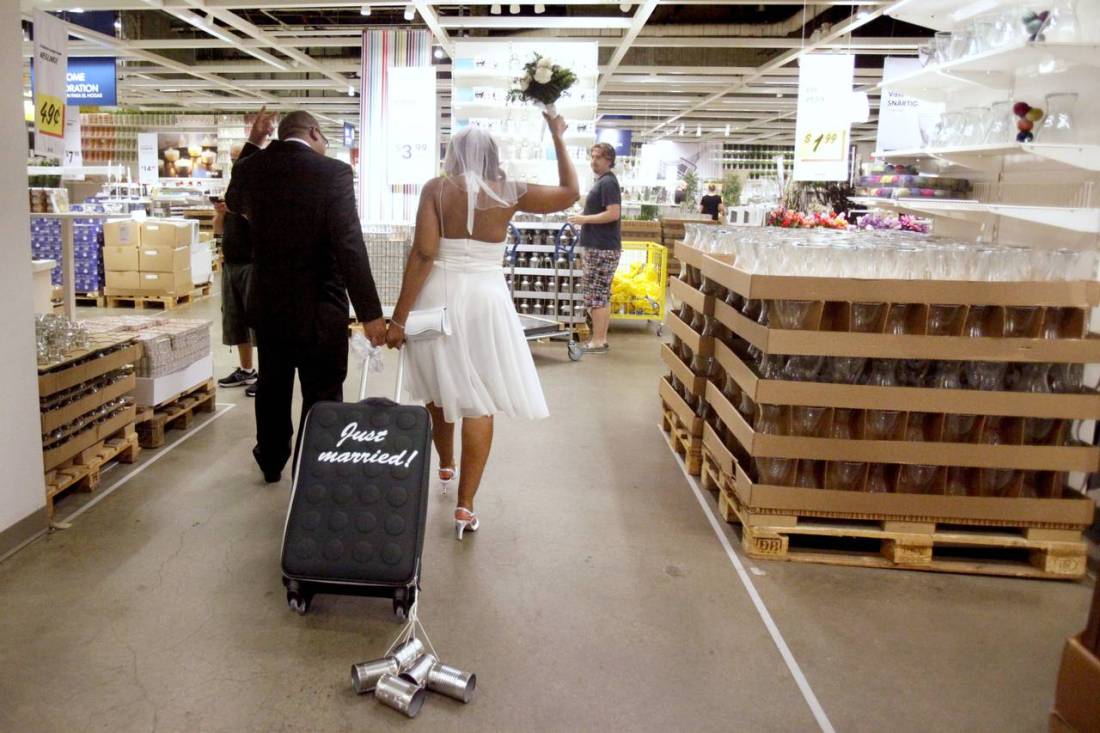
(Featured Image: Rashid and Shirley Smith got married at the IKEA in Elizabeth, N.J., in 2013. Source)