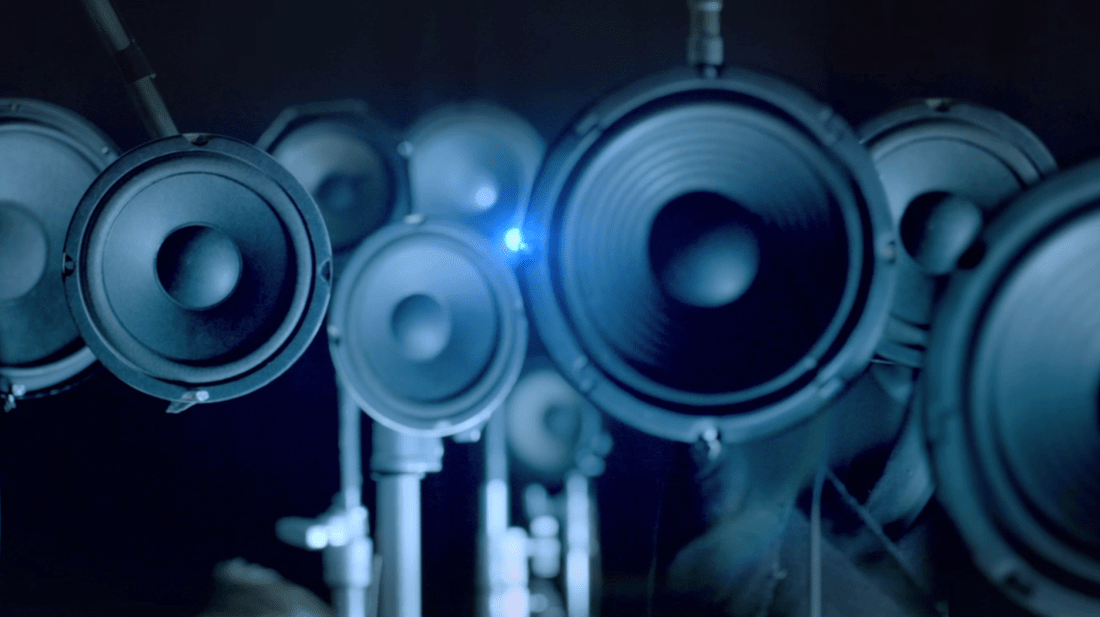
Soundscapes And Sonic Tapestries: Part 2/2

What do Cyborg Artists, Automobile Engineers, Game Designers and Branding Specialists have in common?

At least those featured in this blog post, that is. Surprise, surprise… all these have sound at the core of what they do!

See the part 1 of this thread here. In part 2, let me share some fascinating examples whereby sound and our ability to decode sound waves is complementing and supplementing our perceptual experience in truly astounding ways!

Sound As A Complement To Our Perceptual Experience

Sound (and its design) can be deployed in a very strategic manner to compliment our perceptual experience. Two compelling examples:

(1) Soundscaping In Product design: We know that there are armies of designers and engineers that work towards designing and developing  a car – it’s mechanics, electronics, aesthetics, thermodynamics, fluid dynamics etc. But did  you know that car companies  also employ sound experts to design the noise of a car? Read here a fascinating account of how GM makes a car sound like what a car is supposed to sound like. On that note meet Kara Gordon  – GM Noise & Vibration Performance Development Engineer who has designed the quietest Chevy.

(2) Sonic Logos In Branding/AdvertisingSonic Branding is big today. Think about the sound of ‘Intel Inside’, a call on Skype, the default ring/message tones on your phones and you’d get the idea. In fact Audi’s heart beat logo is said to be one of the most recognized sonic logos in the world today.  By the way did you know that after 14 years of using this sonic logo, BMW in March 2013, has changed it to this? This change didn’t get many fans by the way.

Sound As A Supplement To Our Perceptual Experience

Sound (and our ability to decode sound) can potentially also supplement our perceptual experience in new and interesting ways. Two examples again:

(1) Audio Games: What would happen if someone wanted to take the “video” out of video games and make users rely solely on their other senses?

At first the idea of Audio only games might sound like just another lateral marketing -isque variant (of video game formats).  But when you read about Deep Sea,  or about  Vanished you’d see that we are at the cusp of another revolution in game design and experience. These games are some of the best (if not the first) of its kind that explore the frontiers of what sound  (and our ability to decode sound) are truly capable of.

For e.g., Vanished – an iOS game as of Oct 2013 –  uses the iPhone’s internal compass and accelerometer to recreate a person’s movement. Players hold their phone in the direction they want to travel and touch the screen to walk. When in danger, they shake the phone to attack. All exploration is done with the help of audio only cues; as players move, the world “rotates” and provides different sounds.

Vanished

(iPhone Screenshot of Vanished – The Audio Game, Source)

(2) Hearing Colors: They say that you can see sound, but can you hear a color? Apparently Neil Harbisson can!  His profile on TED says this.

Artist Neil Harbisson was born completely color blind, but these days a device attached to his head turns color into audible frequencies. Instead of seeing a world in grayscale, Harbisson can hear a symphony of color — and yes, even listen to faces and paintings.

So there we have – some truly  fascinating examples from the recent past on how sound (and our ability to make sense of sound waves) is being leveraged in some truly exciting ways.

The next time you remind yourself to pause for a moment to appreciate the scenery and to ‘smell the flowers’, don’t forget that you could also take in the richness of the surrounding soundscapes in all their aural splendor.

All you need to do is incredibly simple. Listen.

(Featured image source)

Block By Block – A Consumption Focused Design Paradigm

It took more than a 100 years for inkjet printers to become commercially viable. The reason?

Severe interdependence of the components and underlying systems. 

For e.g., even with the slightest change in the chemistry of the ink, the composition of the resistors had to be changed, and this potentially impacted the physical layout of the circuits and so on.  The solution for this?  Modularity of design. 

Wikipedia defines modularity as ..

 the degree to which a system’s components may be separated and recombined.

Today most tools, gadgets, processes, systems, structures, designs that we interact with on a daily basis have modularity built from deep within. Right from the nuts and bolts of a system to the way it has possibly been put together on an assembly/production line, modularity is all pervasive.

In fact it is almost accepted wisdom now among designers and manufacturers that the speed at which an innovation can be commercialized is directly proportional to the speed at which the underlying design (of the system) and the process (of the assembly or integration) is standardized and modularized.

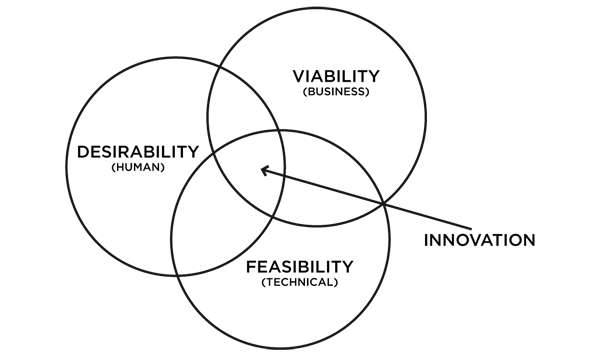
Now consider the above statement in conjunction with the following self explanatory paradigm of Design Thinking evangelized by IDEO, called the Desirability – Viability – Feasibility triad of innovation design. 

IDEO

Based on the above two, my hypothesis is the following:

While modularity in the context of production has almost proven itself to be a pre-requisite for establishing technical feasibility and – in many cases – for driving business viability of a given innovation , modularity in the context of consumption – if done right – can have far reaching implications in seeding the attributes of human desirability for the same.  

Three recent examples that seem to suggest the compelling potential for modularity in the context of consumption as a design paradigm:

(1) Phoneblok: Most of us, by now, would have seen this short video on the idea of building a phone with modular detachable blocks. This  presents the idea of Phonebloks –  hailed as a radical vision of what tech could be. The idea for me, is sheer ingenuity and insight. The possibilities  of such a consumer focused modularity in design seem to be truly empowering and liberating.

(2) NoFlo – A Flow Based Development Environment: The philosophy of Modular Programming is the default standard in most coding systems. But this modularity was mostly – for lack of a better term – limited to the realm of abstraction and ideation, since the corresponding code nevertheless lends itself as ‘strings of spaghetti’ and presents challenges for debugging compilation and logic errors.   With NoFlow as a development environment, modularity can be made more tangible and actionable in order to help inform, structure, design, test, debug and implement a complete software package.  The following is the video put together by the team for their Kickstarter campaign to raise funds (the funding was successful!).

(3) Modularity in content consumption: Unleashing the power of modularity in the domain of content consumption is in fact the name of the emerging game. Platform agnosticism is one of the many ways in which modularity lends itself in the consumption context for services like Amazon, Youtube and now Dropbox.  The latest edition of WIRED in fact features a fantastic story on  Dropbox’s radical plan for a future where “the gadgets are dumb, the features are smart, and data trumps devices.”

Dropbox

So there we have, emerging examples of modularity in the context of consumption (as opposed to only production) and how they promise to pan out in mobile, software design environments and cloud based architectures. Something for the technology powerhouses to sit up and take note? In fact in a recent interview with Forbes Clayton Christensen worries about Apple saying Modularity Always defeats Integration! 

Even in life as usual as we know it, no matter what we do from fixing a meal, concocting a cocktailassembling a piece of furniture, to laying out our Google Newsfeed, there’s always been a sense of joy, an inexplicable sense of desirability that we had for our stuff, for after all, it was our creation.  Step by step. Block by block. Isn’t it?

(Source for the featured image)

The Wabi Sabi Edge

The Ise Grand Shrine – a Shinto Shrine – in Ise, Mie prefecture in Japan has been preserved exactly like it was around 2,000 years ago. Despite such a rich legacy, the UNESCO has refused to list the shrine in its list of historic places.

Why?

Shinto Shrine

(Shinto priests walking beside the Ise Grand Shrine, Japan. Source)

This is because the shrine is not built of a ‘permanent structure’. The ISe Grand Shrine is built of wood and hence it  gradually loses its structural integrity over years. So the Shinto priests have a solution;  every 20 years they tear down the structure and rebuild another – in an adjacent plot –  in exactly the same specifications as the original using the wood from the same forest that the original structure was built from. Result: the shrine  is  forever new,  ancient and original! The present structure, dating from 1993, is the 61st iteration to date and is scheduled for rebuilding in 2013!

A centuries old Shinto belief of death and renewal of nature and the transience  of all things called Wabi- Sabi underscores the philosophical and artistic significance of this shrine. To quote the wiki  page ….

Wabi Sabi nurtures all that is authentic by acknowledging three simple realities: nothing lasts, nothing is finished, and nothing is perfect.

Burning Man

Further to the west, in northern Nevada US is the Black Rock Desert –  an open swathe of desert land where a week long annual cultural festival called Burning Man is held every August/September. This iconic event is described as an annual experiment in community, art, radical self-expression, and radical self-reliance – a week long celebration of extreme creativity, art, spirituality and innovation. Often compared to TED for its potential to provoke, inspire, connect, indulge or just ‘let be’, Burning Man regularly attracts stalwarts like the Google founders, Eric Schmidt, Chip Conley among many many others. But what makes Burning Man stand out as an exceptional event is the fact that it is transient by nature. The whole venue, the structures and the shelters for the event are practically built from scratch and again torn to dust without leaving a trace at the end of the week!

See below the time lapse video of 2011 Burning Man to appreciate the ‘dust to dust’ cycle typical of the Burning Man.

As Business Strategy

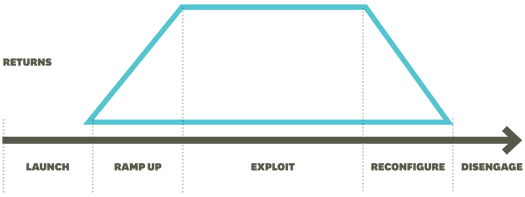
Transience as a method, an approach or a strategy is not just  an expressionist arts style or some exotic charm of a shrine.  It also has far reaching implications on contemporary business strategy. The June 2013 edition of Harvard Business Review features an interesting article by Rita Gunther McGrath on what she calls as Transient Advantage. She argues that  in a world where competitive advantage often evaporates in less than a year, companies can’t afford to spend months at a time crafting a single long-term strategy. She introduces what she calls as The Wave of Transient Advantage and explains its ‘curve’ (below). Companies possessing this edge constantly start new strategic initiatives, build, exploit, re configure and if need be even actively disengage from an initiative as a means to reprioritise, reinvent and renew their approach to growth.

Transient Advantage

(Wave of Transient Advantage, Source)

She posits that the thinking in this field “has reached an inflection point” leading to an acknowledgment from a multitude of strategy practitioners that “Sustainable competitive advantage is now the exception, not the rule. Transient advantage is the new normal.”

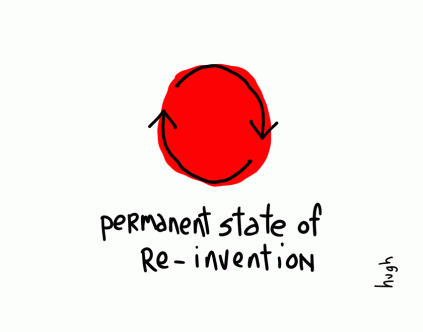
The latest post in the Gaping Void newsletter by Hugh Mac­Leod pays an artistic tribute to this concept through this delightful piece of ‘office art’.

permanent_state

(You must subscribe to his newsletter, sure to make your day!)

Essentially from which ever perspective you look at it – artistic, personal, emotional, professional or even strategic, the ability to accept transience as the new normal, the ability to let go of the status quo to rethink, re-invent and renew our  approach forms the bedrock of the new competitive edge – The Wabi Sabi Edge.

The Last Of Us And The McWrap

What is common between the latest PS3 game The Last Of Us and the recent McDonald’s addition to its menu The Premium McWraps?

Stealth.

Let’s first take The Last Of Us

If you still haven’t heard of this survival horror video game, you must be hiding under an abandoned bunker in a post apocalyptic zombie infested world.

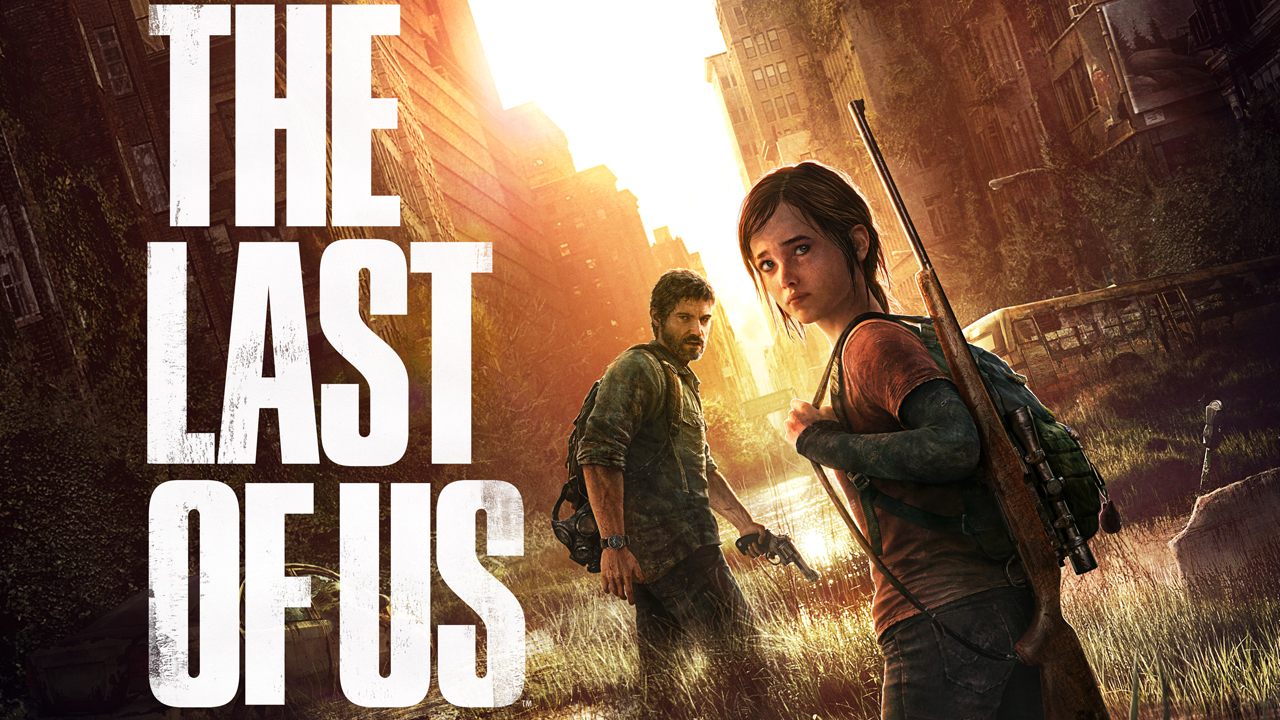
The-Last-of-Us-key-art

At least that’s how you might feel once the brilliance of this creation hits you. Declared as a masterpiece, for its choice-enabling gameplay, realistic action, emotional depth in the plot, sound design, and environments, The Last Of Us has been the biggest video game launch of 2013 so far, selling over 1.3 million units in its first week after its worldwide release on June 14, 2013  (source)

A key innovation that underpins the genius of this game’s design is its AI system called as Balance Of Power. This enables realistic combat situations and enriches stealth attack tactics to what it calls as Dynamic Stealth.

Dynamic Stealth: While Stealth is not particularly new as a gameplay tactic, the genius of Dynamic Stealth lies in how it makes the player own the consequences of his actions in real time. For example:

  • If you’re infiltrating a secured building and see two guards at the entrance,  you create a distraction, split them up, and take out one of them when he’s off in the shadows. In other stealth games, the second guard would stoically continue to be on the watch as if nothing had happened.  But with Dynamic Stealth he starts to wonder where his buddy went, gets panicky and might even call for extra cover and back up.
  • the game doesn’t pause when the player  is accessing their inventory and assembling weaponry (loading guns, crafting a molotov cocktail etc), so the player’s stealth tactics are governed by real life like rules of space and time.

Instead of  just bombarding the player with a constant stream of actions resulting in cookie clutter shoot and swear sequences, the Dynamic Stealth system lets the user set the pace of his own survival experience and make him fully own the consequences of his decisions and actions. And that for me is the big insight in interaction or use case design from The Last of Us: 

If the system is designed in such a way that it allows the user to own the consequences of his decisions and actions, they’d willingly embrace all its resulting outcomes – both positives and negatives.

Now let’s move over to The Premium McWrap

mcdonalds_mcwrap

Launched on April 1 2013 after 2 years of R&D and a blockbuster like pre-launch fan fare, the marketing mix of this newest addition to the McDonald’s menu can be summarized  as follows: (Source)

Product: The McWrap is a 10-inch, white-flour tortilla wrapped around 3 ounces of chicken (grilled or crispy), lettuce, spring greens, sliced cucumbers, tomatoes, and cheddar jack cheese topped with ranch, sweet chili, or creamy garlic dressing.

Proposition: “The Subway Buster”

Target Group: Millenials, 18-32, who are looking for healthier and tastier alternatives to their fast food.

Packaging:  The PKG design requires the customers to tear off the top half of the container. “The packaging was a very big, big idea,” says Kasey Short, director of menu innovation in the U.S. “When you unzip the product, there was more excitement.” It’s also designed to fit easily in a standard cup holder; 65% of McDonald’s customers order at the drive-through.

Price:  At $3.99, it’s four times the cost of a McChicken.

Service: Assembled in 60 seconds, the lettuce and chicken peek out of the top, suggesting farm-to-table freshness.

Ingredients:  After lot of R&D, testing and negotiations with the suppliers, McDonald’s managed to add one new ingredient to the McDonald’s arsenal: the English cucumber. That might not seem like a big change, but when the chain added sliced apples to its menu, it immediately became one of the largest buyers of apples in the country! So this addition has a huge implication on the supply chain of cucumbers around the world.

As an analyst sums it up “It’s the best piece of total marketing we’ve seen out of them in a long time. It’s convenient, healthy, fresh, good-tasting, and filling”.  While reading about these specific elements of the mix was definitely interesting, the big reveal for me came towards the end in this Businessweek article:

… the McWrap serves another stealth purpose…..customers may come into restaurants with healthy intentions but fall short of their aspirations…. With salads and now the McWrap on the menu, customers may forgive themselves a little more for showing up at McDonald’s. And if they skip the wrap at the final moment and get a Big Mac and fries instead they don’t blame the restaurant.”

Now that’s a tremendous AHA moment for me in stealth marketing – almost like a Dynamic Stealth tactic in gaming.

As they say – It’s a reality of the fast-food business that what can be ordered in a few words, served up in seconds, and consumed in minutes is often the product of years of research and testing. Because the battlefield here is not in the restaurants, it’s not in the ingredients, it’s not in the fields where the ingredients are grow, it is after all in our minds. 

No wonder then you have battlefield tactics like stealth meant to lure you not just into making a decision but also into owning it.  How’s that for some food for thought?

Nespresso – An Unsustainable Business Model?

 Single-serving coffee made at home.  That’s the category Nespresso operates in – a segment estimated to be 8 billion USD in 2012 (source).

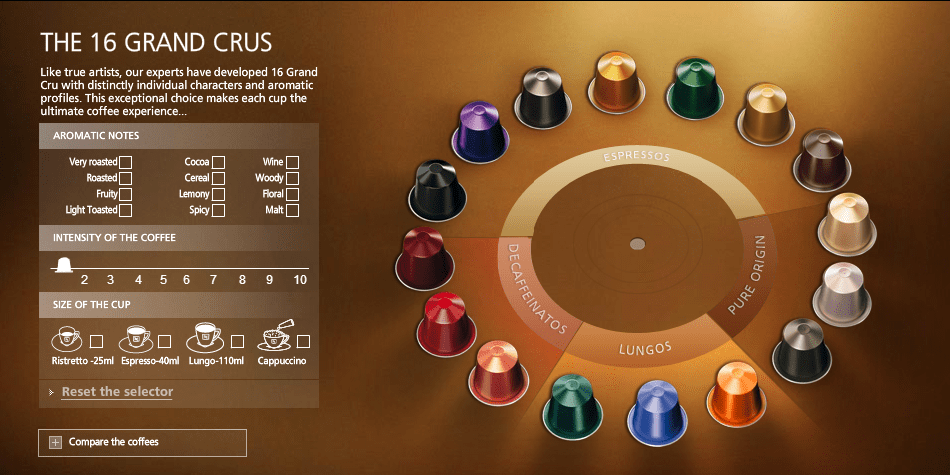
Nespresso

Some laudable facts regarding Nespresso to start with:

  •  It took 30 years for Nespresso to get to where it is now.
  • Their first patent was registered in 1976 and it was launched internationally in 1991.
  • As of 2012,  their concept (machine, capsule, service) is subject to 1,700 patents.
  • Features celebrities, such as George Clooney and John Malkovich, as brand ambassadors.
  • At 55 cents for a 4-g capsule, Nespresso coffee works out to a nerve-jangling $62 per lb. ($137 per kg). And the hefty markup doesn’t seem to bother its fans.
  • Is rumored to command gross margins at about 85%, compared with 40% to 50% for regular drip-coffee brands.
  • The company confirmed that  Nespresso is targeting to grow sales by around half a billion francs in 2013.

(sources for the above information: 1, 2, 3, 4)

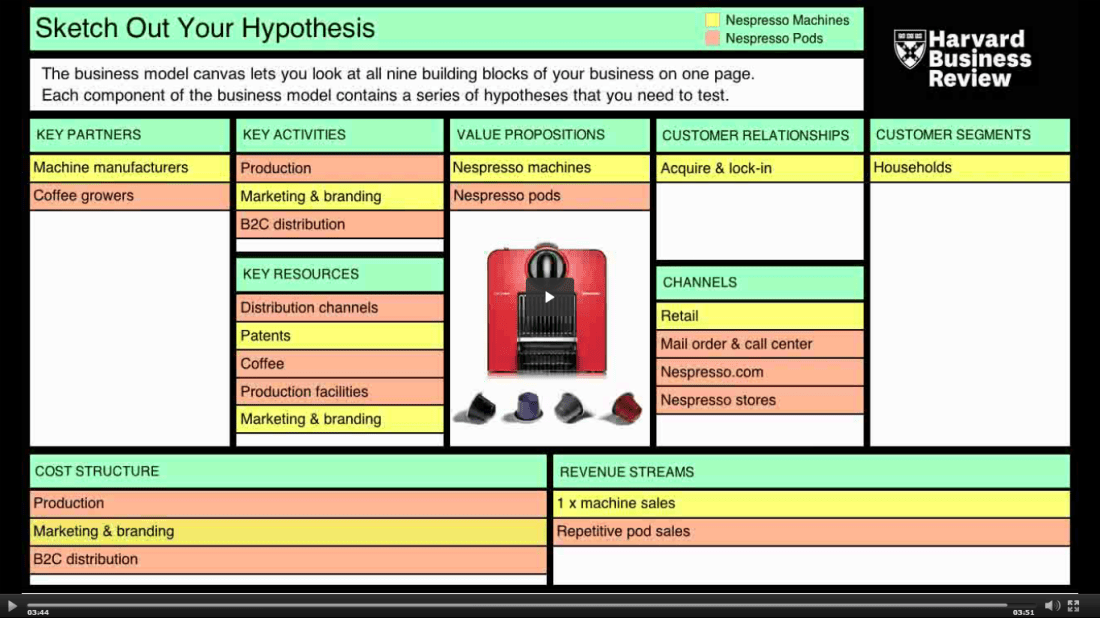
As a brand, Nespresso has been vaunted as the “Apple of coffee pods” riding high on the classic razor/razor-blade business model – otherwise called as the Vendor Lock In business model.  See an informative video here on the specifics of the Nespresso business model using the framework of Business Model Canvas.

Nespresso Business Model

Now the not so good news for Nespresso is the emergence of nearly 100 competitors around the world including 50 that claim compatibility with the Nespresso system (many of Nespresso’s patents have expired in 2012).  A more recent Reuters report on the latest threat to Nespresso from Mondelez…

Mondelez International, the world’s second-biggest coffee maker, is going head to head with larger rival Nestle by launching capsules compatible with its Nespresso system to steal a share of the premium coffee market.

The capsules will be sold under the Jacobs and Carte Noire brands in many EU markets in the second half of 2013 – the biggest challenge yet for the $4.4 billion (2.8 billion pounds) Nespresso brand that has sued many copycats.

These are just the warning bells for the company as many more brands jump onto the bandwagon of this fast growing coffee segment.

David Taylor on the brandgym blog posits that these moves can be in the larger interest of Nespresso as long as it ensures the following:

  • Benefit from market growth: Even if Nespresso’s share drops, sales can still increase if the market is growing.
  • Keep product quality up: Continue offering a better coffee experience through its select blend of coffee.
  • “Load” existing customers: Defend against the Mondelez launch by loading its existing customers with product, and so taking them out of the market.
  • Drive distribution: Drive distribution in new channels. e.g., store-within-store formats.
  • Tell a product story:  have a bit more product “sausage” to complement the emotional “sizzle”

I would however beg to disagree here, as I suspect if the current business model can be sustainable in the long term. And my argument is equally applicable to the Tassimo’s, Dolce Gusto’s, Keurig’s and Verismo’s of the world. Why?

Insight #1: Which business are the Nespresso’s of the world actually  into

These brands are not in the business of delivering convenient, barista like coffee at home. Instead they are in the business of making cup after cup of a consistent brew of coffee on demand with consistent being the operative word. Guardian reports

..while pod machines might not make great coffee, they do make a consistent cup. This is making them irresistible to high-end restaurants…. Nespresso machines can now be found in the kitchens of around 30% of the world’s 2,400 Michelin-starred restaurants. The appeal is obvious –they’re consistent, cheaper than hiring a barista and take up less space than a traditional espresso machine.

Insight #2: What can I learn from a cup of Starbucks coffee that bears my name? 

One thing I enjoy the most whenever I queue up at a Starbucks for my cuppa is eavesdropping on how different people want their coffee to be customized (a Quadriginoctuple Frappucino anyone?) and finally seeing them hold on to the cup with their name scribbled on it with an affection and warmth that comes out of familiarity and a sense of having co-created the cup coffee (by the sheer act of asking for a slightly personalized brew!)

The scribbled name on the cup just seals the deal in a magical way.  (speak about The IKEA Effect)

starbucks_cup

Now based on these 2 insights…

What if a ‘coffee pod’ sets up a unique proposition of designing a one of its kind, exclusive and a truly unique coffee blend concocted to your minutest specifications and delivered it to you as your own coffee pod  (like that cup of starbucks with your name on it) for you to be able to enjoy this very same cup of coffee day after day using the machine back home?

The benefits are obvious: enduring consumer relationships, deeper consumer insights, a treasure trove of data on how people love their coffee, a truly unique blend that only you can deliver, resulting in pods that consumers are willing to pay a premium for and finally pods that cannot be easily replicated by the “me too’s” of the world.

Speak about infusing authenticity to the  vendor lock in business model.

Gyotaku And The Trailer

What is common between Gyotaku and Movie Trailers?

Gyotaku Trailer

1. Both are traditionally forms of ‘advertisements’ of another art form

2. And both have evolved into specialized art forms unto themselves

Let’s start with Gyotaku

Gyotaku is the traditional Japanese art of fish printing dating back to the mid 1800s. Before you read any further, you might want to begin with this fabulous TEDEd video to get a quick introduction on this fascinating art form.

As you can see, the purpose of the early Gyotaku print was to serve as an advertisement and proof of the fisherman’s skills as reflected by the quality of his catch.  The emphasis was thereby to capture just the basic proof of the size and species of the fisherman’s “trophy fish” and to record this permanently.

Now Gyotaku has become so popular around the world that it has dedicated competitions, hobby clubs, instruction classes, museums, books, textile prints etc;  and has currently evolved to the point where the actual activity of fishing is almost besides the point.  The craft has now become a unique representational art of Japanese Culture that honors realism and story telling.

The insight for me here is that,

A good piece of Gyotaku art captures a moment in the ocean and not just a piece of dead fish.

Gyotaku2

In other words each piece of Gyotaku tells a story where:

1. The narrative often comes from what you don’t see – the negative space: A good Gyotaku composition is known to make use of the negative space within the frame and brings to life the concepts like idea, flow and freedom of movement that come with the ocean.

2. Our minds are lead into the frame and then set free : A good Gyotaku ‘hand holds’ our mind by gently leading us into the exquisite form and finish of the fish. But a great Gyotaku takes it a step further by then carefully setting our imagination ‘free’ as it allows ample space for the mind to take the fish on its journey.

Moving on to Movie Trailers

Just like Gyotaku, the movie trailer has come a long way from being a plain advertisement (of a full length movie) to becoming a genre unto itself. Today it is a thriving industry that is almost as popular as that of the movies they’re teasing, with legions of fans following, dissecting, analyzing, reviewing and rating them on a regular basis even as they are feted out at forums like The Key Art Awards and The Golden Trailer Awards (the Oscars of movie trailers).

From being just a linear montage of title cards, voice-over, a few key scenes followed by a cast run-through, movie trailers today are part art, part marketing wizardry and part awesome creativity. Result: They can tease, titillate, shock, seduce, awe, thrill or even hypnotise us via subliminal messages, imagery, and music and lull us into the cinema for the actual full length fare.

The latest edition of the WIRED magazine has an insightful feature on the Art Of The Movie Trailer. Two insights that emerge from the construct of great trailers:

1.The narrative of the trailers doesn’t necessarily come from what you see, it comes from what you hear (the negative space of trailers = music): Trailers are all about rhythm, pacing, and feeling. That’s why music plays a vital role as a key narrative device and can more often than not make or break a trailer. Mark Woollen, the man behind the trailer for The Social Network shares a secret of how he came up with its music for an evocative narrative ..

I’d had “Creep” on my iTunes for five or six years kind of kicking around before the Social Network trailer…And then when this project came along, I started to consider that song. There are a couple of qualities to it that I thought could do a lot for the trailer. It was a fantastic piece of music—the build, the message, the flavor.

And the rest as they say is history – with the trailer going on to win both The Key Art Awards and The Golden Trailer Awards for 2011 for its outstanding achievement in advertising movies. See this trailer here:

2. Our minds are lead into the plot and then condemned to a free fall: A good trailer gently leads our minds and imaginations into the centre of the plot or the tension that is eventually created in the act 2 and then sets it on a free fall. E.g., Alfred Hitchcock’s trailer for Psycho (though being a tad bit long at ~ 6 mins) very gently teases us bit by bit till almost the end before throwing us off the cliff! See the iconic trailer here: (don’t miss the last 2.5 mins at least)

The trailer for Alien is another master piece that stands out for a similar reason.

So there you have it – Gyotaku and Movie Trailers:  two art forms that have begun to become bigger than the art forms that these are based upon, two powerful examples where creativity thrives despite the underlying constraints ; or probably examples where creativity thrives due to its underlying constraints.

Toothbrush, Vitamins And Pain Killers

Starting from 2001, Google has made 127 mergers and acquisitions till date.

Which makes it nearly 6 acquisitions for every 7 months over the last 12.5 years. It is expected now that this M&A rate is further going to accelerate with Google – for the first time –  considering forging alliances with private-equity firms to help it structure deals.

During the recent Bloomberg Next Big Thing Summit, speaking about how Google evaluates a potential M&A target, Don Harrison –  Google’s mergers and acquisitions chief said

“We apply something called the toothbrush test, which is we ask ourselves, ‘Is this something people use once or twice a day and does it solve a problem?’”

Thanks to its immensely sticky nature (and aided by the current  rock star status of Google), this toothbrush analogy has seemed to have gained an instant global popularity and is shooting to newer heights in terms of recorded “interest over time” as we speak. I did a quick sense check myself  by entering  “the toothbrush test”  as the search term and this is what I see on Google Trends:

ToothBrush Test

(Click to see larger image)

While this sounded to me like a fascinating analogy that brings a powerful idea to life, the concept of The Toothbrush Test somehow didn’t quite fit in within the schema of what I had in my mind regarding so many things that Google does today.  For e.g., I began to wonder –  Is Google+ a ‘toothbrush’? i.e., does it solve a problem and is it something that people use once of twice a day? Or is Sparrow (acquired by Google in July ’12) a ‘toothbrush’?

May be it  is. Or  may be it isn’t. But probably for me there’s a missing piece to the jigsaw here.

That’s when I hit upon this very useful question that VCs are known to ask entrepreneurs. (source)

Is your product like candy, vitamins, or pain-killers for your market?

2806-940x626

(Image Source)

To elaborate:

  • Candy = a product that is a nice-to-have, that people enjoy and can be wildly successful if it becomes a fad (like Beanie Babies)
  • Vitamins = a product that is a nice-to-have and serves an emotional need, used to augment and improve things but sometimes harder to quantify and has an unknown market
  • Pain Killers = a product that is a need-to-have and serves an obvious need, or solves critical problems that need to be alleviated and has a quantifiable market and thereby immediately monetizable

While it might probably take a ‘marketing master stroke on steroids’ to sustain a successful company based on ‘candies’ alone, many product ideas can probably be placed in the continuum between ‘vitamins’ and ‘pain killers’.

Vitamin Painkiller

(Image Source)

In this context, as someone who blogs at the intersection of  psychology, technology, and business –  Nir Eyal at the Stanford Graduate School of Business posits that successful companies are known to be so good at embedding/implementing hooks in their products that they travel along the above continuum from being vitamins for ‘pleasure seeking’ consumers to becoming pain killers for their pain alleviation as they cement enduring habits in them.

In other words, a ‘cleverly designed vitamin product experience’ hooks the consumers and becomes so important in their lives that – because it becomes a habit, it becomes a pain relieving product.  Flip through the following presentation by Nir to get a more comprehensive view on his theory of  Hooked – The Psychology Of How Products Engage Us.

That’s when the insight stuck me:
For any well designed product/ experience the question is not IF it passes The Toothbrush Test.
The question is WHEN.
Don’t believe me? Ask the largest cigarette makers in the world who are currently making a gold rush to acquire/ develop e-cigarettes and they will tell you.

On Looking Back To The Future

Have you ever thought about looking back to the future?

This is not about the acclaimed 1985 Academy Award winning American Science Fiction Comedy directed by Robert Zemeckis and produced by Steven Spielberg – which by the way is a must see.  The question is whether you have ever thought about the notion of ‘looking into the future’ as akin to that of looking back.

Let’s talk about the Aymaras

Apparently this tribe of indigenous people in South America called the Aymara have an unusual way of referring to the future – when they talk about the past, they point to the space in front of them and when they talk about the future, they point behind them. Wonder why?

As Austin Kleon succinctly puts it …

The reason they point ahead of them when talking about the past is because the past is known to them — the past has happened, therefore it’s in front of them, where they can see it.The future, on the other hand, is unknown, it hasn’t happened yet, so it’s behind them, where they can’t see it.

A very thought provoking concept if one begins to think about it.

After embarking upon a mini thought + search experiment, I have come to appreciate that looking back to the future can be more than just a conceptual metaphor of the Aymara’s. My three riffs on this concept:

1. First a relatively straight forward one –  in a very practical sense, the notion of looking back into the future can be said to be closely related to the concept of Retro Innovation. Think about it. Isn’t it? More about it here.

2. We have heard about Chris Anderson‘s concept of The Long Tail. Of comparable significance is Bill Buxton‘s concept of The Long Nose of Innovation – a must read for anyone fascinated by the world of Innovation and Design. Flip through the following slide deck to get a gist of what he meant by this in just under 50 – 60s.

He makes a strong case that – any technology that is going to have significant impact over the next 10 years is already at least 10 years old. And thereby says The Future Is History and goes to conclude with the advice –  “Use history to evaluate new concepts and ideas instead of only gut feel”.
So may be next time we ideate within a category/segment for innovation ideas, it might be worthwhile to look for trends that go back to nearly 10 years from now for a change.

3. Lastly, in many ways the concept of looking back to the future could also be related to the idea of photography as time travel.

Irina Werning was a virtually unknown photographer till she embarked on a project called Back To The Future in 2010 (and subsequently in 2011) and the rest as they say is history, with her photographs going hugely viral – even becoming Internet Memes and her project becoming a big sensation. Read more about Irina’s obsession as a photographer to take her subjects back and forth in time through her unique project here. Enjoy the behind the scenes video of the project here.

I find the idea of looking back to the future hugely fascinating and as Austin Kleon says, the Aymara’s way of referring to the future continues to blow my mind no matter how long I think about it.

And you thought History and Innovation make strange bedfellows?

Marketing Nostalgia – Retro Innovation

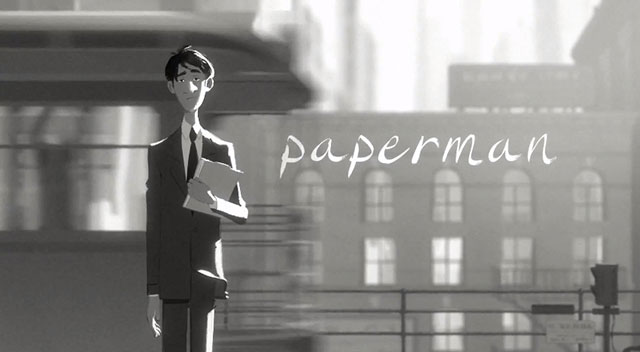
The first thing you notice about Paperman – an Academy Award nominee for Best Animated Short Film (2012) –  is how different it seems from most modern cartoons.

paperman_title

See the full 6mins version here. It has a distinct retro black & white look not just because it is a story based out of 1940s Manhattan, but also because it clearly feels like as if real people have drawn it  it on a piece of paper as opposed to say – like machines creating it on computers.  The result of Disney’s new in-house software called Meander, it seamlessly  blends the best of ‘hand drawn cartoon kinda’ look with CGI animation in a way the animation industry has never seen before; a game changing animation style so distinctive, innovative and beautiful that WIRED magazine even bills it as the future of animation as a whole!

This can be called out as an example of a unique kind of innovation – new technologies, new products or experiences that are designed around connecting us with the past that is nostalgic. Something that  calls as Retro Innovation.  In this FastCompany article he writes that Retro Innovations roughly fall into three categories:

  1. Innovations that authentically mimic a product or experience of the past to transport the user back into a gone era.
  2. Innovations that use a nostalgic format to meet a new need.
  3. Innovations that use a new format to meet an old need.

Read the whole article here and get a dose of some 10 emerging examples of Retro Innovations. My favorite example is Moleskine, regarding which he says..

The Italian paper notebook maker MDleskine, whose recent IPO was valued at more than $600 million, is a stunning anachronism in a business environment that glorifies tech startups and digital business models.

There are reams of case studies out there that extol the brilliance of Moleskine’s branding. But the best example of its retro innovation is its Moleskine Evernote Smart Notebook that bridges the digital and the analog world.

The key insight on which most successful retro innovations thrive on is brilliantly articulated in this Washington Post article that says..

With the rise in computing power, there has been an acceleration of the rate in which we build on new information technologies, leaving us clutching awkwardly for things we recognize from the past. The pace of change at times seems so overwhelming that it’s no wonder that sometimes we want to be transported back to an earlier era.

Think about this insight and you could possibly have explanations for things like:

  • The emergence of  a ‘modern retro’ trend in the  retro gaming culture.
  • The popularity of Mad Men – the only basic cable series to win Emmy Award for Outstanding Drama Series besides 14 other Emmys and 4 Golden Globes. (source)
  • Brands like Adidas and Puma having a dedicated innovation pipeline specially meant for their retro line ups: Adidas Originals and Puma Classics. In fact by many accounts, Adidas Originals can be considered to be a top of the pyramid brand in terms of their positioning and price points. Besides, the corporate logo of Adidas is distinctive from that of Adidas Originals recognizing the unique appeal and potential of this retro innovation line up from the sports brand.
  • The popularity of classics that are remastered to the new digital world – Jurassic Park 3D anyone?

And  in extreme case it might possibly even explain the rationale behind the existence of Skeuomorps – which might be a different discussion altogether!

While the jury is still out to argue whether the ‘retro trend’ actually cripples innovation, a few venture capitalists do concede that  retro innovation is indeed the most lucrative kind. After all, if innovations are about elevating and enriching human experiences, there would always be a market that values a more traditional notion of this experience and that’s where Retro Innovations kick in.

What other examples of Retro Innovations can you think of?