Counterfactual Thinking

Quick Read: We have all seen those ads that start with “what if…”? But did you know that behind the facade of their deliberate wacky-ness there is a method to their madness. 

In a world where Rhinoceros are domesticated pets who wins the second world war?

Or sample this..

In a world where a piano is a weapon, not a musical instrument, on what does Scott Joplin play the Maple Leaf Rag?

Counterfactuals. That’s what Amy and Sheldon call them.

First the definition. 

Counterfactual thinking is a concept in psychology that involves the human tendency to create possible alternatives to life events that have already occurred; something that is contrary to what actually happened. (source)

It turns out that counterfactual thinking can have a huge influence over us.

To help us find greater meaning in our lives

In her book, ” The Power of Meaning: Crafting a Life That Matters ,” Emily Esfahani Smith suggests that counterfactual thinking can be a way to find greater meaning in significant past events, be they positive or negative.

The Power of Meaning

In one experiment referenced in the book, researchers had asked participants to think about a turning point event in their lives – be it positive/ negative /or neutral.

Subsequently these participants were segregated into three groups.

  • Group 1 (counter factual thinking): these participants were asked to describe how their life would look if the turning point event had never happened
  • Group 2 (factual thinking): these participants were simply asked to recount the turning point event in detail
  • Group 3 (meaning association): these participants were asked to reflect on why the turning point event was meaningful.

The researchers then asked these participants to respond to two statements about their turning point event: “It made me who I am today” and “It gave meaning to my life.”

Results showed that that participants in group 1 perceived the turning point events as more meaningful than those in group 2 (those primed towards factual thinking) or even those in group 3 (those primed towards meaning association)!

As Esfahani Smith points out in the book, research suggests that counterfactual thinking helps us find meaning in our lives for two reasons:

  1. We’re able to attribute greater benefits to significant past events. Participants in the study mostly imagined that their lives would be worse if the event hadn’t happened.
  2. It helps us tell more coherent stories about our lives – as though everything we have experienced has happened for a reason.

Influence on advertising response

As per (1) and (2) above, if counterfactual thinking indeed makes us better story tellers and helps us become more cognizant and appreciative of our own narratives, could it also have an impact on how we assess and internalize the narratives and stories that we are exposed to on a daily basis a.k.a advertising and marketing?

That’s exactly the hypothesis that these two researchers had set to validate and presented their learnings in the paper titled Counterfactual Thinking and Advertising Responses.

In a nutshell their research proved that invoking counterfactual thinking before an exposure to the advertising message can prime us up to be more receptive to and become more critical of the (key persuasive) message that follows.

No wonder many NGO marketing messages are structured around counterfactuals.

tapproject_print
Agency: Droga5 New York

Or even those ads like the following recent ones from Amtrak that are made with the objective to persuade the viewers and drive a behavioral change.

Can you think of any other advertising examples that ride on counterfactuals?

(Featured Image: What If )

The Stranger Self

Quick Read: Our future selves are strangers to us. For any brand marketer that wants to drive a habit change among people, this could be a million dollar insight.  

What advise would you give your younger self? 

That’s a common question Tim Ferriss asks his interviewees in The Tim Ferriss Show.

The answers are always wise, instructive and helpful. As they ought to be. For the exercise of looking back and reflecting upon one’s journey so far, tends to be a highly visual and (thereby) a pretty straightforward affair in our minds.

Brands like Tine – a Norwegian Dairy brand – have even used it as a construct to tell one of their stories. (more on this in my older blog post)

The idea of looking into a younger version of oneself was also the central theme of a fascinating photography project called Reflections by Tom Hussey.

Each photograph features a person looking into a mirror and seeing a reflection of his/her significantly younger self. Result – a powerful and a poignant means to communicate the story of someone whose mind has gotten stripped of its more recent memories.

Novartis – the pharma giant, used these photographs towards a campaign for their Exelon Patch – a prescription medicine for Alzheimer’s. (more here)

(Photographs by Tom Hussey as part of his Reflections series)

Now let us try flipping the scenario.

Let us try envisioning our future selves.

Think about it for a moment. Is it as easy as envisioning our past selves?

The answer tends to be in the negative. Well, mostly.

Many studies establish our biological truth that one’s future self is a stranger within each of us. For example, Jason Mitchell – Professor of Psychology at Harvard –  has found that when we picture ourselves experiencing something pleasurable a year from now, many of us use the brain areas involved in imagining a stranger.

Biju Dominic’s latest piece is on this very insight and what it could mean for us as a society.

He says that it is this lack of relationship between our present self and our future self that is at the core of many of our behavioural problems — from not saving enough for our retirement to unhealthy lifestyle practices and many more.

This is such a compelling insight that I am tempted to go out on a limb and wager that this lack of a more intuitive relationship between our present and our future selves could actually be the key to solving for classic marketing challenges like low levels of penetration prevalent across several future focussed categories like BFSI (Mutual Funds, Insurance) or Beauty (Anti Ageing) or other FMCG categories (like Oats, Sugar free F&B variants) etc.

The solution to this lies in getting our present self to be more aware of, relate to and empathise with our future self.

Is-that-me-in-the-mirror-1024x682
Pic Source

But that’s the challenge.

It is known that the feeling of empathy between two persons diminishes as the physical and temporal distance between them increases. So how do we get our present selves to build empathy with a self that is 20 or 30 years ahead in future?

Now that could be a great problem worth solving for, with creative possibilities in marketing communications.

Biju Dominic’s article even provides thought starters for possible approaches. He writes..

Hal Hershfield, a social psychologist at UCLA Anderson found that people who spend a few minutes getting acquainted with a computer-generated simulation of what they might look like in the future were motivated to make better decisions about retirement planning.

Now that’s a spring board of an idea – using computer generated simulation to show what one might look like in the future.

Now hold on to that thought and juxtapose that with this famous Dove Sketches execution.

Do you also see the possibilities that I see?

(Featured Image: The Old Man in the Mirror by Vergyl)

On Stock Footage

Quick Read: The ubiquitous stock footage that we see in most visual media around us can prove to be more influential than we can imagine.  

It all started with this video.

Tickets for the Fyre Festival were sold for up to $12,000 with promises of VIP chartered flights, luxury eco-friendly villas and gourmet food. The reality as it turned out over the last few days was very very different. And the Internet has been going crazy over this. (read here, here for more on this)

For me it’s the (above) video that fascinates the most. Composed of what looks like glamorous stock footage and some fancy copy (like, “..on the boundaries of the impossible..”) and made to look more like a video for a bikini fest than that for a music fest, it had all the clippings (pun intended) of an inflated bubble of pseudo reality.

Speaking of stock footage you should read this short poem by Kendra Eash called ..

This is a generic brand video. 

It begins with these lines..

We think first
Of vague words that are synonyms for progress
And pair them with footage of a high-speed train.

And goes on to poke fun at the stock language and footage that is often used by brands in their advertising campaigns.

The interesting thing is what Dissolve did with this poem.

With a stroke of marketing genius, Dissolve – a stock footage company went ahead and made a video of this poem using (surprise, surprise) its own stock footage and turned it into an ad for itself!

The result – work that is in equal parts parody and ad that went on to win the 2015 Shorty Award for Best in B2B. See the video here.

Extending this thought over the years, Dissolve brilliantly leveraged the US Presidential elections campaign and made This Is a Generic Presidential Campaign Ad on very similar lines. This again won them a Shorty Award for 2017.

Now with the ‘Fyre Festival Fiasco’ I really hope they go ahead and make a ‘This Is a Generic Music Festival Video Ad’.

Can stock footage say anything about us as a society? 

image-hack
Image_Hack, (Pic Source)

A lot, it turns out.

Mindshare in Denmark tapped into an insight around how the advertising industry has been perpetuating stereotypes around beauty over the years (knowingly or otherwise).

So they turned to one of the largest stock footage sites – Shutterstock and devised what they call as Image_Hack as an initiative for the Dove Real Beauty campaign.

Check out this video for more detail.

Though it arguably feels a bit ‘case study-isque’ (you know what I mean) it is definitely an insightful, novel and a refreshing approach to give more wings to the conversation around “Real Beauty”.

One stock photo at a time.

(Bonus Link: Speaking of stock footage, check out this new music video from Cassius, featuring Pharrell Williams and Cat Power. The amount of stock footage the director Alexandre Courtes went through to find all these corresponding split screen images must have been staggering!)

(Featured Image Source: Image_Hack, Photograher: Magnus Ekstrøm) 

Contextual Codes

Quick Read: Think Contextual Codes, not Category Codes. Sometimes it could make a massive difference. 

Fifty years ago, in the fictional world of Mad Men, Don Draper pitched a bold ad campaign to Heinz.

The ads showed close-ups of food that go great with ketchup— a cheeseburger, french fries, a slice of steak—but without any ketchup in sight.

The tagline: “Pass the Heinz.”

But the Heinz clients in the Mad Men episode called it “half an ad”. They wanted to see the bottle.

No wonder Don didn’t get the account.

But now, in March 2017, in a meta union of advertising’s real and fictional worlds, Heinz green lighted the ads.

The best thing: Heinz is slated to run these ads almost exactly as Draper intended, in print and in OOH executions in the New York City. Read more here.

Heinz OOH
Heinz, At 49th and 7th. NYC, Source

Regardless of the fact that these ads are part PR stunt, part on-brand communications, they have something great going for them.

What’s that?

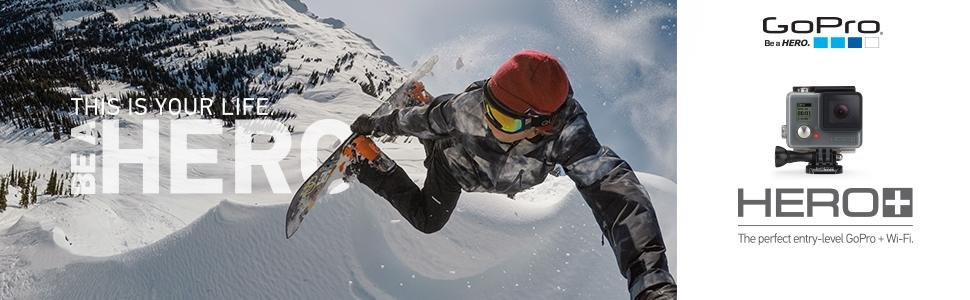
For an insight into that, see any GoPro ad.

And ask the same question.

What do these GoPro Ads have going for them?

GoPro_1GoPro_2

 GoPro_5

My favorite is the following one. (big H/T to Rob Campbell for this one)

GoPro_3

As Rob raves about this ad in his post.

Look at it..Even if you’re not a skier, that photo makes you feel ‘in the action’. Literally in it.

You can feel the snow, the cold, the speed of the World rushing past you.

Then there’s that line, ‘Be A Hero’.

Now compare these GoPro ads to this one from Garmin for the same product category.

Garmin
Garmin, Source

Or this one from Nikon.

Nikon
Nikon, Source

These are all camera brands trying their hand at the “live action category”.

But seeing these, you could say that Garmin and Nikon have failed to understand a crucial distinction between a camera in the ‘live action category’ and that from the photographic category. Sure, they both involve a lens to capture the action, but fundamentally the rules, values and the culture around these categories are very different.

Quoting Rob again from another post,

GoPro’s success is not just because they were one of the first to exploit this market, but because they were part of the culture that created this market.

They understood these people. What they do. What they want. What they feel.

This knowledge influenced everything, from their positioning through to the style of advertising they created.

The fact  that Nikon’s (or Garmin’s) ads show an image that comes from the perspective of watching others do something, highlights how they have failed to understand the audience they are talking to.

So now my question again –  what do  these ads have going for them? 

The New Range Rover Velar’s ad is another case in point. 

(Agency: Spark44 . Directed by Chris Palmer of Gorgeous TV)

From the very first second of the ad you are living it.

Thanks to the brilliant sound design, you feel the jungle cruising by you and the night looming over you.

The car almost becomes your sensory vehicle for this experience.

Now, if you look at them all, don’t these great ads have one thing in common?

The Insight

Don Draper’s ‘Pass the Heinz’ creatives or GoPro’s ads or The New Range Rover Velar’s ad stand out because their executions are not about conforming to any of their respective ‘category codes’ but are about staying true to their respective ‘contextual codes’.

That’s perhaps why you don’t need to show the bottle.

As Don Draper said in his Heinz pitch..

“The greatest thing you have working for you is not the photo you take or the picture you paint. It’s the imagination of a consumer. They have no budget, they have no time limit. And if you can get into that space, your ad can run all day.”

(Featured Image: GoPro Ad)  

Willfull Wandering

Quick Read: A world fleeting by giga bytes per every nano second lends itself to the emergence of a paced down, nuanced and a deeper notion of travel as an experience  – of the body or the mind or the soul. 

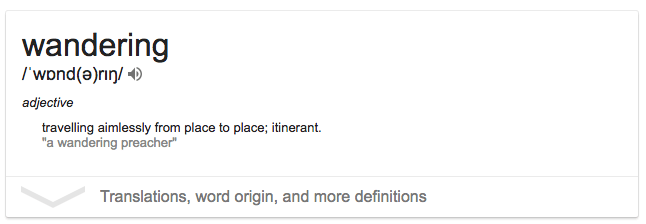
Google ‘wandering’ and it says the following:

screen-shot-2017-02-26-at-2-38-34-pm

What if there were to be an aim for wandering?

Speaking of which, what if a sign post says ‘Please Trespass’.

That’s literally one of the unique joys of living in Sweden.

Called allemansrätten, or the Right of Public Access, it means as long as the land is not cultivated, and as long as no damage is caused, most of Sweden’s nature is yours to explore. This right of public access allows anyone to roam freely in the countryside, swim and travel by boat in someone else’s waters or even to camp or park a motor home on another person’s land.

Because it has existed for generations, allemansrätten is a part of the national identity of Sweden. School groups explore the forests from an early age and families often fish, pick berries or go for walks in the woods together.

No wonder, many people in Sweden can identify a surprising number of birds, fish and trees by name. (source)

What if we could all go to the woods to live deliberately. 

What if we willfully subject ourselves to the challenge of stillness and get away from the tyranny of the screens to appreciate solitude and seek inspiration from the nature?

Walden, a Game‘ is an upcoming video game that challenges the player with this very question. See its trailer here.

Inspired by Henry David Thoreau’s classic Walden, Tracy J. Fullerton, the director of the Game Innovation Lab at the University of Southern California School of Cinematic Arts, came up with this idea of a video game as a way to reinforce our connection to the natural world and to challenge our hurried culture.

A game that has apparently been in development for nearly a decade, ‘Walden..” takes takes six hours to play. It starts in the summer and ends a year later — offering players tasks like building a cabin, planting beans or chatting  with Ralph Waldo Emerson.

Should you not leave sufficient time for contemplation, or work too hard, the game cautions: “Your inspiration has become low, but can be regained by reading, attending to sounds of life in the distance, enjoying solitude and interacting with visitors, animal and human.” (source)

Costing $19.99, the game is billed  as the world’s most improbable video game for obvious reasons. Nevertheless it signals the mainstream arrival of the phenomenon of people seeking a sense of calm, a modicum of mindfulness and a pinch of presence amidst a world fleeting by giga bytes per every nano second.

So let the world wait 

Perhaps as a reflection of such times that we live in today, we also have brands that have positioned themselves around this emerging need of the individual to seek these moments of peace and calm.

In its recent set of commercials, Black Dog encourages one to pause to unwind and relax. It asks one to take the time to savor all the things that truly matter – “because life is in the pause”.

In his recent annual book of ideas and insights titled Non Obvious-2017 edition, Rohit Bhargava references some interesting trends in this space (of ‘willful wandering’ and its adjacencies) to watch out for in 2017. He calls them “desperate detox”, “deep diving” and “mainstream mindfulness”. (check out his insightful commentary around these trends and much more in his must read book)

Putting it all together, the industry that is rife with disruption due to this trend is obviously travel. And an emerging category of travelers in this space is called the ‘Post Tourist’.

The Post Tourist

The term ‘post-tourist’ is commonly used to refer to a new breed of travellers, those who eschew common tourist hotspots and opt for a more unconventional experience, immersing themselves in local culture for an extended period of time.

No wonder,  Airbnb tells us “Don’t go there, live there”

As Rohit says in his book..

“In a world filled with quick burst experiences, the future of travel seems to be something more meaningful, far deeper, and involving much more willful wandering.” 

Given this, what’s my insight?

If travel is nothing but a state of mind, I have a feeling we are just fastening our seat belts before the category takes off.

A category called, willful wandering – of the body or the mind or the soul.

(Featured Image: From Walden, a Game)

The Overview Effect

Quick read: Overview Effect – a phenomenon from space travel can have some great creative parallels in the arts. 

There’s a strange phenomenon that happens to astronauts when they see Earth from space. Most astronauts describe this as a cognitive shift in awareness, a state of mental clarity or a sense of deep connection.

This state called the “overview effect,” occurs when you are flung so far away from Earth that you become totally overwhelmed and awed by the fragility and unity of life on our planet. It’s the uncanny sense of understanding the ‘big picture’ and a humbling appreciation of our infinitesimalness in comparison – all at the same time.

Recently, two creative technologists have created an oddly mesmerizing website that provides something approximating the ‘Overview Effect’ for the rest of us.

Check it out at astronaut.io

screen-shot-2017-01-30-at-5-31-47-pm
astronaut.io

Andrew Wong and James Thompson created an algorithm that picks YouTube videos fitting specific criteria: uploaded within the past week, with generic file names (IMG, MOV WMV) as titles, and zero views. And juxtaposed this seemingly endless stream of random videos against a view of our planet from low Earth orbit. (source)

The result is a fascinating glimpse at the mundane, perplexing, and oftentimes sweet events of everyday life juxtaposed against the monumental, mystical and often times sublime views of the planet earth.

The insight here could be about the possibilities that can be achieved w.r.t driving a shift in the viewers’ perspective when an object is made to interact with a meta object. E.g., what if a character in a story interacts with someone that typically exists in a dimension higher to that of the character, like the author? 

Let’s take two examples.

The Gunfighter

Think of an actor in a film as an object.

Now think of the narrator of this film. A narrator is conceptually meant to be at a degree higher in dimension or abstraction vs an actor in that film, in order for him to be able to narrate the story to us. Right?

But what if the actor in the film is made to interact with its narrator?

The result? See it for yourself here. The Gunfighter

Directed by Eric Kissack, The Gunfighter has won several awards across categories like best narrative, best short film, best comedy etc and was the official selection for various film festivals.

Old Mout Cider even commissioned him to shoot a film with the same narrative device for their ad. (see here)

The Museum’s Ghosts

This eponymous photography project by Andrés Wertheim is an experiment on similar lines.

the-museums-ghosts_andres-wertheim_munich11-adapt-1190-1
Photograph from The Museum’s Ghosts – Andrés Wertheim

The premise as stated by Andrés Wertheim is simple.

It is assumed that when people go to a museum, they carefully observe the paintings and sculptures and thoroughly read the explanatory panels.

But what if the characters portrayed in nearby paintings looked upon visitors while they aren’t paying attention, what unusual scenes would we find ?

Through double exposures made in camera, Andrés Wertheim merged in a single photoframe, both planes of the visible reality – the audience in a museum’s room and the portrayed characters on the same room’s walls – trying to create a dialogue between them.

The Museum’s Ghosts as a photography project, has also been featured in National Geographic for its creation of such surreal scenes that place art and its observers together in a new imagined dimension.

The bottomline

Whether it’s art walking off the walls to interact with the visitors of a museum, or the characters in a film being able to interact with its’ narrator, or a micro level human narrative getting juxtaposed against the macro level perspective of the planet earth, they all have one thing in common.

They are all examples of objects interacting with meta objects, compelling us to re-evaluate and reconsider our perspectives of the world within and around us – perhaps just like in the ‘Overview Effect’ as experienced by a space walker when looking back at our planet earth.

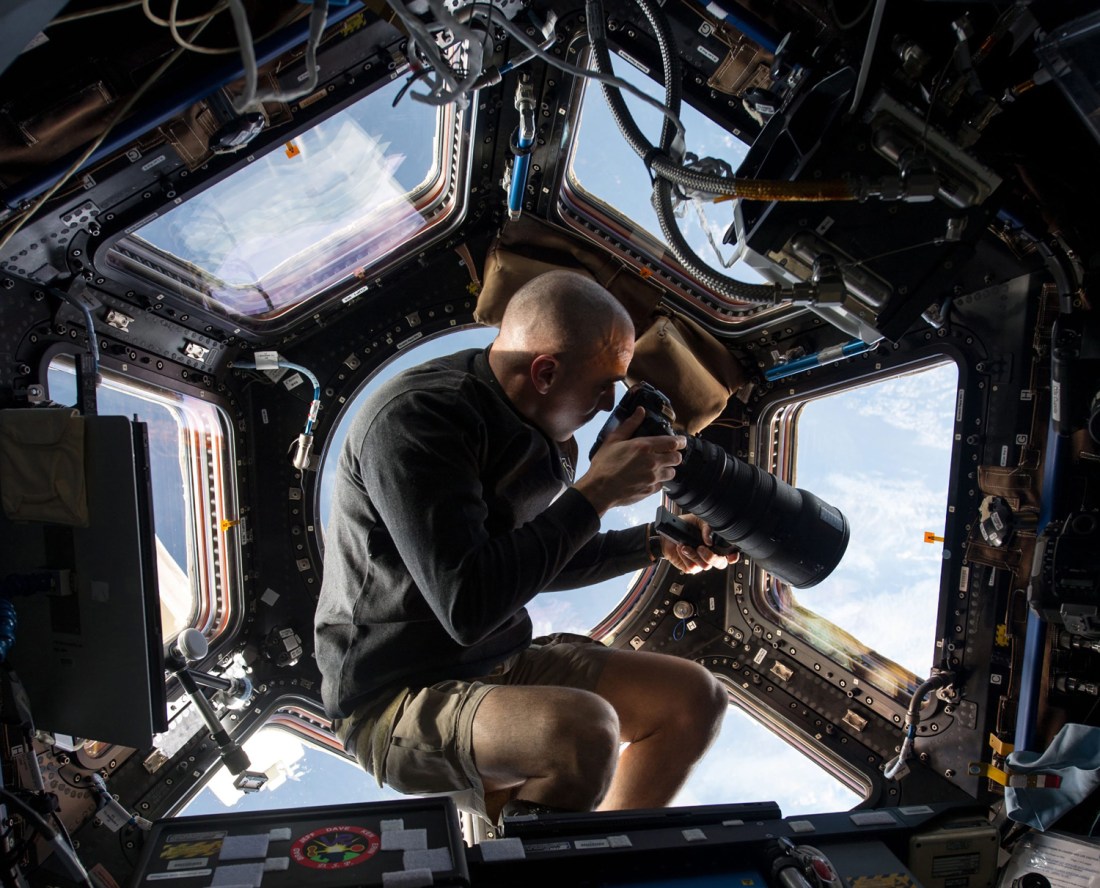
(Featured Image: Photos being shot from International Space station. Source)