Time Travel Democratised

Quick Read: Time travel, branding and public sentiment indices could have a lot in common. To know more, just ask Zlaty Bazant (the Slovak beer) for a test drive to the 1970s. 

Here’s an exercise. Think of any science fiction story. Anything.

Now take a few seconds and reflect on its theme.

Chances are that its theme might not be the future. You would notice that the genre uses the future only as a canvas on which to imprint its real concerns—the present.

The insight: Counterintuitively, time travel stories are often those tales that are most anchored in the present.

Similarly, stories that transport you to the past do so only to provide the necessary distancing effect for the narrative to be able to metaphorically address the most pressing concerns of the here and now – the present.

This has an interesting corollary for brands.

Na zdravie, Slovensko (“Cheers, Slovakia!”)

Central and eastern European countries faced the scourge of communism for most part of the last century. So it’s only natural to expect that the people in these countries would not want to be reminded of those darker times.

Yet, a curious trend seems to be suggesting the contrary in recent times.

Retro is seriously back with a bang.

  • Polish hipsters are lapping up retro furniture of the Jaruzelski era.
  • Lidl stores (the German supermarket chain) in Czech Republic have sales of imitation communist products in their now popular “Retro Week” promotions
  • Even the communist era beers are getting resurrected across the region

(Retro Products at Lidl. Source)

As The Economist article frames it, communist nostalgia is not new, but it does seem to be having a new wave of resurgence. While this makes some sense in Russia, which ruled the empire, it is puzzling to understand its relevance among the central and eastern Europeans whom the Soviets ground under their boots.

And to frame this irony even more acutely, this affection for the socialist era products seems embodied even in the consumer products that are marketed by Western multinationals!

For example, in May this year a Heineken-owned Slovak brewery, Zlaty Bazant, introduced a premium version of its beer based on a 1973 recipe, priced 20% higher than its standard line up. Even its slogan Na zdravie, Slovensko! (“Cheers, Slovakia!”) vaunts its local roots as opposed to typical beer marketing themes that emphasize Europeanness and modernity.

zlaty-bazant
Zlaty Bazant Ad. Source

Yet, this doesn’t necessarily reflect a desire of these people to return to the pre-1989 era. That’s where it becomes a bit complicated (in terms of their relationship with these brands).

The insight here: As Ivan Klima, a Czech novelist, puts it, “nobody is nostalgic for the communist era, but many people are nostalgic for their youth”.

Why?

Most people in the region are believed to be discouraged about the future.

In fact according to the recent Eurobarometer survey, just 30% of Slovaks and 26% of Czechs have a positive view of the European Union. Poland and Hungary are more pro-European, but have elected governments determined to check the power of Brussels. (source)

And these themes of insecurity and pessimism in the current socio political context manifest among the central and eastern Europeans as an inexplicable longing for brands of the bygone communist era. As if returning to these good old things could bring about a sense of security and stability amidst the slipping sands of the current times.

So if a Serb is seen enjoying a 1973 communist era quaff like the Zlaty Bazant, he is perhaps not so much contemplating nationalizing the auto industry as he is struggling with his attempts to reconcile with his current times.

Almost like the fascination with that time travel story to the past that is fueled by the strifes of the current times.

This could have interesting implications on brand building.

Public sentiment index (or their proxies) can perhaps be a lighthouse for brand builders. If the sentiment is low for a prolonged period of time in a market, brand builders there could perhaps do well to dust the grime off legacy brands and shine a light on them.

And may be even charge a premium for the same, as it is after all time travel, only packaged in a little bottle.

(Featured Image: Zlaty Bazant saying “Merry Christmas, Slovakia!”)

Repeat After Me

Quick Read: Some deep seated cultural values that we project on to our children are in need of a massive over haul. Nike and Dove have brilliantly brought this to life in their recent campaigns. 

Handwriting just doesn’t matter.

Or does it?

For a long time it was believed that cursive writing identifies us as much as our physical features do, revealing something unique and distinctive about our inner being.

But over a century, the focus on cursive handwriting in schools actually ended up achieving the opposite. Mastering it was dull, repetitive work, intended to make every student’s handwriting match a pre-defined standard.

In fact in the 19th century America, students were reportedly taught to become “writing machines”, holding their arms and shoulders in awkward poses for hours to get into shape for writing drills.

Or take this Lego ad from 1981. See anything unusual here? 

1981+Lego+Ad

(What it is is beautiful. Source |HT Seth Godin “Stop Stealing Dreams“)

Those were the days when LEGO blocks were sold by the “bucket” with blocks of different sizes and colors thrown in together and labelled “Universal Building Sets”.

This approach celebrated a child’s creativity regardless of what she has created. As the ad copy above goes on to say..

“…how proud it’s made her. It’s a look you’ll see whenever children build something all by themselves. No matter what they’ve created”

Sadly this approach didn’t sell a lot of LEGO blocks presumably because it required too much risk on the part of parents and kids—the risk of making something that wasn’t perfect or expected.

So what did LEGO do?

They switched from these all purpose “Universal Building Sets” to a lineup that included more of predefined kits – models that must be assembled precisely one way, or they’re wrong.

Why would these pre-defined kits of LEGO blocks sell so many more copies? As Seth Godin says, it is because they match what parents expect and what kids have been trained to do.

Lego Products Page

(The LEGO products page today, with a disproportionate focus on predefined kits)

These discourses on cursive handwriting or LEGO are metaphors of what’s happening with schools around. 

By the turn of the 19th century, the biggest challenges of our newly minted industrial economy were two fold.

  1. finding enough compliant workers and
  2. finding enough eager customers

The school system – that most of us would have been brought up under – evidently solved both problems.

But the world around has changed into a culture that celebrates ideals like ingenuity, connection, ideas, courage and risk Vs one that only promoted values like conformity, obedience and risk aversion.

Sadly our schooling system has changed little from that originally envisaged for a completely different era. (More in Seth Godin’s must read manifesto ‘Stop Stealing Dreams – What is school for?’)

So a scene with a class full of students repeating ad nauseam after their teacher, rhymes or lessons that only serve the purpose of further perpetuating outdated or worse still outlandish values against today’s realities is certain to provoke anger and perhaps even instigate an active change in our world view. 

Two brands have recently used this very scene, to demonstrate how deeply we have tried to graft our misplaced conceptions of ideas around individualism and beauty in our children.

Nike’s Minohodoshirazu

Earlier this month, Nike Japan  launched a new campaign with a spot that redefines the phrase ‘Minohodoshirazu’, which translates to “Don’t know your place.” While the term is typically used as an insult towards the overly ambitious, the anthem ad tells viewers that not knowing your place can instead be a mindset for athletes to strive for. (source)

Created by W+K Tokyo and directed by Omri Cohen, the ad manages to contrast the values being embedded in children with shots of athletic achievements that run counter to these messages of compliance and obedience. Video here.

https://www.youtube.com/watch?v=WvvpKGVOf0Q

Dove’s Is That You? 

The famous nursery rhyme ‘Chubby Cheeks, Rosy Lips…’ is used as the background score for this video created by Culture Machine (and subsequently pitched to Dove).

The rhyme and the contrasting visuals make you wonder if this is how we have sought to institutionalize a misguided set of beauty ideals in generation after generation of young girls, every single year. Video here.

It is always interesting to see different brands, different agencies from different parts of the world adopt a similar executional approach to land their respective ideas.

(Featured Image: Source)

Isomorphism

Quick Read: Cooking up amazing food and language translation could have something in common. Isomorphism. 

Chef David Chang – the famed American restaurateur who owns the Momofuku restaurant group shares a great insight on what characterises amazing food.

When you eat something amazing, you don’t just respond to the dish in front of you; you are almost always transported back to another moment in your life.

He believes that food – like fragrances – has a set of ‘base patterns’ that people inherently respond to. So, as long as you can string together the required base patterns of any given dish- no matter what the ingredients are – you are sorted.

So the formula for a hit, according to him, is to strip a dish down to its component flavours,  and re-compose the dish bottom up, by staying true to its constituent set of base patterns albeit with unexpected ingredients.

Think of it like making Bolognese, the Italian meat sauce but by using only Korean ingredients. (He calls it Spicy Pork Sausage & Rice Cakes, and when most people taste it, it reminds them—even on a subconscious level—of a spicier version of Bolognese.)

And that’s what makes his dishes the smash hits that they are.

He calls it his Unified Theory of Deliciousness. 

UTD_WIRED

(Source: WIRED, August 2016)

Featured as the cover story in this August edition of WIRED, David Chang’s give away is his insight into base patterns and how they constitute the building blocks of any given dish from around the world.

He draws parallels to the concept of isomorphisms – concepts that can be expressed in different ways while retaining their core form.

That’s how I feel about food. Different cultures may use different media to express those base patterns—with different ingredients, for instance, depending on what’s available. But they are, at heart, doing the exact same thing.

They are fundamentally playing the same music. And if you can recognise that music, you’ll blow people’s minds with a paradox they can taste: the new and the familiar woven together in a strange loop.

Now think of the concept of isomorphism for a moment.

It occurs to me that languages are perhaps the best examples of isomorphism.

Different cultures may use different expressions to communicate their ‘base patterns’—with different words, phrases and idioms, depending on what their language is. But they are, at heart, doing the exact same thing.

So a software that powers a good language translator has to be able to strip down a sentence according to it’s language’s base patterns and be able to construct them back in the other language for the user to be able to appreciate the original meaning.

Almost like how David Chang believes his hit dishes should be made of.

(Incidentally, Google Translate paired up with some amazing food earlier this year.

In April Google opened Small World, a curious pop-up restaurant in NYC with celebrity chefs like Danny Bowien, Eina Admony and JJ Johnson.

But, there was one catch: diners could only order their food using Google Translate. This recent video captures the essence of the campaign.

This short film documenting the restaurant’s run, “#EveryoneSpeaksFood,” was directed by Josh Nussbaum.)

(Featured Image: Momofuku Ssam Bar’s Spicy Pork Sausage & Rice Cakes – the spicier version of Bolognese made from all Korean ingredients)


Access Restricted

Quick Read: Want to generate footfall or demand? Sometimes all it could take is a board saying “Access Restricted”.

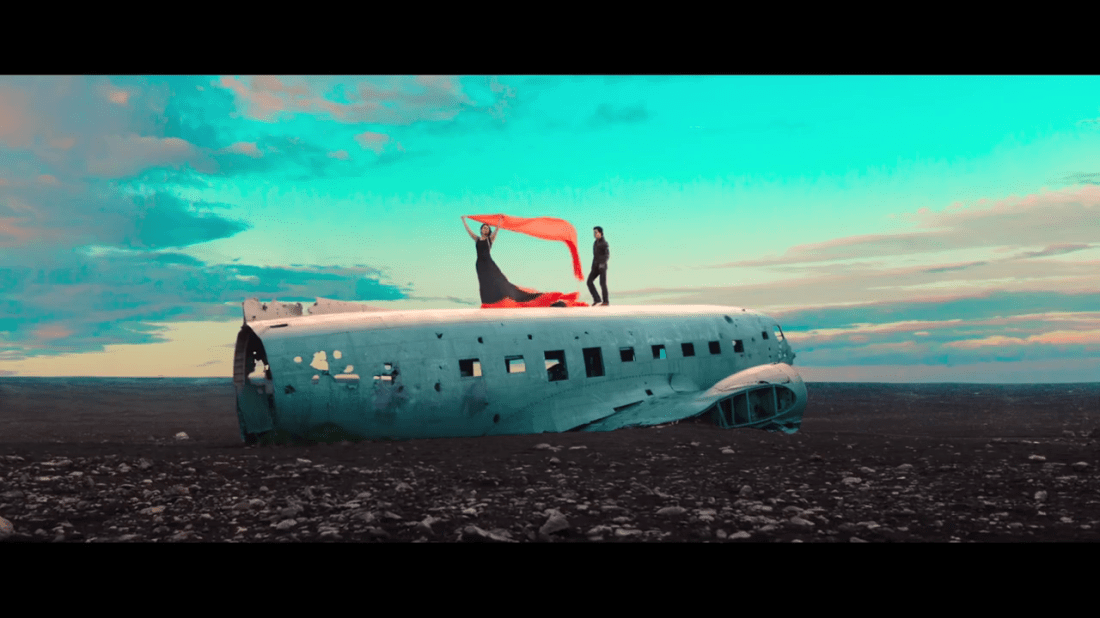
Iceland is renowned for its fairytale landscapes, waterfalls and dancing midnight lights. But of all the places, an unusual site has become one of its most talked about destinations – a site of a plane crash. 

Sólheimasandur beach in Iceland is a desolate site, but for the mangled remains of a US Navy’s C-117 aircraft. It was in November 1973 that the aircraft crashed at the site with the crew onboard having miraculously survived.

After the crash, the U.S. military removed everything that was salvageable in the aircraft and left behind the 10,000 pound shell by the beach. For over four decades since then nothing much happened around it.

The landowners of the site almost forgot about it and were perfectly content to let time and nature slowly eat away at the twisted wreck.

Iceland Plane Crash

(Photo Credit: Eliot Stein. Source)

But steadily over the years it has become a not so well kept secret among photographers – who lent it an extra air of surrealism, by way of their documentaries and photographs.

In recent times it came to be used as a location for destination weddings.  Not to be left behind Bollywood even managed to get Shah Rukh Khan to lean backwards, spread his arms while not forgetting to romance Kajol over its fuselage!

Dilwale

(Still from the song in Dilwale)

Hell even Justin Bieber skateboarded on the plane’s roof in a music video in November 2015.

Expectedly it led to a steady increase in visitors to the site and got people into driving all over the place with little consideration about the property around. So in March 2016 the landowners’ of the site decisively put up signs banning all access to the area. 

…and then things started to go crazy!

Google Search Trends - Iceland Plane Crash Site

(Google Trends showing a spike in searches for the crash site in March 2016)

All it took was a “No Entry” sign.

Now, hundreds of people every day are reportedly following GPS coordinates to a remote, unmarked gate on the side of the road and trekking four kilometers through a barren lava desert to try their chances at seeing the plane’s twisted remains.

How Hitchcock Got People To See “Psycho”

When Psycho hit theaters, critics weren’t given private screenings. Instead Hitchcock created buzz for the film by exerting an unusual degree of directorial control over the viewing experience of the audience.

Accordingly the showings of the film began on a tightly-controlled schedule in theatres in New York, Chicago, Boston, and Philadelphia.  And a firm “no late admission” policy was put in place.

hitchcok-rules

(A standee to announce No Late Admission policy for Psycho. Source)

Theatre managers initially balked at the idea, fearing financial losses. But Hitchcock had his way.

And he was right.

Long lines formed outside the theaters, pulled even more people in and Psycho went on to enjoy critical and commercial success.

Sydney Opera House says “Come On In”

Sydney Opera House is the most Instagrammed destination in Australia.

The challenge:  Only 1% of those who upload a photo ever go inside.

Sydney Opera House found who these people were, recorded personalised invitation videos on the fly, and got them to step in to experience the Opera House from inside with exclusive access and perks.

See the case study video here

While it is definitely a smart intervention that effectively leverages relevant consumer touch points on the fly to get people to step inside, I wonder if the management of the Sydney Opera house had considered the contra idea.

…that of putting up a sign saying “Access Restricted”.

(Featured Image: Sólheimasandur plane crash site by Eric Cheng. Source)

Convergent Evolution

Quick Read: ‘Convergent Evolution’ while being a concept from the life sciences could actually be seen playing out with a greater degree of recurrence in creativity and arts.

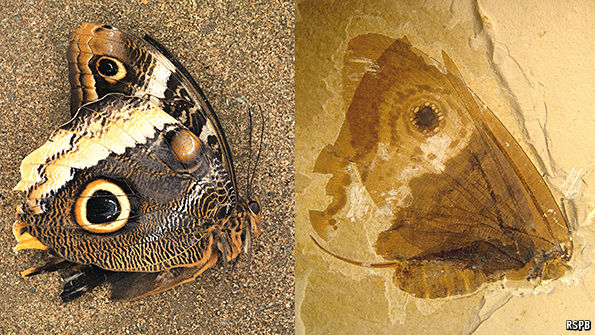
What you see here on the left is the picture of a butterfly. But what what you see on the right, is not.

Convergent Evolution

(Pic source: The Economist)

In fact it is that of a fossil of a lacewing (an insect) called Oregramma illecebrosa. Supposedly it flew in the forests of the Jurassic period between 165m and 125m years ago, dying out 69m years before the first-known butterfly fossil. (source)

These are examples of Convergent Evolution: the emergence of similar bodies in unrelated groups of species, to permit the pursuit of similar ways of life.

Another example of Convergent Evolution is the Jurassic Ichthyosaurs and the modern Dolphin.

CONVERGENT EVOLUTION (1)

(Pic Source: The Dinosaur Store)

But that’s not the interesting part.

Convergent Evolution while being a concept from the life sciences could actually be seen playing out with a greater degree of recurrence in creativity and arts; where it can loosely be defined as follows:

Convergent Evolution in the arts is the emergence of similar kinds of ideas and creative executions from unrelated sources or disciplines, to permit the pursuit of similar expressions.  

Let us take two projects Futuristic Archaeology and Inherit the Dust and a set of OOH executions by Amnesty International as examples.

Futuristic Arhaeology 

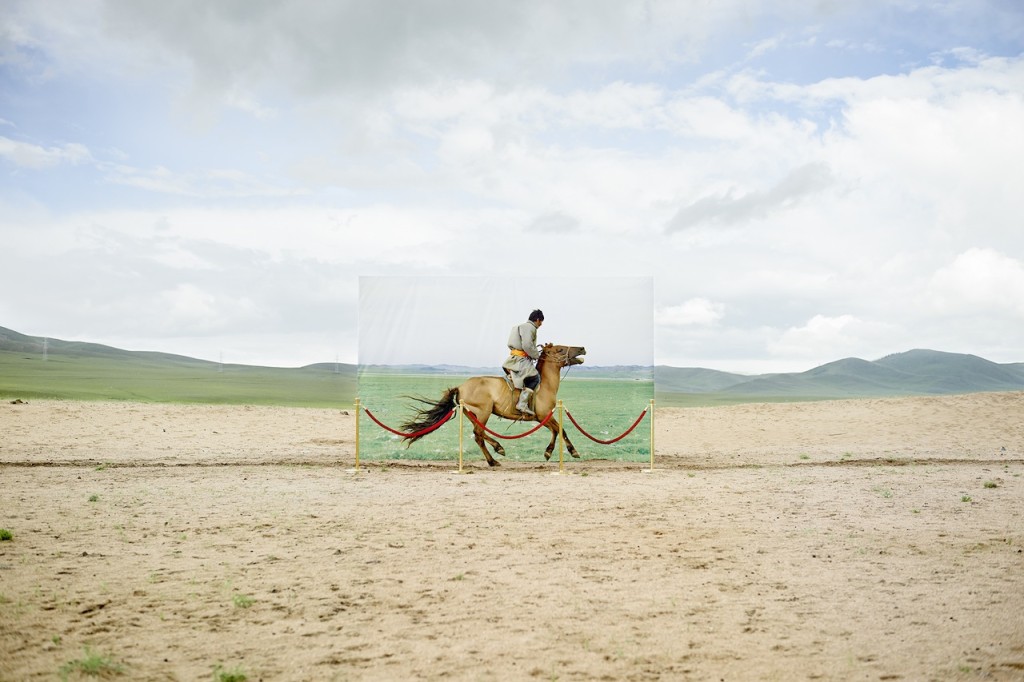
Mongolia has long been home to one of the world’s largest nomadic populations, with more than a third of its population pursuing their livelihood on the vast Mongolian-Manchurian steppe. But in recent years, the grassland has been drying up.

Korean photographer Daesung Lee’s series Futuristic Archaeology explores what the desertification of their home means for Mongolian nomads through a series of fantastically staged images.

They feature landscapes-within-landscapes — barren, desert environments inlaid with decidedly greener ones.

futuristic-archaeology-1-1024x682

futuristic-archaeology-10-1024x683

(Images from Futuristic Archaeology. Full collection here)

These incredible scenes aren’t digitally orchestrated: Lee actually printed out billboard-sized photographs and strung them up on site, using former nomads as models. Inside the smaller images, people ride horses, herd goats, and go about their lives fenced in by red rope barriers. (source)

Inherit the Dust

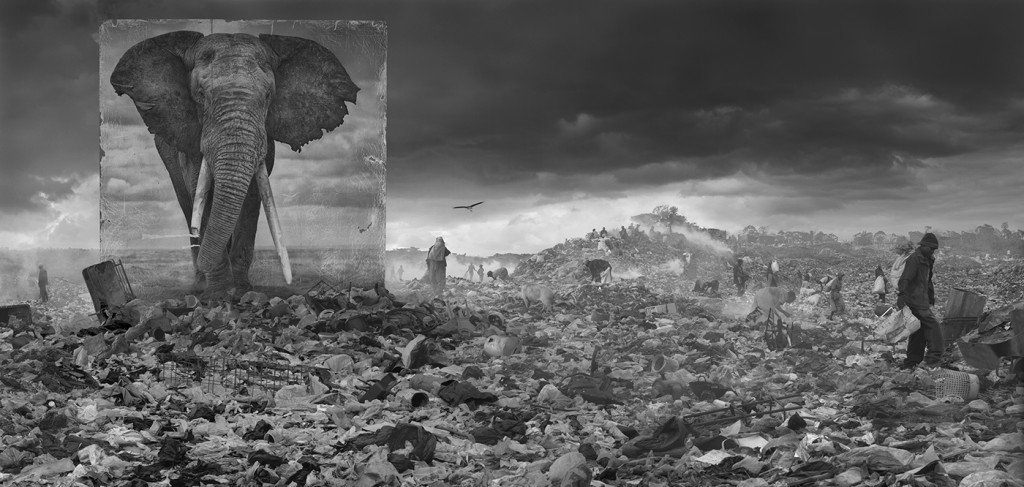
Nick Brandt is as much an activist as he is a photographer. After spending 15 years working in Africa he was depressed by the changes he saw sweeping across the African landscape, like illegal logging predicted to eliminate some 30 million acres by 2030.

Thus was born his latest project Inherit the Dust a collection of  moody portraits of elephants, giraffes, and lions to call attention to Africa’s vanishing megafauna. Each picture in this project has been meticulously staged and exquisitely shot in black and white to bring to life these beautiful creatures wandering the landscapes they’ve long since been driven out of.

Brandt_04-1024x474Brandt_05-1024x474Brandt_008-1024x489

(Images from Inherit The Dust, Nick Brandt. Source)

While with Inherit The Dust, the quiet dignity of the animals that Nick Brandt photographs is shockingly juxtaposed against the indignity and disarray of our own…

…. Amnesty International flips this concept a bit

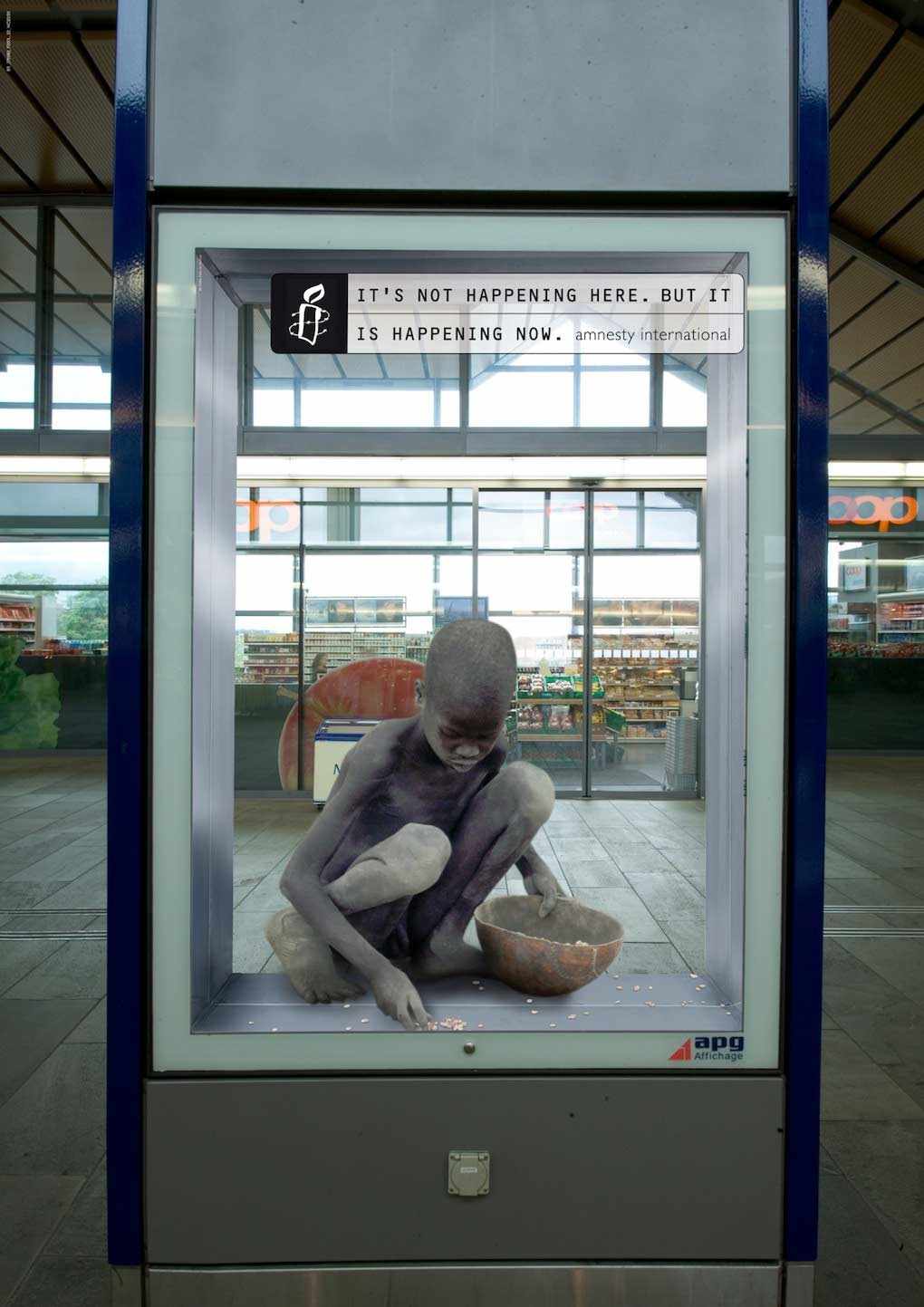
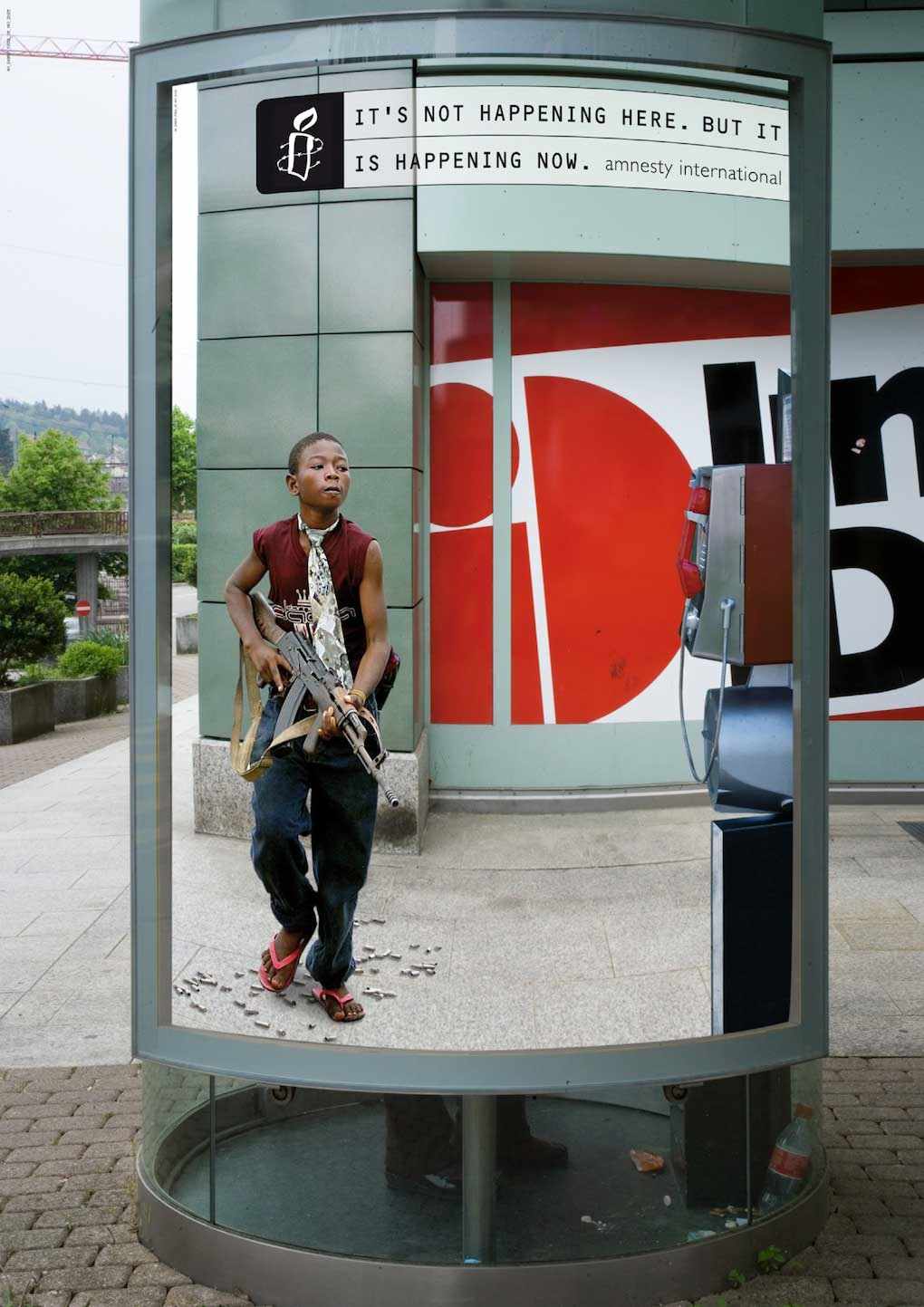
…by juxtaposing the shocking indignity of human rights violations against the backdrop of a quite dignified civic life that most of us easily take for granted.

Amnesty International_1

Amnesty International_2

(Advertising Agency: Walker, Zürich, Switzerland. More executions here, here and here)

As one reviewer of Nick Brandt’s Inherit the Dust puts it..

“These haunting photographs force us to think about what we are doing, and who is at stake.”

Now even at a nuanced level, if you come to think about it, isn’t this statement equally applicable for all the other projects featured here?

Perhaps that’s what makes them apt examples of convergent evolution.

(Featured Image: Wasteland with Elephant, by Nick Brandt from Inherit the Dust)

Fata Morgana

Quick Read: What do you call an ad that brilliantly grabs our attention – by its balls? Not the ones that are made to work like click baits,  but those made to create a meaningful and an impactful closure. 

Fata Morgana

This picture recently shot by one Mr. Nick O’Donoghue at 30,000 ft from a plane has been doing the rounds on the Internet this week. (source)

Seeming to be featuring what looked like some huge robot walking along the clouds, these pictures got Reddit rife with juicy speculations.

An alien? An Iron Giant? Some astronaut?

Well the suspense seemed to have been solved.

Weather experts say that the phenomenon can be explained by what is called as Fata Morgana – a specific kind of mirage. (some cool explanation here)

No wonder, throughout history few phenomena have both fascinated and scared the hell out of sailors, saints, warriors and vacationers alike as it did.

But Fata Morgana is great because of what it quintessentially succeeds at.

Over centuries every Fata Morgana has attracted our attention, invoked curiosity, set our mental models in search of narratives that could explain it, and sent us on a great deal of wild goose chase.

But all Fata Morganas have one thing in common. They all made complete sense once the underlying logic and rationale were brought to bear.

In modern marketing terms..

..Fata Morgana is like an ad that brilliantly grabs our attention – by its balls. But not like those click baits, or those that come with some cheap attention grabbing visuals or effects.

These are stories ensconced in narratives that are deliberately layered to challenge our conventional expectations and shake up our notions of rationality. Yet when the closure arrives, these make eminent sense and leave an indelible impact in our minds.

Let’s take Abby Wambach

The 35-year-old superstar is said to be one of the greatest soccer players to ever step on the field. Besides leading her team to World Cup victory, she also won two Olympic gold medals, became the world’s all-time leading goal scorer (man or woman), and was recognized as one of TIME’s 100 in 2015.

On 16 December 2015 she played her final game in New Orleans.

And on 16 December 2015 when she took the field for the last time, Gatorade released this commercial.

Her message? “Forget Me

(Agency: TBWA\Chiat\Day)

Updated: Kobe Bryant seems join a similar discourse saying Hate Me for Nike.

(Agency: W+K)

(Featured Image: Fata Morgana.Louise Murray/Visuals Unlimited/Getty Images. Source)

Could a Great Insight Backfire?

Quick Read: Rooted in a universal insight about play and its potential, Barbie’s new film is brilliant. But could that very insight be its undoing? 

Using imagination as the USP to sell something is nothing new.

But using imagination as a means to reshape a brand’s narrative into that of a more affirmative and purportedly more inclusive discourse is.

At least that’s what the new Barbie campaign does. To good effect.

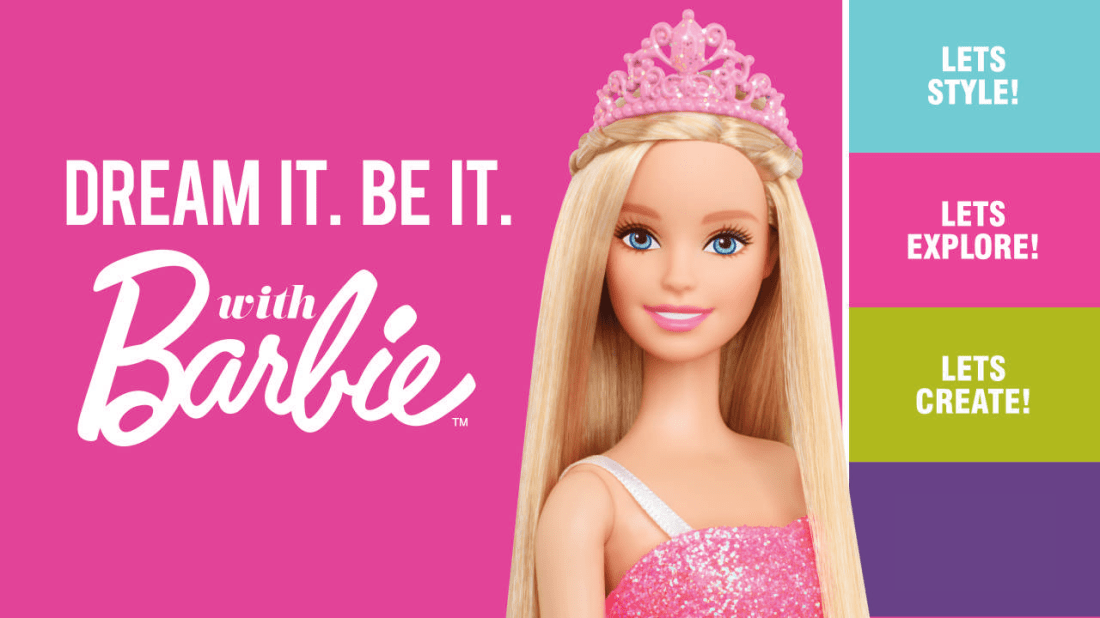
In a new film by BBDO called “Imagine The Possibilities”, Barbie speaks of the power of imagination that allows girls to explore their potential.

It’s twitter page shows how the brand has begun to drive conversations around topics like inspiring confidence, celebrating boldness, encouraging self expression and calling out the ‘inner superstar’.

For a brand that has often been accused of perpetuating an epidemic of body hatred, this campaign seems to hold promise in getting parents to reappraise the role Barbie can play in a child’s life. At least a cursory look into the comments in the film’s YouTube page seems to suggest so.

The film is great because of its brilliant insight – when a girl plays with Barbie she imagines everything that she can become.

But ironically it is this very insight that could be its undoing. 

If when a girl plays with Barbie, she imagines everything that she can become, wouldn’t such an imagination naturally get rooted in a (misguided) notion –  i.e., the notion that her dream of becoming this someone could be a function of her growing up to look as ‘perfect & pretty’ as the Barbie dolls seem to her?

The jury is out.

Only time will tell if this can make any substantial dent in the brand imagery for Barbie in the long term beyond the seemingly positive discourse of “seek your inner superstar”.

Meanwhile, did you hear about Lammily?

Lammily

It is feted as as the “first fashion doll with realistic proportions”.

[Bonus Link: Did you know that every woman in every Disney/Pixar movie in the past decade has the exact same face? You should check this out.]

(Featured Image source: Barbie.com)

On Points Of View

Quick Read: Some businesses thrive by driving a singular POV regarding their offering amongst their target audience. And there are some that take pride in celebrating multiple POVs regarding theirs. 

Some elite restaurants in Japan are ichigen-san okotowari (first-time customers not allowed), meaning a regular customer has to introduce you before you can make a reservation.

The genius of this system is that it ensures that you buy yourself into a singular and a specific POV about its food, experience and its clientele if you want to be able to get a reservation at the restaurant.

Almost by definition.

And the story continues. One customer at a time.

It works because the ichigen-san okotowari system ensures that a single consistent POV gets bought into, replicated and passed on.

Meanwhile elsewhere..

A recent print campaign by Shutterstock made it to the shortlist of Clio Awards 2015 under the Print category.

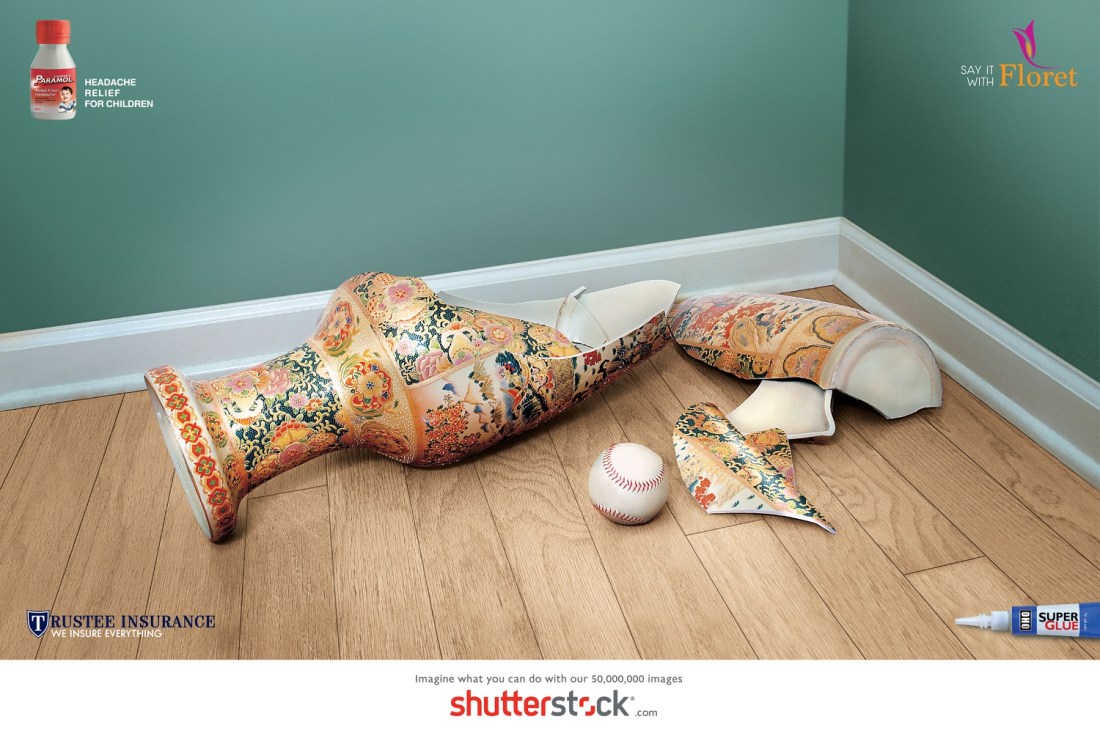
As a purveyor of stock photos, Shutterstock.com wanted to celebrate the fact that an image can potentially fire up your imagiation in multiple ways.

So it brought this idea to life through the following executions.

ShutterStock_Shark

ShutterStock_Broken

ShutterStock_Baby

[Click on the images for a larger view]

Agency: Leo Burnett. Images via: Clio Awards. (HT Bhatnaturally)

A truly insighful execution that celebrates the multiple POVs that an image can inspire. As Mr. Bhat says..

The irony is that this is too close to reality. We’ve all seen how art directors search for inspiring images first and then try and retrofit an idea. Also, a visual idea which was rejected or didn’t make the cut for a pitch in one category can be adapted to a totally unrelated category. This campaign actually puts a positive spin on that.

Does your brand – and by extension its strategy and execution –  thrive on driving and sustaining a singular POV or does it celebrate multiple POVs? 

[Bonus Link: Speaking of POVs, you should check out Hardcore – the world’s first action POV film that got premiered in the latest Toronto International Film Festival to critical acclaim.  The entire movie is shot from a single POV and boy is it intense!]

(Featured Image: Shutterstock Print Execution. Source)

Story Tellers, Super Powers And Second Lives

Quick Read: For the first time in the history of story telling we seem to be having the means to explore the dimensions of *actual* time and space in building narratives. Story telling might just be at an inflection point.

Andrew Stanton while talking about The Clues to a Great Story quotes an incredibly insightful definition of what constitites drama.

Drama is anticipation mingled with uncertainty.” 

Now, while keeping the uncertainty element constant, what if you can build anticipation at the rate of actual human experience?

Wouldn’t the drama get amplified?

Let’s elaborate.

World’s Most Boring Television 

Stick a camera to an ordinary train on an ordinary day. Shoot the entire 7 hr + footage of this ordinary journey as the train pulls from station to station, and put it on national TV with almost no editing.

Sounds like the most boring television show in the history of mankind. Right?

Wrong.

The results of this Norwegian TV show were extra-ordinary, fascinating and even bizarely insightful.

Welcome to the world of ‘Slow TV‘.

What began as a pilot by the Norwegian TV producer Thomas Hellum and his team turned out to become a national phenomenon leading to more shows such as an 18 hour fishing expedition, a 5.5 day ferry voyage along the coast of Norway and many more.

These went on to receive extensive attention in global media, and were considered a great success with coverage numbers exceeding all expectations and record ratings for the NRK2 channel!

But why were these ostensibly boring shows so popular?

To paraphrase Thomas Hellum from the following must watch TED Talk..

Slow TV is so popular because it builds drama by letting the viewer make the story themeslves. 

In otherwords Slow TV is an amazing example of a narrative that rides on building anticipation at the rate of actual human experience in time.

Not to be left behind, the advertising/marketing world has also begun to experiment with the concept.

Virgin America has produced a six-hour-long commercial (!) about how unbearably dull the average plane ride is. The video shows passengers on a flight across the US, playing out its events in real time.

And it has clocked around 850K views till date!

Now moving over to the other dimension.

A New Photographic Language Is Born 

..so says dronestagram – an instagram for footage shot with dones. We even have drone film festivals celebrating the art of films shot with drones.

Meanwhile, YouTube this year has begun supporting 360 degree videos.  And we already see several brands experimenting with this format to create truly amazing ads like the one below by Nike that lets you be Neymar on the field as you check out the action in all its 360 degree glory.

And then you have the likes of Oculus and Google Cardboard pushing the envelope in bringing immersive VR experiences to life. The Economist in its recent feature has in fact taken a serious take on VR and believes that its time may have truly come.

This year the Tribeca Film Festival has even called for ‘virtual reality’ submissions.

So why are we raving about films shot with drones, 360 degree videos and VR experiences?

It is possibly because they all have one thing in common.

Thanks to these, for the first time ever, we see possibilities in constructing narratives that can build anticipation at the rate of actual human experience in space

So what’s next?

From Story Telling To Crafting Experiences To Creating Parallel Lives

As story tellers build increasingly immersive narratives that progress at the rate of actual human expereince in time and space, it ceases being just a story and moves on to becoming an experience.

Now throw in sensory elements to this and you suddently have multi dimensional multi sensory experiences that could possibly shift the business of story telling to that of building parallel realms of existence.

What does that mean?

I don’t know.

But at the least it could herald a second life for the likes of Second Life.

(Featured Image, Source)

Is The Classic Purchase Funnel Flawed?

Quick Read: With most products in any given category tending to have total functional parity, the only way to drive trial could possibly be through a singular route – curioisty.

Often times I am curious why “curiosity” doesn’t even figure in the classic purchase funnel.

In fact I tend to believe that without inciting a threshold level of curiosity in a consumer, awareness and consideration could end up proving to be moot pursuits.

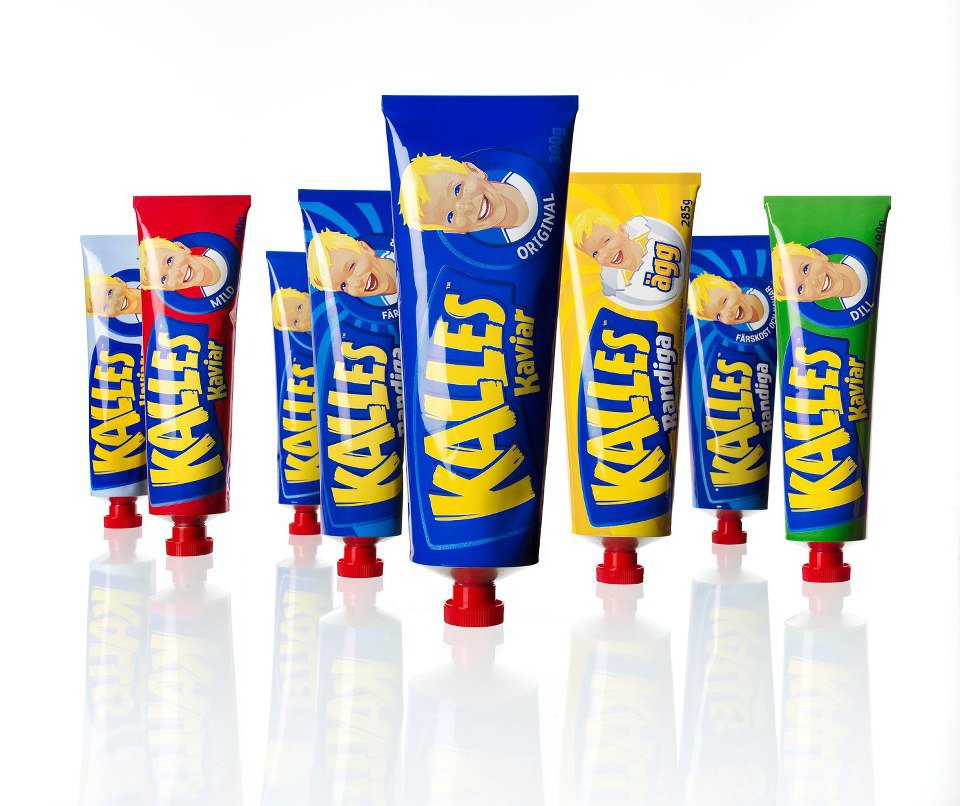
Let’s take Kaviar. (or Smörgåskaviar to be specific)

Kaviar is a Scandinavian spread – a paste consisting mainly of lightly smoked cod roe that has a salty/sweet/fishy taste and a gooey pink/orange colour. Packed full of omega-3 goodness, kaviar can be eaten at anytime and practically spread on anything edible – breads, eggs, meat, cheese etc. (source)

Mills Kaviar

(Source: Mills Kaviar)

No wonder the Scandivaians swear by them, with the category that is sufficiently crowded with brands like MillsStabburet, Kalles, Kavli etc battling out for market share by commanding fierce loyalties.

However kaviar supposedly has one catch – it is an acquired taste and a first timer might find the taste disgusting

Now that’s where the Kalles Campaign proves to be a genius. (Kalles is a Swedish Kaviar brand)

The campaign holds a mirror to other nationalities’ incomprehension and their reaction at having something that tastes – let’s just say – strong and funny.

It starts with Los Angeles where obviously the Californians don’t hold back their feelings upon tasting something weird.

As it moves to Switzerland, the taste test yields more hand and eyebrow gestures than actual verbal responses.

“It tastes … ” a serious looking man in a tie says. “It tastes … ”

“Fantastic?” the Swede asks.

“No,” the Swiss man replies, with a resolute firmness.

In Budapest, the reaction is icier. A woman takes a bite, exchanges cold glances and upon being asked if she likes it, she smiles, and says “yes,” with a look that clearly says no.

The Costa Ricans laugh and gesticulate.

And the Japanese are very polite even as they appear to be gagging at the taste.

 The Kalles commercials began in 2012 and were made by the Swedish ad firm Forsman & Bodenfors.

As this NYTimes article says, if nothing else these ads are a whimsical cultural excursion into manners.

Now, can anyone get me a Kalles Kaviar please?

I want to try my own gag reflex.

I am really curious!

Now, where am I in the purchase funnel?

(Featured Image Source: My Guilty Pleasures)