The Drone View Advantage

Quick read: Drone shots of the Swiss Panoramic Express could remind us about the need to sometimes take the larger ‘meta view’ vs the ‘window view’. And that could perhaps be a good reminder across contexts – from our investment theses, our career choices to even getting a better handle on how we frame our life stories.

Now don’t get me wrong.I LOVED the ride!

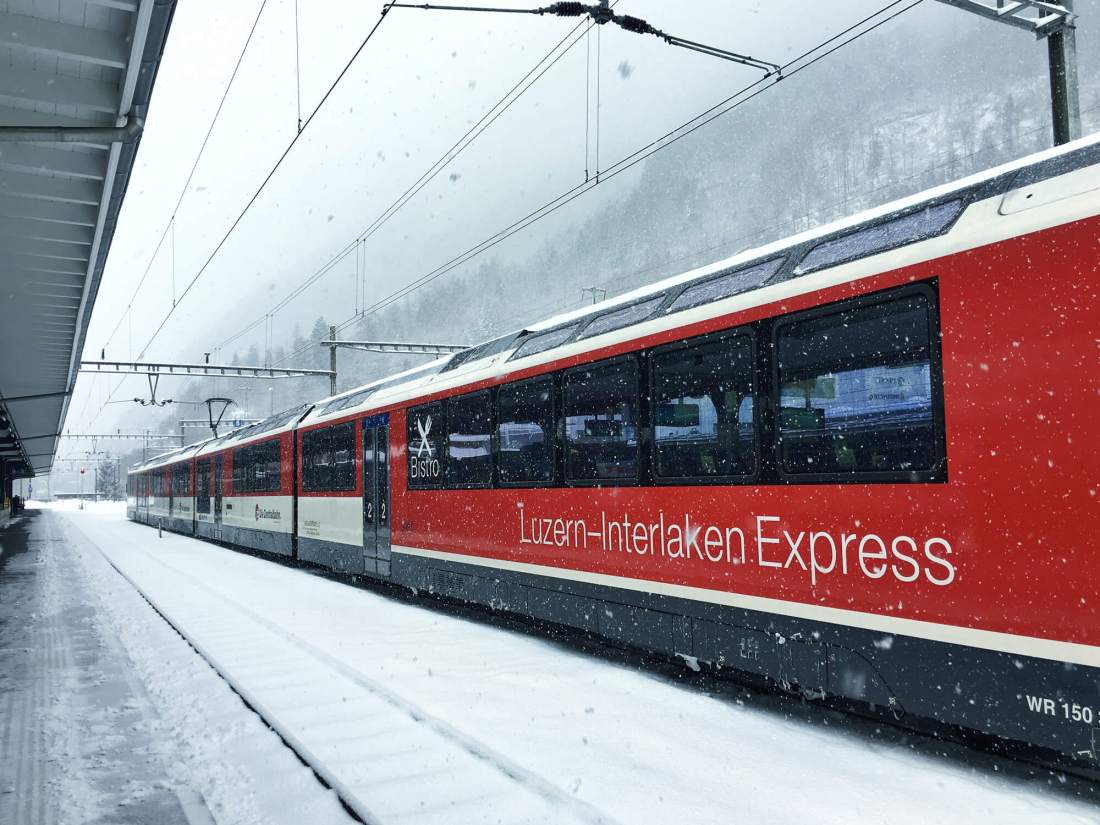
Especially as someone who had found every single nook and cranny of Switzerland picture post card perfect. So, what’s not to like about the truly awesome Lucern – Interlaken Express route? In fact, for once I was happy that a journey would take longer than I had expected – 1hr 55mins to be precise.

Image source

Why should I be the only one that enjoys such magnificent views? (I know! How magnanimous of me, right?) So, I sent a few of such pictures to my friend, who then dutifully responded with a few of such (👍 and ❤️) emojis.

Basking in the sunny snowy views from my train seat, I then turned to the Internet to see what’s the “official word” about this beautiful train ride. The Swiss tourism website said thus

During a train ride of roughly two hours, passengers marvel at five crystal clear mountain lakes that gather the waters from various rivers and waterfalls. At the lakeshore, steep rock faces of surrounding mountains rise up protectively and provide unique photo motifs.

Shortly before starting its steep, winding ascent to BrĂĽnig Pass, the train changes to cogwheel drivetrain technology in order to conquer the gradient. With good reason, the Luzern–Interlaken Express is part of the scenic GoldenPass Line leading to Interlaken and on to Montreux. 

Source

Just as I was trying to situate this romance within my 2-dimensional window view, something caught my eye. And soon enough I discovered I was unable to peel my eyes off these spectacular images from my phone screen.

Image source: MySwitzerland

I now sent my friend the above image and texted him saying that’s the route I am actually on.

Now as if by magic, this stubbornly laconic friend of my mine started on a paragraph of expletive ridden love letter to the stunning beauty of the Swiss landscapes. And I must confess, I found these ‘drone’ shots much more appealing than those that my rectangular windows framed for me along the route.

In order for me to get a more first person / visceral perspective of such a view, I wish I had the equivalent of the “tail camera airshow view” – that one occasionally finds on aircraft – in the train.

What just happened?

I was enjoying the view. But I was sure, the “view of the view” (call it a meta view, if you will, but let me call it the “drone view”) would perhaps be a more spectacular one. And I could bet, that drone view would have trumped my window framed 2D view in story telling too!

That’s why most of the airlines ads we see (print / video / OOH) have more footage/shots like this ..

Image source: Turkish Airlines

.. than those like this.

Image source. Photo by Babaroga / Shuttersrock

The “drone view” vs the “2D window view”.

Taking the view of the view vs well, the view.

If you think about it, that’s what financial advisors never tire of telling us.

The Ayodhya Stock Exchange

No, I didn’t make up that click-baity phrase. A popular news portal had this headline: “‘Ayodhya Stock Exchange’: 10 stock ideas to play the Ram Temple theme”.

Another one said “Ayodhya Ram Mandir becomes new investing theme: 6 stocks in focus”, and another “Ram Temple inauguration: Here are 12 shares that may benefit from Ayodhya tourism boom” and the list goes on.

But if you hear the other voices, they would tell you to stick to fundamentals and take the broader view. In other words, they caution us against mixing this “2D window view” with what should have ideally been a “drone view” that frames the larger journey for us.

And come to think about it- in many other aspects in life: from our considerations that drive career pivots and choices, to relationships, to many other things big and small – wouldn’t this be sage advice?

Of reminding ourselves of the need for taking the “view of the view” vs well, the view?

[Featured Image: Source]

Of Similarities and Split Screen

Quick Read: There are ads that try and communicate a message of ‘contrast’ and there are those that communicate ‘similarity’. While the former type of ads ride on a diverse set of story telling devices, there seems to be an interesting trend in the story telling devices deployed by the latter set. It’s the ‘Split Screen’.

A lot of advertising is meant to tease out / explain / amplify an element of a brand that is supposedly in contrast w.r.t the competition. Think about it for a moment and think of the core narratives behind most of the ads that you see around.
A lot of advertising narratives tend to fall into this camp, where they try to land a message through a narrative that is designed to communicate a contrast – sometimes in a straightforward manner or sometimes in perhaps a tongue in cheek style.
A few share worthy ads of that kind below.
1. Jeep,  Anti Manifesto
(Agency: Arnold Worldwide. H/T: Bhatnaturally)
And oh, btw just for fun, see this one and it’s hard to not think that the Jeep’s creative team didn’t have this in mind while conceptualizing the above work.
2. Fevicol, Ezee Spray
(Agency: Ogilvy)
3. Eko Kom, Flight Attendants / Garbage Collectors
 
(Agency: Havas, Prague. H/T: Bhatnaturally)
As you can see, ads that have ‘contrast’ as the core message, ride on a diverse set of story telling devices.
Interestingly, this is in contrast with ads where ‘similarity’ is the core message.
When similarity is the core message..
.. there seems to be an interesting trend in the story telling devices that most of them seem to draw upon. Most of such narratives are rooted in a singular story telling device – the split screen.  
Sample the following examples.
1. The Day Before 
(Agency: Leo Burnett Chicago)
2. McDonald’s
(Agency: Agency: Leo Burnett Chicago)
3. John Lewis
(Agency: DDB Worldwide)
4. Coca Cola UK
(Agency: David The Agency, Buenos Aires)
For the record, the split screen as a story telling device has also been used in ads that seek to communicate a contrast.
Like this one from Apple.
In fact this entire campaign for iPhone (in May 2017) had creatives that all used the split screen.
What other story telling devices have caught your eye in the recent past?


The Stranger Self

Quick Read: Our future selves are strangers to us. For any brand marketer that wants to drive a habit change among people, this could be a million dollar insight.  

What advise would you give your younger self? 

That’s a common question Tim Ferriss asks his interviewees in The Tim Ferriss Show.

The answers are always wise, instructive and helpful. As they ought to be. For the exercise of looking back and reflecting upon one’s journey so far, tends to be a highly visual and (thereby) a pretty straightforward affair in our minds.

Brands like Tine – a Norwegian Dairy brand – have even used it as a construct to tell one of their stories. (more on this in my older blog post)

The idea of looking into a younger version of oneself was also the central theme of a fascinating photography project called Reflections by Tom Hussey.

Each photograph features a person looking into a mirror and seeing a reflection of his/her significantly younger self. Result – a powerful and a poignant means to communicate the story of someone whose mind has gotten stripped of its more recent memories.

Novartis – the pharma giant, used these photographs towards a campaign for their Exelon Patch – a prescription medicine for Alzheimer’s. (more here)

(Photographs by Tom Hussey as part of his Reflections series)

Now let us try flipping the scenario.

Let us try envisioning our future selves.

Think about it for a moment. Is it as easy as envisioning our past selves?

The answer tends to be in the negative. Well, mostly.

Many studies establish our biological truth that one’s future self is a stranger within each of us. For example, Jason Mitchell – Professor of Psychology at Harvard –  has found that when we picture ourselves experiencing something pleasurable a year from now, many of us use the brain areas involved in imagining a stranger.

Biju Dominic’s latest piece is on this very insight and what it could mean for us as a society.

He says that it is this lack of relationship between our present self and our future self that is at the core of many of our behavioural problems — from not saving enough for our retirement to unhealthy lifestyle practices and many more.

This is such a compelling insight that I am tempted to go out on a limb and wager that this lack of a more intuitive relationship between our present and our future selves could actually be the key to solving for classic marketing challenges like low levels of penetration prevalent across several future focussed categories like BFSI (Mutual Funds, Insurance) or Beauty (Anti Ageing) or other FMCG categories (like Oats, Sugar free F&B variants) etc.

The solution to this lies in getting our present self to be more aware of, relate to and empathise with our future self.

Is-that-me-in-the-mirror-1024x682
Pic Source

But that’s the challenge.

It is known that the feeling of empathy between two persons diminishes as the physical and temporal distance between them increases. So how do we get our present selves to build empathy with a self that is 20 or 30 years ahead in future?

Now that could be a great problem worth solving for, with creative possibilities in marketing communications.

Biju Dominic’s article even provides thought starters for possible approaches. He writes..

Hal Hershfield, a social psychologist at UCLA Anderson found that people who spend a few minutes getting acquainted with a computer-generated simulation of what they might look like in the future were motivated to make better decisions about retirement planning.

Now that’s a spring board of an idea – using computer generated simulation to show what one might look like in the future.

Now hold on to that thought and juxtapose that with this famous Dove Sketches execution.

Do you also see the possibilities that I see?

(Featured Image: The Old Man in the Mirror by Vergyl)

On Stock Footage

Quick Read: The ubiquitous stock footage that we see in most visual media around us can prove to be more influential than we can imagine.  

It all started with this video.

Tickets for the Fyre Festival were sold for up to $12,000 with promises of VIP chartered flights, luxury eco-friendly villas and gourmet food. The reality as it turned out over the last few days was very very different. And the Internet has been going crazy over this. (read here, here for more on this)

For me it’s the (above) video that fascinates the most. Composed of what looks like glamorous stock footage and some fancy copy (like, “..on the boundaries of the impossible..”) and made to look more like a video for a bikini fest than that for a music fest, it had all the clippings (pun intended) of an inflated bubble of pseudo reality.

Speaking of stock footage you should read this short poem by Kendra Eash called ..

This is a generic brand video. 

It begins with these lines..

We think first
Of vague words that are synonyms for progress
And pair them with footage of a high-speed train.

And goes on to poke fun at the stock language and footage that is often used by brands in their advertising campaigns.

The interesting thing is what Dissolve did with this poem.

With a stroke of marketing genius, Dissolve – a stock footage company went ahead and made a video of this poem using (surprise, surprise) its own stock footage and turned it into an ad for itself!

The result – work that is in equal parts parody and ad that went on to win the 2015 Shorty Award for Best in B2B. See the video here.

Extending this thought over the years, Dissolve brilliantly leveraged the US Presidential elections campaign and made This Is a Generic Presidential Campaign Ad on very similar lines. This again won them a Shorty Award for 2017.

Now with the ‘Fyre Festival Fiasco’ I really hope they go ahead and make a ‘This Is a Generic Music Festival Video Ad’.

Can stock footage say anything about us as a society? 

image-hack
Image_Hack, (Pic Source)

A lot, it turns out.

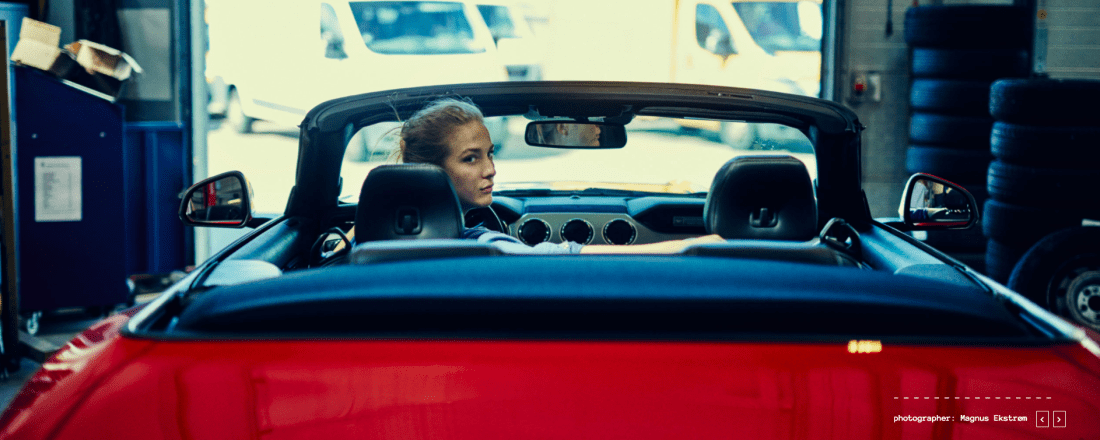
Mindshare in Denmark tapped into an insight around how the advertising industry has been perpetuating stereotypes around beauty over the years (knowingly or otherwise).

So they turned to one of the largest stock footage sites – Shutterstock and devised what they call as Image_Hack as an initiative for the Dove Real Beauty campaign.

Check out this video for more detail.

Though it arguably feels a bit ‘case study-isque’ (you know what I mean) it is definitely an insightful, novel and a refreshing approach to give more wings to the conversation around “Real Beauty”.

One stock photo at a time.

(Bonus Link: Speaking of stock footage, check out this new music video from Cassius, featuring Pharrell Williams and Cat Power. The amount of stock footage the director Alexandre Courtes went through to find all these corresponding split screen images must have been staggering!)

(Featured Image Source: Image_Hack, Photograher: Magnus Ekstrøm) 

Convergent Evolution

Quick Read: ‘Convergent Evolution’ while being a concept from the life sciences could actually be seen playing out with a greater degree of recurrence in creativity and arts.

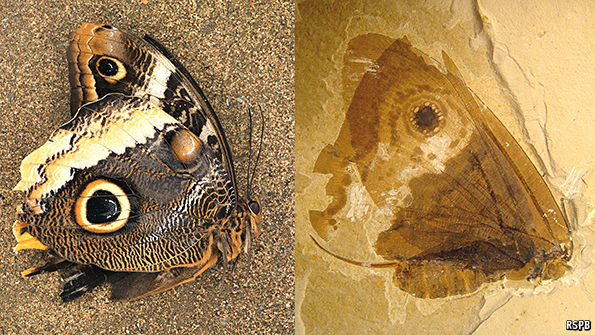
What you see here on the left is the picture of a butterfly. But what what you see on the right, is not.

Convergent Evolution

(Pic source: The Economist)

In fact it is that of a fossil of a lacewing (an insect) called Oregramma illecebrosa. Supposedly it flew in the forests of the Jurassic period between 165m and 125m years ago, dying out 69m years before the first-known butterfly fossil. (source)

These are examples of Convergent Evolution: the emergence of similar bodies in unrelated groups of species, to permit the pursuit of similar ways of life.

Another example of Convergent Evolution is the Jurassic Ichthyosaurs and the modern Dolphin.

CONVERGENT EVOLUTION (1)

(Pic Source: The Dinosaur Store)

But that’s not the interesting part.

Convergent Evolution while being a concept from the life sciences could actually be seen playing out with a greater degree of recurrence in creativity and arts; where it can loosely be defined as follows:

Convergent Evolution in the arts is the emergence of similar kinds of ideas and creative executions from unrelated sources or disciplines, to permit the pursuit of similar expressions.  

Let us take two projects Futuristic Archaeology and Inherit the Dust and a set of OOH executions by Amnesty International as examples.

Futuristic Arhaeology 

Mongolia has long been home to one of the world’s largest nomadic populations, with more than a third of its population pursuing their livelihood on the vast Mongolian-Manchurian steppe. But in recent years, the grassland has been drying up.

Korean photographer Daesung Lee’s series Futuristic Archaeology explores what the desertification of their home means for Mongolian nomads through a series of fantastically staged images.

They feature landscapes-within-landscapes — barren, desert environments inlaid with decidedly greener ones.

futuristic-archaeology-1-1024x682

futuristic-archaeology-10-1024x683

(Images from Futuristic Archaeology. Full collection here)

These incredible scenes aren’t digitally orchestrated: Lee actually printed out billboard-sized photographs and strung them up on site, using former nomads as models. Inside the smaller images, people ride horses, herd goats, and go about their lives fenced in by red rope barriers. (source)

Inherit the Dust

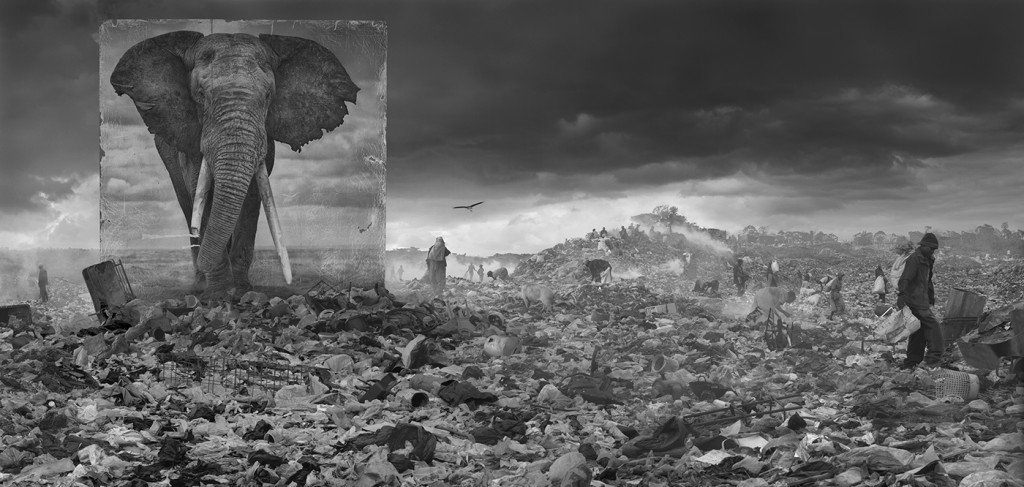
Nick Brandt is as much an activist as he is a photographer. After spending 15 years working in Africa he was depressed by the changes he saw sweeping across the African landscape, like illegal logging predicted to eliminate some 30 million acres by 2030.

Thus was born his latest project Inherit the Dust a collection of  moody portraits of elephants, giraffes, and lions to call attention to Africa’s vanishing megafauna. Each picture in this project has been meticulously staged and exquisitely shot in black and white to bring to life these beautiful creatures wandering the landscapes they’ve long since been driven out of.

Brandt_04-1024x474Brandt_05-1024x474Brandt_008-1024x489

(Images from Inherit The Dust, Nick Brandt. Source)

While with Inherit The Dust, the quiet dignity of the animals that Nick Brandt photographs is shockingly juxtaposed against the indignity and disarray of our own…

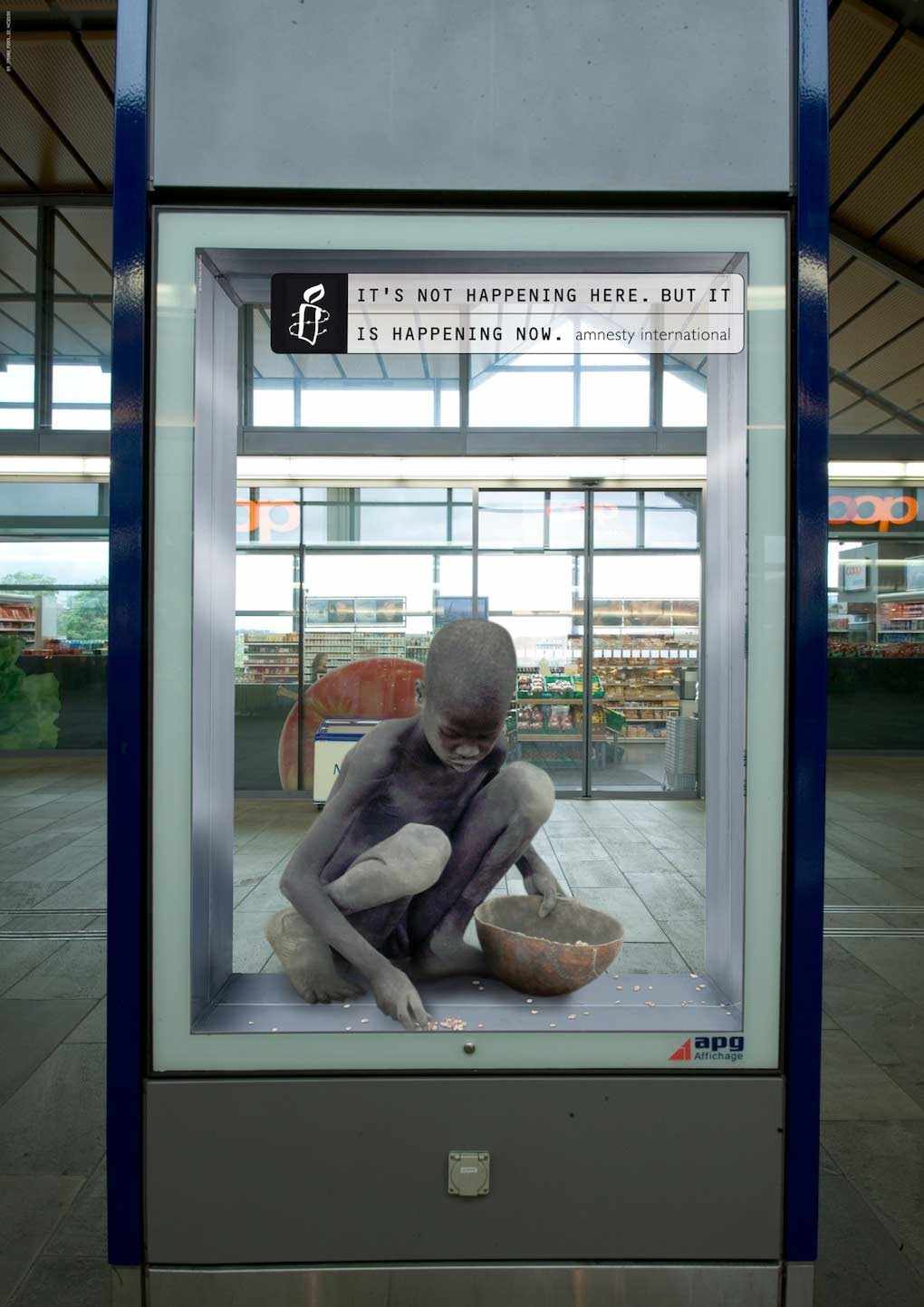
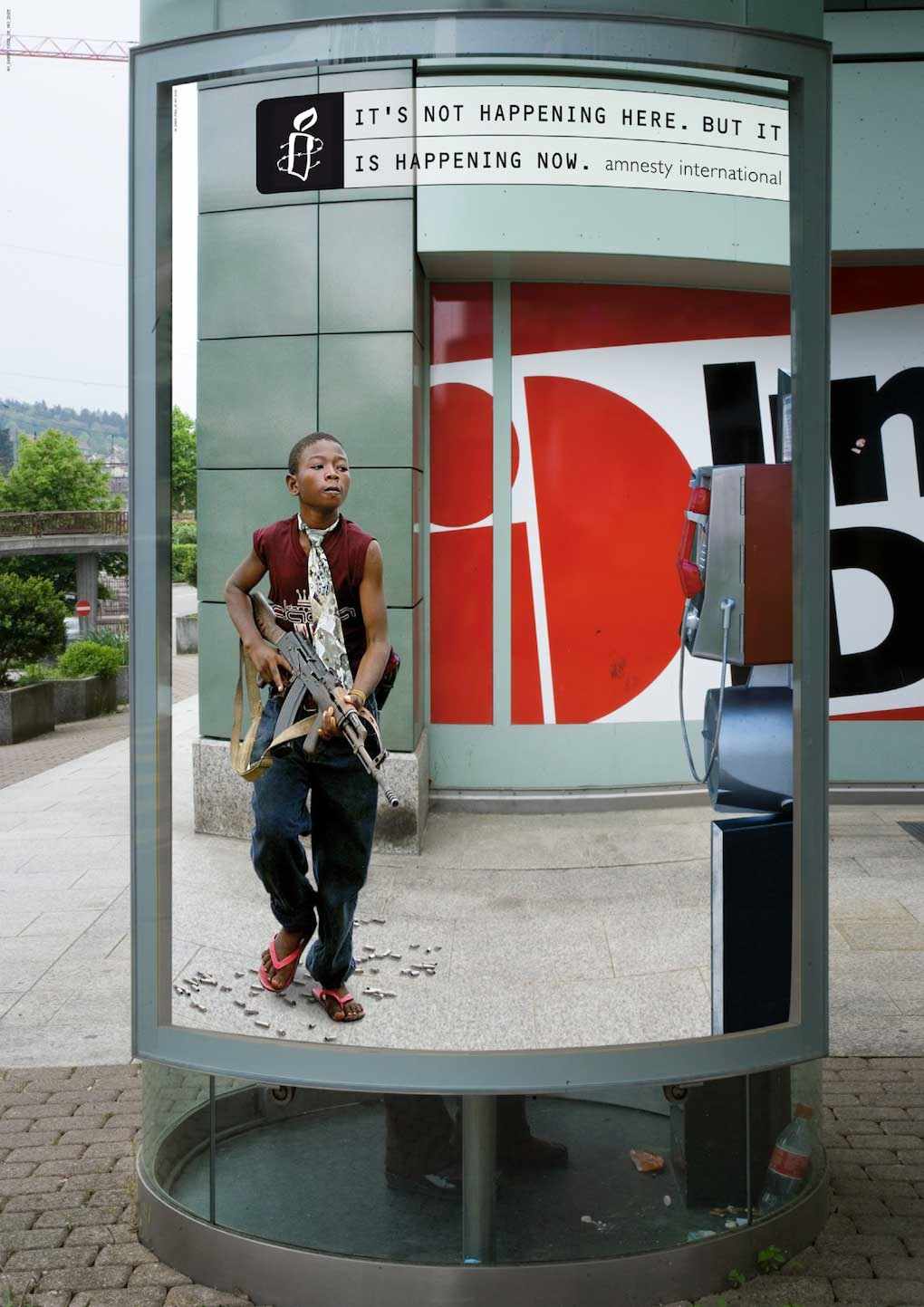
…. Amnesty International flips this concept a bit

…by juxtaposing the shocking indignity of human rights violations against the backdrop of a quite dignified civic life that most of us easily take for granted.

Amnesty International_1

Amnesty International_2

(Advertising Agency: Walker, ZĂĽrich, Switzerland. More executions here, here and here)

As one reviewer of Nick Brandt’s Inherit the Dust puts it..

“These haunting photographs force us to think about what we are doing, and who is at stake.”

Now even at a nuanced level, if you come to think about it, isn’t this statement equally applicable for all the other projects featured here?

Perhaps that’s what makes them apt examples of convergent evolution.

(Featured Image: Wasteland with Elephant, by Nick Brandt from Inherit the Dust)

TGFA

Quick Read: Some communities resort to fascinatingly extreme means to preserve and propagate their culture. Fortunately for the rest of us there is advertising.

On the outskirts of Pretoria, South Africa is an extremely closed community called Kleinfontein.

It is home to a small group of 1,200 Christian Afrikaners who embrace traditional Afrikaner culture and exclude all others from their settlement.  

They are so excluded from the larger population that at the entrance of the settlement is a gate monitored by security guards 24 hours per day who let in visitors only if they have an invitation.

NatGeo

(Pic Erica Canepa, source: Nat Geo)

No wonder then, when Erica Canepa – a freelance Italian photographer started researching the community she couldn’t find even a single photo of the place. Thus began her quest to get into the community that culminated in a brilliant NatGeo piece.

The big insight that dawns from her NatGeo picture story is that the Kleinfontein’s way of life is more about preserving their unique cultural identity than simply keeping others out. 

“I found it’s not about the race; everything is about the culture, and racism became a consequence of their desire to protect themselves and their culture.”

After all, isn’t this need to preserve our collective DNA (a.k.a culture) universally applicable?

Ask the ultra orthodox Rabbis if you are still in doubt. 

Recently as part of their long struggle to keep the modern media from corrupting their ultra orthodox Rabbi community also called the Haredi, their council gathered earlier this year to discuss a “great spiritual danger” a.k.a WhatsApp.

Why?

Because it turns out, it has become a popular method for their followers to form groups for exchanging gossip and even “immodest” images and video clips. (source)

Consequently, as the economist reports..

The ultra-Orthodox community’s purchasing power is such that Israeli mobile-phone providers agreed to market special “kosher connection” smartphones, without the offending apps and allowing only carefully regulated information services. To make sure the faithful use them, these devices have their own group of phone numbers and a distinctive ringtone.

Haredi Phone

(A Haredi man with a mobile phone. Pic Source)

Apparently, what do the younger Haredim that want to ignore the edict do?

Interestingly, as the report says, they buy two mobile devices: one for calls within the community, while tucked away in another pocket is a smart phone to keep up with the outside world.

The extent to which these younger Rabbis go to, to get what they want while still ostensibly trying to appear “kosher compliant” speaks (ironically) about their commitment to be part of the larger community moment to preserve and propagate their core cultural ideals and ideas.

Meanwhile elsewhere..

Did you know of this ongoing plot to liberate North Korea with smuggled episodes of Friends?

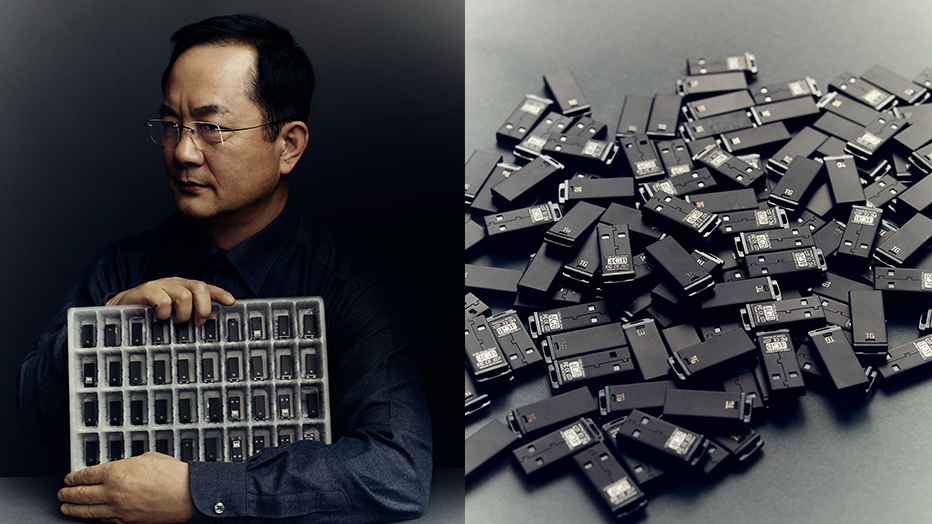
Not just Friends. In fact by the estimates of the group that has been meticulously executing this cross border “culture smuggling”, over 3,000 USB drives filled with foreign movies, music, and ebooks land into the North Korean territory annually.

Kang Chol-hwan, the founder of this group likens the USB sticks to the red pill from The Matrix: a mind-altering treatment that has the power to shatter a world of illusions.

north_korea_lead

(Kang Chol-hwan and the thumb drive guerrilla invasion. Pic Source)

Now that’s some real transformative power of cultural propagation.

Fortunately for the rest us there’s advertising to lend a helping hand. 

See any festive ad now – anything that you can think of.

And arguably it would be about this one single thing – preserving and propagating our culture, within communities and across generations.

This festive season, amidst all the fun and frolic, among family and friends as you exchange your warmest gifts and greetings why not reflect for a moment and ask yourself..

Would this festive occasion still hold the same special meaning to us with all its finer nuances and rich textures without this thing called ‘advertising’?  

Festive Greetings and Thank God For Advertising! 

(Featured image source)

On Points Of View

Quick Read: Some businesses thrive by driving a singular POV regarding their offering amongst their target audience. And there are some that take pride in celebrating multiple POVs regarding theirs. 

Some elite restaurants in Japan are ichigen-san okotowari (first-time customers not allowed), meaning a regular customer has to introduce you before you can make a reservation.

The genius of this system is that it ensures that you buy yourself into a singular and a specific POV about its food, experience and its clientele if you want to be able to get a reservation at the restaurant.

Almost by definition.

And the story continues. One customer at a time.

It works because the ichigen-san okotowari system ensures that a single consistent POV gets bought into, replicated and passed on.

Meanwhile elsewhere..

A recent print campaign by Shutterstock made it to the shortlist of Clio Awards 2015 under the Print category.

As a purveyor of stock photos, Shutterstock.com wanted to celebrate the fact that an image can potentially fire up your imagiation in multiple ways.

So it brought this idea to life through the following executions.

ShutterStock_Shark

ShutterStock_Broken

ShutterStock_Baby

[Click on the images for a larger view]

Agency: Leo Burnett. Images via: Clio Awards. (HT Bhatnaturally)

A truly insighful execution that celebrates the multiple POVs that an image can inspire. As Mr. Bhat says..

The irony is that this is too close to reality. We’ve all seen how art directors search for inspiring images first and then try and retrofit an idea. Also, a visual idea which was rejected or didn’t make the cut for a pitch in one category can be adapted to a totally unrelated category. This campaign actually puts a positive spin on that.

Does your brand – and by extension its strategy and execution –  thrive on driving and sustaining a singular POV or does it celebrate multiple POVs? 

[Bonus Link: Speaking of POVs, you should check out Hardcore – the world’s first action POV film that got premiered in the latest Toronto International Film Festival to critical acclaim.  The entire movie is shot from a single POV and boy is it intense!]

(Featured Image: Shutterstock Print Execution. Source)

The Other Side Up

Quick Read: Invert the traditional workflows, dispel orthodox notions and see lateral thinking come to life for newer ways of going about things.  

Every once in a while there come initiatives and executions that turn the tables on traditional concepts that we have always taken for granted. Such instances compel us to re-evaluate our existing notions of what we consider to be the norm and thereby make great fodder for some lateral thinking.

Three such recent examples.

1. Photography

Trevor Christensen is a photographer who shot to international acclaim with his recent series called Nude Portraits.

What is interesting about this project? In this series the photographer is naked, the subjects are not.

According to him: The photographer/subject paradigm is one of inequality. Nude Portraits is about leveling the playing field in an unorthodox way. Instead of focusing on bringing the subject to a place of ease–where I am, this project brings me to a place of vulnerability.

Nude Portraits

(Source: Nude Portraits by Trevor Christensen)

The results are an interesting commentary on the photographer/subject paradigm and hold a thought provoking mirror to the subject and photographer’s feelings around vulnerability, shame, guilt and self composure.

Talking of portraits, meanwhile elsewhere…

Samsung had an interesting set of executions that reframed selfies as Self Portraits.

2. Painting 

Rainworks is a project  by Peregrine Church.

What is interesting about the project? It is art that appears when it rains! Check this video out:

This cool project challenges our notions around negative space and opens up newer possibilities of creative expression.

Talking of negative space, meanwhile elsewhere…

Volvo introduces Life Paint to promote safety for those both inside and outside its cars.

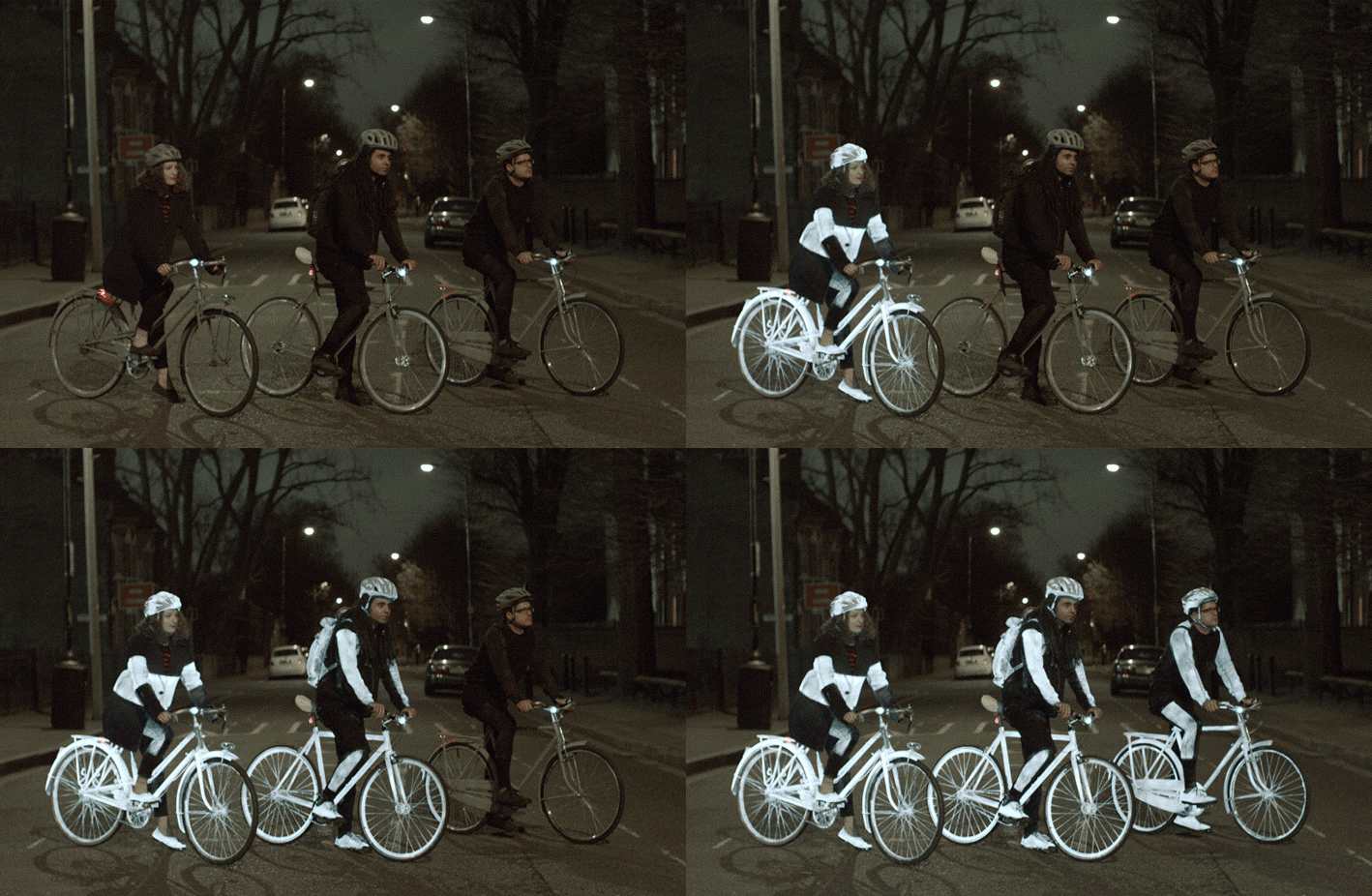
According to this must read post, Life Paint is a unique reflective safety spray aimed at increasing the visibility and safety of cyclists, and other vulnerable road users.

What makes it special? It is invisible by daylight, but glows brightly in the glare of car headlights, making the invisible, visible at night.

Life Paint

(Source: Life Paint by Grey London for Volvo)

The Life Paint concept was developed by creative agency Grey London, in collaboration with Swedish startup Albedo100 and is one of a series of projects to highlight the key product innovations of the all-new Volvo XC90.

3. Reviews

Online reviews have become both a boon and a bane for many a marketer. As this HBR post says,

The idea that a new (reviews) website or app can undercut years of careful messaging may be deeply frustrating to marketers—but it is a reality they must face.

But what if we turn the tables around on the traditional concept of reviews. Australia based Art Series Hotel Group has recently initaited what it calls Reverse Reviews‘. 

What is interesting about the concept? While you review their hotels, you would also be reviewed by the hotel. Get five stars and get a free night to stay again (applicable between April 17 until May 31 2015).

Reverse Reviews AU

(Source: Art Series Hotels )

Talking of reviews, meanwhile elsewhere…

Today’s new world of ‘on-demand everything’ is being touted as The Shut In Economy.

Read this brilliant piece on why this is so and you would probably agree that institutionalising a ‘Reverse Review’ system could just be what the doctor would have ordered to make our world a better place.

Result: People behind the doors (who use the apps, platforms and services to place their orders online) and the people outside the doors (those that deliver) could live in a world that is more inclusive and respectful of each other.

Isn’t it?

(Featured Image: ‘This Side Up’ table design by DEDE DextrousDesign)

Sonder And The Art Of Photography

Quick Read: Perspectives can be valuable.  A Kickstarter campaign shows us how to create value out of them while a multi million dollar campaign from a global brand shows us what it can learn from the former.

Sonder is a fascinating word.

It is the realization that each random passerby is living a life as vivid and complex as your own—populated with their own ambitions, friends, routines, worries and inherited craziness—an epic story that continues invisibly around you. (source)

At a fundamental level, Sonder for me is a shift in perspective that makes me cognizant and appreciative of the tens of thounsands of stories unravelling around me, in all their characteristic diversity and profundity.

It’s sonder that makes Street Photography fine art. It’s sonder that makes Vernacular Photography artistic to our eyes.

In fact, it’s sonder that can even help us put a price to perspectives.

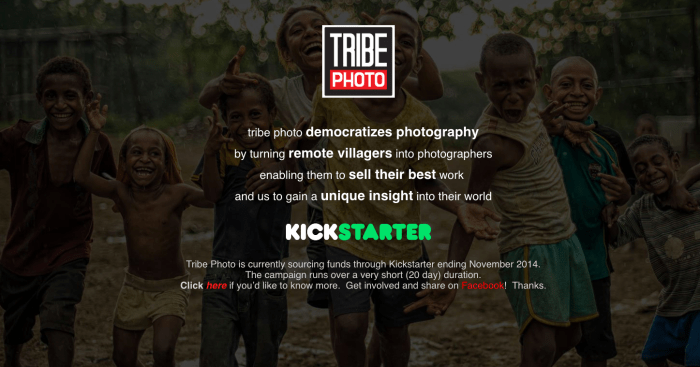
Heard of Tribe Photo? James Kell is a photographer and sailor. In his words..

Recently during my work in Haiti I had an opportunity to put my subjects on the other side of the lens – to give them the chance to experience the pleasure of photographing people.  I found the perspectives of the locals – when they were making the photographs – was completely, strikingly unique. This was the kernel of the idea that is now Tribe Photo.

Read more about the business model of Tribe Photo on its kickstarter page.

But the essential idea that underlies Tribe Photo is insightful and impactful in many ways than one. It gets to the heart of the “art in photography” by transcending the narrative of the camera gear. It puts a value to perespectives as seen through the photographer’s eyes and thereby puts the photographer first, celebrates the art of photography and gives back to the community.

Tribe Photo

I Am Generation Image

Now, contrast that to the campaign that Nikon is introducing this week timed for the Christmas shopping season. This campaign with an estimated budget of $ 5 – $7 million themed “I am Generation Image“, is essentially a plea to the generation Y – the millenials –  to shoot more with a DSLR than with their phones. (source)

So what is this campaign all about? Check this video out.

This attempt at speaking to the millennials by asking them “Are Your photos good enough?” loses out on two counts:

  1. In putting people first: in fact it challenges them in a way that might actually provoke them to go out of their way to shoot outstanding photos with their phone camera
  2. In celebrating the art of photography: While the campaign does have at it’s core this page being promoted through this video audaciously titled “See Through The Eyes Of This Generation”, the content on the page tries hard to dumb it down for their TG. Sample this: “Zoom out as wide as you can, and you can even do selfies on a DSLR”

Really? All this from the brand whose theme has been to be proudly “At The Heart Of The Image”?

(Featured Image: IamGenerationImage.Com)

Exploring the Boundaries Of The Traditional Concept

Quick Read: The idea of Traditional Concept and its reliance on metrics like Purchase Intent for validating product ideas is being challenged. More so in the realm of Retro Innovations.  

The Traditional Concept and its classic three part construct – Insight | Benefit | Reason To Believe – to represent a product idea for consumer research has been coming under scrutiny. In fact, there are even obituaries being written about it citing reasons like:

  • It is too rigid, rational and over – engineered as a construct to represent a product idea
  • Puts far more emphasis on our deliberative ‘System 2’ thinking
  • Fails to take into account how consumers tend to make decisions (unconsciously, quickly, swayed far more by emotional impact and immediate impressions)
  • Relies heavily on metrics like purchase intent for validation

Academic arguments apart, one thing that a Traditional Concept cannot possibly help with is screening product ideas that fall into the realm of Retro Innovations – new products that are designed around connecting us with the past and invoking our nostalgia.

Two recent product examples where a traditional concept could have had a tough time cracking the consumer code:

The ‘Miller Light’ Retro Design And Its Placebo Effect

Miller Lite is known as the first mainstream light beer in the US. But over the years, the U.S. sales of the beer had been declining, trailing Bud Light, Coors Light, and Budweiser. Revenue dropped 7 percent in just 2013 (source). So in January 2014, as part of a product placement tie in with the film Anchorman 2, Miller released a limited edition version  of its original 1975 white can.

bottle(The Retro Designed Miller Lite Can)

Surprisingly for Miller Lite, this retro designed packaging proved to be a success (it sold 32 million cans more than that during YTD 2013) that by September 2014 it decided to switch back to this packaging full-time, including on bottles and tap handles.

And reportedly, taken by surprise, when Miller marketers conducted some post launch evaluation, they learnt that the Millennials had liked it because it seemed iconic and old while their parents had liked it because it reminded them of what they used to drink. Strangely, customers even started telling the company its “new” beer tasted better even though they were still drinking the same old beer(!)

Obviously, a Traditional Concept and conventional testing for metrics like Purchase Intent, could not have driven the brand along this unexpected ‘retro’ direction.

Leica M Edition 60 – The Digital Camera Without An LCD Screen

To celebrate the 60th anniversary of the legendary Leica rangefinder system, the company recently announced the Leica M Edition 60. The unique thing about this camera is that it does something bold – it ditches the back LCD screen and all onboard menus. One cannot even review their photos. It leaves photographers with physical controls of aperture, shutter speed, and ISO. And it forces them to look through just one thing – the viewfinder.

Is this a good idea? Will consumers like it? Does it even make design sense? The debate is on.

But one thing is certain:  this reductionism as a celebration of photographic art – as Leica calls it – could not have been conceived of through the lens of the Traditional Concept and testing for Purchase Intent.

Is the Leica M Edition 60 too high end to be a realistic example here?

Well, then let’s get a bit ‘low end’ – Music CDs and online music.

Let’s think of product ideas in terms of Traditional Concepts and test for their Purchase Intent to sell online music to the Japanese vs the good old CDs. 

And good luck to us doing that!

JAPAN-MUSIC-01-master675(AKB48, a popular Japanese group, has sold CDs containing tickets to its performances, encouraging fans to buy multiple copies. Source)

(Featured Image: The New Leica M Edition 60)