
Convergent Evolution

Quick Read: ‘Convergent Evolution’ while being a concept from the life sciences could actually be seen playing out with a greater degree of recurrence in creativity and arts.

What you see here on the left is the picture of a butterfly. But what what you see on the right, is not.

Convergent Evolution

(Pic source: The Economist)

In fact it is that of a fossil of a lacewing (an insect) called Oregramma illecebrosa. Supposedly it flew in the forests of the Jurassic period between 165m and 125m years ago, dying out 69m years before the first-known butterfly fossil. (source)

These are examples of Convergent Evolution: the emergence of similar bodies in unrelated groups of species, to permit the pursuit of similar ways of life.

Another example of Convergent Evolution is the Jurassic Ichthyosaurs and the modern Dolphin.

CONVERGENT EVOLUTION (1)

(Pic Source: The Dinosaur Store)

But that’s not the interesting part.

Convergent Evolution while being a concept from the life sciences could actually be seen playing out with a greater degree of recurrence in creativity and arts; where it can loosely be defined as follows:

Convergent Evolution in the arts is the emergence of similar kinds of ideas and creative executions from unrelated sources or disciplines, to permit the pursuit of similar expressions.  

Let us take two projects Futuristic Archaeology and Inherit the Dust and a set of OOH executions by Amnesty International as examples.

Futuristic Arhaeology 

Mongolia has long been home to one of the world’s largest nomadic populations, with more than a third of its population pursuing their livelihood on the vast Mongolian-Manchurian steppe. But in recent years, the grassland has been drying up.

Korean photographer Daesung Lee’s series Futuristic Archaeology explores what the desertification of their home means for Mongolian nomads through a series of fantastically staged images.

They feature landscapes-within-landscapes — barren, desert environments inlaid with decidedly greener ones.

futuristic-archaeology-1-1024x682

futuristic-archaeology-10-1024x683

(Images from Futuristic Archaeology. Full collection here)

These incredible scenes aren’t digitally orchestrated: Lee actually printed out billboard-sized photographs and strung them up on site, using former nomads as models. Inside the smaller images, people ride horses, herd goats, and go about their lives fenced in by red rope barriers. (source)

Inherit the Dust

Nick Brandt is as much an activist as he is a photographer. After spending 15 years working in Africa he was depressed by the changes he saw sweeping across the African landscape, like illegal logging predicted to eliminate some 30 million acres by 2030.

Thus was born his latest project Inherit the Dust a collection of  moody portraits of elephants, giraffes, and lions to call attention to Africa’s vanishing megafauna. Each picture in this project has been meticulously staged and exquisitely shot in black and white to bring to life these beautiful creatures wandering the landscapes they’ve long since been driven out of.

Brandt_04-1024x474Brandt_05-1024x474Brandt_008-1024x489

(Images from Inherit The Dust, Nick Brandt. Source)

While with Inherit The Dust, the quiet dignity of the animals that Nick Brandt photographs is shockingly juxtaposed against the indignity and disarray of our own…

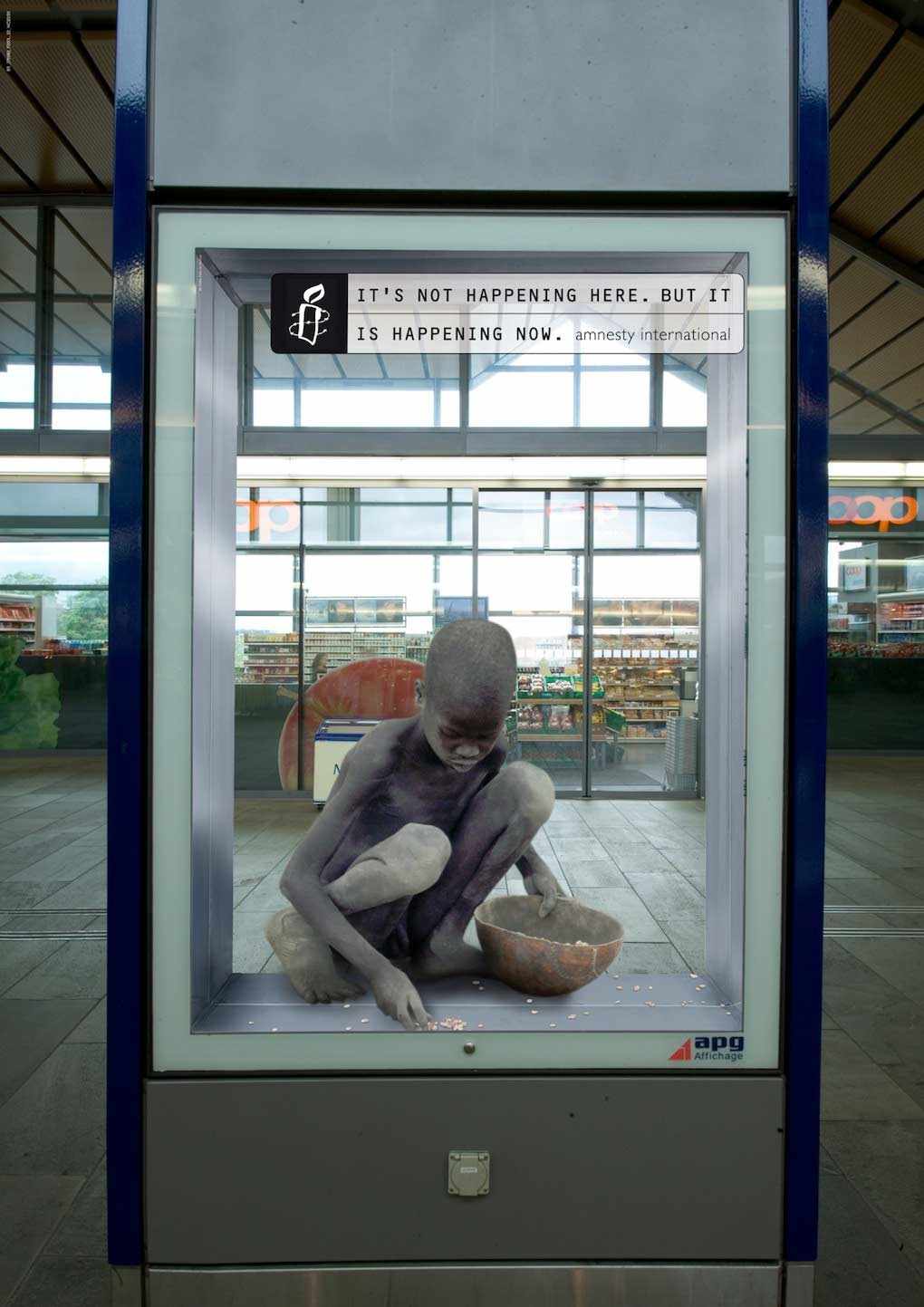
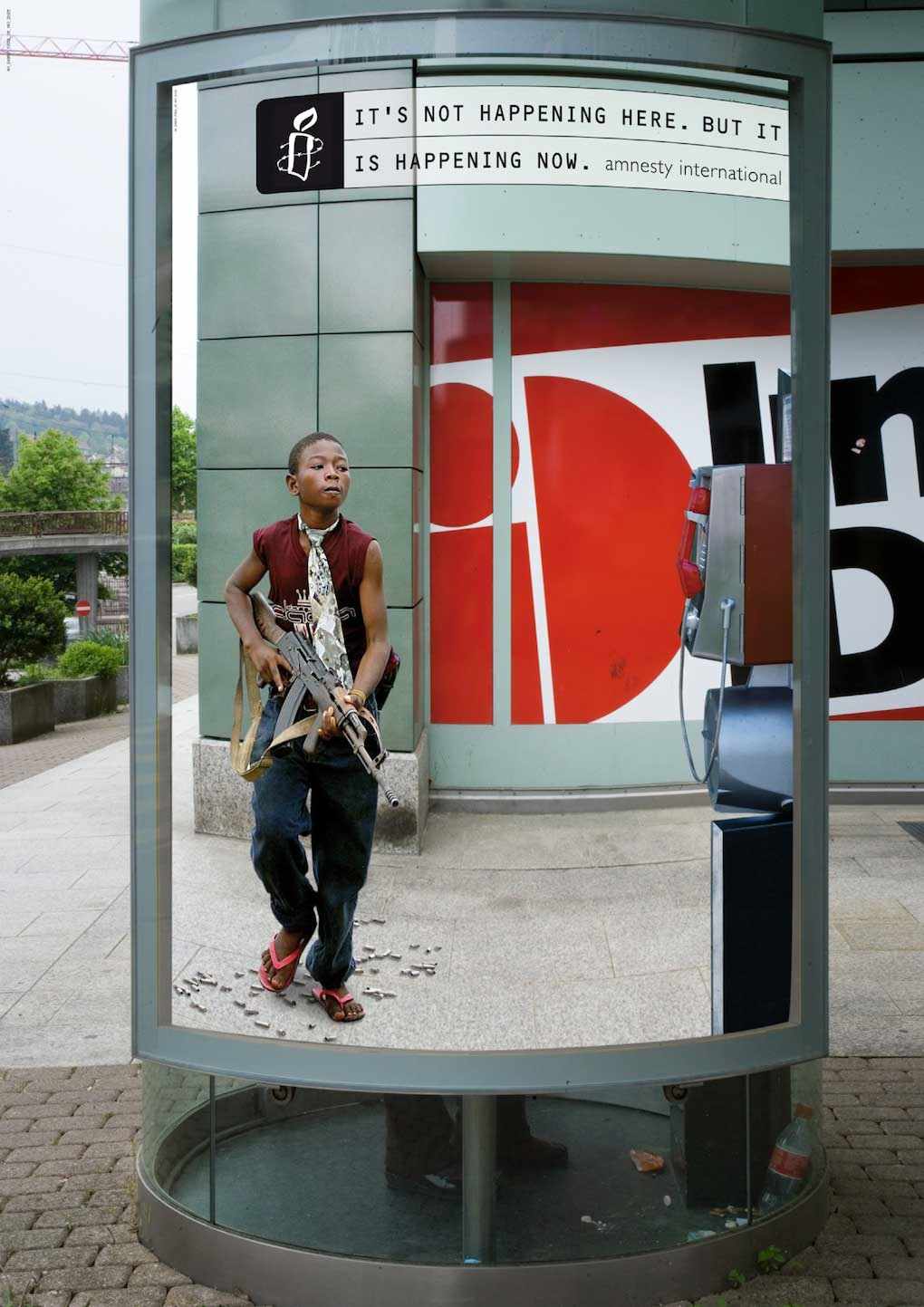
…. Amnesty International flips this concept a bit

…by juxtaposing the shocking indignity of human rights violations against the backdrop of a quite dignified civic life that most of us easily take for granted.
Amnesty International_1

Amnesty International_2

(Advertising Agency: Walker, Zürich, Switzerland. More executions here, here and here)

As one reviewer of Nick Brandt’s Inherit the Dust puts it..

“These haunting photographs force us to think about what we are doing, and who is at stake.”

Now even at a nuanced level, if you come to think about it, isn’t this statement equally applicable for all the other projects featured here?

Perhaps that’s what makes them apt examples of convergent evolution.

(Featured Image: Wasteland with Elephant, by Nick Brandt from Inherit the Dust)

Targeting Boredom

Quick Read: Marketers have always tried to dial up and capitalise on their consumers’ active interest and consideration levels. Now what if they could also leverage the lack of it? 

Let’s take boredom.

A common human emotion, boredom often makes us to instinctively reach out to our mobile phones.

With our attention spans thrown into a state of suspended animation, it is natural that we see ourselves seeking solace in the infinite scrolls of updates, tweets, videos, pics etc.

In fact there is research to prove that our boredom levels can be inferred from – surprise surprise – our mobile phone usage alone!

By leveraging features related to our mobile phone usage like recency of communication, usage intensity, time of day and demographics – the research has successfully built a machine learning model that can infer our state of boredom with an 83% accuracy!!

Bored-man-using-a-phone.jpg

(Pic source)

Interestingly, results from this research also suggest that people are more likely to engage with ‘recommended content’ when they are bored than when they are not.

Why?

Presumably because our ‘conscious choice’ takes a back seat when we are bored making us open to nibbling at a bit of whatever gets thrown our way.

Now these findings could have huge impact on targeting possibilities for marketers.

What if we could target not just by conventional cuts like demo, psychographics, affinities etc, but also by temporal mental states like say being bored, being excited, feeling low, feeling on top of the world etc? 

Not too unrealistic a prospect. Is it?

But when that happens, we are looking at dramatic implications for brands from across a range of industries – be it for media platforms marketing content, or for e-commerce players seeking to deploy real time pricing interventions  etc.

Now that’s interesting.

(Featured Image Source)

TGFA

Quick Read: Some communities resort to fascinatingly extreme means to preserve and propagate their culture. Fortunately for the rest of us there is advertising.

On the outskirts of Pretoria, South Africa is an extremely closed community called Kleinfontein.

It is home to a small group of 1,200 Christian Afrikaners who embrace traditional Afrikaner culture and exclude all others from their settlement.  

They are so excluded from the larger population that at the entrance of the settlement is a gate monitored by security guards 24 hours per day who let in visitors only if they have an invitation.

NatGeo

(Pic Erica Canepa, source: Nat Geo)

No wonder then, when Erica Canepa – a freelance Italian photographer started researching the community she couldn’t find even a single photo of the place. Thus began her quest to get into the community that culminated in a brilliant NatGeo piece.

The big insight that dawns from her NatGeo picture story is that the Kleinfontein’s way of life is more about preserving their unique cultural identity than simply keeping others out. 

“I found it’s not about the race; everything is about the culture, and racism became a consequence of their desire to protect themselves and their culture.”

After all, isn’t this need to preserve our collective DNA (a.k.a culture) universally applicable?

Ask the ultra orthodox Rabbis if you are still in doubt. 

Recently as part of their long struggle to keep the modern media from corrupting their ultra orthodox Rabbi community also called the Haredi, their council gathered earlier this year to discuss a “great spiritual danger” a.k.a WhatsApp.

Why?

Because it turns out, it has become a popular method for their followers to form groups for exchanging gossip and even “immodest” images and video clips. (source)

Consequently, as the economist reports..

The ultra-Orthodox community’s purchasing power is such that Israeli mobile-phone providers agreed to market special “kosher connection” smartphones, without the offending apps and allowing only carefully regulated information services. To make sure the faithful use them, these devices have their own group of phone numbers and a distinctive ringtone.

Haredi Phone

(A Haredi man with a mobile phone. Pic Source)

Apparently, what do the younger Haredim that want to ignore the edict do?

Interestingly, as the report says, they buy two mobile devices: one for calls within the community, while tucked away in another pocket is a smart phone to keep up with the outside world.

The extent to which these younger Rabbis go to, to get what they want while still ostensibly trying to appear “kosher compliant” speaks (ironically) about their commitment to be part of the larger community moment to preserve and propagate their core cultural ideals and ideas.

Meanwhile elsewhere..

Did you know of this ongoing plot to liberate North Korea with smuggled episodes of Friends?

Not just Friends. In fact by the estimates of the group that has been meticulously executing this cross border “culture smuggling”, over 3,000 USB drives filled with foreign movies, music, and ebooks land into the North Korean territory annually.

Kang Chol-hwan, the founder of this group likens the USB sticks to the red pill from The Matrix: a mind-altering treatment that has the power to shatter a world of illusions.

north_korea_lead

(Kang Chol-hwan and the thumb drive guerrilla invasion. Pic Source)

Now that’s some real transformative power of cultural propagation.

Fortunately for the rest us there’s advertising to lend a helping hand. 

See any festive ad now – anything that you can think of.

And arguably it would be about this one single thing – preserving and propagating our culture, within communities and across generations.

This festive season, amidst all the fun and frolic, among family and friends as you exchange your warmest gifts and greetings why not reflect for a moment and ask yourself..

Would this festive occasion still hold the same special meaning to us with all its finer nuances and rich textures without this thing called ‘advertising’?  

Festive Greetings and Thank God For Advertising! 

(Featured image source)

On Points Of View

Quick Read: Some businesses thrive by driving a singular POV regarding their offering amongst their target audience. And there are some that take pride in celebrating multiple POVs regarding theirs. 

Some elite restaurants in Japan are ichigen-san okotowari (first-time customers not allowed), meaning a regular customer has to introduce you before you can make a reservation.

The genius of this system is that it ensures that you buy yourself into a singular and a specific POV about its food, experience and its clientele if you want to be able to get a reservation at the restaurant.

Almost by definition.

And the story continues. One customer at a time.

It works because the ichigen-san okotowari system ensures that a single consistent POV gets bought into, replicated and passed on.

Meanwhile elsewhere..

A recent print campaign by Shutterstock made it to the shortlist of Clio Awards 2015 under the Print category.

As a purveyor of stock photos, Shutterstock.com wanted to celebrate the fact that an image can potentially fire up your imagiation in multiple ways.

So it brought this idea to life through the following executions.

ShutterStock_Shark

ShutterStock_Broken

ShutterStock_Baby

[Click on the images for a larger view]

Agency: Leo Burnett. Images via: Clio Awards. (HT Bhatnaturally)

A truly insighful execution that celebrates the multiple POVs that an image can inspire. As Mr. Bhat says..

The irony is that this is too close to reality. We’ve all seen how art directors search for inspiring images first and then try and retrofit an idea. Also, a visual idea which was rejected or didn’t make the cut for a pitch in one category can be adapted to a totally unrelated category. This campaign actually puts a positive spin on that.

Does your brand – and by extension its strategy and execution –  thrive on driving and sustaining a singular POV or does it celebrate multiple POVs? 

[Bonus Link: Speaking of POVs, you should check out Hardcore – the world’s first action POV film that got premiered in the latest Toronto International Film Festival to critical acclaim.  The entire movie is shot from a single POV and boy is it intense!]

(Featured Image: Shutterstock Print Execution. Source)

Story Tellers, Super Powers And Second Lives

Quick Read: For the first time in the history of story telling we seem to be having the means to explore the dimensions of *actual* time and space in building narratives. Story telling might just be at an inflection point.

Andrew Stanton while talking about The Clues to a Great Story quotes an incredibly insightful definition of what constitites drama.

Drama is anticipation mingled with uncertainty.” 

Now, while keeping the uncertainty element constant, what if you can build anticipation at the rate of actual human experience?

Wouldn’t the drama get amplified?

Let’s elaborate.

World’s Most Boring Television 

Stick a camera to an ordinary train on an ordinary day. Shoot the entire 7 hr + footage of this ordinary journey as the train pulls from station to station, and put it on national TV with almost no editing.

Sounds like the most boring television show in the history of mankind. Right?

Wrong.

The results of this Norwegian TV show were extra-ordinary, fascinating and even bizarely insightful.

Welcome to the world of ‘Slow TV‘.

What began as a pilot by the Norwegian TV producer Thomas Hellum and his team turned out to become a national phenomenon leading to more shows such as an 18 hour fishing expedition, a 5.5 day ferry voyage along the coast of Norway and many more.

These went on to receive extensive attention in global media, and were considered a great success with coverage numbers exceeding all expectations and record ratings for the NRK2 channel!

But why were these ostensibly boring shows so popular?

To paraphrase Thomas Hellum from the following must watch TED Talk..

Slow TV is so popular because it builds drama by letting the viewer make the story themeslves. 

In otherwords Slow TV is an amazing example of a narrative that rides on building anticipation at the rate of actual human experience in time.

Not to be left behind, the advertising/marketing world has also begun to experiment with the concept.

Virgin America has produced a six-hour-long commercial (!) about how unbearably dull the average plane ride is. The video shows passengers on a flight across the US, playing out its events in real time.

And it has clocked around 850K views till date!

Now moving over to the other dimension.

A New Photographic Language Is Born 

..so says dronestagram – an instagram for footage shot with dones. We even have drone film festivals celebrating the art of films shot with drones.

Meanwhile, YouTube this year has begun supporting 360 degree videos.  And we already see several brands experimenting with this format to create truly amazing ads like the one below by Nike that lets you be Neymar on the field as you check out the action in all its 360 degree glory.

And then you have the likes of Oculus and Google Cardboard pushing the envelope in bringing immersive VR experiences to life. The Economist in its recent feature has in fact taken a serious take on VR and believes that its time may have truly come.

This year the Tribeca Film Festival has even called for ‘virtual reality’ submissions.

So why are we raving about films shot with drones, 360 degree videos and VR experiences?

It is possibly because they all have one thing in common.

Thanks to these, for the first time ever, we see possibilities in constructing narratives that can build anticipation at the rate of actual human experience in space

So what’s next?

From Story Telling To Crafting Experiences To Creating Parallel Lives

As story tellers build increasingly immersive narratives that progress at the rate of actual human expereince in time and space, it ceases being just a story and moves on to becoming an experience.

Now throw in sensory elements to this and you suddently have multi dimensional multi sensory experiences that could possibly shift the business of story telling to that of building parallel realms of existence.

What does that mean?

I don’t know.

But at the least it could herald a second life for the likes of Second Life.

(Featured Image, Source)

Duality And Everything In Between

Quick Read: We seem to have a thing for things that are dual in nature. Be it a town, a person or perhaps even a brand.

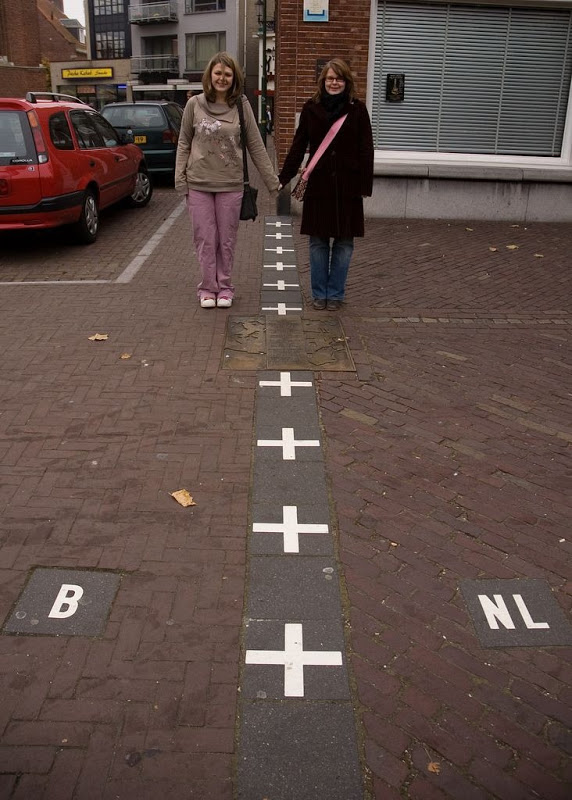
Baarle –  a town at the border of the Netherlands and Belgium, is perhaps the world’s strangest international border.

Why?

Because the town is an enclave that consists of pockets of the Netherlands nested inside Belgium, nestled inside the Netherlands.

The result?

The international border cuts through Baarle indiscriminately, crossing streets, dividing roads and slicing through buildings forming Baarle-Nassau and Baarle-Hertog – two municipalities that are in Netherlands and Belgium respectively.

Naturally many peculiarities arise.

For e.g., many homes are cut in half by the border, so as a matter of convention each household’s nationality is determined by the location of its front door. Which also decides where taxes are paid. So some houses apparently swap the location of their front doors between countries to benefit from the most favourable taxes!

Baarle House

(Pic: Source )

And if the border runs through the front door, the two parts then belong in different countries, and this is indicated by two street numbers on the building.

So duality has become the central character of Baarle where everything is two fold: two churches, two town halls, two post offices, two fire stations and even two police forces and so on.

And it is this charm of duality that makes Baarle quite popular with tourists around the year.

baarle-nassau-hertog

(Pic Source. HT Credit)

Caitlyn Jenner

Recently an unknown 65-year-old woman has become an internet senstion overnight. She was revleaed to the world through the cover page of Vanity Fair and a Twitter account that amassed 1 million followers in four hours – faster than the account launched by the US president, Barack Obama! Four days later she was up to 2.37 million followers, with another 1.5 million followers on Instagram! (source)

Why?

Perhaps it is the enigma of a duality the Vanity Fair’s cover story revealed.

Caitlyn Jenner

(Pic sources: Bruce Jenner | Caitlyn Jenner)

During the 70s, the Olympic hero William Bruce Jenner had the unofficial title of “world’s greatest athlete” and nearly 40 years later, in 2015, Bruce became the world’s most high-profile transgender woman named Caitlyn Jenner.

She has now become a hugely powerful cultural figure almost overnight and could soon become an important voice in the transgender rights movement. Apparently even Obama tweeted in response saying “It takes courage to share your story”.

Duality, it seems, has a certain enigma to it! Ask Buzz Bissinger – the Pulitzer winning journalist who crafted Caitlyn’s reveal for Vanity Fair over a period of 3+ months leading to this watershed of a cover story.

Duality & Brands

The human brain is said to possess this intrinsic nature of actively labeling everything it encounters into neatly defined buckets. That’s probably why anything that has a strong duality ends up becoming such a tease to our minds and perceptions.

No wonder then, there are brands that thrive on duality. (The classic Coffy Bite and more recent Cadbury Oreo are some well known Indian exmples)

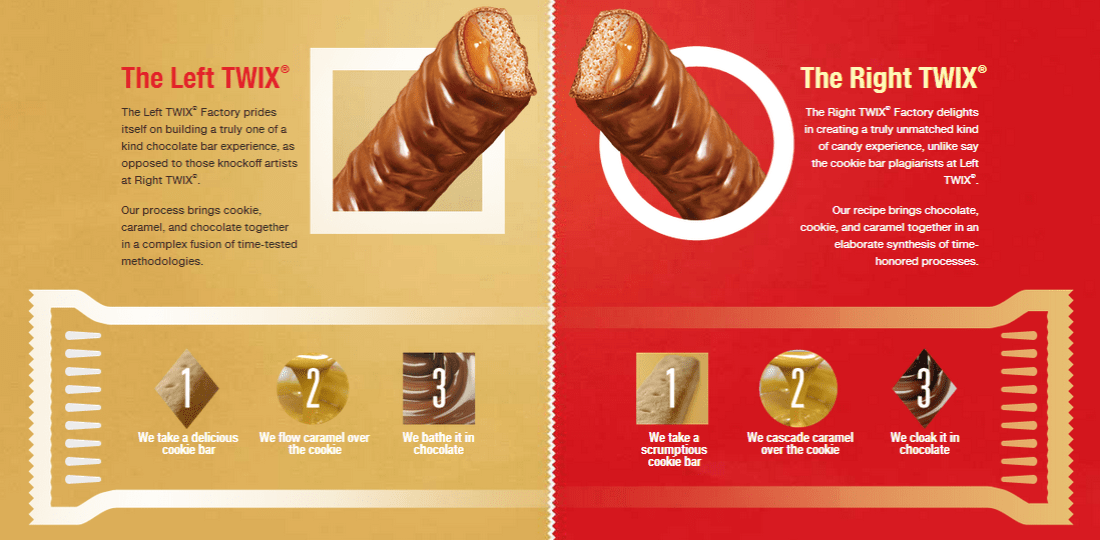
In fact, this allure of duality seems so high for Twix – a Mars’ chocolate bar brand –  that the brand thrives on teasing out a duality that never actually exists.

twix Dual2

(Source: Twix.com)

See a reel of its “Left Twix vs Right Twix – Pick a side” ads here.

Can you think of any other brands that leverage ‘duality’?

(Featured Image: Twix)

The Other Side Up

Quick Read: Invert the traditional workflows, dispel orthodox notions and see lateral thinking come to life for newer ways of going about things.  

Every once in a while there come initiatives and executions that turn the tables on traditional concepts that we have always taken for granted. Such instances compel us to re-evaluate our existing notions of what we consider to be the norm and thereby make great fodder for some lateral thinking.

Three such recent examples.

1. Photography

Trevor Christensen is a photographer who shot to international acclaim with his recent series called Nude Portraits.

What is interesting about this project? In this series the photographer is naked, the subjects are not.

According to himThe photographer/subject paradigm is one of inequality. Nude Portraits is about leveling the playing field in an unorthodox way. Instead of focusing on bringing the subject to a place of ease–where I am, this project brings me to a place of vulnerability.

Nude Portraits

(Source: Nude Portraits by Trevor Christensen)

The results are an interesting commentary on the photographer/subject paradigm and hold a thought provoking mirror to the subject and photographer’s feelings around vulnerability, shame, guilt and self composure.

Talking of portraits, meanwhile elsewhere…

Samsung had an interesting set of executions that reframed selfies as Self Portraits.

2. Painting 

Rainworks is a project  by Peregrine Church.

What is interesting about the project? It is art that appears when it rains! Check this video out:

This cool project challenges our notions around negative space and opens up newer possibilities of creative expression.

Talking of negative space, meanwhile elsewhere…

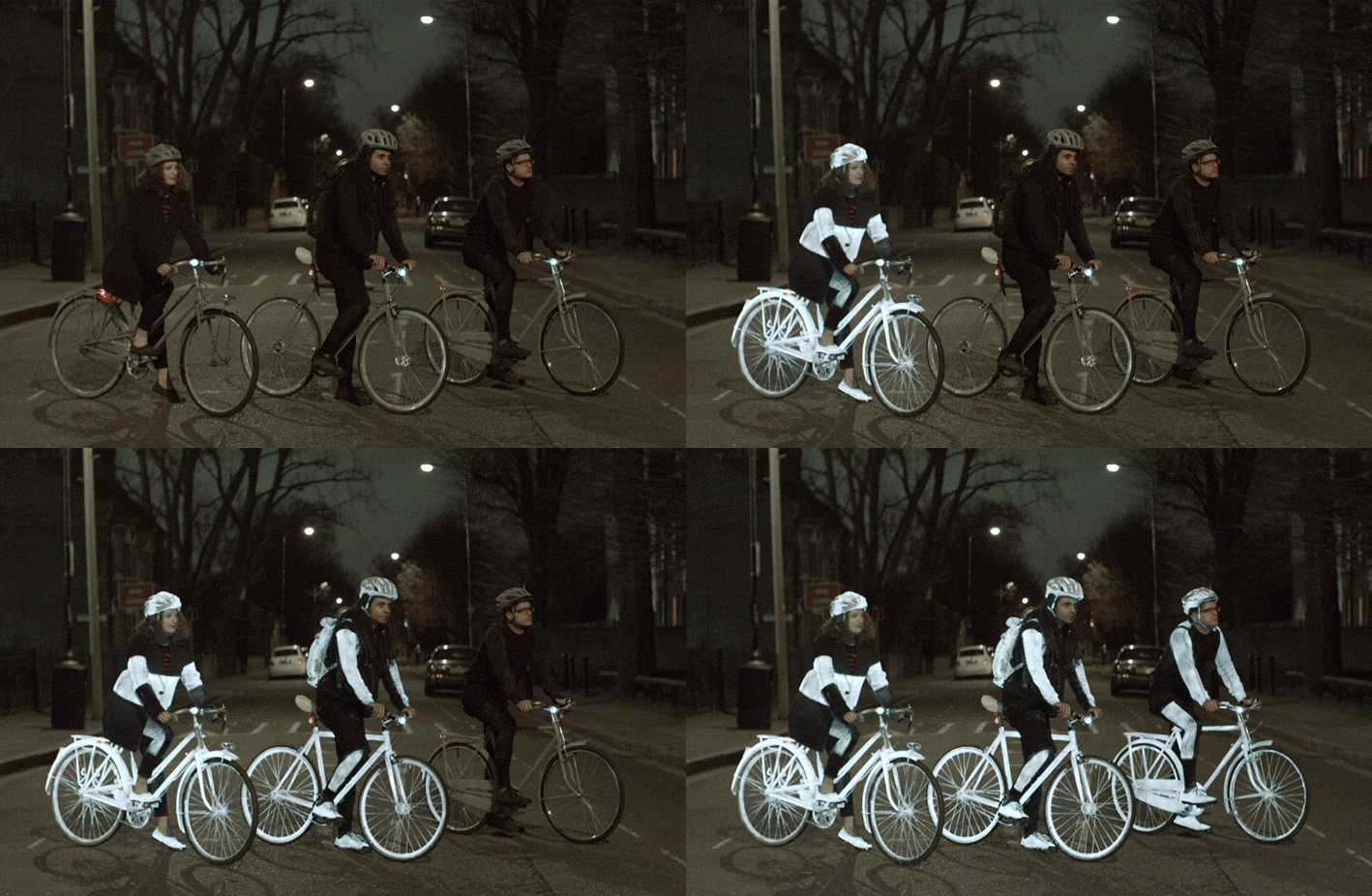
Volvo introduces Life Paint to promote safety for those both inside and outside its cars.

According to this must read post, Life Paint is a unique reflective safety spray aimed at increasing the visibility and safety of cyclists, and other vulnerable road users.

What makes it special? It is invisible by daylight, but glows brightly in the glare of car headlights, making the invisible, visible at night.

Life Paint

(Source: Life Paint by Grey London for Volvo)

The Life Paint concept was developed by creative agency Grey London, in collaboration with Swedish startup Albedo100 and is one of a series of projects to highlight the key product innovations of the all-new Volvo XC90.

3. Reviews

Online reviews have become both a boon and a bane for many a marketer. As this HBR post says,

The idea that a new (reviews) website or app can undercut years of careful messaging may be deeply frustrating to marketers—but it is a reality they must face.

But what if we turn the tables around on the traditional concept of reviews. Australia based Art Series Hotel Group has recently initaited what it calls Reverse Reviews‘. 

What is interesting about the concept? While you review their hotels, you would also be reviewed by the hotel. Get five stars and get a free night to stay again (applicable between April 17 until May 31 2015).

Reverse Reviews AU

(Source: Art Series Hotels )

Talking of reviews, meanwhile elsewhere…

Today’s new world of ‘on-demand everything’ is being touted as The Shut In Economy.

Read this brilliant piece on why this is so and you would probably agree that institutionalising a ‘Reverse Review’ system could just be what the doctor would have ordered to make our world a better place.

Result: People behind the doors (who use the apps, platforms and services to place their orders online) and the people outside the doors (those that deliver) could live in a world that is more inclusive and respectful of each other.

Isn’t it?

(Featured Image: ‘This Side Up’ table design by DEDE DextrousDesign)

Is Sweden a Low Context Culture?

Quick Read: Differences between high context and low context cultures in branding could just be theoretical. All it takes is some brilliant marketing to blur the lines in between.

High-context culture and low-context culture are terms coined by the anthropologist Edward Hall.

Theoretically this categorisation between culutures has implications on branding and communications associated to them.

For example, according to this recent article, in a high cultural context, inherent cultural cues (e.g, symbols and emotions) add a lot of meaning to asociated marketing communications. Think of ads that reference cultures like Indian, Latin American or Middle Eastern for example and you get the picture. 

(A great ad that references Indian culture)

Low cultural contexts, by contrast, are those where there is little influence of emotions, gestures and cultural cues over the associated marketing communications.

For example – the article goes on to state – Sweden has a low cultural context. In other words, Swedish cues and metaphors are believed to contribute little meaning to any branding/communication.

But is it? 

While differences between these cultural contexts might help us to justify to ourselves the relative decibel levels of ‘cultural noise’ that gets thrown into their respective communications (e.g., narratives in films, ads etc), communications that reflect a culture are more complex and do not necesarily confine themselves to these siloed definitions.

Let’s take Sweden for example. Why is there a stereotype that Swedish metaphors add little meaning to any associated branding or advertising?

This cultural guide to Sweden encaplsulates it well when it says “Despite the generally contented natures of the Swedes, there is an underlying melancholy most often attributed to the long, dark and cold winters.” In other words, theoretically there is nothing much beyond a brooding sense of gloom to add as ‘cultural cues’ when it comes to referencing anything Swedish.

But lately, marketers seem to have used this very subdued under tone of melancholy and turned it into a state of mind (and soul) to be celebrated as uniquely Swedish!

Now that’s not exactly how a low context culture is meant to work. Right?

Volvo ‘Vintersaga’ – Embrace the Swedish melancholy

With a montage that celebrates the miserable weather conditions of Sweden aided by some spectacular photography and echoey music, Volvo recently paid a “tribute to Sweden at it’s worst” through its Vintersaga (Winter’s tale) campaign.

By capturing the country’s bleakest weather, Volvo goes on to explain that without the harsh Swedish winters it would not have become what it is today, or make the cars that it does.

Stutterheim Raincoats – ‘Swedish melancholy at its driest’

Being melancholic is an essential part of being a human being. 

…so says the philosophy page of Stutterheim’s rain coats. What for Mr. Stutterheim was initially an art project, has transformed – with a stroke of marketing genius coupled with a sharp positioning – into a line up of raincoats that are now shipped worldwide, with a price tag between $370 –  $1,400.

Stutterheim

(Source: Stutterheim’s philosophy on Melancholy and Creativity)

Apparently Swedish gloom seems to have a tremendous market demand with the brand today seeing strong growth in Europe and the U.S., with sales estimated to reach $4.8 million in 2015, up from $180,000 in 2011. (source)

After all as its philosophy goes on to say …

Through our melancholy we come up with new ways of seeing the world and new ways of being in the world. Let’s embrace Swedish melancholy. Embracing rain is a good start.

Now that’s some smart marketing that has converted something as monochromatic as Swedish melancholy into a unique (and dare I say sufficiently loud) motif of the Swedish culture.

Bonus Links: Check out this Volvo campaign that celebrates Swedish wilderness and this recent one by Grey London that celebrates Swedish….. (hold your breath & drum rolls)…. air!

Now, do you still believe Sweden is a low context culture?

Any classifications exists only as long as marketers allow it to.

Isn’t it?

(Featutured Image: Sutterheim – Swedish Melancholy At It’s Driest)

Annotations About Annotations

Quick Read:Who would have thought what had begun as a traditional 17th century readers’ habit of jotting down some thoughts and gossip on the margins of a sheet of paper could turn out to become a concept for world domination?

Annotations are in vogue today!

In the 17th and 18th centuries, it was traditional for newspapers to include space for readers to jot down thoughts, gossip, and observations before passing along their copy to others. Some papers kept their margins wide for such notes; others, like the very first American newspaper, Publick Occurrences, included an entire blank page.

Annotations are an extension of that tradition.

Annotations in the past

(Annotations in Boston Gazette and Country Journal (1770): Source)

…Saying this, Quartz – a popular blog, annouced the opening up of its margins to users’ comments – also known as annotations.

Medium – the acclaimed blog publishing platform – introduced this concept of ‘notes’ that let readers comment (annotate) on specific paragraphs of the story instead of at the bottom of the piece.

Today Soundcloud allows users to annotate audio; Gawker Media allows users to annotate images and New York Times experimented with annotations around news as a more participative means of user engagement.

Annotations – as a creative narrative device

Even novels have begun to adopt annotations as a narrative device. S. – a novel previously featured on BrandedNoise –  has at least four different interconnected narratives unfolding at the same time. One such narrative is the dialogue between a guy and a girl who read and discuss a book through their notes passed on to each other written as annotations.

ship-of-theseus-3

(This is how an actual page of S. looks like. Image source)

If there is one book that you should buy – even for the sheer experience of just leafing through its pages and marveling at its creativity and design. This is it!

‘Annotations’ as a billion dollar idea?

Genius.com – a Andreessen Horowitz backed startup – is believed to be testing a new feature: the ability to annotate any page on the web, adding a new stratum of knowledge to the largest store of information in human history.

Currently in beta, the new functionality lets users add genius.com/ to the beginning of any URL to access a version of the page on Genius. The page is fully annotatable, so users can highlight and annotate any text on the page and view others’ annotations. (source)

Genius Annotate

(Annotations from Genius.com: Image Source)

Enough and more is already being written about Genius.com and its stated goal of “annotate the world”, with some even predicting that Annotate would soon transcend into the class of those fundamental verbs of contemporary culture, such as Google and Like!

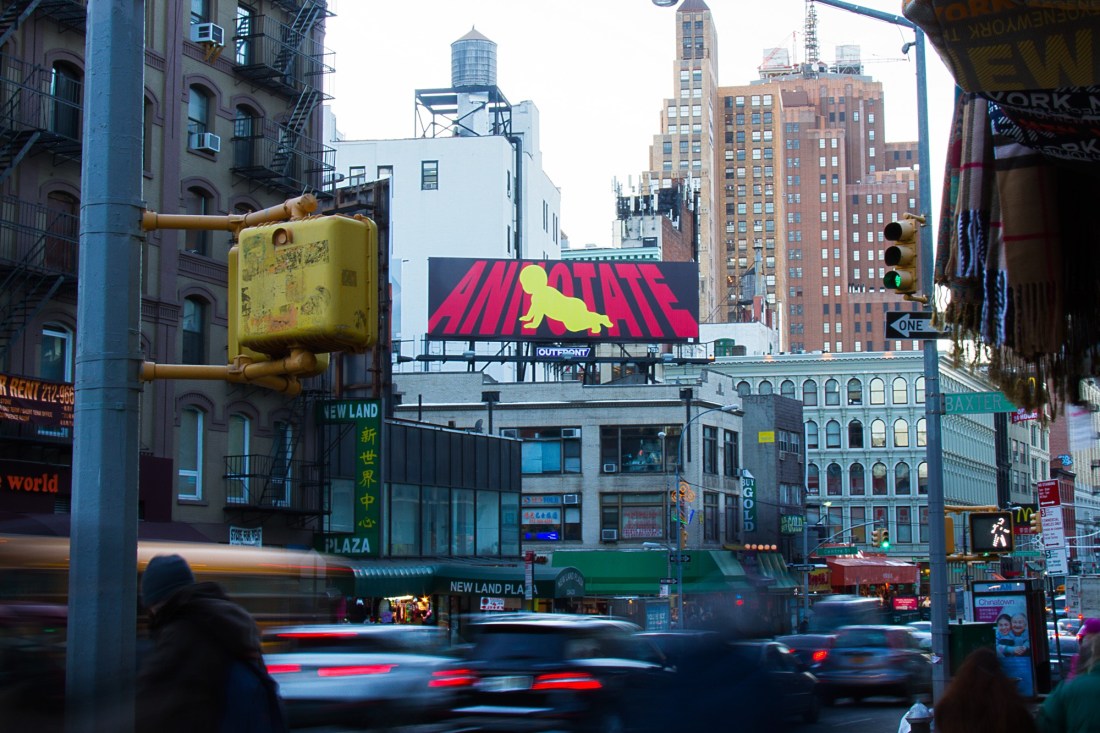
Bonus read: Recently a mysterious billboard had appeared on the streets of Manhattan. (see the featured image above) Whereas most billboards are logo delivery vehicles, this one is unclaimed. The billboard is the work of Emily Segal for Genius.com. A great post on this avante-garde marketing campaign here

Exploring the Boundaries Of The Traditional Concept

Quick Read: The idea of Traditional Concept and its reliance on metrics like Purchase Intent for validating product ideas is being challenged. More so in the realm of Retro Innovations.  

The Traditional Concept and its classic three part construct – Insight | Benefit | Reason To Believe – to represent a product idea for consumer research has been coming under scrutiny. In fact, there are even obituaries being written about it citing reasons like:

  • It is too rigid, rational and over – engineered as a construct to represent a product idea
  • Puts far more emphasis on our deliberative ‘System 2’ thinking
  • Fails to take into account how consumers tend to make decisions (unconsciously, quickly, swayed far more by emotional impact and immediate impressions)
  • Relies heavily on metrics like purchase intent for validation

Academic arguments apart, one thing that a Traditional Concept cannot possibly help with is screening product ideas that fall into the realm of Retro Innovations – new products that are designed around connecting us with the past and invoking our nostalgia.

Two recent product examples where a traditional concept could have had a tough time cracking the consumer code:

The ‘Miller Light’ Retro Design And Its Placebo Effect

Miller Lite is known as the first mainstream light beer in the US. But over the years, the U.S. sales of the beer had been declining, trailing Bud Light, Coors Light, and Budweiser. Revenue dropped 7 percent in just 2013 (source). So in January 2014, as part of a product placement tie in with the film Anchorman 2, Miller released a limited edition version  of its original 1975 white can.

bottle(The Retro Designed Miller Lite Can)

Surprisingly for Miller Lite, this retro designed packaging proved to be a success (it sold 32 million cans more than that during YTD 2013) that by September 2014 it decided to switch back to this packaging full-time, including on bottles and tap handles.

And reportedly, taken by surprise, when Miller marketers conducted some post launch evaluation, they learnt that the Millennials had liked it because it seemed iconic and old while their parents had liked it because it reminded them of what they used to drink. Strangely, customers even started telling the company its “new” beer tasted better even though they were still drinking the same old beer(!)

Obviously, a Traditional Concept and conventional testing for metrics like Purchase Intent, could not have driven the brand along this unexpected ‘retro’ direction.

Leica M Edition 60 – The Digital Camera Without An LCD Screen

To celebrate the 60th anniversary of the legendary Leica rangefinder system, the company recently announced the Leica M Edition 60. The unique thing about this camera is that it does something bold – it ditches the back LCD screen and all onboard menus. One cannot even review their photos. It leaves photographers with physical controls of aperture, shutter speed, and ISO. And it forces them to look through just one thing – the viewfinder.

Is this a good idea? Will consumers like it? Does it even make design sense? The debate is on.

But one thing is certain:  this reductionism as a celebration of photographic art – as Leica calls it – could not have been conceived of through the lens of the Traditional Concept and testing for Purchase Intent.

Is the Leica M Edition 60 too high end to be a realistic example here?

Well, then let’s get a bit ‘low end’ – Music CDs and online music.

Let’s think of product ideas in terms of Traditional Concepts and test for their Purchase Intent to sell online music to the Japanese vs the good old CDs. 

And good luck to us doing that!

JAPAN-MUSIC-01-master675(AKB48, a popular Japanese group, has sold CDs containing tickets to its performances, encouraging fans to buy multiple copies. Source)

(Featured Image: The New Leica M Edition 60)