Fruit Flies, Technology and Heritage

Context: I was recently invited by Ahmedabad University Centre for Heritage Management to deliver a “curtain raiser keynote” (had to look up what that meant) at their annual research conference – The 5th International Conference on Heritage Management Education and Practice. Organized between March 15 – 17 2024, the theme of this year’s conference was “Intersections of Heritage Economics and Digital Technologies”.

When I had first received the invite, I was pretty certain that there must have been some mistake, for I had/have no authority to speak on the subject. But long story short, I took up the challenge and delivered my keynote at the Ahmedabad University CHM research conference. And to my absolute surprise, the presentation ended up receiving very positive (and very kind) feedback from the attendees. So I thought I would put it out here on brandednoise to solicit further ideas/ inputs.

So here goes my presentation. This is the direct ‘slide by slide’ rundown along with my speaker notes. Barring extremely minor tweaks (that I have incorporated to aid readability of the content as a blog post), this is my keynote – as is, in full.


Esteemed leaders – current & soon to be – from academia, research, policy and the practitioner community. It is such a privilege to be here amidst you all, precisely because I belong to none of these groups wrt the domain of “Heritage Management Education and Practice”! At best, I may call myself an observer as I seek to soak in, participate and contribute to the topic of the conference today “Intersections of Heritage Economics and Digital Technologies“.


When I thought about the rapidly growing role of Digital Technologies in Heritage Management, I naturally thought about how the technologies of AR/VR, Artificial Intelligence & advances in Cloud Computing are transforming how we interface with Heritage & Art. 

I thought I’d talk about Google’s platform where all this comes to the forefront – Google Arts & Culture. And how it uses technology to elicit user participation, engagement and drive co-creation of experiences wrt art & heritage.

But here’s the thing – that would be my “comfort zone”. 

And I thought, this is a research conference – and one of its kind at that! And what is a research conference if we don’t step beyond our comfort zone – a slight bit. That zone where we do a bit of philosophising, theorising and some crystal ball gazing, if you will? 

And that’s what I am going to do over the next few mins here. So indulge me here 🙂


My argument (or more precisely a premise) in a nutshell is as follows… 

It is clear as daylight that digital technologies have incredible value wrt heritage management & practice. 

But I’d be doing a disservice if I focus on just this aspect of technology – which is just the “tip of the iceberg” , For, if we do that we’d perhaps end up focusing on just a small subset of possibilities: i.e., digital technologies as just “techniques” to be used.


I am going to take a few more steps further and argue that Digital Technologies have an even more foundational role to play wrt the domain of heritage management. For, if you view Digital Technologies for what they truly are or what they truly can be, you could perhaps even see them as enablers of new ontological, epistemological and axiological perspectives of the domain.

So I’d say that Digital Technologies can have a lot to contribute to (even) the core philosophical foundations of heritage as a construct.

Let’s unpack that.
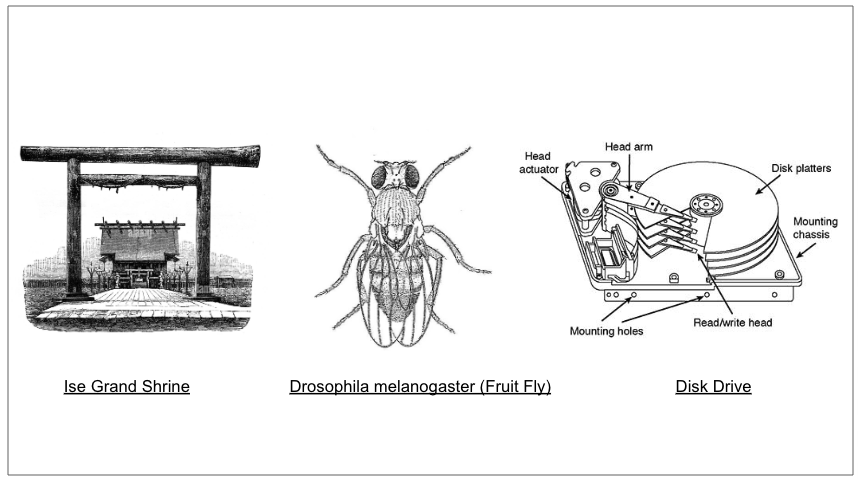

I’d like to start by asking a question. What is common amongst these three.

  1. A 2000 year old Japanese Shinto Shrine 
  2. The Drosophila melanogaster a.k.a the “fruit fly” 
  3. The hard disk drive

Have a think.


Let’s start with the Ise Grand Shrine – a.k.a .Ise Jingu

What can this 2000 year old Shinto shrine have to do with Heritage Management and Digital Technologies?

The Ise Grand Shrine – a Shinto Shrine – in Ise, Mie prefecture in Japan has been preserved exactly like it was around 2,000 years ago. Despite such a rich legacy, it doesn’t figure in the UNESCO world heritage list.

Why?

This is because the shrine is not built of a ‘permanent structure’. The Ise Grand Shrine is built of wood and hence it gradually loses its structural integrity over years. 

So the Shinto priests have a solution;  every 20 years they tear down the structure and rebuild another – in an adjacent plot –  in exactly the same specifications as the original using the wood from the same forest that the original structure was built from. 

Result: the shrine is forever new, ancient and original! 


The Shrine is currently in its 62nd reconstruction, the next reconstruction will be in 2033.

Despite not being on the UNESCO’s World Heritage list, the Ise Jingu Shrine is one of the highest visited Shinto shrines in the world! Now that’s saying something about Heritage Economics 🙂  

What can a 2000 year old Shinto shrine have in common with Digital Technologies?

It goes by the name “version control” / “generational cycle management”. 


The definition of Heritage is anchored around the core concept of “generations” 

  • What qualifies to be called as ‘legacy’ by a generation?
  • How does one generation view the legacies of an older generation? 
  • And what are the socio political cultural & economic imperatives that influence how a generation preserves its ‘legacy’ for its future generations?

And we can’t speak about generations without speaking about the Strauss Howe Generational TheoryWhat it essentially states is that history repeats itself and the sooner we understand the socio – political – cultural and economic contours of the same, we will be better served.

First a few building blocks of the theory:

  • Let’s take the average human life span as approx. 80-90 years. This is called a Saeculum and consists of four periods of approximately 20-22 years each. Which are (1) Childhood (2) Young Adult (3) Midlife and (4) Elder hood.
  • A generation – as we know – could be thought of as an aggregate of people born approximately every 20-22 years.
  • Each generation experiences “four turnings” every 80-90 years. They are (1) High (2) Awakening (3) Unravelling and (4) Crisis.

In essence, the cyclical nature of these “four turnings” could be stated as follows:

  • “Strong people” create “good times” (in general)
  • “Good times” create “weak people”
  • “Weak people” create “hard times”
  • “Hard times” create “strong people”
  • “Strong people” create “good times”
  • and it goes on…

Throwing all these elements into one chart gives us a view like this one about American generational cohorts – where you can see this cyclicity emerge across generations punctuated by the four turnings. And at any given point in time we have multiple generations co-inhabiting the time space. And the interplay between these generations is what leads to the socio political and economic imperatives that we grapple with as a society.

And the world around us – here and now – is this ‘laboratory’ where one can study this theory play out across generational cohorts.
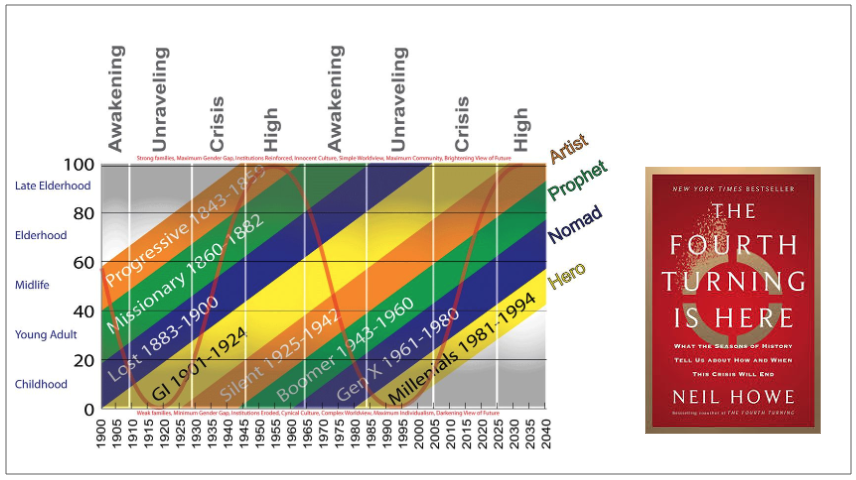

In fact in their book “The Fourth Turning is here” the authors of this theory argue that we are collectively living through the “Fourth Turning” now. The book has been called prophetic given how it seems to have ‘predicted’ way back in 1997, many of the socio political economic cultural and technological realities that we have seen ourselves grapple with over the last two decades in this millennium.

Now let’s conduct this thought experiment.

What if we were to set up a lab where we can observe these inter generational forces at play along with their fall outs? Only this time, the generational intervals are much shorter, thereby allowing us this rare opportunity to get a sweeping view across multiple generations during one single life time.

Wouldn’t we then be able to identify hypotheses, build models, test theories and perhaps even build grounded simulations around how the notions of heritage emerge, propagate and evolve over generations?


Studying species with short generational intervals is not a novel concept. Today, scientists study evolution in species with short generational intervals. This allows for direct observation of changes over many generations, which wasn’t possible in Darwin’s time.

This is Prof Thomas Hunt Morgan who was awarded the Nobel prize in medicine in 1933. His genius lies in establishing the Drosophila melanogaster as the model organism in the study of evolutionary genetics. Why? Because, the whole life cycle of the fruit fly is relatively rapid and takes only 10-12 days

Over the last century, this discovery has led to an exponential rise in research productivity across a diverse range of topics including genetics, embryonic development, learning, aging, behavior and more.


This is Prof. Clayton Christensen who has developed the theory of “Disruptive Innovation”. Reportedly..

Someone told him that disk drives were the “fruit flies” of technology: they were ideal subjects for studying innovation, because a generation in disk-drive technology was incredibly short. He saw that the companies that made fourteen-inch drives for mainframe computers had been driven out of business by companies that made eight-inch drives for mini computers, and then the companies that made the eight-inch drives were driven out of business by companies that made 5.25-inch drives for PCs. 

What was puzzling about this was that the eight-inch drives weren’t as good as the fourteen-inch drives—they had a lower capacity, and a higher cost per megabyte—and the 5.25-inch drives were inferior to the eight-inch drives. So why hadn’t the fourteen-inch-drive companies simply started producing eight-inch drives? It didn’t make sense.
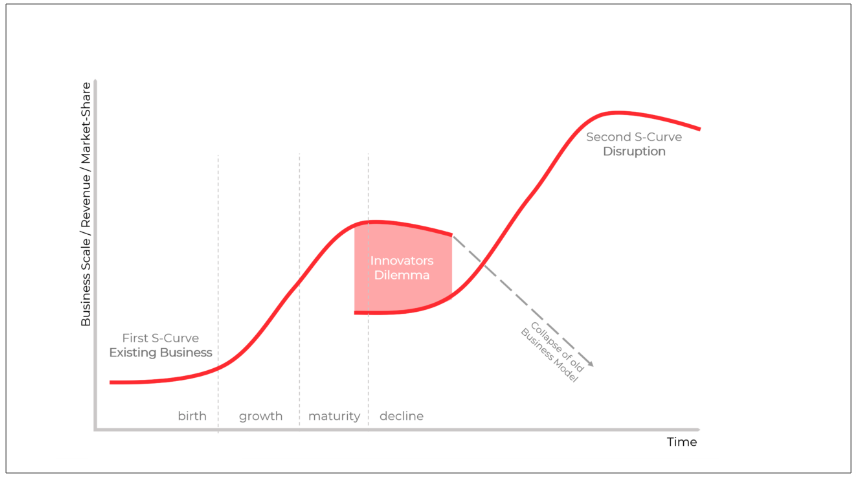

The genius of Prof. Christensen lies in studying innovations in products/categories which have incredibly short generational intervals and rapid evolutionary cycles in order to identify the organizational, economic (and sometimes even political) imperatives that could lead to an incumbent getting ‘disrupted’ by a new entrant in an industry.


In many ways, this – exercising our focus on digital technologies as our canvas – could be inevitable as they pretty much characterise the times that we live in. Students of economics would know the Kondratiev Wave which pretty much says the same thing.

This shows the pattern in the societal waves of advancement since the industrialization era. A few things that you can immediately observe, (1) every k-wave (which is characterized by the dominant technologies of its time) is shorter than its previous wave. (2) We are today living through the 6th K-wave, which could have an even shorter interval span, and finally (3) this wave (loosely estimated to be the one between 2010-2050) could probably be the one around “intelligent technologies”.

Central theme here: Technology’s shorter generational cycles and how that creates a second or a third order influence over the corresponding socio, economic, political and cultural forces at large. It’s pretty much the story of our times.

Let’s take a few examples.
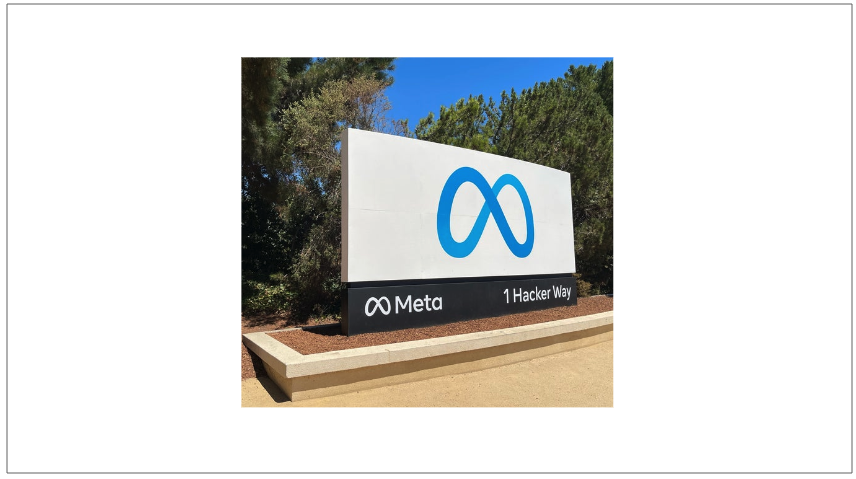

Many people would know what this is.

This is the signboard of Meta at their corp HQ at Menlo Park, California. Many people come over here to get their pictures. But not many would know that this has a peculiar “feature”.


Sun Microsystems (est. 1982) had gone defunct in 2010. Subsequently, Facebook has bought over and remodelled the property as its global headquarters by 2011. And instead of replacing the Sun sign, Facebook just flipped it over and put Facebook’s name (now Meta) on the front(!)

Beyond serving as a homage to Sun Microsystems as a company that had significantly contributed to several key computing technologies, many see this as an intentional ‘reminder‘ to those looking from within the campus.


Many of the logos that you see on the left belong to those brands that had been global leaders in their own right. They had defined standards, influenced culture, and pretty much led to our popular narratives around how societal trends and technologies have a symbiotic relationship given the breathtakingly rapid developments in this space. But today they no longer exist!

At the same time, we also have technologies/digital platforms/ device ecosystems that continue to see strong evolution over the times. For e.g., many would know that 2024 also marked the 40th anniversary of the Apple Macintosh and one can’t over-emphasize its socio cultural influence (that spanned several domains) over the years.


It is to chronicle these very stories in technology and with a stated mission to “decode technology—its computing past, digital present, and future impact on humanity” the Computer History Museum (CHM) at Mountain View California prides itself as the largest repository of computational artifacts under a single roof. The museum presents stories and artifacts of Silicon Valley and the information age, and explores the computing revolution and its impact on society.


I would like to believe that it is not an accident that the CHM’s core belief about the inter generational value of computational technologies has parallels with how UNESCO defines ‘heritage’.

(as a fun aside, I couldn’t help but notice the fact that the Centre for Heritage Management and the Computer History Museum share the same acronym!)


Therefore, the UNESCO’s charter on the “Preservation of the Digital Heritage” proposed in 2009 is a good start to the conversation. But we have a lot more to do.

Given rapid bursts of new technology breakouts coupled with ever shortening generational time spans of these technologies such as AR/VR/AI/Cloud etc, their ever expanding and evolving influence over practically every domain of our existence has a near axiomatic appeal wrt the socio economic political and cultural discourse of our times.


And that leads us to more fundamental questions.

  • What is digital heritage? (a question with an ontological lens)
  • Why study digital technologies in the realm of heritage research? (a question with an axiological lens)
  • What standards inform digital heritage identification? How do these influence how we experience & identify tangible and intangible heritage artifacts? (questions with an epistemological lens)

By virtue of the inquiry along these lines, I would posit that we might soon need to reconsider broader perspectives to help us answer even the central ontological question in our domainWhat is heritage?


And that’s why I would argue that Digital Technologies have even more foundational role to play wrt the philosophical aspects of heritage management. 


We spoke about the Kondratieff Waves a few minutes ago. Another way to look at these waves, especially in the context of Heritage Management is as follows:

  • What a generation calls as ‘legacy’ could be that which it perceives as the vehicle or the marker of its ‘progress’.
  • While the first few (known) millennia of the chronicled human history saw progress around the vectors of “transforming material”, the next set of waves – characterized by a dramatically reduced scale (of centuries) – could be seen as a commentary on our progress around the vectors of “transforming energy”
  • And today, our progress (and thereby what we’d perhaps call as the legacy of our times) can probably be characterized as that pertaining to “transforming information”
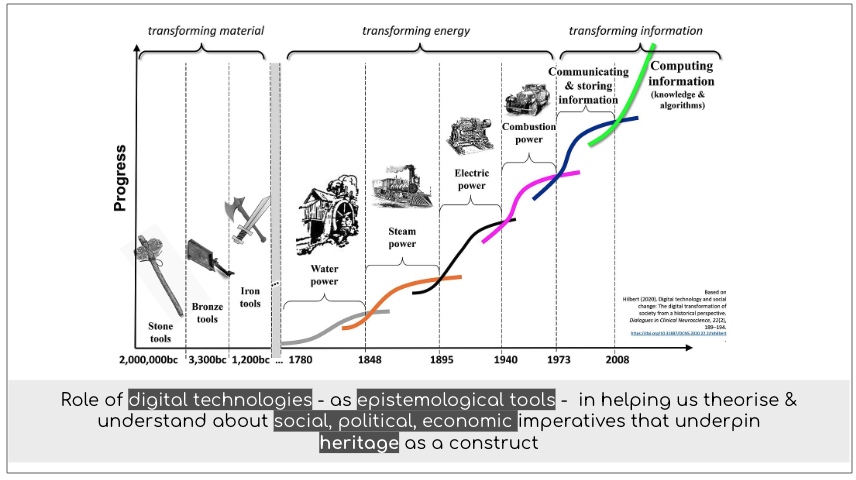
And that leads to the question about: the role of digital technologies – as epistemological tools –  in helping us theorize about and understand the social, political, economic imperatives that underpin not just ‘digital heritage’ but also the construct of ‘heritage’ as a whole.


And therefore just as the Drosophila melanogaster (fruit fly) ended up becoming the “model organism” that revolutionized the research in evolutionary genetics, just as the hard disk drives helped serve as the “fruit flies” for research on innovation management, my premise I submit for your consideration – phrased as a question- is as follows…

Can digital technologies be the ‘fruit flies’ for research in Heritage Management?

Thank you once again for the opportunity and I wish The 5th International Conference on Heritage Management Education and Practice at the Centre for Heritage Management, Ahmedabad University a grand success!

Monetizable Sentiment Indices

Quick Read: Recently we’ve seen how being able to smartly parse the chatter on social media becomes valuable – especially for speculative trades. This heralds an interesting opportunity: i.e., monetising such knowhow of social sentiment, at scale.

Have you heard of BUZZ – the social sentiment ETF?

Social Media ETFs

In a previous post, we argued that there is a certain premium attached to being able to smartly parse and capitalise on the knowhow of the social media chatter on forums like r/WallStreetBets. This is best exemplified by the recently launched ETF by New York asset manager VanEck the Buzz NextGen AI US Sentiment Leaders Index. Quoting the FT article..

The Reddit rebellion might have died down for the moment, but New York asset manager VanEck is betting that there is long term value in listening to social media chat and is launching a social sentiment exchange traded fund. The fund will invest in the stocks being most talked up on social media. (..)

Its underlying benchmark, the Buzz NextGen AI US Sentiment Leaders Index…aggregates investment-related content from social media sites such as Twitter and StockTwits, blogs and news articles. Machine learning and artificial intelligence are then deployed to attempt to “identify patterns, trends and changing sentiment which can affect market-based outcomes”. The 75 US large-cap stocks judged as having the highest degree of positive investor sentiment and bullish perception then form the portfolio, which is rebalanced monthly. (..)

Source: Financial Times

The following tidbits from the interview with Jamie Wise, CEO of Buzz Holdings and the originator of the index, shed more light on some further specifics related to the ETF.

“This is not a Reddit meme stock ETF,” said Jamie Wise, CEO of Buzz Holdings. “This is about the broader conversation around stocks mentioned on social media platforms. We are using broad social media sources, principally Twitter and StockTwits.” Wise said it also uses Yahoo Finance, Benzinga and Reddit.

How to determine “social media buzz?” Wise says the index uses natural language algorithms that examines whether the comment is positive, negative or neutral, then ranks each stock based on the degree of positive sentiment and breadth of discussion. That’s key to understanding the index: stocks are weighted by sentiment, not market capitalization, and no one stock can exceed 3% of the index. It is rebalanced every month. 

“We are aggregating the collective sentiment of the community” that comments on stocks on social media, Wise said.

Source

Is social media popularity a good way to pick stocks? Can stocks be manipulated on social media? Well the jury might still be out on that. But given the current dynamics, it is more likely that the larger question here might soon be skewed towards ‘when’ vs ‘if’.

Extending this thought further

If we are to extend this concept further, new opportunity pools could become evident. Start with any category where popular social sentiment matters, and you would see a monetizable product waiting to be packaged and sold. Few examples:

  • Sports
    • Today, there are social media networks for sports gamblers like BetSperts, but if and when these networks manage to capture, index and channel the emergent sentiment on their platforms, they could very well monetise the same. (obviously this would be subject to the prevailing legal, regulatory and policy frameworks.)
    • The idea: Derivatives for sports betting based on social sentiment indices built on realtime social media chatter. (BTW did you try Locker Room – the Clubhouse for sports fans, insiders and athletes?)
  • Music
    • In 2003 iTunes revolutionised music ownership by letting customers purchase and download the music they want for just 99 cents per song. Now, how about letting the general public participate in the actual funding and co-ownership of their favourite artiste’s tracks/albums by facilitating fractional ownership à la securities on the stock market.
    • The idea: Letting artistes raise funds for their album(s) through an IPO kind of offering to their fans/community. The value of these ‘stocks’ could be pegged to the sentiment/chatter/metrics on platforms like Spotify, SoundCloud etc. And we could have ‘exchanges’ that facilitate trading of these ‘stocks’ among the community. (Taylor Swift would perhaps not have to bother with her rerecordings then)

SoundCloud seems to have already taken a step in this direction by launching ‘fan powered royalties‘ last week.

Source: SoundCloud

Quoting from SoundCloud’s press release announcing the launch..

Fan-powered royalties levels the playing field for independent artists by tying payouts to fandom. Artists are now better equipped to grow their careers by forging deeper connections with their most dedicated fans; and, in turn, fans can directly influence how their favorite artists are paid. Fan-powered royalties reflect feedback from the independent artist community on SoundCloud who want equitable payouts, transparency, and control over their own careers.

Essentially, any context where popular sentiment (now readily available through the hose pipes of social media) lends itself to be indexed and tracked, could potentially be transformed into a monetizable opportunity to unlock value and disintermediate the equation between creators and fans.

And we might perhaps see more such opportunities becoming evident thanks to the alignment of these three forces:

  1. the emergence/growth of platforms that democratise and aggregate media of all types on the Internet
  2. the rapidly growing creator economy and associated ecosystems and
  3. the rise of new modes of interdependencies between (1) and (2) connecting the users’ utility, consumption and communications patterns at scale

Even then we are perhaps just seeing the tip of the possibility iceberg.

[Featured Image: Source]

Narrative Violations and Narrative Primitives

Quick Read: Sometimes narratives could have ‘violations’. And sometimes, what might at first appear to be a ‘violation’ could prove to be intrinsic to its narrative. Knowing the former from the latter could help unlock great value – across verticals or contexts.

Making sense of John Coltrane’s “Giant Steps” is said to be difficult.

It is considered by many to be one of the most revered and feared compositions in Jazz history. In fact generations of Jazz musicians are known to approach ‘Giant Steps’ as the pinnacle in Jazz improvisation.

Why? This video could provide a delightful crash course of an answer.

Or take Afrobubblegum – the new film genre redefining on screen representation of Africa.

It refers to fun, fierce and frivolous African art that has joy and hope at the centre of it. The pioneer of this style, Wanuri Kahiu a TED fellow and a Kenyan filmmaker says “We’re so used to narratives out of Africa being about war, poverty and devastation. We believe that Africa is joyful and full of pride and respect and hope,” and continues to champion the need for such art that captures the full range of human experiences to tell vibrant stories of Africa.

And tell she did!

In 2018, Wanuri Kahiu’s story of young lesbian love, Rafiki, made international headlines for being the first Kenyan film programmed at the Cannes Film Festival in 71 years of French Riviera cinema history.

What is common between Wanuri Kahiu’s ‘Afrobubblegum’ and John Coltrane’s ‘Giant Steps’?

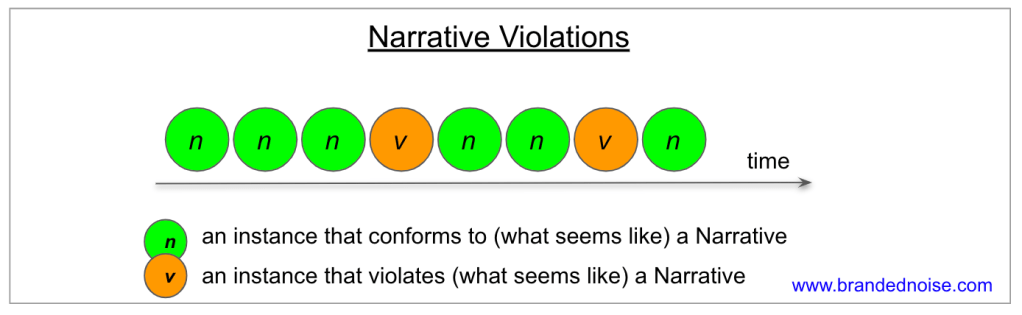
The genre of Afrobubblegum or the Jazz track ‘Giant Steps’ standout because they ‘violate’ the popular narratives around their respective art forms or subjects. They are examples of what venture capitalists call Narrative Violations.

Narrative Violations

While the term could seem like a fancy jargon to reference the essential characteristic of what makes something a ‘contrarian bet’ to a VC, I should admit that it serves its semantic purpose of helping us put a label on something specific through descriptive and non ambiguous terminology.

Perhaps it is this pull that made Geoff Lewis and Eric Stromberg – the founders of Bedrock Capital – write a manifesto for their firm titled ‘In Search of Narrative Violations‘ stating the following..

Some recent ‘Narrative Violations’ listed on Bedrock Capital’s manifesto letter

The letter in its entirety is eloquent and makes for a great read and ends on an inspiring note saying..

“..As our keystrokes hunt for the next narrative high, thousands of possibilities that will never be remain trapped beneath our fingertips. When we allow popular narrative to dictate who, where, and what is worthy of our time or capital, breakthroughs that could transcend remain overlooked, underestimated, or simply fade away.

Against all odds, a few brave entrepreneurs violating the narrative today will come to define profound new truths tomorrow. We’re on a mission to find them

To be clear, the concept of ‘Narrative Violations’ has also had its fair share of critiques for being too reductive. It was even declared 2019’s ‘VC Bingo’ buzzword of the year.

Nonetheless, I find the concept to be a clarifying filter that helps me process or question most things with a healthy dose of scepticism and encourages me to seek out edge cases in popular rhetoric, including say even that around the concept of ‘Narrative Violation’ itself.

Why?

Consider this question.

What if, sometimes, narrative violations are part of the narrative?

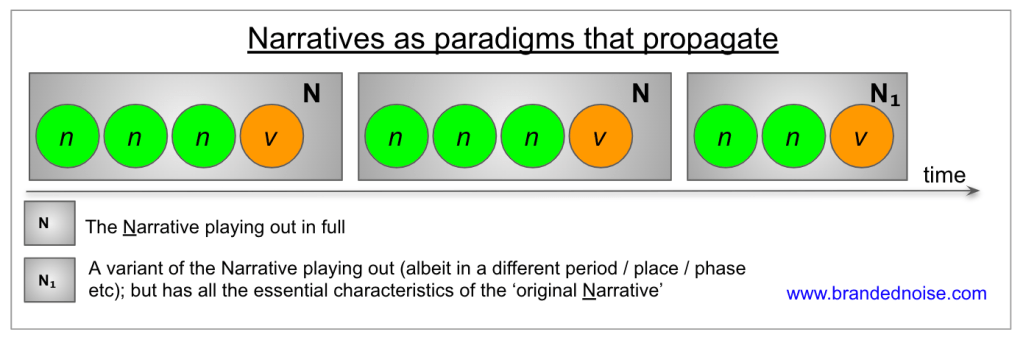
i.e., what if a ‘violation’ is actually an inherent part of a larger pattern that constitutes the narrative itself? Like say, a recurring motif that becomes apparent if only one were to step back and consider the big picture. Being able to see if and when that is the case could help us identify emerging paradigms and recognise how such paradigms propagate.

For e.g., after the dotcom bubble burst in 2000, Carlota Perez published her seminal book Technological Revolutions and Financial Capital arguing that the ‘burst’ was completely normal and qualified it by drawing patterns from four similar epochal periods over the last two centuries: the industrial revolution, steel and railways, electricity and heavy engineering, the automobiles and mass production.

Across each of these periods, she pattern matched its associated moments of ‘crash’ (the equivalent of the dotcom bubble burst from 2000) and recognised such instances as inalienable parts of larger cycles that play out over several decades (as opposed to say some inexplicable violations to the popular narratives of their times).

Source: Carlota Perez, Technological Revolutions and Financial Capital,2002

The master stroke of her framework is that it inherently provisions for moments of ‘big bangs’, ‘bubbles’, ‘crashes’ and then again necessary ‘recompositions’ as part of a single unified narrative that cohesively explains the interplay between financial capital and technological revolutions. And then continues to shine a spotlight on how this narrative seemed to have repeated itself across ages almost inviolably.

(Bonus reads: Two of my favourite thinkers, Alex Danco and Ben Thomspon have recently used Carlota Perez’s framework to write about Debt Financing and Paradigm Shifts in tech. Highly recommended reads indeed.)

To reiterate, a key takeaway for me here is the idea of the narrative as a paradigm that propagates.

Such a narrative construct that propagates needs to be essentially indivisible, should have a full self contained arc of a structure to serve as a standalone story if need be and be able to play out as a cohesive whole even with trivial variations in contexts or actors.

Matthew Ball has a term for this – The Narrative Primitive.

In one of the most intellectually stimulating podcasts I have listened to in the recent past, Matthew Ball joins Patrick O’Shaughnessy to discuss movies, the Metaverse and more and refers to the concept of ‘Narrative Primitive’ to explain why the worlds of the Marvel Cinematic Universe or the Star Wars stand out as expansive and immersive. The following lines from the podcast’s transcript shine light further.

… “how would you have told the story 80 years ago if you had all the tools available? How are those stories going to change in the next 10 years?” And in some instances that is unlocking what you might call a narrative primitive, that’s perhaps some of the reasons why the Marvel Cinematic Universe or the tales of Star Wars are so expansive today, so immersive.

Now, when I consider these two concepts – Narrative Violation and Narrative Primitive – together, I am tempted to posit the following.

The essential insight that rock star traders, venture capitalists and story tellers possess is this – they know a good narrative when they see one. And more importantly they have an eye for a narrative violation. Because they think in narrative primitives.


Noteworthy ingredients – that may or may not have gone into the making of this blog post:

[Featured Image: Pendulums on freepik]

Nomadism

Quick Read: The idea of breaking free and getting lost has always fascinated us. Interestingly this idea manifests itself not just outdoors but also indoors. 

Ajatashatru the fakir, renowned conjurer and trickster, lands in Paris.

His mission? To acquire a splendid new bed of nails. His destination? IKEA.

And there he decides to stay, finding an obliging wardrobe in which to lay his head. Only when he emerges from his slumber does he discover that he is locked in, unable to free himself and heading for England in the back of a truck.

So begins The extraordinary Journey of the Fakir who got Trapped in an Ikea Wardrobe – a book by Romain Puertolas

Book1

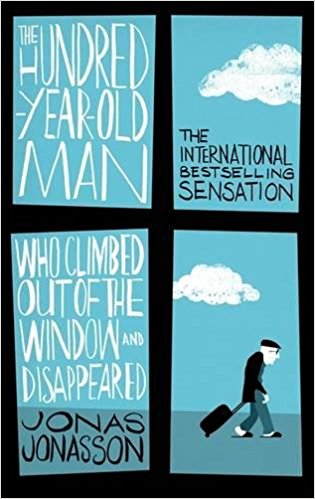
Or let’s take Allan Karlsson who’s sitting quietly in his room in an old people’s home, as his one-hundredth birthday party is to begin. The Mayor and even the press will soon be there. But for some reason he doesn’t want to attend his own party. So what does he do?

He climbs out of his bedroom window and disappears. And embarks on an unlikely journey involving criminals, murders, police and a suitcase full of cash.

That’s the theme of a book by Jonas Jonasson called The Hundred-Year-Old Man Who Climbed Out of the Window and Disappeared.

Book2

The idea of breaking free and getting lost seemed to have always fascinated us as a species. Call it our natural state of entropy or a throw back to our primal tendencies of being a nomad, we seem to have always nursed a flame for throwing everything away and becoming a nomad.

Naturally, the SUV category lends itself to both literal and metaphorical articulations of this yearning of breaking free.

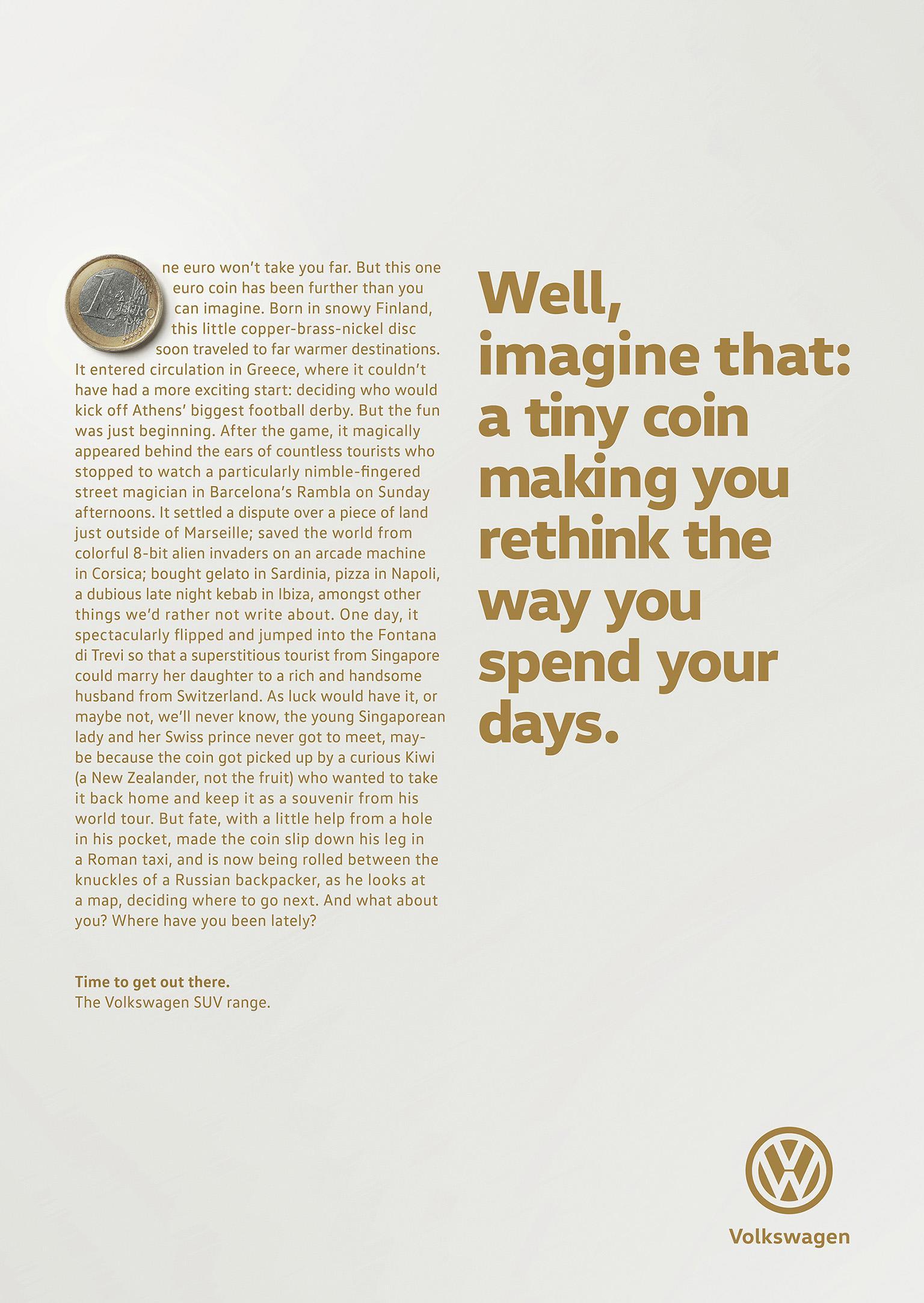
Time to get out there

While typical ads for such ideas tend to showcase the spectre of seduction of the wild vs the boredom of getting chained amongst sterile urban landscapes, the recent Volkswagen campaign by DDB Berlin pushes the creative envelope by taking inspiration from the most unexpected – yet very apt –  sources.

The idea: The great majority of us are not as adventurous and well-traveled as we might think we are. In fact, if we think about it, we are surrounded by ordinary objects that have traveled way more than us. Based on this insight, DDB Berlin created a series of print ads that tell the exciting stories of a paper clip, a disposable lighter, a coin, and a pencil, in a way that pokes fun at our own sedentary lives.

vw_lwmity_coin_rgb_2500px
Volkswagen SUV range, Source

vw_lwmity_clip_rgb_2500px
Volkswagen SUV range, Source

vw_lwmity_lighter_rgb_2500px
Volkswagen SUV range, Source

Each one is a copy writing gem on its own!

While driving off in an SUV is a natural expression of our innate nomadic tendencies, recent times have seen this philosophy seep even into the confines of our bedrooms or drawing rooms!

Nomadism within our homes 

Lidewij Edelkoort, a Dutch trend forecaster, believes that nomadism is a key trend that can be seen playing even within our homes. We no longer adhere to strict borders or rules even within homes: a formal drawing room to entertain guests, a bedroom to sleep in, a study to work. That’s not how the urban citizen lives, so there’s a need to design for a fluid home.

IKEA India’s creative director Mia Lundström in one of her recent interviews echoes this insight around nomadism and says “People live, eat, work, sleep a little bit everywhere in the home. So we make products that don’t have a specific destination but fit in many different contexts around the home. We don’t tell people this cushion is for the sofa. It could be for that or the Rattan chair on the terrace.”

Earlier this year Ikea even launched two collections ostensibly designed for today’s modern nomads living life on their own terms.

A chair that is your own little cocoon? Check.

IKea - cucoon
IKEA, Source

A chair to sleep on? Check this out chair with 18 cushions!

IKEA-chair
IKEA, Source

And many more such designs (see here).

It will be interesting to see how ideas and products across categories adopt this philosophy of nomadism, i.e., those that are designed for fluidity – so they don’t necessarily adhere to categories but contexts.

(Featured Image:Volkswagen Lighter Ad, DDB Germany. Source )

On Points Of View

Quick Read: Some businesses thrive by driving a singular POV regarding their offering amongst their target audience. And there are some that take pride in celebrating multiple POVs regarding theirs. 

Some elite restaurants in Japan are ichigen-san okotowari (first-time customers not allowed), meaning a regular customer has to introduce you before you can make a reservation.

The genius of this system is that it ensures that you buy yourself into a singular and a specific POV about its food, experience and its clientele if you want to be able to get a reservation at the restaurant.

Almost by definition.

And the story continues. One customer at a time.

It works because the ichigen-san okotowari system ensures that a single consistent POV gets bought into, replicated and passed on.

Meanwhile elsewhere..

A recent print campaign by Shutterstock made it to the shortlist of Clio Awards 2015 under the Print category.

As a purveyor of stock photos, Shutterstock.com wanted to celebrate the fact that an image can potentially fire up your imagiation in multiple ways.

So it brought this idea to life through the following executions.

ShutterStock_Shark

ShutterStock_Broken

ShutterStock_Baby

[Click on the images for a larger view]

Agency: Leo Burnett. Images via: Clio Awards. (HT Bhatnaturally)

A truly insighful execution that celebrates the multiple POVs that an image can inspire. As Mr. Bhat says..

The irony is that this is too close to reality. We’ve all seen how art directors search for inspiring images first and then try and retrofit an idea. Also, a visual idea which was rejected or didn’t make the cut for a pitch in one category can be adapted to a totally unrelated category. This campaign actually puts a positive spin on that.

Does your brand – and by extension its strategy and execution –  thrive on driving and sustaining a singular POV or does it celebrate multiple POVs? 

[Bonus Link: Speaking of POVs, you should check out Hardcore – the world’s first action POV film that got premiered in the latest Toronto International Film Festival to critical acclaim.  The entire movie is shot from a single POV and boy is it intense!]

(Featured Image: Shutterstock Print Execution. Source)

Story Tellers, Super Powers And Second Lives

Quick Read: For the first time in the history of story telling we seem to be having the means to explore the dimensions of *actual* time and space in building narratives. Story telling might just be at an inflection point.

Andrew Stanton while talking about The Clues to a Great Story quotes an incredibly insightful definition of what constitites drama.

Drama is anticipation mingled with uncertainty.” 

Now, while keeping the uncertainty element constant, what if you can build anticipation at the rate of actual human experience?

Wouldn’t the drama get amplified?

Let’s elaborate.

World’s Most Boring Television 

Stick a camera to an ordinary train on an ordinary day. Shoot the entire 7 hr + footage of this ordinary journey as the train pulls from station to station, and put it on national TV with almost no editing.

Sounds like the most boring television show in the history of mankind. Right?

Wrong.

The results of this Norwegian TV show were extra-ordinary, fascinating and even bizarely insightful.

Welcome to the world of ‘Slow TV‘.

What began as a pilot by the Norwegian TV producer Thomas Hellum and his team turned out to become a national phenomenon leading to more shows such as an 18 hour fishing expedition, a 5.5 day ferry voyage along the coast of Norway and many more.

These went on to receive extensive attention in global media, and were considered a great success with coverage numbers exceeding all expectations and record ratings for the NRK2 channel!

But why were these ostensibly boring shows so popular?

To paraphrase Thomas Hellum from the following must watch TED Talk..

Slow TV is so popular because it builds drama by letting the viewer make the story themeslves. 

In otherwords Slow TV is an amazing example of a narrative that rides on building anticipation at the rate of actual human experience in time.

Not to be left behind, the advertising/marketing world has also begun to experiment with the concept.

Virgin America has produced a six-hour-long commercial (!) about how unbearably dull the average plane ride is. The video shows passengers on a flight across the US, playing out its events in real time.

And it has clocked around 850K views till date!

Now moving over to the other dimension.

A New Photographic Language Is Born 

..so says dronestagram – an instagram for footage shot with dones. We even have drone film festivals celebrating the art of films shot with drones.

Meanwhile, YouTube this year has begun supporting 360 degree videos.  And we already see several brands experimenting with this format to create truly amazing ads like the one below by Nike that lets you be Neymar on the field as you check out the action in all its 360 degree glory.

And then you have the likes of Oculus and Google Cardboard pushing the envelope in bringing immersive VR experiences to life. The Economist in its recent feature has in fact taken a serious take on VR and believes that its time may have truly come.

This year the Tribeca Film Festival has even called for ‘virtual reality’ submissions.

So why are we raving about films shot with drones, 360 degree videos and VR experiences?

It is possibly because they all have one thing in common.

Thanks to these, for the first time ever, we see possibilities in constructing narratives that can build anticipation at the rate of actual human experience in space

So what’s next?

From Story Telling To Crafting Experiences To Creating Parallel Lives

As story tellers build increasingly immersive narratives that progress at the rate of actual human expereince in time and space, it ceases being just a story and moves on to becoming an experience.

Now throw in sensory elements to this and you suddently have multi dimensional multi sensory experiences that could possibly shift the business of story telling to that of building parallel realms of existence.

What does that mean?

I don’t know.

But at the least it could herald a second life for the likes of Second Life.

(Featured Image, Source)

The Other Side Up

Quick Read: Invert the traditional workflows, dispel orthodox notions and see lateral thinking come to life for newer ways of going about things.  

Every once in a while there come initiatives and executions that turn the tables on traditional concepts that we have always taken for granted. Such instances compel us to re-evaluate our existing notions of what we consider to be the norm and thereby make great fodder for some lateral thinking.

Three such recent examples.

1. Photography

Trevor Christensen is a photographer who shot to international acclaim with his recent series called Nude Portraits.

What is interesting about this project? In this series the photographer is naked, the subjects are not.

According to himThe photographer/subject paradigm is one of inequality. Nude Portraits is about leveling the playing field in an unorthodox way. Instead of focusing on bringing the subject to a place of ease–where I am, this project brings me to a place of vulnerability.

Nude Portraits

(Source: Nude Portraits by Trevor Christensen)

The results are an interesting commentary on the photographer/subject paradigm and hold a thought provoking mirror to the subject and photographer’s feelings around vulnerability, shame, guilt and self composure.

Talking of portraits, meanwhile elsewhere…

Samsung had an interesting set of executions that reframed selfies as Self Portraits.

2. Painting 

Rainworks is a project  by Peregrine Church.

What is interesting about the project? It is art that appears when it rains! Check this video out:

This cool project challenges our notions around negative space and opens up newer possibilities of creative expression.

Talking of negative space, meanwhile elsewhere…

Volvo introduces Life Paint to promote safety for those both inside and outside its cars.

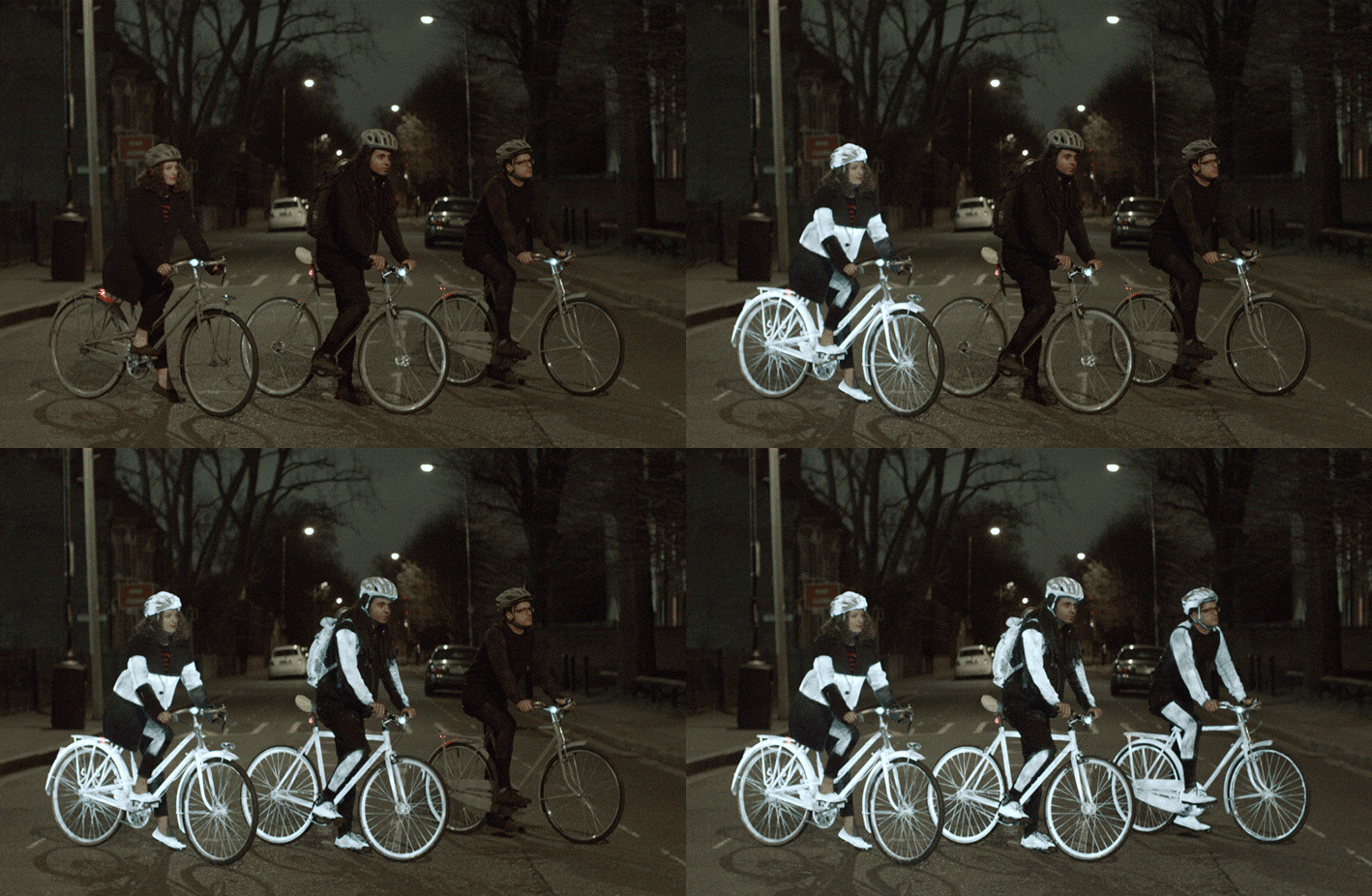
According to this must read post, Life Paint is a unique reflective safety spray aimed at increasing the visibility and safety of cyclists, and other vulnerable road users.

What makes it special? It is invisible by daylight, but glows brightly in the glare of car headlights, making the invisible, visible at night.

Life Paint

(Source: Life Paint by Grey London for Volvo)

The Life Paint concept was developed by creative agency Grey London, in collaboration with Swedish startup Albedo100 and is one of a series of projects to highlight the key product innovations of the all-new Volvo XC90.

3. Reviews

Online reviews have become both a boon and a bane for many a marketer. As this HBR post says,

The idea that a new (reviews) website or app can undercut years of careful messaging may be deeply frustrating to marketers—but it is a reality they must face.

But what if we turn the tables around on the traditional concept of reviews. Australia based Art Series Hotel Group has recently initaited what it calls Reverse Reviews‘. 

What is interesting about the concept? While you review their hotels, you would also be reviewed by the hotel. Get five stars and get a free night to stay again (applicable between April 17 until May 31 2015).

Reverse Reviews AU

(Source: Art Series Hotels )

Talking of reviews, meanwhile elsewhere…

Today’s new world of ‘on-demand everything’ is being touted as The Shut In Economy.

Read this brilliant piece on why this is so and you would probably agree that institutionalising a ‘Reverse Review’ system could just be what the doctor would have ordered to make our world a better place.

Result: People behind the doors (who use the apps, platforms and services to place their orders online) and the people outside the doors (those that deliver) could live in a world that is more inclusive and respectful of each other.

Isn’t it?

(Featured Image: ‘This Side Up’ table design by DEDE DextrousDesign)

Annotations About Annotations

Quick Read:Who would have thought what had begun as a traditional 17th century readers’ habit of jotting down some thoughts and gossip on the margins of a sheet of paper could turn out to become a concept for world domination?

Annotations are in vogue today!

In the 17th and 18th centuries, it was traditional for newspapers to include space for readers to jot down thoughts, gossip, and observations before passing along their copy to others. Some papers kept their margins wide for such notes; others, like the very first American newspaper, Publick Occurrences, included an entire blank page.

Annotations are an extension of that tradition.

Annotations in the past

(Annotations in Boston Gazette and Country Journal (1770): Source)

…Saying this, Quartz – a popular blog, annouced the opening up of its margins to users’ comments – also known as annotations.

Medium – the acclaimed blog publishing platform – introduced this concept of ‘notes’ that let readers comment (annotate) on specific paragraphs of the story instead of at the bottom of the piece.

Today Soundcloud allows users to annotate audio; Gawker Media allows users to annotate images and New York Times experimented with annotations around news as a more participative means of user engagement.

Annotations – as a creative narrative device

Even novels have begun to adopt annotations as a narrative device. S. – a novel previously featured on BrandedNoise –  has at least four different interconnected narratives unfolding at the same time. One such narrative is the dialogue between a guy and a girl who read and discuss a book through their notes passed on to each other written as annotations.

ship-of-theseus-3

(This is how an actual page of S. looks like. Image source)

If there is one book that you should buy – even for the sheer experience of just leafing through its pages and marveling at its creativity and design. This is it!

‘Annotations’ as a billion dollar idea?

Genius.com – a Andreessen Horowitz backed startup – is believed to be testing a new feature: the ability to annotate any page on the web, adding a new stratum of knowledge to the largest store of information in human history.

Currently in beta, the new functionality lets users add genius.com/ to the beginning of any URL to access a version of the page on Genius. The page is fully annotatable, so users can highlight and annotate any text on the page and view others’ annotations. (source)

Genius Annotate

(Annotations from Genius.com: Image Source)

Enough and more is already being written about Genius.com and its stated goal of “annotate the world”, with some even predicting that Annotate would soon transcend into the class of those fundamental verbs of contemporary culture, such as Google and Like!

Bonus read: Recently a mysterious billboard had appeared on the streets of Manhattan. (see the featured image above) Whereas most billboards are logo delivery vehicles, this one is unclaimed. The billboard is the work of Emily Segal for Genius.com. A great post on this avante-garde marketing campaign here

Inspiration From Across The Category Fence

Quick Read: Sometimes, the best idea for a brand campaign might be just around the corner, albeit with another category. Even when the core of the campaign idea is ‘Originality’. And perhaps rightfully so.

Inspiration from across the category fences is no new news. But that’s no excuse why we should take such instances for granted. Some recent examples of brands taking inspiration from other categories and appropriating them in a way that is relevant to their campaign idea/ brand personality. Virtual High Five (Coke – KLM) In May 2013, Coke had this huge hit campaign that ‘connected’ people from different countries (India – Pakistan) through what it called as ‘Small World Machines’.

Cut to this year (Sep 2014),  KLM gave a reason for Amsterdam and New Yorkers to ‘get connected’ through this Virtual High Five campaign.

As this article says, KLM’s deployment of this idea is clever because it underlines the message that while technology has the power to interactively connect people like never before, it’s airlines that have the ability to physically connect people faster, easier and more effectively than we have ever experienced in the past. KLM-Live-High-Five-1-640x340

(Source: Creative Guerrilla Marketing)

Unique, Original & Extraordinary (Absolut – Coke) In Sep 2012, I wrote about Absolut’s brilliant execution of their limited edition design series called Absolut Unique. A story of carefully orchestrated randomness powered by 35 different colors, 51 different pattern types all governed by algorithms meticulously devised to induce a method to this madness of design. absolut-unique-vodka-bottles-02

(Source:Absolut)

Result: A first of its kind design spectacle at a massive scale resulting in over 4 million bottles where no two bottles are alike. See the video here.

And then in 2013, Absolut followed this up with Absolut Originality. Video here.

Cut to this year (Oct 2014), a new campaign for Diet Coke in Israel revolves around the concept “Stay Extraordinary,”  as part of which it produced over 2 million different bottles using a printing system that printed every bottle with a different look. Video here.

Any other examples of well executed campaign ideas inspired from different categories?

(Featured Image: Absolut Originality)